

Innovation Assets, Competitive Advantage, Legal Governance, and Corporate Value in a Knowledge-Driven Economy
Research Publication by Theodora Kelechi Anurukem
New York Center for Advanced Research (NYCAR)
Date: June 2026
DOI: https://doi.org/10.5281/zenodo.20626477
Publication Number: NYCAR-TTR-2026-RP053
Peer Review Status:
This doctoral research publication has been reviewed under the New York Center for Advanced Research (NYCAR) institutional publication standard and is approved for public presentation. The review confirmed doctoral-level coherence, U.S. case-study relevance, source integrity, APA 7th citation discipline, intellectual-property accuracy, strategic-management depth, mathematical suitability, chart originality, and practical value for boards, executives, counsel, innovation leaders, universities, and policy institutions. The work is accepted as a complete doctoral research publication suitable for institutional and professional readership.
Copyright © June 2026 Theodora Kelechi Anurukem. All rights reserved.
Abstract
Intellectual property has moved from the legal department into the center of strategic management. Patents, copyrights, trademarks, trade secrets, data rights, licensing terms, software interfaces, brand identifiers, research disclosures, human authorship records, and AI-use documentation now shape how firms compete, how investors judge value, how universities commercialize research, how creators negotiate power, and how public institutions protect innovation without weakening competition. This doctoral research publication studies intellectual property as a strategic-management discipline in the United States. It argues that IP does not create advantage by existing on paper. It creates advantage when the organization knows what knowledge it controls, what it must share, what it should keep secret, what it can license, what it must defend, and what it should leave open because exclusion would damage adoption, trust, or regulatory standing. The paper uses U.S. case studies including Google LLC v. Oracle America, Inc.; Andy Warhol Foundation v. Goldsmith; Amgen Inc. v. Sanofi; Thaler v. Perlmutter; the U.S. Copyright Office’s AI reports; and the USPTO’s AI-assisted inventorship guidance. It also draws on public data from the National Center for Science and Engineering Statistics, USPTO, WIPO, and related official sources. The study develops an Intellectual Property Strategic Value Function that connects ownership strength, evidence quality, freedom to operate, market relevance, speed of capture, licensing option value, enforcement discipline, and trust consequence. The final position is practical: intellectual property should not be managed as a pile of filings or courtroom weapons. It should be managed as a disciplined system for converting knowledge into durable, defensible, and socially credible value.
Keywords: intellectual property; strategic management; patents; copyright; trade secrets; trademarks; licensing; AI authorship; U.S. case studies; innovation strategy; corporate governance; NYCAR.
Contents
Chapter 1: Introduction: Intellectual Property as Strategic Management
Chapter 2: Literature Review and Conceptual Grounding
Chapter 3: Methodology, Source Discipline, and U.S. Case Selection
Chapter 4: Patents, Scope, Enablement, and Competitive Position
Chapter 5: Copyright, Software, Creativity, and AI-Generated Output
Chapter 6: Trademarks, Brand Trust, Trade Secrets, and Talent Mobility
Chapter 7: U.S. Case Studies in IP Strategy and Corporate Judgment
Chapter 8: Mathematical Model and Diagnostic Tools
Chapter 9: Governance, Implementation, and Risk Controls
Chapter 10: Final Position and Strategic Direction
References
List of Tables
Table 1. U.S. intellectual-property case-study matrix.
Table 2. Intellectual Property Strategic Value Function variables.
Table 3. Institutional implementation sequence for IP strategy.
List of Figures
Figure 1. U.S. R&D scale and business concentration, 2023.
Figure 2. Business R&D by type, United States, 2023.
Figure 3. Business R&D by industry group, 2023.
Figure 4. Global IP filing direction, 2024.
Figure 5. U.S. case studies: innovation value and legal-risk pressure.
Figure 6. Strategic IP value pathway.
Figure 7. IP Strategic Value Function variable weights.
Figure 8. Institutional sequence for IP strategy.
Chapter 1: Introduction: Intellectual Property as Strategic Management
The central problem
Intellectual property is often introduced to executives as a legal possession: a patent issued, a mark registered, a copyright owned, a trade secret protected by agreement, or a license signed after negotiation. That language is not wrong, but it is too small for the strategic weight that IP now carries in the United States. A pharmaceutical company may spend years building a patent estate before a single product reaches the market. A software firm may depend on copyright, contract terms, interoperability, and trade secrecy at the same time. A university may create knowledge with public funds and then face hard choices over disclosure, licensing, start-up formation, and public access. A brand-driven company may discover that trademark strength is not just a registration but a public memory supported by product quality, service consistency, and trust.
The main claim of this doctoral paper is that IP becomes strategic only when legal control is joined to managerial judgment. Filing alone is not strategy. Litigation alone is not strategy. A license that brings cash while weakening future bargaining power is not strategy. A secrecy regime that blocks collaboration, frustrates scientists, and drives talent away is not strategy. A rights portfolio becomes strategic when it supports a clear choice about markets, products, timing, partners, rivals, investors, public interest, and institutional reputation.
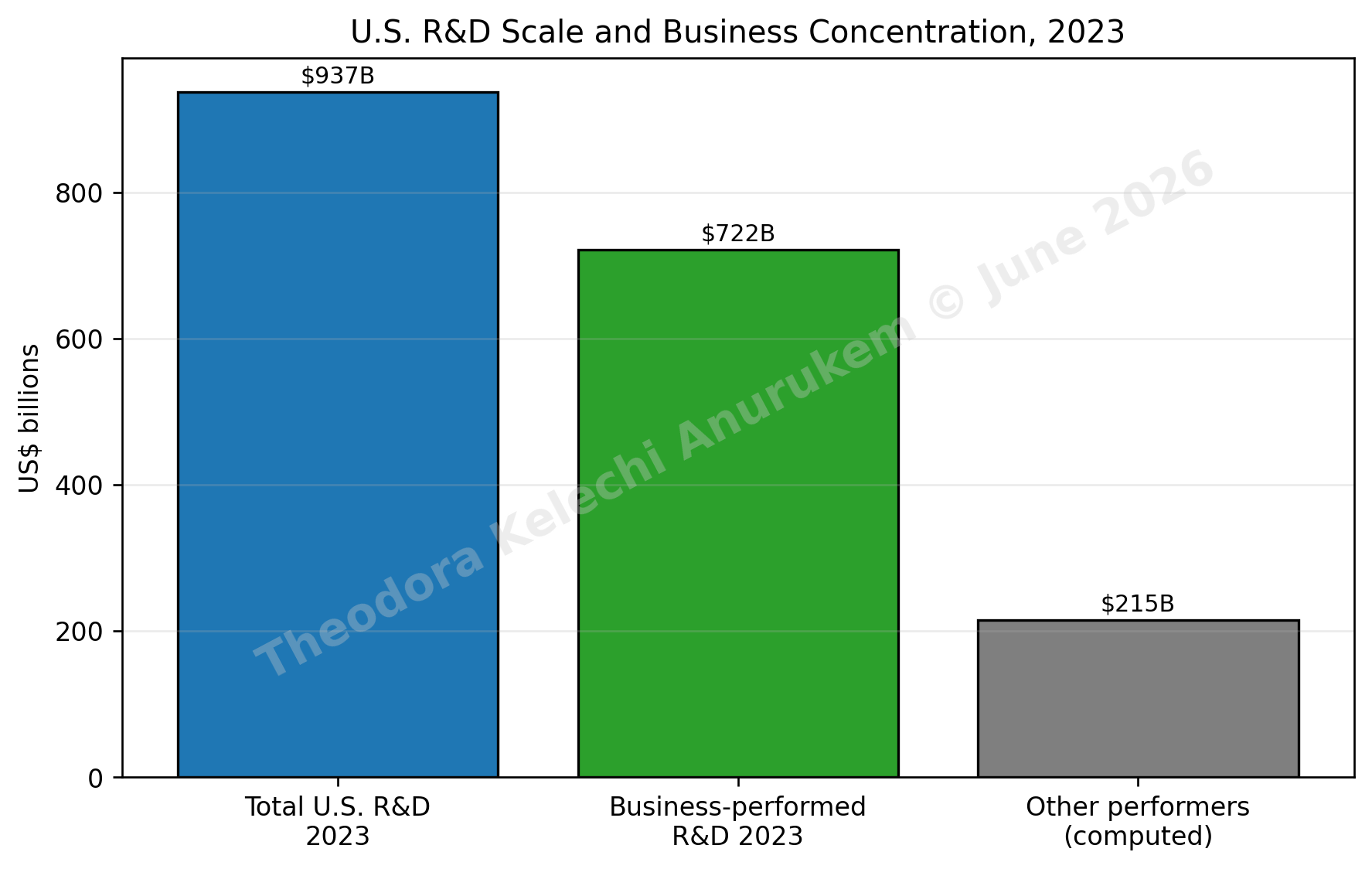
Figure 1. U.S. R&D scale and business concentration, 2023. Source: NCSES public R&D reporting.
Copyright © June 2026 Theodora Kelechi Anurukem. Original figure prepared for NYCAR doctoral research publication.
This view matters because the American innovation system is both powerful and uneasy. The United States remains a global leader in research expenditure, venture-backed innovation, university science, software, entertainment, biotechnology, semiconductors, and platform business. It also carries rising disputes over AI training data, patent scope, drug pricing, brand deception, trade-secret mobility, software interoperability, and the social cost of excessive exclusion. The boardroom therefore needs more than a lawyer who can file or sue. It needs a strategic language for deciding when IP should exclude, when it should enable cooperation, when it should be licensed, when secrecy is wiser than filing, and when public trust should discipline private control.
Why IP strategy now sits at the executive table
Several forces have pushed IP into executive decision-making. R&D spending has become heavily concentrated in knowledge-intensive firms. Software and data now sit inside nearly every industry. AI systems have changed the meaning of authorship, invention support, evidence records, and rights clearance. Global supply chains have made freedom to operate a board-level issue. Universities and research hospitals have become commercialization partners. Brands must manage not only logos but public claims, origin stories, endorsements, and consumer perception. Trade-secret controls must coexist with employee mobility and changing rules around noncompete agreements.
A serious IP strategy does not ask only whether the organization owns something. It asks whether the organization can convert ownership into durable value without inviting avoidable legal, commercial, or reputational loss. The value of a patent depends on claim quality, enablement, market relevance, freedom to operate, enforcement cost, design-around risk, and licensing possibility. The value of copyright depends on originality, human authorship, market substitution, licensing channels, and fair-use exposure. The value of a trademark depends on distinctiveness, consumer recognition, control over use, and consistency of experience. The value of a trade secret depends on secrecy discipline, access control, employee trust, vendor practice, and proof of reasonable measures.
The paper is written for leaders who must make choices before litigation clarifies the law. Courts decide disputes after conflict has matured. Executives must decide while technology, markets, personnel, and regulation are still moving. That timing difference is central. An organization that waits for final legal certainty before developing IP governance will usually act too late. The discipline proposed here is not legal paranoia. It is strategic caution joined to commercial courage.
Doctoral purpose and contribution
The research contributes a practical theory of intellectual property power. Power here does not mean domination for its own sake. It means the capacity to convert knowledge, expression, identity, and confidential know-how into value that can be defended, shared, priced, renewed, and trusted. The paper links IP law, strategic management, innovation economics, corporate governance, and public legitimacy. It uses U.S. case studies because the American system offers an especially demanding setting: strong private rights, intense innovation markets, active courts, large public research systems, contested technology policy, and a high tolerance for both experimentation and litigation.
The paper’s distinctive contribution is the Intellectual Property Strategic Value Function. The model treats IP value as a managerial outcome rather than a legal label. It weighs control, evidence, market fit, freedom to operate, speed, licensing option value, enforcement discipline, and trust consequence. The model is not a court test. It is a boardroom diagnostic, designed to help an organization decide whether a rights position is strategically strong, commercially useful, and institutionally safe.
Theodora Kelechi Anurukem’s doctoral treatment therefore takes a different voice from a general management paper. It speaks from the point where law and strategy meet under pressure. Its concern is not to celebrate intellectual property as an automatic good. Its concern is to ask when intellectual property improves innovation, when it blocks it, when it protects legitimate investment, and when it becomes a substitute for better product, research, partnership, or market judgment.
The executive gap in IP practice
The recurring weakness in many organizations is not ignorance of intellectual property. Senior leaders usually know that patents, marks, copyrights, and trade secrets matter. The weakness lies in translation. Legal teams speak in filings and risk. Product teams speak in release cycles. Scientists speak in proof and discovery. Finance speaks in valuation, margin, and capital discipline. Marketing speaks in recognition and demand. When those languages do not meet, knowledge assets move through the organization without a shared strategic meaning. The result is predictable: inventions are disclosed late, claims are filed without commercial priority, licenses are signed without future option value, and trade secrets are treated as confidential only after a resignation or breach exposes them.
The executive gap is especially costly in the United States because innovation moves through dense markets. A firm may need patents to attract investors, copyright licenses to build software products, trademarks to preserve customer memory, employment agreements to protect confidential information, and data rights to train or operate AI systems. Each right affects the other. A poorly reviewed open-source component may weaken a software company’s acquisition value. A weak trademark clearance may force a costly rebrand after customers have already formed loyalty. A careless publication by a scientist may destroy patent novelty. A loose AI policy may make authorship or inventorship hard to prove. These are management failures long before they become lawsuits.
Strategic management as a discipline of choices
The paper therefore treats intellectual property as a discipline of choice. The organization must choose the assets that deserve protection, the claims that should be pursued, the information that should remain secret, the knowledge that should be shared, the partners that should receive access, the markets that justify enforcement, and the public values that should limit aggressive control. This is why the paper is not written as a legal manual. Legal doctrine matters, but doctrine becomes useful to management only when it is connected to timing, markets, resources, talent, and trust.
The strategic manager also has to understand loss. Not every loss is legal defeat. A company may lose value through delay, poor documentation, confused ownership, employee distrust, reputational backlash, or a license that gives away future bargaining power. Those losses may never appear in a court judgment, but they reduce strategic advantage. A doctoral treatment of IP must therefore examine silent losses as seriously as visible disputes. The serious question is not how many rights an organization can claim. It is how much protected knowledge can be converted into durable value without weakening the institution that holds it.
Why the U.S. case matters for NYCAR scholarship
The U.S. setting gives this study practical force because it sits at the meeting point of law, capital, universities, litigation, public research, and corporate experimentation. American courts continue to shape the boundaries of fair use, patent enablement, authorship, and software reuse. Public agencies such as the USPTO and Copyright Office issue guidance that changes the operating behavior of firms. NCSES and WIPO data reveal the scale of research and filing activity. The result is a living classroom for strategic management. It allows a candidate to study intellectual property not as an abstract rulebook but as a field where executives must act before certainty arrives.
The distinctive scholarly contribution lies in keeping the voice close to decision. The paper does not admire IP from a distance. It asks what leaders must know on the day they choose whether to file, publish, license, sue, disclose, acquire, or protect. That emphasis gives the work a practical doctoral character. It is analytical, but it remains tied to the work of management.
Strategic failure through legal isolation
IP fails when legal work is isolated from the business rhythm. A lawyer may secure a technically valid right while the commercial team has already shifted away from the product. A business unit may launch a promising feature without knowing that a license restriction limits use. A laboratory may create a breakthrough but lose protection because publication was not coordinated. These failures do not come from lack of intelligence. They come from institutional separation. The legal file, product roadmap, research calendar, and investment thesis must speak to one another.
This is why IP strategy needs authority. A policy document is not enough if no one can stop a risky launch, delay a publication, approve a license, or redirect filing funds. Strategy requires the power to change action. The paper therefore treats IP governance as an executive matter. It belongs at the level where budgets, research priorities, brand exposure, platform partnerships, talent movement, and litigation posture can be weighed together.
Knowledge as a managed institution
Knowledge is not self-managing. It moves through people, devices, documents, code repositories, laboratories, cloud services, contractor relationships, presentations, conferences, and investor meetings. Each movement can create value or loss. A doctoral study of IP must therefore examine the social life of knowledge inside organizations. The question is not only what the firm owns. The question is how knowledge travels before and after ownership is claimed.
This view also explains why trust appears throughout the paper. Customers, investors, regulators, employees, researchers, partners, and communities all judge how an organization uses control. An IP strategy that ignores trust may win a legal point and lose the conditions that made the asset valuable. Trust does not replace law. It disciplines the use of law.
Sector implications for strategic management
The impact of IP strategy differs by sector. In life sciences, the central tension is between disclosure, patent scope, clinical development cost, access, and investor confidence. In software, the tension sits between speed, interoperability, open-source use, platform control, and copyright uncertainty. In higher education, the tension is between publication, public mission, technology transfer, and equitable access. In consumer markets, the tension is between brand distinctiveness, customer memory, license control, and public trust. A single IP policy cannot serve all these settings without adaptation.
The common requirement is strategic clarity. Every organization must know which assets sit at the center of value. It must know which risks can be accepted and which cannot. It must know when legal rights are meant to protect exclusivity, when they are meant to create bargaining power, and when they should be used to open a collaborative market. The discipline is not uniformity. The discipline is fit.
This is why the paper uses the United States as a case setting rather than as a universal model. The U.S. provides a rich test of IP strategy because rights are strong, disputes are visible, and innovation markets are active. Other jurisdictions will require adaptation, but the core management question travels: how does an institution turn knowledge into defensible value while maintaining legitimacy?
Chapter 2: Literature Review and Conceptual Grounding
Strategic management and knowledge assets
Strategic management literature has long treated resources and capabilities as sources of advantage, but intellectual property gives that discussion a particular legal edge. A valuable capability may be embedded in people, routines, data, designs, code, research records, customer relationships, or brand reputation. IP law can help secure some of that value, yet it cannot secure all of it. Teece’s work on dynamic capabilities is useful because it reminds managers that advantage depends on sensing, seizing, and transforming rather than possession alone (Teece, 2018). In IP terms, the organization must detect knowledge worth protecting, decide how to protect it, and then change operations so the protected knowledge actually reaches market or mission value.
Innovation strategy also requires a fit between technical choices and commercial choices. Pisano (2015) argued that firms need an innovation strategy that aligns their innovation investments with their larger competitive logic. That argument is especially relevant to IP. A patent filing program without a business theory produces paper density, not advantage. A trade-secret policy without talent and process discipline produces slogans. A copyright policy without data-use discipline collapses under AI and platform pressure. The central question is not whether IP exists but whether IP protection supports the way the organization intends to win, serve, collaborate, or create public value.
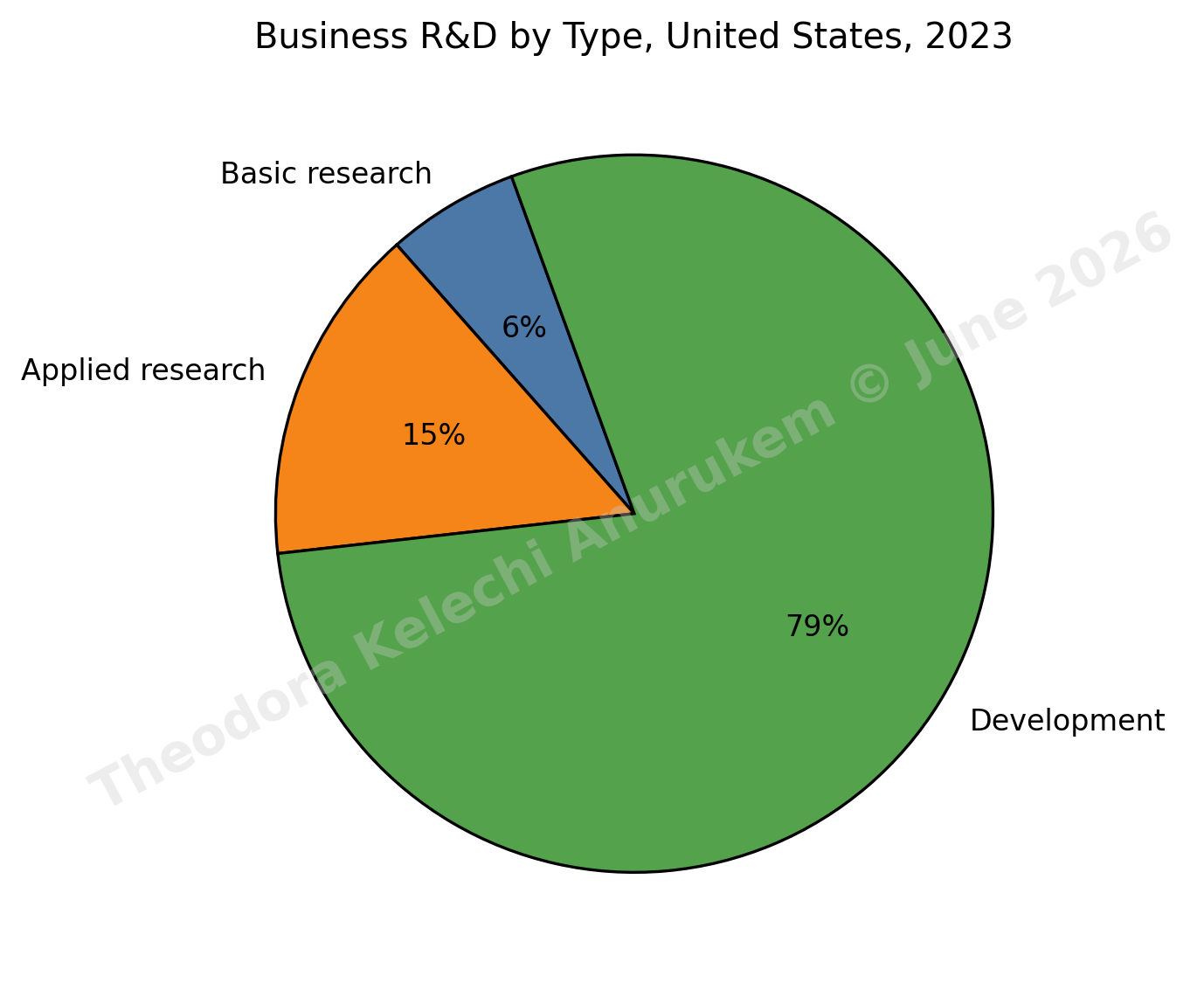
Figure 2. Business R&D by type, United States, 2023. Source: NCSES Business Enterprise Research and Development data.
Copyright © June 2026 Theodora Kelechi Anurukem. Original figure prepared for NYCAR doctoral research publication.
Mission-oriented innovation scholarship also matters because many knowledge assets emerge from public investment, universities, defense research, federal grants, and public-private partnerships. Mazzucato (2018) showed that mission-oriented public policy can shape markets rather than only correct market failures. That insight complicates private IP strategy. When publicly supported knowledge becomes private property, the organization must handle legitimacy, access, pricing, and social return with care. A legal right may be valid while the strategy around it remains publicly fragile.
IP law as market design
The literature on intellectual property often moves between two poles. One pole sees IP as an incentive for creation and invention. The other warns that excessive control can restrict follow-on innovation, raise costs, and entrench incumbents. The better managerial view does not choose one pole permanently. It asks which industry, which asset, which time horizon, which public interest, and which market structure are involved. A narrow patent around a technically demanding invention may protect costly experimentation. An overbroad claim may convert discovery into a private gate that others cannot reasonably pass. Copyright may protect creative labor while fair use protects commentary, interoperability, education, and cultural development.
Recent U.S. cases show that courts are not only resolving private disputes; they are shaping business design. Google v. Oracle placed software interoperability and fair use in the center of platform competition. Warhol v. Goldsmith narrowed confidence in broad transformative-use claims when the accused use serves a similar commercial purpose. Amgen v. Sanofi pressed patent applicants to match claim breadth with enabling disclosure. Thaler v. Perlmutter and the Copyright Office’s AI reports forced firms to document human contribution in AI-assisted creativity. These decisions are not side notes for lawyers. They are signals to executives about how to design innovation processes, product documentation, licensing terms, and market claims.
Empirical innovation data deepen the point. The National Center for Science and Engineering Statistics reported that U.S. R&D totaled $937 billion in 2023, with 2024 estimated at $993 billion (NCSES, 2026). Business R&D in 2023 reached $722 billion, with development accounting for the largest share (NCSES, 2025). Those figures show why IP strategy is no longer specialist paperwork. When firms spend at this scale, the protection, disclosure, use, and governance of knowledge assets become matters of national economic importance.
Authorship, inventorship, and human contribution
AI has sharpened a question that was already present in research organizations: who actually created the protectable contribution? The USPTO’s AI-assisted inventorship guidance makes clear that AI assistance does not categorically defeat patentability, but the inventorship inquiry remains focused on significant human contribution (USPTO, 2024). The D.C. Circuit’s treatment of Thaler v. Perlmutter reinforced the human-authorship requirement in copyright registration. For strategic management, the lesson is plain. An organization using AI in research, design, software, media, drug discovery, marketing, or documentation must keep records of human contribution, tool use, prompts, training restrictions, review, and final creative choice.
This does not mean firms should fear AI. It means they should govern it. AI can accelerate search, drafting, design variation, prior-art review, code assistance, and content generation. It can also blur ownership, contaminate confidential information, weaken originality claims, and create hidden licensing risk. A company that cannot explain the human and machine roles inside an invention or creative output may discover too late that the asset it expected to own is difficult to protect.
The literature therefore leads to a practical position. Intellectual property is neither a magic shield nor an administrative afterthought. It is a strategic-management discipline. Its value depends on law, evidence, market fit, organizational behavior, trust, and timing. A doctoral paper in this area must therefore read cases and data together, not as separate worlds.
Capabilities and exclusion rights
The resource-based view of strategy becomes more precise when intellectual property is introduced. A capability may be valuable because a firm can perform a task better than rivals. IP can strengthen that capability when the protected element is difficult to copy, costly to substitute, and aligned with the firm’s commercial route. Yet protection can also deceive leaders. A patent around a peripheral feature may look impressive while the real advantage lies in manufacturing learning, customer data, brand confidence, or supplier coordination. A trademark may be legally strong but strategically weak if customer experience fails. Trade-secret protection may preserve a formula while the workforce culture that knows how to use it quietly deteriorates.
This is why dynamic capability theory matters. Sensing identifies which knowledge assets are emerging. Seizing turns those assets into product, license, partnership, or market position. Transforming changes the organization so protected knowledge does not remain trapped in a laboratory, legal file, or creative department. The literature becomes useful when it is forced into these managerial movements. Without movement, IP is only stored potential.
Innovation incentives and public obligations
The incentive theory of IP says that legal protection encourages invention and creative production by allowing creators and firms to recover investment. That theory remains important, especially in fields such as pharmaceuticals, software, entertainment, and advanced manufacturing, where development can be expensive and copying can be cheaper than creation. Yet the incentive argument is not complete by itself. Strong rights can also raise access costs, slow follow-on work, and allow incumbents to control markets beyond what public purpose requires. Strategic management therefore has to understand IP as both incentive and constraint.
Mission-oriented innovation adds a further challenge. Public money often helps create private knowledge assets. Universities, research hospitals, defense contractors, energy firms, and technology ventures may all benefit from public grants or public procurement. When such assets become private rights, managers should think about access, pricing, licensing terms, march-in risk, public criticism, and institutional reputation. A legal right created with public support may need a different strategic posture from one developed entirely with private funds.
Evidence from research investment
The NCSES data used in this paper show the scale of the issue. The United States spends hundreds of billions of dollars on research and development, and business performs the dominant share. The intellectual output of that spending cannot be left to chance. Invention disclosures, publication timing, data management, lab notebooks, software licenses, and collaboration agreements all shape the value that can be captured. An institution that invests heavily in R&D but underinvests in IP governance is behaving inconsistently. It funds discovery but weakens the route through which discovery becomes strategic value.
The literature therefore supports a joined conclusion. IP strategy is not a specialist topic at the edge of management. It is part of the way a knowledge-based organization senses opportunity, protects contribution, manages collaboration, earns public confidence, and renews advantage. The purpose of the literature review is not to gather famous theories. It is to create a disciplined base for the case analysis that follows.
Strategic theory and legal institutions
Strategic theory often treats the firm as a chooser of markets and resources. IP law reminds us that the firm chooses within legal institutions that shape what can be owned, copied, licensed, disclosed, and enforced. This institutional setting matters. A strategy that is brilliant in a weak-rights environment may fail in a strong-rights environment. A platform model that depends on reuse may flourish under one fair-use interpretation and face strain under another. Managers must therefore treat legal institutions as part of the competitive setting, not as background.
The literature also shows a tension between speed and proof. Firms want rapid movement, especially in AI and software. IP law often asks for records, contribution, originality, inventorship, and rights clearance. The strategic solution is not to choose speed over proof. It is to build proof into the speed. Good process makes rapid action defensible.
The gap between doctrine and action
Legal doctrine explains standards, but management must convert standards into action. Fair use becomes a review of purpose, amount, market effect, and alternative licensing. Enablement becomes a research-data and claim-scope conversation. Human authorship becomes an AI documentation protocol. Trade-secret law becomes access control and employee education. Trademark law becomes naming discipline and quality control. The literature has practical value only when this conversion is made visible.
This conversion is the paper’s main intellectual move. It does not add another abstract definition of IP. It shows how legal categories become managerial duties. That is why the paper belongs in strategic management as well as law.
Managerial value of legal uncertainty
Legal uncertainty is often treated as a defect. In management terms, it can also be a signal. Where the law is unsettled, firms have to build options rather than assume final answers. AI training data, human authorship, software reuse, and platform content controls all show this pattern. The wise institution does not wait passively. It builds records, negotiates licenses where prudent, avoids reckless claims, and monitors litigation. Uncertainty becomes dangerous only when leaders mistake it for permission or paralysis.
The literature on dynamic capability supports this approach because sensing and adaptation become more important when rules are unsettled. Static compliance is not enough. Organizations must update policy as cases, agency guidance, market practice, and public expectations change. IP strategy must therefore be a learning system, not a one-time legal project.
The implication for doctoral scholarship is clear. A serious IP paper should not pretend that every issue is settled. It should teach leaders how to reason in the unsettled space. That is where strategic management earns its value.
Chapter 3: Methodology, Source Discipline, and U.S. Case Selection
Research design
This study uses an applied documentary and case-study design. It does not claim private interviews, confidential company files, sealed litigation material, or nonpublic board documents. The sources are public: court decisions, official agency guidance, public statistical reports, institutional research data, and credible legal and management scholarship. That source discipline fits the purpose of the paper. The aim is not to reconstruct private deliberation inside particular companies. The aim is to build a doctoral-level management model that can help institutions read public evidence, assess IP exposure, and align rights with strategy.
The U.S. focus is deliberate. The United States has an unusually rich mix of federal IP law, active courts, public research investment, university commercialization, venture capital, platform businesses, pharmaceutical disputes, software cases, entertainment markets, and AI policy debate. It also has a strong culture of both private rights and public contest. That makes it a demanding setting for the study of IP strategy. A weak paper would treat U.S. IP cases as isolated legal events. This paper treats them as management signals.
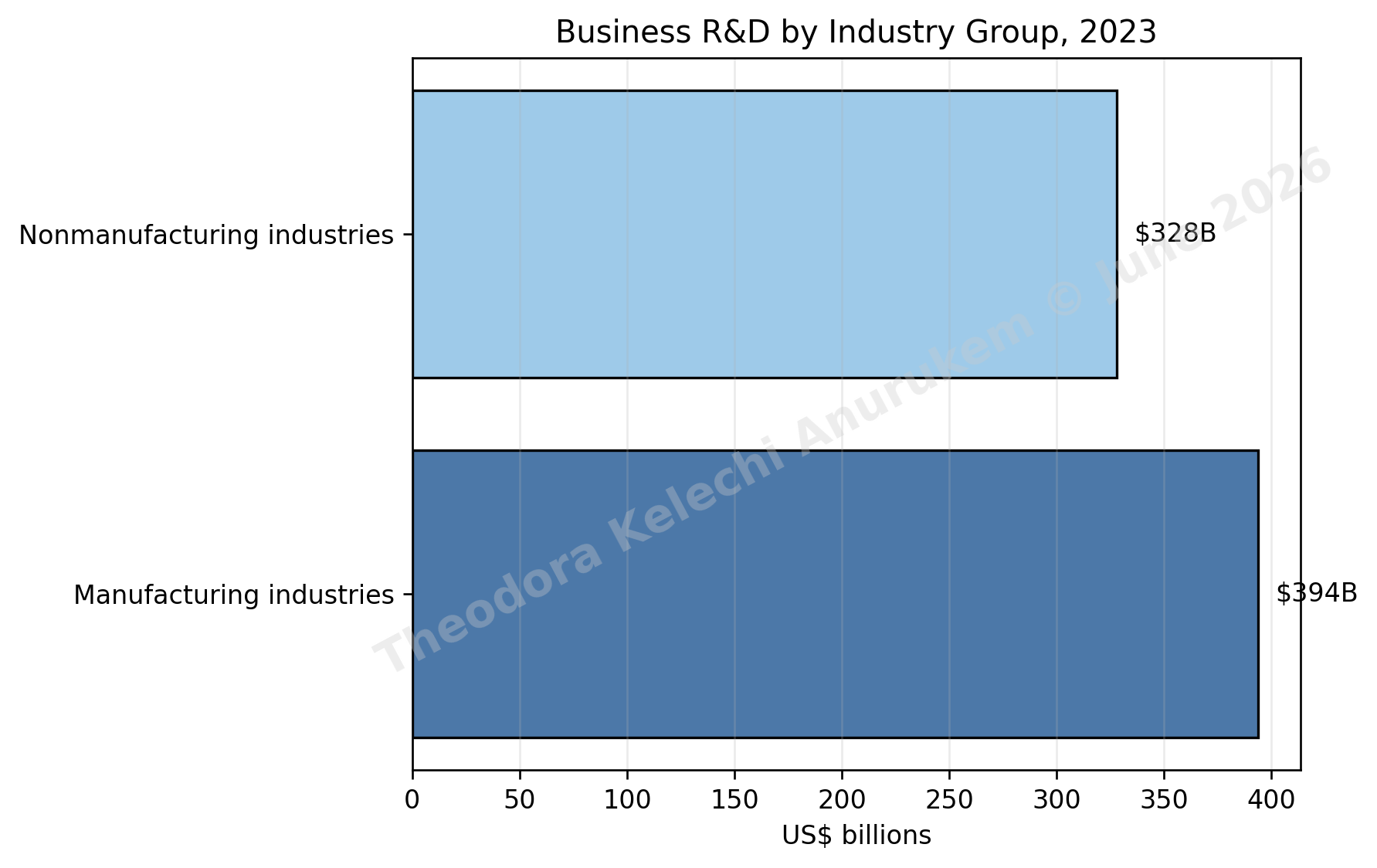
Figure 3. Business R&D by industry group, 2023. Source: NCSES Business Enterprise Research and Development data.
Copyright © June 2026 Theodora Kelechi Anurukem. Original figure prepared for NYCAR doctoral research publication.
Table 1. U.S. intellectual-property case-study matrix.
| Case | IP issue | Strategic-management lesson |
| Google v. Oracle | Copyright and software interoperability | Reusable interfaces may carry innovation value, but copying needs documented purpose and market analysis. |
| Warhol v. Goldsmith | Copyright, fair use, and licensing markets | Creative reuse should be reviewed by purpose, market, and commercial use, not by artistic confidence alone. |
| Amgen v. Sanofi | Patent enablement and claim breadth | Broad claims require deep teaching; portfolio strength depends on evidence, not ambition alone. |
| Thaler v. Perlmutter | AI output and human authorship | Human contribution must be documented when AI assists creative production. |
| USPTO AI inventorship guidance | AI-assisted invention | AI use does not automatically defeat patentability, but significant human contribution remains central. |
Copyright © June 2026 Theodora Kelechi Anurukem. Original table prepared for NYCAR doctoral research publication.
The analysis is conducted through three lenses. The legal lens asks what the case or official source actually says. The strategic lens asks what a firm, university, public agency, or investor should learn from it. The governance lens asks what records, controls, incentives, and review routines should change inside the institution. This three-lens method prevents the paper from drifting into abstract commentary. Every legal point is translated into management practice.
Case selection logic
The case studies were selected because they expose different parts of the IP-management problem. Google v. Oracle concerns software interfaces, fair use, and platform competition. Warhol v. Goldsmith concerns creative reuse, licensing markets, and commercial purpose. Amgen v. Sanofi concerns patent breadth, enablement, and life-sciences claiming strategy. Thaler v. Perlmutter concerns AI output and human authorship. The USPTO’s AI-assisted inventorship guidance concerns human contribution to invention. The Copyright Office’s AI report concerns training data, licensing, and generative AI risk. Together, these sources form a practical case set for the knowledge economy.
The cases are not treated as slogans. Google is not reduced to a victory for software freedom. Warhol is not reduced to a defeat for creativity. Amgen is not reduced to a technical patent lesson. Thaler is not reduced to a simple anti-AI rule. Each case is read through the question that matters to management: what decision should an institution make before a similar dispute arises?
Public data are used to establish context. NCSES data show the scale and concentration of U.S. R&D investment. WIPO reporting shows global filing pressure and the continuing importance of patent and design systems. USPTO reporting and guidance show the operational role of the U.S. patent and trademark system. The public-data figures in this paper are used carefully. They do not claim to predict litigation. They describe the economic and institutional setting in which IP strategy now operates.
Limits
The study has limits. Public court records do not reveal every business motive behind litigation. Public data do not show the quality of every patent, the value of every license, or the true internal cost of every dispute. Official guidance can change. AI-related law is still developing. The model proposed here is a diagnostic tool, not a substitute for counsel, valuation experts, technical specialists, or board judgment.
These limits do not weaken the paper; they discipline it. A serious doctoral paper should not pretend that public evidence can answer private questions with final certainty. It should show how leaders can reason better under uncertainty. That is the purpose of the method.
The research also avoids rhetorical praise of innovation. Innovation can create value, but it can also create exclusion, surveillance, dependency, price pressure, and disputes over access. IP strategy must therefore balance protection with use, secrecy with collaboration, and enforcement with reputation. This is the tone used throughout the paper.
Reading cases as management evidence
A legal case is not only a dispute between parties. It is a public record of managerial choices. Behind every IP case there are decisions about what to build, what to copy, what to license, what to disclose, what to claim, what to enforce, and what risk to accept. The court decides legal questions, but managers should read the case for the choices that made the dispute possible. This is the reason the paper treats Google, Warhol, Amgen, Thaler, USPTO guidance, and Copyright Office reporting as evidence for management practice, not only doctrine.
Case analysis also protects the paper from overgeneralisation. It is easy to say that firms need stronger IP strategy. It is more useful to show how a software interface dispute differs from an antibody enablement dispute, how AI authorship differs from AI-assisted inventorship, and how creative reuse differs from software interoperability. The differences matter. They prevent the paper from offering one flat answer to every IP problem.
Data as context, not decoration
The public data figures in the paper are included to show scale and pressure. R&D spending, business development expenditure, manufacturing concentration, and global filing growth are not decorative charts. They show why IP management deserves doctoral attention. The knowledge economy is not a metaphor. It is a measurable investment system, and the protection or misuse of knowledge assets can shape corporate value, national competitiveness, and public access.
At the same time, the paper avoids turning data into false authority. A chart showing R&D spending does not reveal the quality of a firm’s patent claims. A WIPO filing trend does not prove that every filing is valuable. A case-study score in this paper is an author-developed diagnostic, not an official court or government rating. This separation of public fact and author interpretation is central to the study’s reliability.
Why no private field data is claimed
The paper does not pretend to have private access to corporate files. That restraint is important. Fabricated field claims would weaken the publication. Instead, the paper uses public legal and institutional evidence with discipline. A doctoral work can be strong without confidential data when its reasoning is transparent and its conclusions remain proportionate to the sources used.
Future research could add interviews with counsel, R&D leaders, licensing executives, university technology-transfer officers, and founders. It could also test the Intellectual Property Strategic Value Function against real portfolios. Those future possibilities do not reduce the value of the present study. They show that the paper creates a base for further empirical work.
Documentary research as professional discipline
Documentary research can be weak when it simply summarises sources. It becomes stronger when it reads documents against practical questions. A Supreme Court opinion is not only a statement of law; it is a signal about future transaction costs. A USPTO guidance document is not only administrative material; it is an instruction to inventors, counsel, and firms about how records should be kept. An R&D data release is not only statistical reporting; it is evidence of the scale at which knowledge is being produced and therefore the scale at which IP governance matters.
The paper’s research design therefore treats each source as part of a decision environment. A source is included because it can help leaders make better choices. Sources that are famous but not useful to the management argument are avoided. This keeps the work lean even while it remains doctoral in depth.
Case selection and sector spread
The selected cases span software, visual art, biotechnology, AI authorship, and agency guidance. That spread is necessary. A paper limited to patents would miss copyright and AI. A paper limited to copyright would miss life-sciences claiming and trade-secret substitution. A paper limited to AI would miss the larger commercial discipline of IP management. The cross-sector method makes the argument more useful to different organizations.
The spread also prevents legal tunnel vision. Executives rarely manage one IP type in isolation. A technology firm may hold patents, copyrights, trade secrets, data rights, trademarks, and contractual restrictions at the same time. Case diversity reflects that reality.
Public sources and verification ethics
The ethical use of public sources matters. This paper relies on sources that can be checked: court opinions, agency guidance, R&D statistical reports, and institutional publications. It does not invent interviews, internal documents, or proprietary figures. This discipline matters for NYCAR-style research because credibility depends on what the writer can prove. A polished claim that cannot be verified weakens the entire publication.
The same principle applies to charts. Public-data charts in the paper identify their source. Author-developed diagnostic charts identify themselves as diagnostic. This distinction protects the reader from mistaking an original management tool for official government data. It also protects the candidate’s authorship by making clear where the interpretation begins.
Verification is a scholarly habit and a management habit. The same care that protects an academic paper also protects an IP portfolio. Records, sources, dates, contribution, and authority matter in both settings.
Chapter 4: Patents, Scope, Enablement, and Competitive Position
Patents as disciplined disclosure
A patent is sometimes described as a monopoly, but that language hides the bargain at its core. The inventor receives a limited right to exclude in exchange for public disclosure. The quality of that disclosure matters. A patent that claims more than it teaches may look powerful in a portfolio until challenged. A narrow patent may appear modest but still protect a product, attract investment, or support licensing when its claims fit the market. Strategic patent management therefore begins before filing. It begins with a disciplined choice about what the organization can prove, what it should disclose, what rivals can design around, and what future product pathway the claim should protect.
Amgen v. Sanofi is a central U.S. case for this point. The Supreme Court held that broad functional antibody claims must be enabled across their full scope, not presented as a research assignment for others to complete. For strategic management, the lesson reaches beyond biopharmaceutical drafting. Claim breadth is not free. The wider the claim, the heavier the burden of teaching. A company that pursues maximal exclusion without adequate disclosure may gain temporary confidence but lose the asset when enforcement tests it.
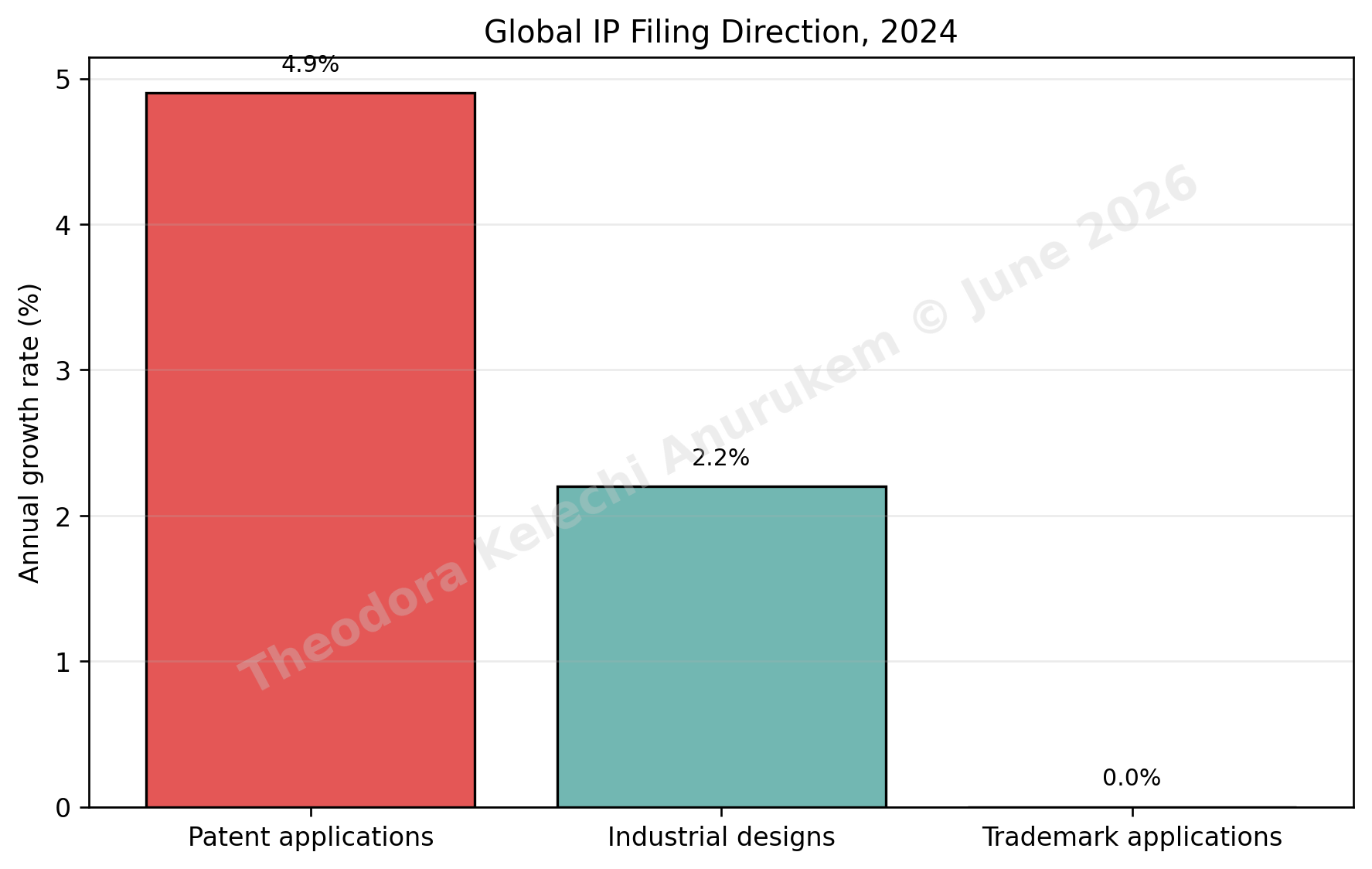
Figure 4. Global IP filing direction, 2024. Source: WIPO World Intellectual Property Indicators 2025.
Copyright © June 2026 Theodora Kelechi Anurukem. Original figure prepared for NYCAR doctoral research publication.
Patent strategy should therefore distinguish between invention capture and invention overreach. Capture records the real technical contribution and protects the commercial pathway. Overreach claims a territory the organization has not taught or cannot defend. The difference is not only legal. It is managerial. Overreach can distort R&D incentives, invite litigation, mislead investors, and create a false sense of security. Careful claim strategy may look less dramatic, but it often survives better.
Freedom to operate
Freedom to operate is as important as ownership. A firm may own patents and still be blocked by the rights of others. A start-up may have an attractive invention but lack clearance for manufacturing, distribution, software integration, data use, or brand naming. A pharmaceutical or medical-device company may spend years developing a product only to find that a crowded patent field raises licensing costs or delay. A strategic IP program maps both the assets owned and the rights that stand in the way.
This is where management and counsel must work together. Technical teams often see a solution. Legal teams see claims. Commercial teams see customers. Finance sees capital risk. Strategy requires those views to meet early enough to affect design. Freedom-to-operate review should not be a last-minute gate just before launch. It should influence research direction, partner choice, acquisition diligence, product design, and pricing.
The problem is more difficult in fields with cumulative innovation. Software, AI, semiconductors, life sciences, clean energy, and connected devices all depend on prior layers. In those fields, exclusion can protect investment but also block improvement. Strategic patent managers must know when to enforce, when to license, when to cross-license, when to join standards, and when to use defensive publication. The strong institution is not the one that files the most. It is the one that knows why each right exists.
Portfolio quality
Patent counts can flatter weak strategy. A large portfolio may impress outsiders, but it may also contain low-value claims, expired relevance, uncertain ownership, narrow coverage, or assets unrelated to current business. Portfolio quality depends on fit. Does the patent protect the product roadmap? Does it support licensing? Does it deter entry? Does it strengthen fundraising? Does it help negotiate with partners? Does it survive likely invalidity pressure? Does it protect a jurisdiction that matters?
A mature portfolio has tiers. Some patents protect core products. Some preserve bargaining use. Some support licensing. Some are defensive. Some should be abandoned because maintenance cost exceeds likely value. The willingness to abandon weak rights is a sign of strategy, not neglect. It shows that management sees IP as a living asset base rather than a trophy cabinet.
Patent governance should also include invention disclosure routines. Scientists, engineers, designers, and product teams need a clear route for recording invention, dates, contributors, laboratory notebooks, code repositories, AI assistance, prototypes, and decision points. The patent application can only be as strong as the institution’s evidence record. Evidence is the quiet discipline beneath IP value.
Patent timing and disclosure discipline
Patent timing can decide value. A team that publishes too early may destroy novelty. A team that files too early may lack the evidence needed to support meaningful claims. A team that files too late may lose priority or allow rivals to shape the field. Timing is therefore a managerial decision, not only a legal calendar. The best research organizations train scientists and product teams to recognize invention points, report them quickly, and coordinate publication with protection strategy.
This is especially important in universities and research hospitals, where publication culture and patent culture may pull in different directions. Academic recognition rewards disclosure. Patent value may require controlled timing. The solution is not to silence researchers. The solution is to build a clear review process that protects publication while preserving protectable inventions. A serious institution can do both if the process is trusted and timely.
Continuation strategy and market learning
Patent strategy also continues after the initial filing. Continuation practice, claim adjustment, divisional filings, and international decisions allow the portfolio to respond to technical and market learning. A company may discover that the original commercial route has changed, that competitors are designing around claims, or that a narrower but better-supported claim will be more valuable than a broad and vulnerable one. The portfolio should evolve with evidence.
This does not mean endless filing. Continuations can become expensive and unfocused when they are used without strategic discipline. The question is whether each filing supports a credible product, platform, license, or defensive position. Portfolio review should include technical relevance, market relevance, jurisdictional relevance, and enforcement reality.
Patents and bargaining power
Patents often function as bargaining tools. They may support cross-licensing, joint ventures, acquisitions, standard-setting participation, or settlement. In technology markets, freedom to operate can depend on a firm’s ability to negotiate from a position of credible ownership. This makes portfolio design relational. The value of a patent may depend on who the firm must negotiate with and what alternatives exist.
Boards should therefore ask how the patent portfolio affects bargaining power. Does it help the firm enter standards discussions? Does it protect against exclusion? Does it support due diligence in acquisition? Does it attract strategic partners? Does it allow licensing without giving away core know-how? A patent that answers none of these questions may still be legally valid, but its strategic value may be thin.
Patent strategy and product truth
A patent portfolio should be tested against product truth. What product does it protect? Which claim covers the most defensible commercial feature? Which competitor pathway is blocked? Which pathway remains open? Which claims would matter in a license negotiation? Which rights would survive if a challenger attacked validity? These are uncomfortable questions because they force the organization to compare legal confidence with market reality.
Product truth also changes with time. A patent filed around an early technical direction may become less relevant after the product pivots. A claim that seemed peripheral may become important when the market shifts. Portfolio review should therefore be tied to product strategy, not only annuity dates. Renewal fees should be paid because the asset still matters, not because no one wants to decide.
Enablement and scientific honesty
Enablement doctrine encourages scientific honesty. A patent should not claim an entire field while teaching only a small corner. This is not only a legal requirement. It is an ethical and strategic discipline. Overbroad claims can deter research by others, invite costly disputes, and damage the credibility of the claiming institution. The better practice is to align claim scope with genuine contribution and then keep developing evidence as the science matures.
Life-sciences leaders should take this seriously. The market pressure to build broad exclusivity can be intense, especially where investment is high and product cycles are long. Yet the same pressure can tempt firms into claims that look strong before they are tested. A serious board should prefer enforceable strength over impressive breadth.
Patent strategy in start-ups and mature firms
Start-ups and mature firms use patents differently. A start-up may use patents to attract investment, signal technical seriousness, protect a narrow product route, or strengthen acquisition value. A mature firm may use patents to defend market share, support cross-licensing, shape standards, or manage competitor pressure. The same patent can therefore have different strategic meanings depending on the institution that holds it.
This difference should affect governance. A start-up needs early clarity about assignment, provisional filings, founder contributions, employee inventions, and investor representations. A mature firm needs portfolio pruning, claim mapping, competitor monitoring, and coordination with product strategy. Both need discipline, but the discipline is applied differently.
The mistake is to copy the patent behavior of another organization without understanding its market position. A start-up that files broadly without funds to prosecute and defend may waste scarce capital. A mature firm that underfiles in a contested field may lose bargaining power. Strategy begins with context.
Read also: Strategic Branding and Intellectual Property in Business
Chapter 5: Copyright, Software, Creativity, and AI-Generated Output
Copyright after software and AI
Copyright has become a strategic-management issue for sectors that once treated it as a concern for publishers, musicians, designers, and media firms. Software platforms, data products, generative AI systems, training datasets, user interfaces, internal manuals, code libraries, visual assets, product documentation, marketing materials, structural drawings in the ordinary legal sense, and digital content now carry copyright questions. The problem is not only ownership. It is use. Firms need to know what they copied, what they licensed, what they trained on, what they generated, what humans contributed, and what markets the use may affect.
Google v. Oracle is central because it placed software interoperability within fair-use analysis. Google copied declaring code from Java API packages to allow programmers familiar with Java to work in Android. The Supreme Court held that the use was fair, emphasizing context, purpose, amount, and market effects. Strategic managers should not read the case as a general permission to copy. They should read it as a lesson in how software reuse, compatibility, developer communities, and innovation markets interact. Interoperability can carry public and commercial value, but the facts matter.
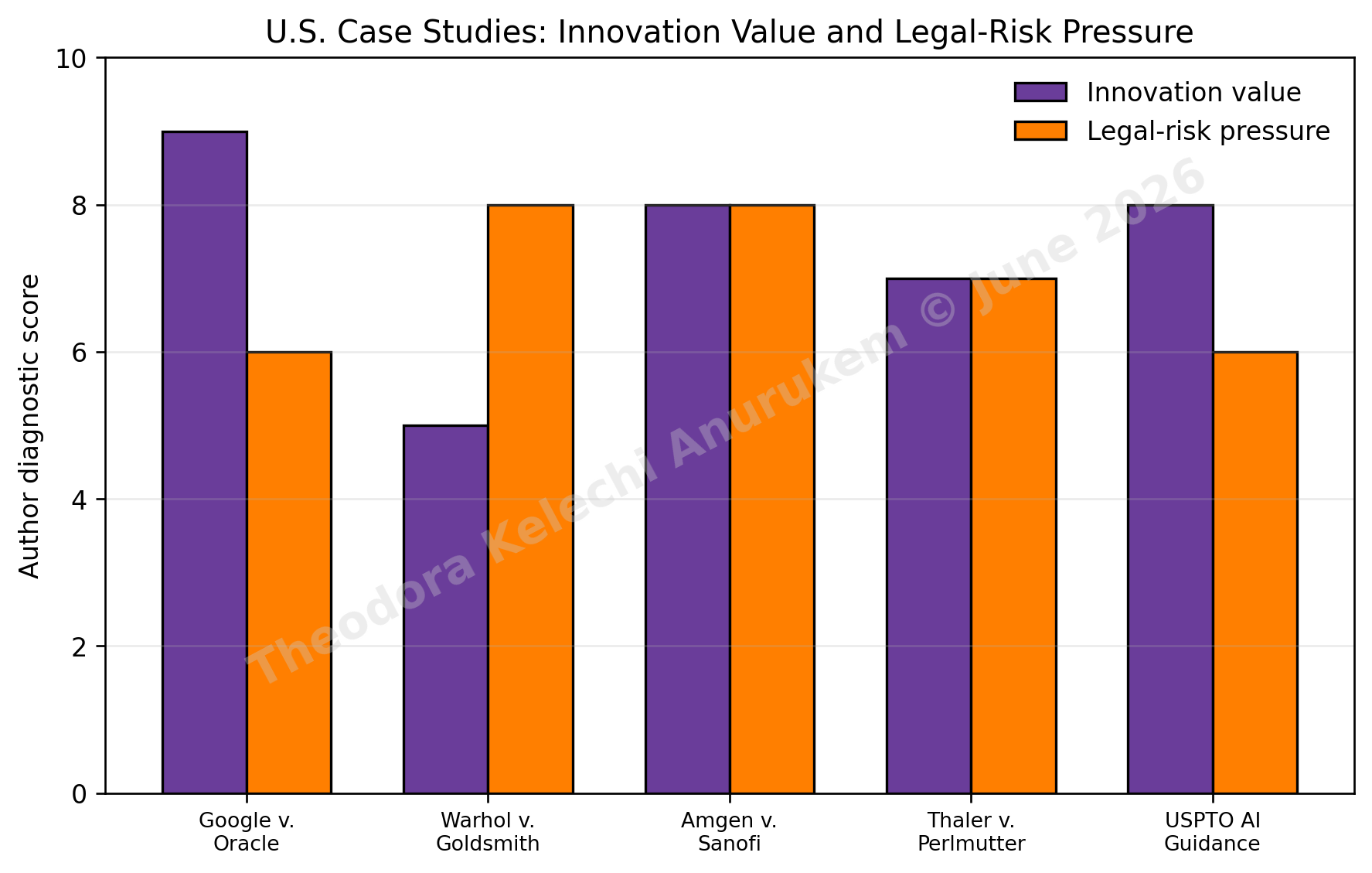
Figure 5. U.S. case studies: innovation value and legal-risk pressure. Author-developed diagnostic chart.
Copyright © June 2026 Theodora Kelechi Anurukem. Original figure prepared for NYCAR doctoral research publication.
The case affects product strategy because platforms often grow by making it easier for others to build. APIs, developer tools, software libraries, plug-ins, and compatibility layers create network effects. If copyright were applied without regard to such realities, innovation could be choked by control over functional interfaces. Yet firms still need licensing discipline. The safe lesson is neither reckless copying nor fear of reuse. The safe lesson is documented purpose, minimal necessary use, technical necessity, and careful market analysis.
Creative reuse and market substitution
Warhol v. Goldsmith gives a different warning. The Supreme Court rejected a broad fair-use claim involving a Warhol image based on Lynn Goldsmith’s photograph of Prince, focusing on the specific commercial licensing use before the Court. The managerial lesson is that transformation as a word is not enough. A company, museum, publisher, advertising agency, or platform must ask what use is being made, what market the use enters, and whether the new work competes with a licensing market that matters to the rights holder.
This is especially important for brand campaigns, creator partnerships, social-media content, documentary production, product packaging, and AI-generated visual material. A design team may believe a use is artistically different while the market sees the same commercial purpose. A marketing department may treat internet culture as raw material while the law sees protected expression. A publisher may believe a derivative work is commentary while the licensing context tells a different story. Strategy must read purpose in market terms, not only in creative terms.
The best organizations do not wait for litigation to define the boundary. They create rights-clearance records, licensing protocols, creator contracts, image-use rules, training-data policies, and review channels for high-risk creative reuse. That discipline protects creativity. It does not smother it. Strong creators deserve clean rights behind their work.
Human authorship and AI
AI has made authorship records urgent. The Copyright Office and courts have reinforced that copyright protection depends on human authorship. AI-assisted work may still be protectable where human creativity, selection, arrangement, editing, or expressive contribution is sufficient. A purely machine-generated output, without meaningful human authorship, may not carry the protection a company expects. This has direct implications for firms that use AI in advertising, design, publishing, entertainment, software documentation, training content, and product imagery.
A practical AI copyright policy should answer concrete questions. Which tools may staff use? What inputs are prohibited because they are confidential or The further point-party protected? Are outputs reviewed for similarity, factual error, and brand risk? How are prompts, iterations, human edits, and final creative choices documented? Who owns the output under vendor terms? Can the output be registered? Can it be licensed? Can it be defended in a dispute?
Strategic management cannot treat AI as a private productivity toy. Once AI output enters the market, it becomes a rights, reputation, and evidence issue. The institution that keeps a clean human-contribution record will be better positioned than the institution that cannot explain how the work came into being.
Copyright governance inside firms
Copyright governance is often weaker than patent governance because organizations assume that copyright arises automatically. While that is true at a basic level, automatic protection does not solve ownership, authorship, licensing, clearance, registration, infringement, fair use, or AI-output questions. A firm may own some employee-created works but not contractor-created works. It may have permission for a photo in one medium but not another. It may have licensed music for an internal video but not for public advertising. These distinctions can become costly once content scales.
A strategic copyright program should therefore include standard contract terms, rights clearance, asset metadata, registration rules for high-value works, and a review process for public-facing materials. Media, software, education, marketing, consulting, entertainment, health communication, and AI product teams all need copyright awareness. The work should be practical, not theatrical. People need to know what they can use, what they must clear, and what records they must keep.
AI supply chains and downstream use
Generative AI adds a supply-chain problem to copyright. Training data, model weights, prompts, outputs, filters, retrieval systems, fine-tuning, and user-facing products can all raise rights questions. A company may not control every layer. It may use a vendor model, open-source model, proprietary dataset, public internet data, licensed content, or internal archives. Each layer carries different contractual and legal risk. Strategic management must map these layers before the product reaches market.
The U.S. Copyright Office’s AI report matters because it treats training data and market effects as serious issues. Firms should not assume that all training is safe or that all training is infringing. The law is fact-sensitive. A wise company prepares for that uncertainty by documenting data sources, license terms, opt-out processes, filtering measures, output testing, and human review.
Creative teams and legal courage
Creative teams sometimes experience IP review as obstruction. That reaction is understandable when legal review is slow, vague, or overly cautious. The remedy is not to remove review. The remedy is to make review practical and early. A designer should know when a reference image is dangerous. A copywriter should know when song lyrics, celebrity likeness, or trademark use needs clearance. A product team should know when generated content needs similarity review. Early legal guidance protects creative courage because it prevents a strong campaign from being killed late.
The best creative organizations treat rights discipline as part of craft. They create original work, clear what must be cleared, credit when required, and negotiate when the market value justifies it. That approach is more serious than borrowing loosely and hoping the dispute never arrives.
Software reuse and internal controls
Software teams often move faster than rights-review systems. Developers import libraries, reuse snippets, copy documentation patterns, and rely on open-source packages. These practices can be efficient and entirely legitimate, but they require controls. An organization should know which components are used, which licenses apply, whether copyleft obligations are triggered, whether attribution is required, and whether security risks accompany the component.
The lesson from software cases is not to slow engineering with unnecessary fear. It is to make rights review part of engineering hygiene. Automated dependency scanning, approved repositories, legal guidance for license categories, and escalation for unusual components can protect speed while reducing risk.
AI output and customer-facing risk
AI output creates particular risk when it faces customers, investors, regulators, or the public. A generated image, product description, training module, code sample, or marketing claim can create copyright, trademark, false advertising, privacy, and reputational issues. Internal experimentation is different from public release. The review standard should rise when output leaves the organization.
This distinction helps firms use AI responsibly. Staff can experiment, but public use should require human review, rights checks, factual confirmation, and brand approval. The company should be able to explain who approved the work and why it was safe to use.
Copyright in education and corporate training
Education and corporate training create their own copyright issues. Course materials, slides, manuals, videos, diagrams, AI-generated summaries, case studies, and assessment instruments can all carry ownership questions. Universities and training firms need clear terms for faculty, contractors, guest lecturers, and platform vendors. The problem is not only infringement. It is future reuse. Who may update the material? Who may license it? Can it be sold? Can it be used in another program?
This is especially relevant for institutions that build online programs. Digital delivery multiplies reuse. A lecture recorded for one cohort may be repurposed for another. A consultant’s slide deck may become part of a commercial course. AI may summarize readings or generate practice exercises. Without clear agreements, successful educational content can become legally tangled at the moment it becomes most valuable.
A strategic copyright policy in education should therefore address authorship, work-made-for-hire terms, moral expectations, reuse rights, platform permissions, student submissions, and AI assistance. The aim is to make knowledge usable without exploiting contributors.
Chapter 6: Trademarks, Brand Trust, Trade Secrets, and Talent Mobility
Trademark as memory under discipline
Trademarks protect source identification, but their strategic value comes from disciplined memory. A mark becomes valuable when customers connect it with consistent quality, origin, experience, and expectation. Registration helps, but registration does not create trust by itself. A weak product can damage a strong mark. A confusing licensing arrangement can weaken distinctiveness. Poor quality control in franchising or brand extension can erode meaning. Trademark strategy therefore belongs with brand management, product governance, customer experience, and legal control.
The American marketplace is crowded with names, marks, logos, slogans, product shapes, digital icons, app identifiers, domain names, hashtags, and influencer-led brand signals. A company choosing a mark must assess distinctiveness, clearance, class, foreign expansion, consumer confusion, platform handles, search visibility, and cultural meaning. A legal clearance that ignores market meaning is incomplete. A marketing choice that ignores legal conflict is dangerous.
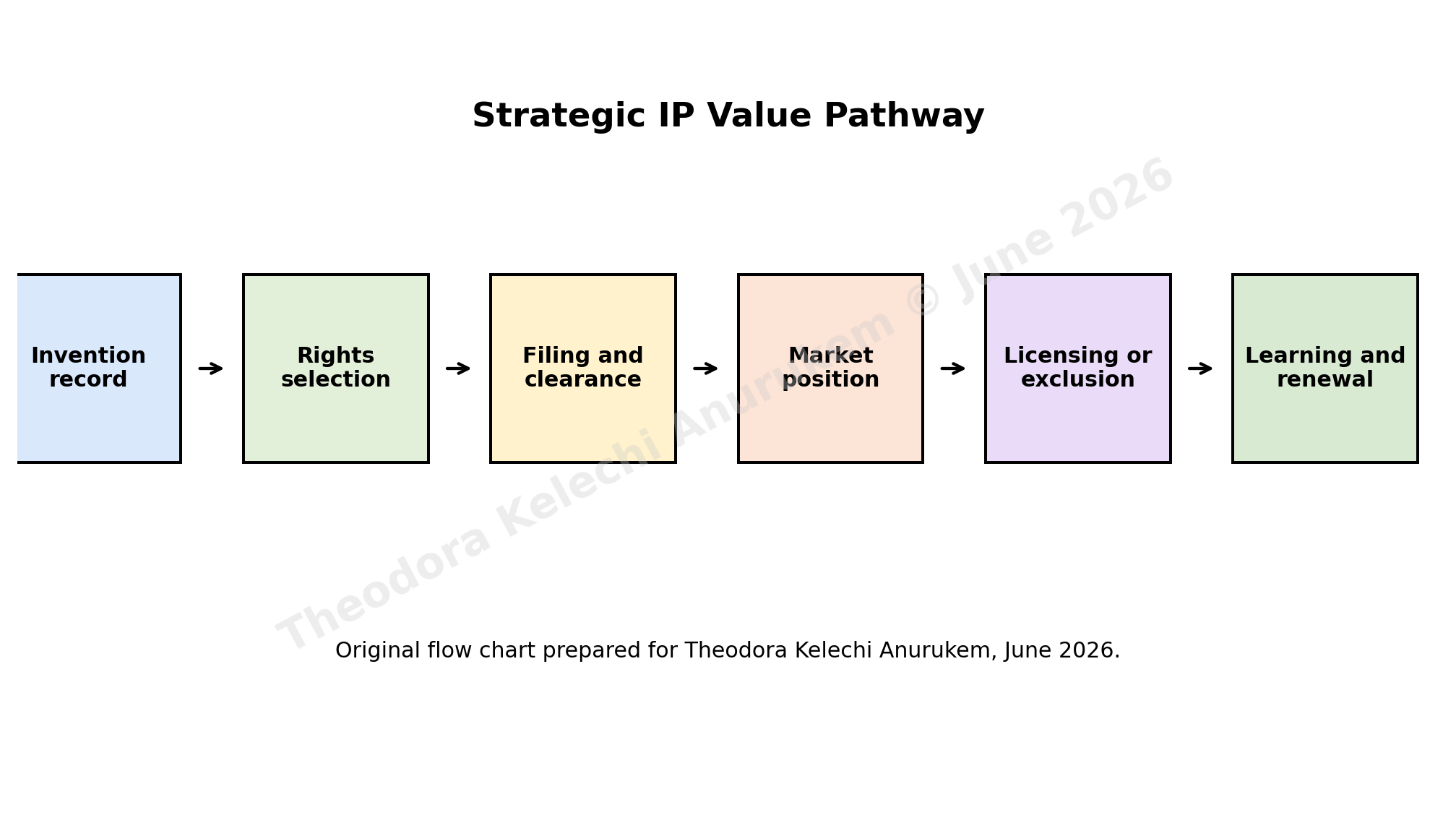
Figure 6. Strategic IP value pathway. Author-developed flow chart.
Copyright © June 2026 Theodora Kelechi Anurukem. Original figure prepared for NYCAR doctoral research publication.
Trademark management also requires policing with judgment. Failure to police can weaken rights, but overaggressive enforcement can damage public goodwill. Small creators, commentators, fan communities, repair businesses, and comparative advertisers may trigger different responses. The strongest brand owner knows when to send a letter, when to license, when to tolerate, when to educate, and when public backlash would cost more than the alleged misuse.
Trade secrets and internal trust
Trade secrets are often the most practical form of protection for information that should not be disclosed: algorithms, formulas, manufacturing processes, customer data, pricing methods, product roadmaps, training data, supplier terms, source code, research notebooks, and negative know-how. The legal requirement is not magic. The organization must take reasonable measures to keep the information secret. That means access control, confidentiality agreements, data security, onboarding and exit routines, vendor rules, lab discipline, and evidence of secrecy practice.
Trade-secret strategy also depends on culture. Employees must understand what is confidential and why it matters. Excessive secrecy can damage collaboration; weak secrecy can destroy value. A company that labels everything secret trains staff to ignore labels. A company that labels carefully builds respect for the few things that truly matter. The managerial task is precision.
Talent mobility complicates trade-secret protection. Employees carry skill and memory; the law does not allow firms to own a person’s general knowledge. The FTC’s noncompete rule was stopped by a district court and later the agency moved to dismiss its appeal, leaving the national rule unenforceable. Even without a broad federal ban in effect, employers face a changing legal and political environment. The strategic answer is not to trap people. It is to protect specific confidential information through reasonable, well-documented measures while building a workplace people do not want to leave.
Brand trust and confidential knowledge
Trademarks and trade secrets meet in brand trust. A company may publicly promise quality while privately depending on confidential processes that allow that quality to exist. A restaurant chain may protect recipes and supplier systems. A technology firm may protect algorithms and training data. A life-sciences company may protect manufacturing know-how. A luxury brand may protect sourcing and craftsmanship methods. In each case, IP protection supports the promise only if operations keep the promise.
The danger appears when law becomes a substitute for performance. A firm may sue aggressively to protect a mark while customers are already leaving because the experience has declined. A firm may protect a trade secret while failing to invest in talent, data security, or product renewal. In those cases, IP enforcement becomes defensive theater. Strategic management asks whether the protected asset still supports a live market advantage.
The stronger path is integrated governance. Brand, legal, product, security, HR, and commercial teams should share enough information to know what must be protected and why. A mark, a secret, and a product promise should not live in separate rooms.
Distinctiveness and strategic naming
Naming is a strategic act. A product name can be memorable, legally weak, culturally insensitive, difficult to search, hard to translate, or already crowded by similar marks. The strongest naming process brings brand, legal, product, and market teams together before public launch. It tests distinctiveness, customer meaning, class coverage, domain availability, platform handles, foreign expansion, and confusion risk. A rushed name can become expensive when rebranding becomes necessary.
Trademark clearance should not be treated as a late-stage formality. By the time packaging, campaigns, websites, investor decks, and customer memory have formed, a name becomes emotionally and financially hard to change. Early clearance is cheaper than public correction. A company with mature brand governance understands that legal availability and brand meaning must be tested together.
Trade-secret boundaries
Trade secrets require boundaries. The firm must know which information deserves secrecy and which does not. Overclassification creates fatigue. Underclassification creates leakage. The most valuable secrets should be identified, marked, access-limited, and reviewed. Staff should understand the difference between general skill and protected confidential information. Vendors should receive only what they need. Departing employees should leave with dignity and clarity, not threats that invite resentment.
Reasonable measures are both legal and cultural. Passwords, access logs, NDAs, clean-room procedures, compartmentalisation, and security policies matter. So do trust, leadership, and fair treatment. People protect what they understand and respect. An organization that treats employees poorly should not be surprised when confidentiality culture weakens.
Mobility, competition, and renewal
The changing status of noncompete restrictions makes renewal more important. A firm cannot depend on locking talent in place. It must build systems that protect specific secrets while allowing people to work, grow, and contribute. That means better documentation, better access control, stronger project handovers, and a workplace capable of retaining talent through purpose, pay, respect, and opportunity.
This approach is also better for innovation. Knowledge work depends on movement, collaboration, and learning. Excessive restriction may protect a company temporarily while weakening the broader ecosystem that supplies talent and ideas. Strategic management must protect secrets without suffocating the human mobility that makes innovation possible.
Quality control and licensing
Trademark licensing can create revenue and reach, but it also creates quality-control duties. A brand owner that licenses without oversight can weaken the meaning of the mark. This is not a technical concern only. Customers experience licensed goods as part of the same brand world. Poor licensing can make a strong mark feel careless. Strategic licensing therefore needs audit rights, product standards, termination rights, and brand-use rules.
The same is true for co-branding. A partnership may look attractive because it borrows another audience, but it can also import another organization’s controversy, quality problem, or cultural misfit. Brand and legal review should ask whether the partnership strengthens the mark’s meaning or only creates short attention.
Secrecy and digital systems
Trade-secret protection now depends heavily on digital systems. Remote work, cloud storage, shared drives, contractor access, AI tools, and collaboration platforms make information easier to move. A company may have strong NDAs and weak access logs. It may have a policy against disclosure while allowing confidential files to sit in open shared folders. Legal language cannot compensate for poor information security.
Security teams therefore belong in IP governance. Trade secrets are not protected by contracts alone. They are protected by technical controls, audit trails, employee education, and fast response when access changes. A resignation, vendor change, or product launch should trigger review of who can see what.
Trade secrets in collaborative research
Collaborative research creates special trade-secret risk. Universities, hospitals, firms, government agencies, and contractors may share data, prototypes, methods, or early findings. Collaboration is valuable, but it can blur confidentiality. Before information is shared, the parties should know what is confidential, who may access it, whether publication is restricted, how long secrecy lasts, and what happens if a collaborator develops related work independently.
The best collaborations make these terms clear without destroying trust. A contract written like a threat can damage scientific cooperation. A vague handshake can destroy value. The middle path is disciplined candor: define the protected information, identify permitted uses, set review timelines, and preserve room for publication where public or academic missions require it.
This is another place where IP strategy becomes management. The legal document should support the relationship, not replace it. Good collaboration needs both trust and boundaries.
Chapter 7: U.S. Case Studies in IP Strategy and Corporate Judgment
Google v. Oracle: interoperability as strategic design
Google v. Oracle teaches that software IP cannot be managed without understanding developer ecosystems. The dispute concerned Java API declaring code used in Android. The Supreme Court treated the use as fair on the facts before it. For strategic management, the case warns against simplistic rights thinking. Oracle owned valuable software assets. Google sought developer familiarity and platform growth. The Court’s analysis placed the copied material, purpose, amount, and market effect inside a broader innovation setting. A company operating in software should therefore examine not only what is owned but how control affects adoption, compatibility, and follow-on development.
The case also matters to contract strategy. Firms that depend on APIs, SDKs, open-source components, or developer communities should define permissions early. Ambiguous reuse can become expensive later. Clear licenses can build ecosystems. Overcontrol can slow adoption. Undercontrol can lose bargaining power. The strategic question is not whether openness or exclusion is always better. The question is what mix supports the product’s position.
For U.S. technology companies, the practical lesson is a governance habit: document the reason for reuse, identify minimum necessary code, review licenses, assess interoperability purpose, and test market harm. This should happen before launch, not during litigation discovery.
Warhol v. Goldsmith: creative transformation and market purpose
Warhol v. Goldsmith is a warning to firms that rely on remix, reference, appropriation, and visual culture. The Court’s decision did not erase fair use, but it made commercial purpose and licensing-market conflict harder to ignore. A media company, fashion brand, entertainment platform, or advertising agency should not assume that a new aesthetic automatically defeats infringement risk. The commercial use matters.
This case is especially relevant to AI-supported creative work. If a marketing team generates images resembling a photographer’s style, or a platform trains on protected works and produces outputs that compete in licensing markets, the organization may face a market-based challenge. Fair use remains fact-sensitive. Strategy should not depend on slogans. It should depend on licenses, records, review, and commercial judgment.
The case also has a moral lesson. Creative industries depend on source labor. Photographers, illustrators, musicians, writers, and designers often lack the bargaining power of platforms and large firms. An institution that uses creative work without care may win attention while losing legitimacy. IP strategy should include respect for the labor that makes culture available.
Amgen v. Sanofi: patent ambition and evidence burden
Amgen v. Sanofi teaches that patent ambition must be matched by enabling disclosure. In strategic terms, the case punishes a mismatch between claim scope and demonstrated teaching. A life-sciences company may want broad exclusivity around a class of compounds or antibodies, but the legal system asks whether the patent teaches skilled persons to make and use the claimed range. This has direct consequences for R&D planning. The patent team must work with scientists before filing to decide which data support which claim.
The case also affects investor communication. Broad claims can make a portfolio appear stronger than it is. If the claims are vulnerable, the company’s valuation may rest on legal fragility. Boards should therefore ask not only how many patents exist but which claims carry commercial value and how they would perform under enablement scrutiny.
Strategic patent management after Amgen should favor evidence depth, claim discipline, continuation planning, and honest assessment of what the organization has actually enabled. The strongest patent is not always the broadest patent. It is the one that protects the value pathway and survives challenge.
Thaler, AI guidance, and human contribution
Thaler v. Perlmutter and the USPTO’s AI-assisted inventorship guidance show that human contribution is not a clerical detail. It is central to ownership. Companies using AI in invention, design, content, and research must create records of human selection, problem framing, experimentation, evaluation, and final contribution. Without those records, later claims of authorship or inventorship may become weak.
This is not a reason to avoid AI. It is a reason to govern it. Human teams should use AI as a tool for search, variation, testing, drafting, and analysis while preserving evidence of original human judgment. A clean record protects the asset and supports internal trust. It also helps during diligence, licensing, and litigation.
The AI cases and guidance point toward a new executive question: can the institution explain how its knowledge assets were made? A firm that cannot answer that question is not ready for the next decade of IP strategy.
Case comparison and strategic humility
The cases studied in this paper resist easy lessons. Google supports fair use on a particular software record, not general copying. Warhol narrows a fair-use confidence in a particular commercial licensing context, not all creative transformation. Amgen demands enabling disclosure across claim scope, not timidity in invention. Thaler reinforces human authorship, not hostility to AI tools. These distinctions matter because executives often seek clean rules. IP strategy rarely provides clean rules. It provides disciplined questions.
Strategic humility is not weakness. It is the willingness to recognize that a case does not say more than it says. Many organizations make bad decisions because they turn a favourable case into a slogan. A lawyer’s careful distinction becomes a business team’s careless permission. A court’s narrow holding becomes a product team’s broad assumption. The serious institution maintains nuance even when speed demands simplicity.
From case law to policy
Case law should affect internal policy. After Google, software firms should document interoperability purpose and license review. After Warhol, creative and marketing teams should review commercial purpose and licensing-market conflict. After Amgen, patent teams should align claim breadth with technical teaching. After Thaler, AI-assisted creative teams should document human authorship. After USPTO inventorship guidance, R&D teams should record significant human contribution when AI assists invention.
The policy change should be concrete. A checklist alone is not enough. Staff need training, templates, decision thresholds, named reviewers, and escalation routes. The point is not to create fear. It is to create a workplace where smart people know when a legal question has strategic weight.
The corporate judgment standard
Corporate judgment in IP requires balance. Weak control loses value. Excessive control invites backlash, inefficiency, and regulatory attention. Underinvestment in rights leaves innovation exposed. Overinvestment in filings wastes money and confuses priorities. Litigation can protect markets. Litigation can also drain leadership attention and damage the brand. The executive task is to decide which path protects durable value.
This standard should be built into board oversight. Directors do not need to draft claims or interpret every fair-use factor. They do need to ask whether the company understands its core knowledge assets, whether AI use is documented, whether freedom to operate has been assessed, whether licensing strategy is coherent, and whether IP enforcement aligns with reputation and long-term market position.
Management lessons from litigation posture
Litigation posture reveals strategy. A company that sues immediately may be protecting a core asset or reacting from pride. A company that settles quickly may be avoiding waste or hiding weakness. A company that licenses after conflict may be creating value or conceding dependency. The posture should be examined through business purpose. What is being protected? What market is at stake? What precedent would be set? What evidence would become public? What relationship would be damaged?
The U.S. cases in this study show that litigation can clarify boundaries, but it rarely gives managers the full answer they want. The outcome depends on facts, procedural history, doctrine, and court framing. Strategic leaders should prepare for uncertainty rather than pretending that one case will settle every future dispute.
Building case lessons into governance
The real value of case study lies in operational change. A company reading Google should review software reuse. A company reading Warhol should review creative licensing. A company reading Amgen should review patent support. A company reading Thaler should review AI authorship records. A company reading USPTO guidance should review invention contribution logs. If no process changes after case analysis, the case has become academic theater.
This is why the paper’s case chapter is not a museum of legal decisions. It is a management room. Every case is placed before leaders as a question about their own institution.
Case studies as executive training
The cases in this chapter can be used as executive training materials. Each case should be discussed through a decision question. In Google, what reuse is necessary for compatibility and what permission is required? In Warhol, when does creative transformation enter the same commercial market? In Amgen, how much evidence is needed for the claim being pursued? In Thaler, how should human contribution be recorded? In USPTO AI guidance, how should inventors and counsel treat AI assistance?
Such training should not ask executives to become judges. It should teach them to notice risk early. The value of the case lies in the moment before the dispute: the product meeting, the licensing negotiation, the lab publication decision, the design review, the AI tool approval, the board discussion. That is where better management prevents later damage.
A case becomes useful when it changes behavior. Otherwise it is only a story that intelligent people admired and then forgot.
Chapter 8: Mathematical Model and Diagnostic Tools
The Intellectual Property Strategic Value Function
This chapter proposes the Intellectual Property Strategic Value Function. The model is designed for board, executive, counsel, and innovation-team use. It does not estimate damages, predict litigation outcomes, or replace legal advice. It gives a disciplined way to ask whether an IP asset or portfolio is strategically valuable. The model is useful because IP value is often discussed too vaguely. Teams say a patent is strong, a mark is valuable, or a trade secret is critical without explaining which evidence supports that claim.
The function is expressed as: IPSV = [(0.16C + 0.15E + 0.17M + 0.14F + 0.12S + 0.13L + 0.13T) × A] − R. C is control strength. E is evidence quality. M is market fit. F is freedom to operate. S is speed of capture. L is licensing option value. T is trust consequence. A is asset durability, scored from 0.8 to 1.2. R is residual risk, scored from 0 to 2. Each main variable is scored from 1 to 5. The weights reflect managerial importance rather than official legal valuation.
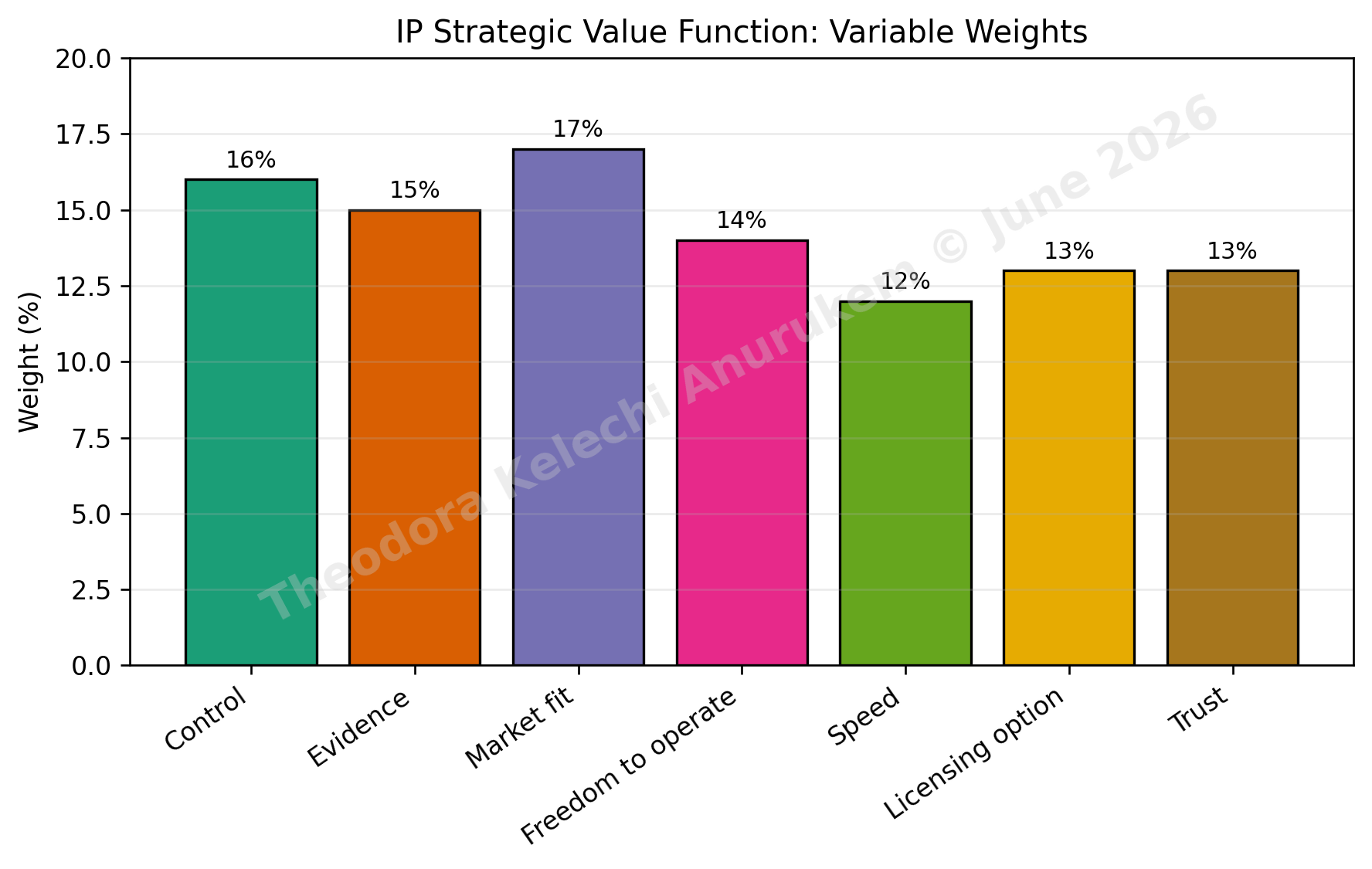
Figure 7. IP Strategic Value Function variable weights. Author-developed diagnostic chart.
Copyright © June 2026 Theodora Kelechi Anurukem. Original figure prepared for NYCAR doctoral research publication.
Table 2. Intellectual Property Strategic Value Function variables.
| Variable | Meaning | Management question |
| C: Control strength | Ownership, assignment, registration, secrecy, and access clarity | Can the institution prove control over the asset? |
| E: Evidence quality | Records of invention, authorship, use, clearance, and contribution | Can the institution show how the asset was created and why it is protectable? |
| M: Market fit | Connection between right and product, service, brand, licensing, or mission | Does the right protect a live value pathway? |
| F: Freedom to operate | Exposure to The further point-party rights and blocking positions | Can the organization use the asset without avoidable infringement risk? |
| S: Speed of capture | Ability to convert the asset into commercial or institutional value | Can value be realised before the asset loses relevance? |
| L: Licensing option value | Usefulness for collaboration, revenue, bargaining, or ecosystem growth | Could licensing create more value than exclusion? |
| T: Trust consequence | Likely effect of secrecy, enforcement, or licensing on legitimacy | Will the IP decision strengthen or damage public trust? |
Copyright © June 2026 Theodora Kelechi Anurukem. Original table prepared for NYCAR doctoral research publication.
Control strength measures whether ownership, assignment, contracts, registration, secrecy, and internal access are clear. Evidence quality measures whether records support invention, authorship, use, secrecy, date, contributor role, and rights clearance. Market fit asks whether the asset protects a real product, service, research pathway, brand position, or licensing market. Freedom to operate measures whether The further point-party rights can block use. Speed of capture reflects how quickly the organization can convert the asset into value. Licensing option value measures whether the asset can create revenue, collaboration, bargaining use, or ecosystem growth. Trust consequence asks whether enforcement or secrecy could damage legitimacy.
Interpreting the score
A high score does not mean a firm should sue. It means the asset deserves senior attention because it has strong strategic value. A medium score may indicate a useful asset with gaps in evidence, market fit, or freedom to operate. A low score may show that the organization is maintaining rights that do not justify cost or management attention. The score should be discussed, not worshipped. Its value lies in forcing leaders to show their assumptions.
Consider a software platform with valuable API documentation, developer tools, and proprietary code. The company may score high on market fit and speed, but lower on freedom to operate if open-source dependencies and The further point-party libraries are poorly documented. The model would not tell the board what the law decides. It would tell the board where governance must improve before the product scales.
Consider a life-sciences patent portfolio around a biologic therapy. The company may score high on control and market fit but lose value if enablement is fragile or freedom-to-operate risks are unresolved. A board using the model would push for claim review, data support, continuation strategy, and licensing assessment before making public valuation claims.
Diagnostic use
The model should be used at acquisition, product launch, research commercialization, licensing negotiation, AI deployment, brand extension, and annual portfolio review. It is especially useful during diligence because it separates legal existence from strategic readiness. A filing may exist, yet the asset may lack assignment records, documentation of human authorship, clear market fit, or enforceable secrecy controls.
The model also protects against the common habit of treating IP as a simple asset count. Counts are easy. Judgment is harder. A small portfolio with strong evidence, clean ownership, and close market fit may be worth more than a large portfolio of scattered filings. A single trade secret protected by disciplined process may be more important than dozens of marginal patents.
The diagnostic should be run with people from law, R&D, product, finance, marketing, security, and strategy. If only lawyers score it, market value may be missed. If only executives score it, legal fragility may be ignored. IP strategy is a cross-functional discipline.
Normalization and weighting discipline
The Intellectual Property Strategic Value Function uses weights because every variable does not carry equal managerial importance in every setting. Market fit receives a high weight because rights disconnected from market value produce little strategic advantage. Control strength and evidence quality also carry high weight because assets without proof become fragile. Freedom to operate is essential because ownership does not guarantee usable freedom. Trust consequence is included because IP decisions can damage legitimacy even when legally available.
The model can be adapted by sector. A pharmaceutical company may increase the weight for evidence quality and freedom to operate. A consumer brand may increase the weight for trust and trademark control. A software platform may increase the weight for licensing option value and interoperability risk. A university may increase the weight for public mission and access conditions. The value of the model is not rigidity. It is disciplined discussion.
Residual risk and asset durability
Residual risk is subtracted because no asset exists in a vacuum. Unclear assignment, pending litigation, weak enablement, open-source uncertainty, public backlash, secrecy gaps, and policy volatility all reduce value. Asset durability adjusts the score because some rights decay quickly while others can sustain value over time. A fast-moving software interface may lose relevance sooner than a strong pharmaceutical patent. A trade secret may endure for decades if secrecy holds. A mark may grow stronger with use if quality control remains sound.
This logic helps managers avoid a common error: valuing all assets by the same horizon. Some IP is tactical, some is strategic, some is transitional, and some is foundational. The review process should identify the horizon before assigning resources.
Using the model in practice
The model should be used in structured discussion. Each variable should be scored by people who understand different parts of the asset. Legal should assess control and risk. Technical teams should assess evidence and contribution. Product and commercial teams should assess market fit. Finance should assess revenue and option value. Brand and public-affairs teams should assess trust consequence. The scoring meeting is as important as the score.
The score should be kept with the asset record and revisited after major events: new litigation, product pivot, acquisition offer, employee departure, regulatory change, license negotiation, or AI tool deployment. IP value changes. A living asset should not be managed with a dead record.
Worked example: AI-assisted design product
A consumer technology firm using AI to design accessories may score high on speed of capture because design variations can be generated quickly. It may score medium on evidence quality if human selection and editing are not recorded. It may score low on freedom to operate if training data and source references are unclear. It may score high on market fit if the designs align with a growing product category. The model would tell management that the asset is commercially promising but evidence and clearance must improve before launch.
The decision that follows is practical. The firm should document human contribution, review outputs for similarity, confirm vendor terms, clear marks and images, and decide whether registration is worthwhile. The model does not replace judgment. It directs judgment to the weak points.
Worked example: university biotechnology invention
A university biotechnology invention may score high on evidence if lab records are strong and inventorship is clear. It may score high on market fit if industry partners are interested. It may score medium on speed because clinical development is slow. It may score high on trust consequence because public funding and patient access will shape public reception. The model would push the university to design licensing terms that preserve public credibility while allowing commercial development.
This example shows why trust is included. A license that maximises short-term revenue may not be the best strategy if it creates access criticism, reputational loss, or political pressure. IP value is not only cash. It is also institutional legitimacy.
Portfolio review and resource discipline
The model can also support portfolio pruning. Many organizations accumulate rights because no one wants to approve abandonment. The result is cost without discipline. Maintenance fees, renewal costs, monitoring, prosecution, and internal attention all consume resources. A yearly review using the model can identify assets that deserve continued investment, assets that need evidence repair, assets that should be licensed, and assets that should be allowed to lapse.
This is not a reduction exercise for its own sake. It is resource discipline. Money spent maintaining weak rights is money not spent protecting core inventions, improving data security, clearing brand risk, or training staff. Strategic management requires the courage to remove clutter.
The model also helps prevent emotional attachment. Teams often love assets they helped create. A structured score introduces distance. It asks whether the asset still serves the institution, not whether it once felt important.
Chapter 9: Governance, Implementation, and Risk Controls
Institutional ownership
IP governance begins with ownership of responsibility. In many organizations, IP decisions are spread across legal, R&D, product, marketing, HR, procurement, cybersecurity, and business development. That spread is unavoidable, but it becomes dangerous when no one owns the whole picture. A patent attorney may know filing status but not product priority. A product manager may know market need but not claim limits. HR may know employee movement but not trade-secret exposure. Marketing may know brand reach but not clearance risk. Senior management must bring these signals into one review rhythm.
The practical answer is an IP strategy council or equivalent review body. The name matters less than the function. The group should review invention disclosures, patent filings, trade-secret controls, brand clearance, licensing opportunities, open-source use, AI tool adoption, data rights, litigation threats, and portfolio pruning. It should include people with authority to move resources. A meeting that cannot change budgets, priorities, or controls becomes ceremony.
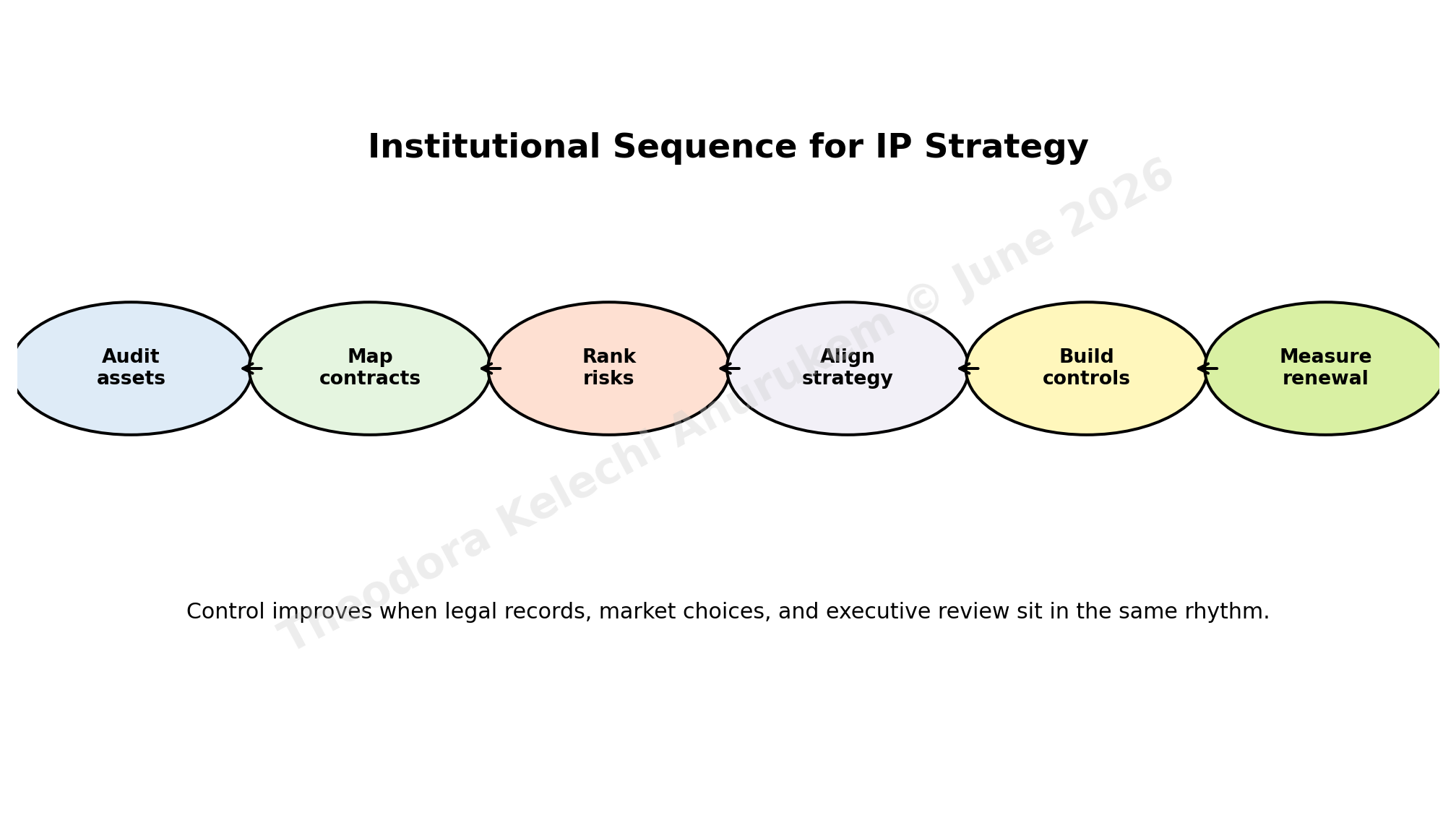
Figure 8. Institutional sequence for IP strategy. Author-developed flow chart.
Copyright © June 2026 Theodora Kelechi Anurukem. Original figure prepared for NYCAR doctoral research publication.
Table 3. Institutional implementation sequence for IP strategy.
| Stage | Action | Publication-ready output |
| Asset audit | Identify patents, marks, copyrights, trade secrets, data rights, contracts, and AI-use records | Verified IP inventory with ownership and risk notes. |
| Evidence repair | Correct missing assignments, contributor records, licenses, secrecy markings, and clearance files | Evidence folder that can support filing, diligence, licensing, or litigation. |
| Strategic ranking | Score assets using the IP Strategic Value Function | Portfolio ranked by market fit, control, risk, and trust consequence. |
| Governance alignment | Create review rhythm among legal, R&D, product, finance, security, HR, and brand teams | Working IP council or equivalent decision process. |
| Commercial pathway | Decide whether to enforce, license, disclose, keep secret, abandon, or partner | Action plan tied to budget, market, and accountability. |
| Learning cycle | Review outcomes after filings, disputes, product launches, and licensing deals | Updated policy, training, and portfolio decisions. |
Copyright © June 2026 Theodora Kelechi Anurukem. Original table prepared for NYCAR doctoral research publication.
The governance rhythm should match the business. A research hospital, a software firm, a university, a pharmaceutical company, and a consumer brand do not need identical routines. They do need clear responsibility, evidence records, escalation triggers, and reporting to senior leadership.
Evidence and records
Evidence is the backbone of IP strategy. Invention records, laboratory notebooks, code commits, design files, authorship logs, AI-use records, prompt histories, source licenses, employee assignment agreements, contributor contracts, vendor terms, secrecy markings, access logs, brand clearance reports, and licensing files determine whether an organization can prove what it claims. Poor evidence turns valuable knowledge into vulnerable knowledge.
AI raises the record burden. Companies should record how AI assisted invention, design, writing, image generation, code production, prior-art search, and market analysis. They should identify human contribution and review. They should also identify inputs that cannot be used because of confidentiality, license restrictions, or rights uncertainty. This is not bureaucracy. It is future proof.
Records should be designed for use. A system that staff cannot use will fail. The best records are clear, short, searchable, and tied to normal work. A scientist should not need a legal degree to file an invention disclosure. A designer should know when external material needs clearance. A software engineer should know where open-source use is logged. A marketer should know when a campaign needs legal review.
Enforcement and restraint
Enforcement is part of IP strategy, but restraint is part of wisdom. Not every infringement deserves litigation. Not every confusing use deserves a public fight. Not every former employee deserves aggressive pursuit. Not every competitor’s design-around deserves complaint. The institution should ask what enforcement will cost, what it will signal, what it will protect, and whether a license or business response would serve better.
This is especially true for universities, health institutions, public-interest organizations, and firms with strong public trust claims. A legally available enforcement option may still be strategically foolish. Litigation can reveal documents, drain leadership attention, provoke public criticism, and harden rivals. The question is not whether the organization can fight. The question is whether fighting protects value.
The strongest IP governance therefore includes exit and settlement discipline. Leaders should know when to stop a weak patent, abandon a marginal registration, settle a dispute, license a technology, or publish defensively. Strategy is not only the courage to claim. It is the judgment to release.
IP governance calendar
Implementation requires a calendar. Annual portfolio reviews are not enough for fast-moving sectors. A quarterly IP strategy review may be appropriate for technology, life sciences, media, and AI-intensive companies. Monthly review may be needed during product launch, major litigation, acquisition diligence, or research commercialization. The review should ask what new knowledge assets have emerged, what risks have appeared, what filings are pending, what licenses are being negotiated, what trade-secret access has changed, and what AI-use issues require record updates.
The calendar should also include training. Staff forget rules that are presented once. Short training tied to actual work is more effective than long abstract sessions. Engineers need examples involving code, prior art, and AI assistance. Designers need examples involving images, fonts, and brand marks. Researchers need examples involving disclosure timing and invention records. Executives need examples involving valuation, diligence, and enforcement reputation.
Acquisition and investment diligence
IP diligence should test evidence rather than accept labels. A company selling itself may present a portfolio as valuable. The buyer should examine assignments, prosecution history, maintenance status, claim relevance, litigation threats, open-source components, key trade secrets, employee agreements, data rights, AI use, and license restrictions. The aim is not to find defects for sport. The aim is to understand what is actually being acquired.
Investors should also ask whether IP supports the company’s business model. A start-up with many filings but weak product-market fit may have less value than a company with fewer rights and stronger market evidence. In some sectors, speed, data, talent, and network effects may matter more than formal rights. In others, formal rights are central. Diligence should fit the business rather than applying a universal checklist.
Crisis readiness
IP crises often arrive suddenly: a cease-and-desist letter, a departing employee, a leaked document, a takedown demand, an AI output controversy, a copied product, a trademark opposition, or a patent infringement claim. Crisis response is better when records already exist. The organization should know who owns the response, where evidence is stored, what public statement is permitted, whether insurance applies, and whether business alternatives exist.
A calm response depends on prior discipline. Firms without records panic. Firms with records decide. This is why governance is not administrative decoration. It is the difference between reaction and judgment.
Policy ownership and board reporting
Board reporting should be concise but meaningful. Senior leaders do not need every filing detail. They need to know the status of core assets, material disputes, major licenses, open-source risk, AI-use exposure, trade-secret incidents, portfolio pruning, and upcoming decisions that require authority. Reporting should show trends, not only events. Are disputes increasing? Are invention disclosures late? Are licenses producing value? Are rights tied to active products? Are secrets protected in practice?
A board that receives this information can ask better questions. It can distinguish a paper-heavy portfolio from a value-producing portfolio. It can insist on evidence repair before acquisition. It can approve litigation with a clear understanding of cost and purpose. It can prevent IP from becoming invisible until crisis.
Training as institutional memory
Training should create institutional memory. Staff turnover can erase IP discipline if knowledge lives only in a few people. Practical training modules, short guides, decision trees, and example-based sessions help new staff inherit the organization’s standards. The goal is not to make every employee a lawyer. It is to make every relevant employee alert to the moment when IP judgment is needed.
The most effective training uses actual scenarios. A researcher preparing a conference paper. A developer importing code. A designer using an online image. A marketer proposing a brand name. A sales team sharing confidential pricing. A manager considering an AI tool. These examples turn policy into usable knowledge.
Public communication of IP decisions
Some IP decisions require public communication. A university licensing a publicly funded health technology, a company enforcing a mark against a small business, or a platform using copyrighted materials for AI training may face public scrutiny. The institution should not wait until criticism arrives before deciding how to explain its choices. Communication should be honest about the reason for protection, the public value of the asset, and the safeguards around access or fairness.
Public explanation is not weakness. It can protect legitimacy. A firm that explains why a trade secret protects safety or quality may be understood differently from a firm that hides behind legal language. A university that explains licensing terms and public-benefit safeguards may preserve trust while commercializing research. The explanation must be grounded in real practice, not slogans.
This is one reason trust consequence appears in the mathematical model. IP strategy is not private even when the right is privately owned. Its use can affect workers, customers, creators, patients, students, competitors, and communities.
Chapter 10: Final Position and Strategic Direction
Intellectual property is no longer a quiet legal file kept at the edge of corporate decision-making. It now sits near the center of modern strategy. In a business world shaped by software, biotechnology, artificial intelligence, creative production, brand power, data, licensing, research partnerships, and platform competition, the assets that often decide value are the ones that cannot be touched by hand. Code, patents, trade secrets, trademarks, research records, product designs, creative works, datasets, algorithms, and brand identity now carry the weight once carried by factories, land, and machinery. A firm that mismanages those assets may still appear successful for a time, but its advantage will be fragile.
The central lesson of this study is clear: intellectual property becomes powerful only when leaders understand it early. It is too late to discover ownership gaps after a product has launched, after a license has been signed, after a partner relationship has broken down, after an AI output has entered commercial use, or after a competitor has challenged a patent in court. Strong organizations treat intellectual property as part of the way they think, plan, build, negotiate, protect, and grow. Weak organizations treat it as paperwork after value has already been exposed.
The cases examined in this paper show why that distinction matters. Google v. Oracle was never just a dispute about lines of code. It raised deeper business questions about software reuse, platform growth, developer communities, interoperability, and the freedom to build without allowing control over technical interfaces to choke progress. Warhol v. Goldsmith was not just a disagreement over an image. It forced creative industries to confront the difference between artistic interpretation and commercial substitution. Amgen v. Sanofi was not only a patent case in biotechnology. It showed that a company cannot claim more than it has actually taught the public how to make and use. The recent disputes over AI authorship and inventorship bring the issue into a new age, where machines may assist creation while the law still demands human responsibility, judgment, and ownership.
These cases do not produce a simple rule. They produce a management warning. Intellectual property disputes often begin long before the lawsuit. They begin when teams fail to document invention, when executives rush partnerships without settling ownership, when engineers use code without clear permission, when creative departments assume style is enough to avoid liability, when researchers make broad claims before the science can carry them, or when companies use AI tools without knowing what those tools may have absorbed, reproduced, or exposed. Litigation is often the visible end of an earlier strategic weakness.
For that reason, leaders must stop treating intellectual property as a defensive service. The legal team remains essential, but the responsibility is wider. Research leaders must keep careful invention records. Product teams must know what they are building on. Marketing teams must protect brand meaning. Technology teams must secure code, data, models, and confidential systems. Finance teams must understand how intangible assets affect valuation. Executive leadership must decide when to protect, when to license, when to share, when to challenge, and when to walk away. Intellectual property belongs to the whole institution because its consequences touch the whole institution.
A serious intellectual property strategy begins with knowledge of what the organization owns. Many firms do not have that knowledge in reliable form. They may know their products, but not the underlying rights. They may know their trademarks, but not the licensing limits attached to older agreements. They may know their patents, but not which ones actually protect revenue. They may know their software stack, but not every dependency inside it. They may know they use AI tools, but not whether confidential information has been placed into systems they do not control. That kind of ignorance is not harmless. It is hidden risk.
The next task is to understand what the organization depends on but does not own. This is where many management failures occur. A company may rely on open-source code, university research, licensed images, third-party datasets, contractor work, employee-created tools, supplier technology, or platform access. Those dependencies may be lawful and useful, but they are not free of strategic meaning. They may limit future commercialization, complicate acquisitions, weaken exclusive control, or create obligations that become painful later. A firm that wants to grow responsibly must know the difference between owned value, licensed value, shared value, and borrowed value.
Intellectual property also forces leaders to think carefully about time. A patent may be strong for a period, but it will not last forever. A trade secret may endure longer, but only if secrecy is actually protected. A brand may carry value for decades, but it can be damaged quickly by poor quality, careless association, or public distrust. A copyright portfolio may generate revenue, but only when rights are clearly managed. Strategic management must match the type of protection to the life of the asset. Not every idea should be patented. Not every asset should be kept secret. Not every creative work should be licensed broadly. The right choice depends on market timing, competitive pressure, technical exposure, and the company’s long-term position.
The AI era makes this discipline urgent. Artificial intelligence can help organizations draft, design, code, test, summarize, analyze, model, and produce at great speed. That speed is useful, but it also creates danger. The faster a company produces work, the easier it becomes to lose control of source material, authorship, originality, confidentiality, and rights clearance. Managers should not ask only whether AI makes work faster. They should ask whether the result can be owned, defended, trusted, and commercialized. A fast output that cannot be safely used is not efficiency. It is a liability waiting for a trigger.
Every organization using AI in creative, technical, legal, research, or commercial work needs a clear internal rule. Staff should know what may be entered into AI systems, what must never be entered, when human review is required, how outputs should be checked, who approves commercial use, and how the organization records the role of human judgment. This is not fear of technology. It is respect for ownership. AI can assist work, but it should not be allowed to dissolve responsibility. In serious institutions, speed must answer to accountability.
Biotechnology and healthcare raise an additional moral burden. Intellectual property protection can support the enormous investment required to discover, test, approve, and deliver medical innovation. Without some protection, many companies would not take the risk. Yet the same protection can become troubling when it limits access, delays competition, or prices patients away from life-changing treatment. Amgen v. Sanofi shows the importance of balance: reward genuine invention, but do not allow claims that reach further than the disclosed science. The public pays a price when patents become fences around fields the inventor has not truly opened.
Creative industries face a different pressure. Art, journalism, film, fashion, advertising, music, photography, and digital media all depend on influence, reference, adaptation, and reuse. Culture grows through conversation with what came before. Yet creative freedom does not erase markets. Warhol v. Goldsmith shows that the commercial use of a work can intrude on the value of the original creator’s rights. Managers in creative firms should not rely on vague confidence that a new style or famous name will solve the problem. They need careful rights review, licensing discipline, and respect for the creator whose work made the later work possible.
Technology firms must also avoid arrogance. Software development often relies on shared knowledge, interfaces, developer habits, code libraries, and technical imitation. Google v. Oracle shows that law and innovation can meet in difficult territory. Firms need the freedom to build, but they also need judgment about what they copy, what they license, what they recreate, and what they leave untouched. A strong technology company does not build advantage through careless borrowing. It builds through disciplined creation, proper clearance, and an honest understanding of the systems it depends on.
The future will reward organizations that make intellectual property visible inside management. This does not mean slowing every decision with legal fear. It means creating a practical system that classifies risk. Low-risk work should move without unnecessary delay. Medium-risk work should receive structured review. High-risk work should be escalated before money, reputation, or market position is committed. The best intellectual property systems do not paralyze growth. They protect growth from avoidable damage.
This study also shows that intellectual property is tied to trust. Investors trust firms that know what they own. Partners trust firms that honor agreements. Employees trust firms that credit invention fairly. Customers trust brands that protect quality and authenticity. Regulators trust companies that keep records and follow rules. Courts trust parties that can show discipline rather than improvisation. Trust becomes a business asset when the organization can prove that its intangible value is real, traceable, and properly governed.
The final strategic direction is practical. Every firm that depends on ideas should maintain a living inventory of intellectual property assets. It should review ownership in contracts before partnerships begin. It should train staff on confidentiality, authorship, licensing, and AI use. It should connect legal review to product design, research planning, and market entry. It should protect trade secrets with real controls, not informal hope. It should treat brand value as a trust relationship, not just a marketing identity. It should also review its intellectual property position before funding rounds, mergers, licensing deals, public launches, and international expansion.
Intellectual property power is strongest when it is disciplined by purpose. Protection should not become hoarding. Licensing should not become surrender. AI use should not become carelessness. Innovation should not become trespass. Strategy should not become aggression without judgment. The best organizations know how to defend what is theirs while respecting what belongs to others. They also know that the law may permit some actions that still damage reputation, partnership, or public confidence.
The final position of this paper is straightforward. Intellectual property is not a technical afterthought. It is a management discipline, a value system, a risk control, and a growth instrument. It shapes how firms invent, compete, cooperate, finance, publish, build, and enter markets. The leaders who understand this will be better prepared for the next decade of business. Those who do not will continue to create value in one room and lose it in another.
Innovation without protection is exposed. Protection without strategic judgment is stagnant. Strategy without ethics is dangerous. The task of leadership is to hold invention, ownership, access, market value, and public trust in careful balance. That balance is where intellectual property becomes more than a legal right. It becomes a serious source of institutional strength.
References
Amgen Inc. v. Sanofi, 598 U.S. 594 (2023).
Andy Warhol Foundation for the Visual Arts, Inc. v. Goldsmith, 598 U.S. 508 (2023).
Federal Trade Commission. (2024). FTC announces rule banning noncompetes. Federal Trade Commission.
Google LLC v. Oracle America, Inc., 593 U.S. 1 (2021).
Mazzucato, M. (2018). Mission-oriented innovation policies: Challenges and opportunities. Industrial and Corporate Change, 27(5), 803-815.
National Center for Science and Engineering Statistics. (2025). Business R&D performance in the United States increases to $722 billion in 2023. National Science Foundation.
National Center for Science and Engineering Statistics. (2026). National patterns of R&D resources: 2023-2024. National Science Foundation.
Pisano, G. P. (2015). You need an innovation strategy. Harvard Business Review, 93(6), 44-54.
Teece, D. J. (2018). Business models and dynamic capabilities. Long Range Planning, 51(1), 40-49.
Thaler v. Perlmutter, No. 23-5233 (D.C. Cir. 2025).
U.S. Copyright Office. (2025). Copyright and artificial intelligence, Part 3: Generative AI training. Library of Congress.
U.S. Patent and Trademark Office. (2024). Inventorship guidance for AI-assisted inventions. U.S. Department of Commerce.
U.S. Patent and Trademark Office. (2025). Revised inventorship guidance for AI-assisted inventions. U.S. Department of Commerce.
World Intellectual Property Organization. (2025). World Intellectual Property Indicators 2025. WIPO.
World Trade Organization. (2024). World trade report 2024: Trade and inclusiveness. WTO.