
Editorial Trust and Platform Power in New York Digital Publishing

Editorial Trust and Platform Power in New York Digital Publishing

Platform Power, Audience Ownership, AI Mediation, and Revenue Discipline in a Changing Media Market

Master’s Research Publication

Research Publication by Iniemem Ededem Edem

Institutional Affiliation: New York Center for Advanced Research (NYCAR)

Publication No.: NYCAR-TTR-2026-RP027

DOI: https://doi.org/10.5281/zenodo.20449694

Date: June 2026

Peer Review Status:

Approved for publication release. This master’s research publication meets the New York Center for Advanced Research standard for applied scholarship, source discipline, APA 7th accuracy, professional presentation, and public-facing relevance. The paper demonstrates strong command of digital publishing strategy, editorial trust, platform dependency, AI-mediated discovery, subscription resilience, and New York media case analysis. Its value lies in connecting credible public evidence with practical management judgment, showing how publishers can defend editorial authority while building direct audience relationships in a market shaped by search, social media, commerce, licensing, and artificial intelligence. The work is approved as a complete research publication suitable for institutional, academic, and professional readership without appendix material.


Abstract

Digital publishing in New York is no longer shaped only by editorial excellence, brand history, or metropolitan prestige. It is now shaped by platform power: search engines, social networks, app stores, newsletters, video feeds, commerce systems, and AI answer tools that influence whether audiences see, value, pay for, and return to editorial work. This master’s research publication studies that pressure through three New York-connected publishing cases: The New York Times Company, Condé Nast, and Dotdash Meredith. The argument is that editorial trust becomes a strategic asset only when publishers can convert it into direct audience relationships, durable subscriptions, product habit, licensing strength, revenue diversity, and reader confidence that survives platform change.

The study uses a mixed-methods case-study design. Qualitative analysis examines each firm’s publishing model, audience relationship, revenue logic, and exposure to platform disruption. Quantitative analysis develops a Direct Audience Capability model and an Editorial Trust Resilience Index. Public evidence is drawn from company filings, Reuters Institute digital news research, Pew Research Center platform-use data, IAC results, and recent scholarship on platform power, subscription behavior, AI news mediation, and digital journalism. The study uses colorful author-created charts to visualize social news use, major platform reach, subscriber mix, revenue pressure, and model weights.

Findings show that publishing resilience is not produced by traffic alone. The New York Times demonstrates the power of a paid digital audience and product bundle. Condé Nast demonstrates the difficulty of turning premium cultural authority into direct digital relationships without weakening editorial distinctiveness. Dotdash Meredith demonstrates the strength and risk of utility publishing, where search visibility and AI answer systems may intercept the value of service content. The paper concludes that sustainable digital publishing requires publishers to treat trust as operating discipline, direct audience capability as strategic protection, and AI licensing as a decision about long-term reader relationship rather than short-term revenue alone.

Keywords: digital publishing, editorial trust, platform power, New York media, subscriptions, audience ownership, AI summaries, licensing, media management

Contents

Chapter 1: Publishing After Platform Dependency

Chapter 2: Literature and Conceptual Foundations

Chapter 3: Methodology, Case Selection, and Data Discipline

Chapter 4: The New York Times: Direct Audience Power and Bundle Discipline

Chapter 5: Condé Nast: Premium Authority, Commerce Pressure, and Cultural Trust

Chapter 6: Dotdash Meredith / People Inc.: Utility Publishing and Search Exposure

Chapter 7: AI Mediation, Licensing, and Editorial Governance

Chapter 8: Quantitative Models and Strategic Charts

Chapter 9: Managerial Recommendations for New York Publishers

Chapter 10: Final Position and Research Contribution


Chapter 1: Publishing After Platform Dependency

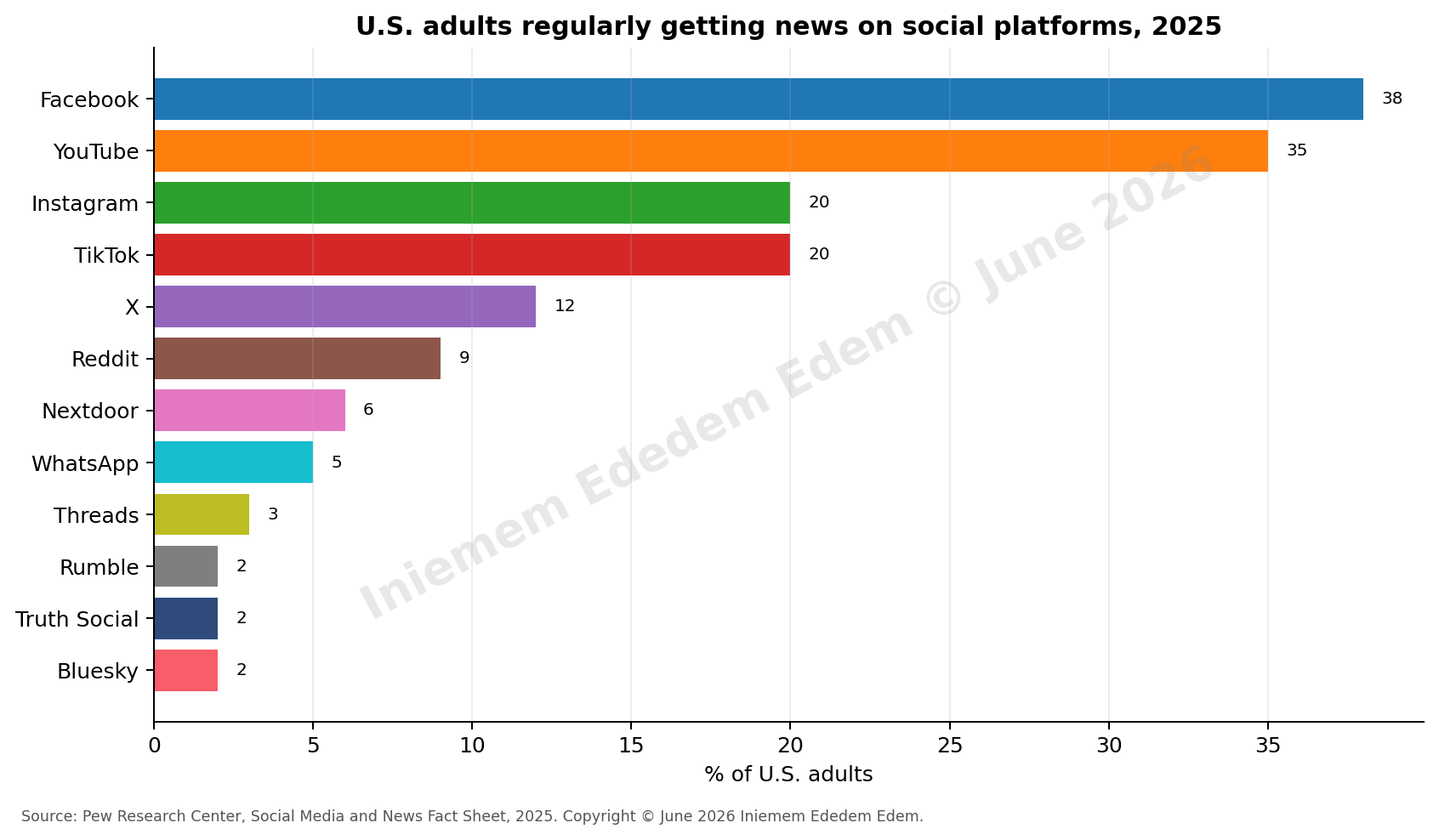
Figure 1. Ini Fig1 Social News.

1.1 The New York publishing problem

Digital publishing in New York now sits in a market where editorial reputation is not enough to protect a firm from platform power. Search engines, social platforms, app stores, newsletter inboxes, video feeds, payment systems, and AI answer tools all stand between publishers and readers. The result is not a simple loss of control; it is a daily negotiation over visibility, attribution, pricing, traffic, and trust.

The New York Times, Condé Nast, and Dotdash Meredith represent three different answers to that pressure. One has built a global subscription and product system around journalism and habit. One carries premium cultural authority across fashion, criticism, lifestyle, design, and technology brands. One operates scale publishing through practical service content, intent capture, advertising, commerce, and licensing. Their differences make the comparison useful because the same digital environment produces different strategic risks.

Editorial trust becomes valuable only when it can be converted into repeated audience behavior. A famous name may attract a visit, but durable publishing requires return, payment, registration, newsletter loyalty, app use, event attendance, product confidence, and willingness to accept corrections. The publisher that cannot hold a direct relationship with its reader is forced to borrow attention from platforms that may change rules without warning.

This study treats trust as an operating asset rather than a ceremonial reputation claim. Trust is built through accuracy, clarity, reader respect, visible correction, sound commercial boundaries, and product experience. The management question is not whether the publication has prestige. The question is whether the publication can carry prestige into a business model that still works when referral traffic weakens or AI summaries substitute for visits.

1.2 Audience ownership and trust

Audience ownership does not mean possession of people. It means a publisher has enough direct permission to reach readers without relying entirely on another company’s feed. Subscription accounts, registered users, newsletters, apps, events, saved preferences, paid communities, and editorial products all create a relationship that search and social platforms cannot fully intercept.

The phrase direct audience capability is used here to describe that relationship. It includes the publisher’s ability to attract readers, learn responsibly from their behavior, serve them through useful products, explain pricing, reduce churn, and maintain confidence in editorial standards. Without that capability, trust may exist culturally while remaining weak commercially.

The New York market matters because many of the firms studied here grew from metropolitan authority but now compete globally. A New York publisher may still trade on cultural capital, newsroom prestige, and brand memory, yet the reader may encounter the work through TikTok, Google, Apple News, YouTube, Reddit, AI search, or an inbox. The publication’s identity is therefore assembled across channels the publisher does not fully own.

The danger is quiet dilution. A brand can appear everywhere and still lose the habit of being visited directly. A publisher can gain traffic and lose pricing strength. A magazine can grow commerce revenue while readers begin to question whether recommendations are editorial or sponsored. Strategy must hold business growth and editorial trust together before the audience notices a contradiction.

1.3 Research focus and contribution

The study examines how New York digital publishers convert editorial trust into strategic resilience under platform power. It uses case evidence, public data, and a management model to show how direct audience relationships affect publishing durability. The argument is practical: trust must be managed through editorial practice, business design, product use, and platform exposure control.

The contribution lies in connecting three questions that are often treated separately. How is trust earned by editorial work? How is trust converted into subscriber, member, or registered-user behavior? How is that relationship protected when technology platforms mediate discovery and monetization? The answer cannot come from newsroom analysis alone or from revenue analysis alone. It requires a combined view of editorial, product, commercial, legal, and technology decisions.

The study does not claim access to internal corporate data. It draws on public filings, publisher statements, Reuters Institute evidence, Pew Research Center data, industry reporting, and recent scholarship. The quantitative model is used as a management instrument, not as a claim of audited firm performance. Where public data are unavailable, the paper separates observed evidence from author-developed diagnostic scoring.

The final purpose is to help publishing managers make better choices. Platform power is not going away. AI summaries will not reverse themselves because publishers dislike them. Advertising volatility will continue. Subscription fatigue will remain real. The firms that endure will be those that treat editorial trust as daily discipline and direct audience relationship as strategic protection.


Chapter 2: Literature and Conceptual Foundations

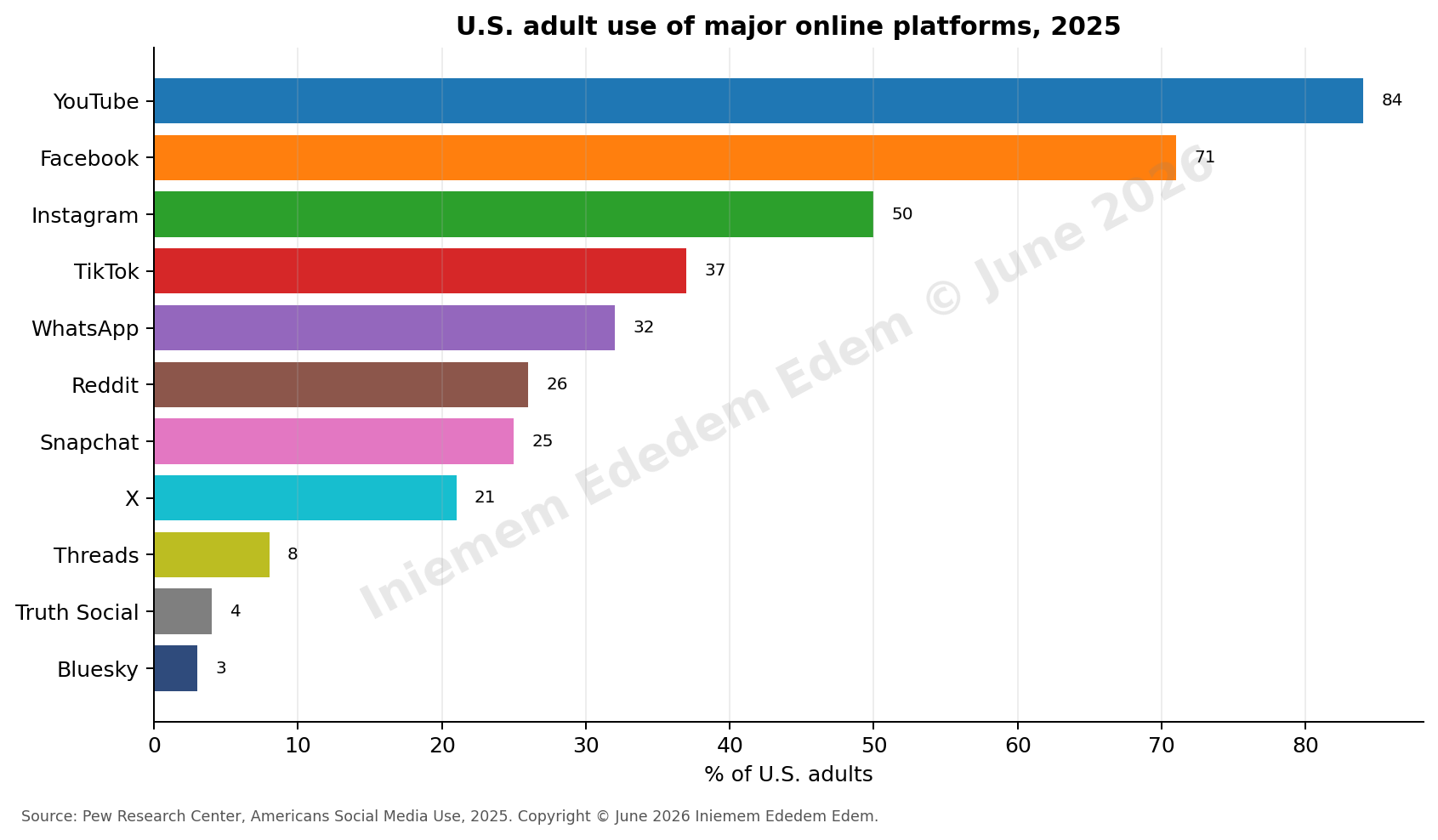
Figure 2. Ini Fig2 Platform Use.

2.1 Platform power and publisher dependence

Digital journalism scholarship has moved beyond the early language of disruption toward a sharper account of platform dependence. Publishers do not simply publish into an open internet. They publish into a market where discovery, ranking, advertising, payment, sharing, and summary are strongly influenced by companies whose business interests may differ from those of news and magazine publishers.

Young (2024) describes journalism’s business problem through people, power, and platforms, showing why publisher strategy must be studied through relations of dependency rather than through content production alone. Iosifidis (2025) makes a similar point in relation to the uneasy relationship between platforms and news publishers: a publisher may own the article but not the path through which many readers find it.

This literature is important because it prevents a false comfort. High-quality editorial work does not automatically produce economic stability. A magazine may win prestige and still lose traffic after a search change. A newspaper may maintain public trust and still face pressure if AI systems summarize reporting without sending readers back. A service publisher may serve millions while remaining exposed to changes in answer engines.

The platform problem is not only technological. It is a bargaining problem. Publishers need audiences, data, payment, distribution, and visibility. Platforms control or influence many of those channels. The strategic task is therefore not withdrawal from platforms but reduction of vulnerability through direct products, reader loyalty, licensing discipline, and commercial clarity.

2.2 Trust, subscriptions, and product habit

Trust literature in digital news shows that audience confidence is uneven, fragile, and tied to behavior. Reuters Institute evidence in 2025 reports continuing pressure on traditional news engagement, stagnating subscription growth in many markets, and concern that AI interfaces may reduce traffic to websites and apps (Newman et al., 2025). That evidence matters for publishers because trust cannot be assumed even when a brand is famous.

Subscription scholarship adds a retention problem. Belchior (2024) uses machine learning to examine online newspaper subscription churn, reminding managers that acquisition is not the same as loyalty. A person may subscribe because of a promotion, an election, a temporary need, or a paywall moment, yet leave when perceived value weakens. Sustainable publishing depends on habit and usefulness, not only reputation.

Bundling research is also relevant. Erbrich (2024) shows how digital news bundles can improve subscription sales and revenue compared with individual offers. Bundles can reduce churn when they give households more reasons to stay. They can also create identity risk when adjacent products become more visible than the editorial mission. The New York Times case is especially instructive because it tests both sides of that logic.

Audience trust should be read as both belief and practice. Readers show trust when they pay, return, recommend, forgive corrected error, and accept that a publisher’s commercial products do not corrupt its editorial judgment. The management task is to measure those behaviors without reducing trust to a dashboard score that ignores the moral obligation behind journalism.

2.3 AI, licensing, and value leakage

Generative AI changes the publishing problem because it can separate editorial value from publisher traffic. A reader may receive a summary of reporting without visiting the publication that produced the underlying work. Reuters Institute’s 2025 report notes publishers’ concern that AI summaries and chatbots could reduce traffic flows to websites and apps (Newman et al., 2025). For management, that is a revenue, attribution, and bargaining concern.

The AI issue is broader than newsroom productivity. AI may assist transcription, metadata, archive search, translation, accessibility, and personalization. It may also produce factual error, weaken attribution, blur accountability, and train readers to expect answers detached from the institutions that reported them. Editorial trust can be harvested by intermediaries if licensing and direct audience strategy remain weak.

Pew Research Center’s 2025 social media evidence reinforces the fragmentation problem. Many Americans encounter news through Facebook, YouTube, Instagram, TikTok, X, Reddit, and other social platforms, with platform audiences differing by age and identity. Publishers are therefore forced to meet audiences in many spaces while still trying to preserve direct relationships.

The literature points toward a strategic triangle: editorial trust, direct audience capability, and platform exposure control. A publisher with trust but no direct audience channel is vulnerable. A publisher with direct channels but weak trust is shallow. A publisher with revenue growth but high platform exposure may appear strong until the rules change. The model developed later in the paper is built around that triangle.

Table 1. New York Digital Publishing Case Matrix

Publisher Core strength Primary exposure Strategic management lesson
The New York Times Subscriber scale and product habit Bundle identity drift and AI licensing Convert trust into recurring use without weakening journalism.
Condé Nast Premium cultural authority Commerce and platform trend pressure Protect editorial taste while deepening direct audience ties.
Dotdash Meredith / People Inc. Scale utility and service content Search and AI answer substitution Turn intent traffic into recognized brand relationship.

Note. Table prepared for NYCAR publication use. Copyright © June 2026 Iniemem Ededem Edem.

Read also: An Econometric Renaissance for Africa’s Fiscal Integrity

Chapter 3: Methodology, Case Selection, and Data Discipline

3.1 Case-study design

The study uses a mixed-methods case-study design. Qualitative analysis examines The New York Times Company, Condé Nast, and Dotdash Meredith as different New York-connected publishing systems. Quantitative analysis uses public data and author-developed diagnostic measures to examine direct audience capability, platform exposure, and editorial trust resilience.

The case selection is purposeful. The New York Times represents a mature subscription and bundle model with public reporting on subscriber scale. Condé Nast represents premium brand authority across fashion, culture, criticism, technology, lifestyle, and design. Dotdash Meredith, now connected to People Inc. in later public reporting, represents scale service publishing, search visibility, advertising, performance marketing, and licensing.

The three cases differ in ownership, reporting transparency, product mix, and audience relationship. That difference is valuable. If all cases had the same business model, the study would only describe one strategy. The comparison shows how different publishers manage the same structural condition: dependence on platforms that can change discovery, pricing, attribution, and traffic.

The study is not a ranking of companies. It is a management analysis. The goal is to examine how trust becomes resilient, where platform exposure becomes dangerous, and what direct audience practices reduce vulnerability. Public figures are used carefully and diagnostic scores are labeled as author-developed where the underlying measure is interpretive.

3.2 Sources and boundaries

Sources include annual reports, SEC filings, Reuters Institute reports, Pew Research Center data, publisher materials, trade reporting, and recent peer-reviewed scholarship. The New York Times subscriber data come from company reporting and SEC materials. Dotdash Meredith revenue evidence comes through IAC reporting. Condé Nast analysis relies on public company materials and industry reporting because the firm is privately held.

The analysis separates public evidence from management interpretation. When subscriber totals are stated, they come from public reporting. When the paper scores case profiles, those scores are diagnostic judgments based on public evidence, not official firm metrics. This separation matters because publishing strategy often suffers from confident claims based on partial data.

The quantitative work uses simple formulas to make management relationships visible. The purpose is not to pretend that editorial trust can be reduced to arithmetic. It is to give managers a structured way to discuss direct relationship, habit, revenue mix, editorial-commercial clarity, AI control, and platform exposure.

Limitations remain. Private companies do not release comparable internal figures. Trust is not measured consistently across publishers. Platform exposure changes quickly. AI search and licensing remain unsettled. The study therefore treats the model as a practical aid for decision-making rather than as a final econometric test.

3.3 Analytical approach

Each case is examined through the same questions. How does the publisher earn trust? How does it convert trust into direct audience behavior? How exposed is it to external platforms? How does it diversify revenue without weakening editorial identity? How prepared is it for AI-mediated discovery? These questions allow comparison without forcing the companies into a single mold.

The model uses Editorial Trust Resilience as the central concept. Resilience is not the absence of risk. It is the publisher’s ability to maintain audience confidence, recurring revenue, product habit, and bargaining strength when platform rules change. A resilient publisher is not immune to disruption; it has enough relationship depth to withstand it.

The paper also considers commercial boundary risk. Publishing firms increasingly rely on affiliate revenue, events, licensing, newsletters, product reviews, branded content, and partnerships. These revenue streams can be necessary. They become dangerous when readers cannot tell whether editorial judgment has been shaped by commercial incentives.

The method therefore combines business analysis with editorial ethics. That combination is central to NYCAR master’s research in media management. Digital publishing cannot be studied only as revenue, nor only as journalism. It is a public-facing industry in which trust and business design now depend on each other.


Chapter 4: The New York Times: Direct Audience Power and Bundle Discipline

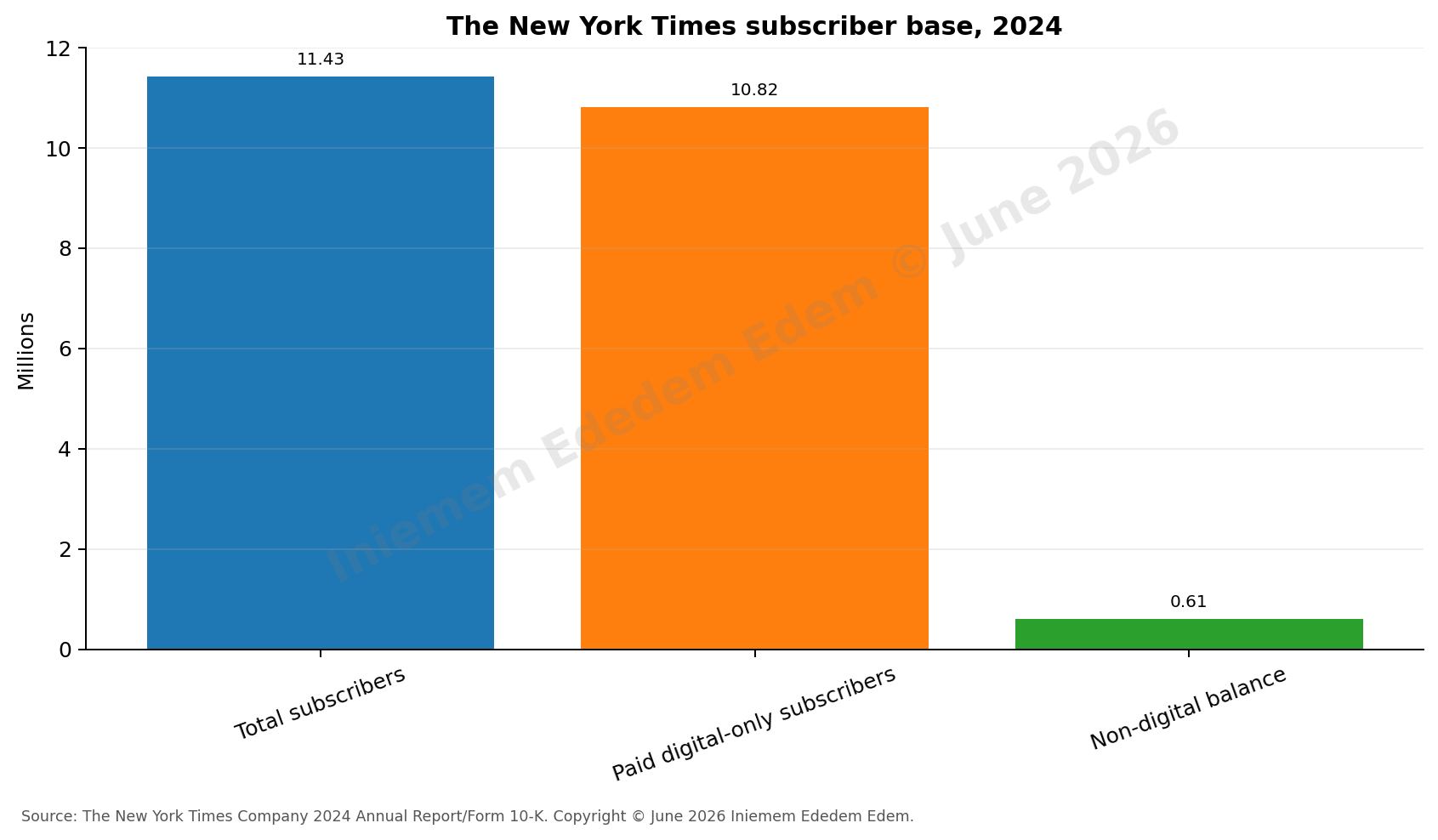
Figure 3. Ini Fig3 Nyt Subscribers.

4.1 The subscription base as strategic protection

The New York Times Company provides the strongest direct-audience example in the case set. Its 2024 reporting shows more than 11.4 million total subscribers and approximately 10.82 million paid digital-only subscribers. Those figures matter because they indicate that the company’s relationship with readers is overwhelmingly digital, account-based, and product-mediated rather than dependent on print habit alone.

A large subscriber base gives the company bargaining strength that many publishers lack. It does not remove platform dependence, but it changes the balance. Search, social platforms, app stores, newsletters, podcasts, and AI interfaces still affect discovery. Yet millions of subscribers already have a direct reason to return. That relationship gives the firm more room to withstand traffic shocks than a publisher built mainly on anonymous visits.

The direct-audience model also changes what trust means. Trust is no longer only a belief that the newsroom is credible. It becomes a pattern of recurring payment and use. Readers show trust when they renew, open the app, read deeply, save recipes, play games, follow sports coverage, and return for major public events. This makes editorial trust measurable through behavior, though not reducible to behavior alone.

The risk is that growth can create complacency. A large subscription base requires continued value, fair pricing, easy account management, and editorial confidence. If the publisher treats subscribers as locked-in revenue units rather than relationships, trust will weaken quietly before churn exposes it. Direct audience capability must be cared for, not simply counted.

4.2 The bundle as habit machine

The New York Times bundle is not just a revenue tactic. It is a habit system. News remains the center, but Games, Cooking, Wirecutter, The Athletic, audio, newsletters, and apps increase the number of daily and weekly reasons a household may stay connected. The bundle shifts the subscription from a single editorial purchase into a portfolio of use cases.

That structure creates strategic advantages. It reduces churn by making cancellation feel costly across more parts of household life. It broadens appeal beyond readers who follow hard news every day. It also gives the company more data about product use, which can support personalization, onboarding, pricing discipline, and product improvement.

The bundle also creates identity risk. If adjacent products become too dominant, the company may protect revenue while thinning the central meaning of the brand. A newsroom known for serious reporting must not allow entertainment, commerce, or lifestyle utility to make journalism feel like only one feature among many. The strongest bundle protects the core rather than replacing it.

The management test is balance. A product ecosystem should make editorial trust more usable without flattening it into convenience. Readers may love games and recipes, but the company’s unique strategic capital remains the credibility of its journalism. The bundle should extend that capital, not hide it.

4.3 Licensing, AI, and negotiation

The New York Times also illustrates the future bargaining problem. Its journalism is valuable to readers, advertisers, search systems, AI companies, educators, and public debate. The more valuable the archive and reporting become to AI systems, the more important licensing, attribution, and control become. A direct audience base strengthens that negotiation because the company is not only asking for traffic; it is defending a subscriber relationship.

AI summaries threaten a basic publishing exchange. Traditionally, search helped users find publisher pages. AI answers may satisfy users before they reach those pages. The shift places pressure on licensing agreements, legal strategy, and product design. The publication with stronger direct audience habits has more strategic room to resist unfavorable terms.

The lesson is not that every publisher can copy The New York Times. Most cannot. The transferable principle is narrower and more useful. Publishers need direct channels, repeated value, product clarity, and reader relationships that do not vanish when a platform changes display logic. Scale helps, but discipline matters even for smaller firms.

The case demonstrates that editorial trust is strongest when it becomes an operating system. Reporting, product, pricing, newsletters, onboarding, corrections, AI policy, and licensing all affect whether the reader sees the institution as worthy of recurring commitment. Trust is no longer only a newsroom matter.


Chapter 5: Condé Nast: Premium Authority, Commerce Pressure, and Cultural Trust

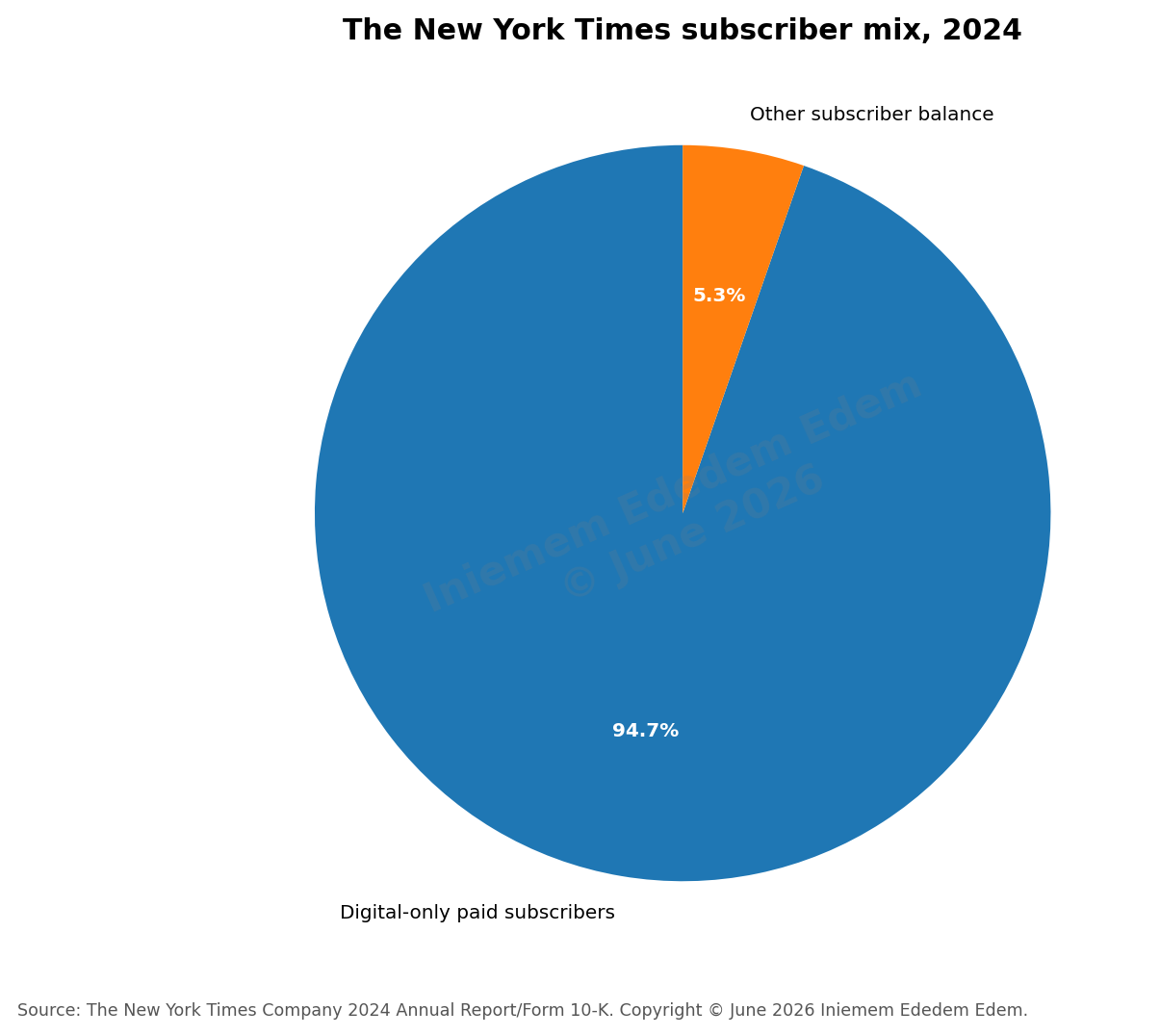
Figure 4. Ini Fig4 Nyt Share.

5.1 Premium brand power

Condé Nast occupies a different position from The New York Times. Its strongest assets are not only news products. They are premium editorial brands with cultural memory: Vogue, The New Yorker, Vanity Fair, GQ, Wired, Architectural Digest, and others. These titles carry authority in fashion, criticism, design, technology, culture, style, and taste. Their value often comes from symbolic judgment as much as information.

Premium trust is harder to measure than subscriber totals. A reader may not pay every month but may still take Vogue seriously during fashion week, trust The New Yorker for criticism, or consult Wired for technology context. Cultural authority can generate events, commerce, video, licensing, memberships, social distribution, and luxury partnerships. The challenge is to convert prestige into durable audience relationship without making the brands feel transactional.

The New York location of Condé Nast matters because it reinforces metropolitan identity and global cultural reach. The company’s brands operate internationally, yet their editorial aura remains tied to New York media power, fashion circuits, literary culture, and elite audience formation. That authority cannot be manufactured quickly by platforms.

At the same time, cultural authority is vulnerable to speed. Social platforms reward immediacy, image flow, celebrity conflict, and trend reaction. A premium publisher must participate in that system without surrendering its editorial character to it. The strongest brands speak quickly when needed but do not let platform tempo define taste.

5.2 Commerce and editorial boundary

Condé Nast’s commercial opportunity is also its risk. Fashion, design, lifestyle, product recommendation, events, luxury advertising, affiliate revenue, and branded content sit close to editorial work. Readers know that magazines in these categories operate near commerce. What they still demand is discernment. They want to believe that taste has not been purchased.

The boundary between editorial authority and commercial influence has to be visible. A product recommendation can support revenue and serve readers when the review is honest, the disclosure is clear, and the editorial standard remains intact. It becomes corrosive when the reader suspects that commerce has quietly replaced judgment.

The same applies to celebrity and influencer culture. Platform visibility may pull premium publishers toward personalities who create attention but weaken editorial independence. A magazine can become popular and less authoritative at the same time. Management must protect the difference between relevance and surrender.

Condé Nast’s strategic task is therefore not simply digital transformation. It is preservation under adaptation. Each brand needs direct audience products, newsletters, memberships, events, and commerce discipline that fit its identity. The New Yorker cannot be managed like Vogue; Wired cannot be managed like Vanity Fair. Shared infrastructure may help, but brand meaning must remain specific.

5.3 Trust as editorial taste

In premium publishing, trust often appears as taste. Readers return because they believe editors can identify what matters, interpret culture, distinguish quality from noise, and preserve a standard. That form of trust is less direct than trust in investigative reporting, but it is still real. It can command attention, price, and sponsorship when handled carefully.

Taste-based trust is fragile because audiences can sense imitation. If a publication chases every platform trend, every celebrity cycle, or every commerce opportunity, it may preserve activity while losing authority. Strong premium media must decide what not to cover, which sponsorships not to accept, and which visual or editorial signals would cheapen the brand.

A direct audience strategy for Condé Nast should therefore be brand-specific. Some titles may build events and memberships. Others may build subscriber communities, specialist newsletters, premium video, or curated commerce. The common rule is that direct relationship should deepen the brand’s authority rather than strip it down to generic engagement.

The case shows why digital publishing strategy cannot be reduced to subscriber counts. Premium authority can hold value across print, digital, social, events, and commerce, but it needs disciplined management. The question is whether cultural authority is being converted into sustainable relationship or spent for short-term monetization.

Table 2. Direct Audience Capability Variables

Variable Meaning Management evidence
Subscription or membership depth Paid relationship with reader Subscriber totals, retention, renewal, bundle adoption.
Habit strength Repeated reader behavior App opens, newsletter engagement, product cross-use.
Owned-channel reach Permission-based contact Accounts, newsletters, apps, events, communities.
Commercial clarity Reader confidence in boundaries Disclosure, labeling, correction visibility, review rules.

Note. Table prepared for NYCAR publication use. Copyright © June 2026 Iniemem Ededem Edem.


Chapter 6: Dotdash Meredith / People Inc.: Utility Publishing and Search Exposure

Figure 5. Ini Fig5 Iac Revenue.

6.1 Scale and service journalism

Dotdash Meredith offers a contrasting model built around scale, practical service, advertising, commerce, and intent. Its brands serve users who often arrive with a task: cook dinner, compare a product, understand a health question, improve a home, plan a trip, manage money, or follow entertainment. Trust in this environment is less ceremonial. It depends on usefulness, clarity, accuracy, and whether the answer helps.

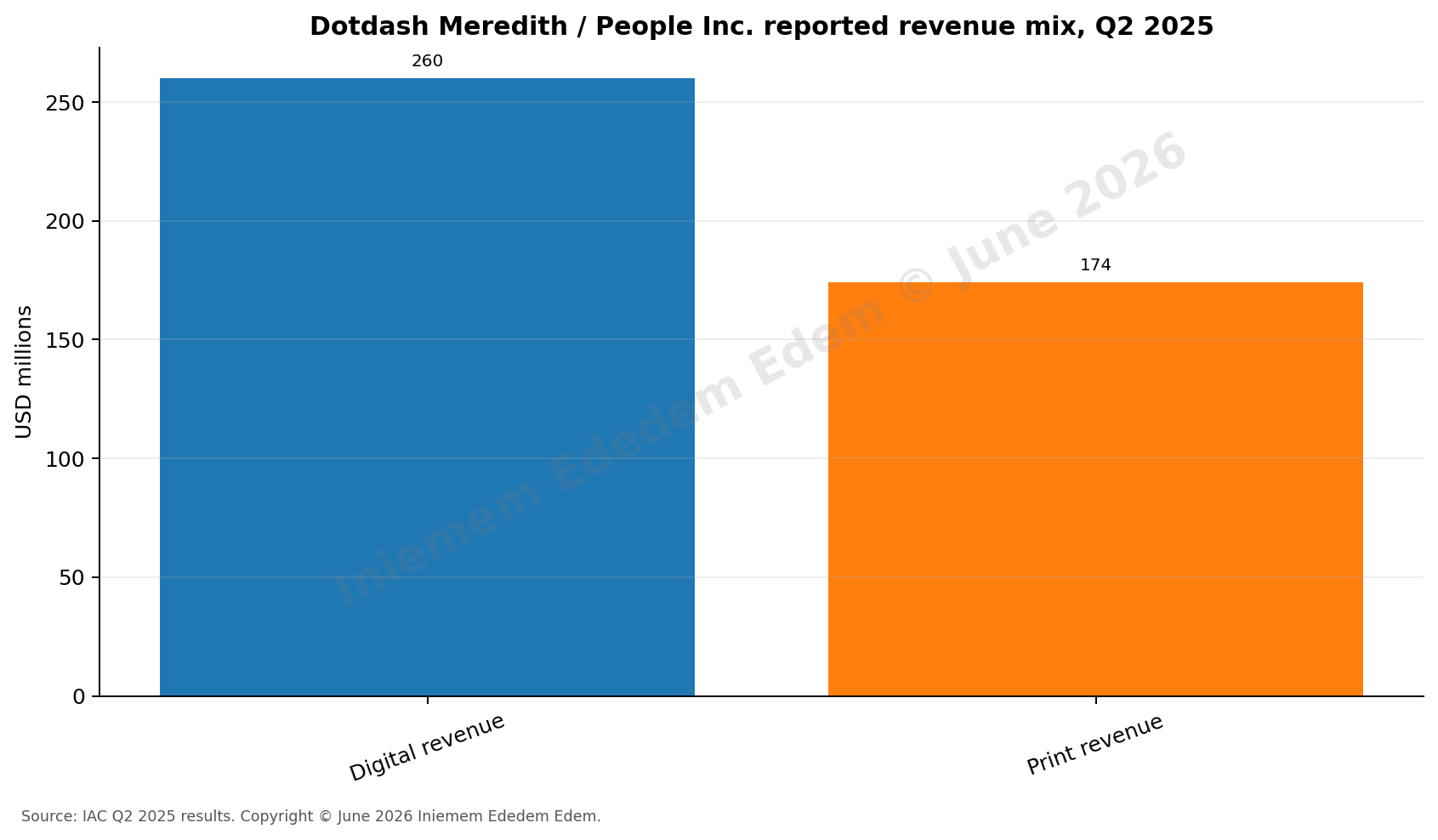
IAC reporting shows the commercial strength of this model, with Dotdash Meredith reporting substantial digital revenue and later rebranding activity around People Inc. The Q2 2025 public results reported digital revenue of $260 million and print revenue of $174 million. Those figures show the digital weight of the business and the ongoing transition away from print dominance.

Service journalism creates a different trust contract from political reporting or luxury editorial. Readers may not think of themselves as loyal to a publisher before a search. They may search for a recipe, a symptom, a product, or a how-to question. The publisher earns trust in the moment by being accurate, clear, readable, and accountable.

The challenge is that this model often depends heavily on search visibility. Intent-driven content is valuable because users know what they need. But if search engines or AI answer tools provide the answer directly, the publisher may lose the visit, the ad impression, the affiliate click, and the chance to become known by name.

6.2 Search, AI, and attribution

Search dependence is not a moral failure. It is a business condition. Many useful publishers grew by matching high-quality content with user intent. The problem arises when the platform that organizes search also becomes an answer engine. The publisher’s work may inform the answer while the reader never develops a relationship with the source.

AI answer systems intensify this concern. A recipe, medical explanation, product comparison, or home repair instruction can be summarized in seconds. If attribution, traffic, and payment are weak, value moves away from the publisher. Licensing may become necessary, but licensing without audience recognition can still leave the brand invisible.

Dotdash Meredith’s strategic response should therefore combine scale with stronger direct relationship. Newsletters, saved recipes, account features, trusted product review standards, video explainers, expert credentials, and clear editorial policies can give users reasons to remember the brand behind the answer. Utility must become relationship, not only traffic.

The case also highlights quality risk. Service content can become thin when the incentive is to match search phrases rather than help readers. The stronger editorial approach is to treat service journalism as care. A reader asking about health, money, home safety, parenting, or product reliability deserves more than keyword coverage. Trust grows when the publisher acts like the answer matters.

6.3 Licensing and commercial credibility

Licensing is likely to become more important for scale publishers. Archives, product databases, expert-reviewed service content, recipes, and structured answers have value for AI companies and search platforms. The publisher must decide which licensing arrangements protect long-term brand value and which may train users to bypass the source.

Commercial credibility is equally important. Service publishers often use affiliate links and commerce partnerships. These can be legitimate when recommendations are tested, clearly labeled, and separated from undue influence. They damage trust when readers suspect that the publisher is pushing products because revenue incentives are hidden.

The management priority is documentation. Product review standards, health review standards, correction policies, affiliate disclosures, AI policies, and author credentials should be visible. Service publishing depends on ordinary trust. Readers may not know the board or editors, but they know when an answer feels careful and when it feels made for traffic.

Dotdash Meredith’s case shows that platform exposure does not eliminate opportunity. Scale, practical usefulness, and brand portfolios can generate strong revenue. The risk is that platform changes can interrupt the relationship before it becomes durable. The strategic goal is to turn answer-seeking users into known, returning, trusting audiences.

Chapter 7: AI Mediation, Licensing, and Editorial Governance

7.1 AI as intermediary

Generative AI has become a new intermediary in publishing. It does not only help newsrooms produce work. It changes how readers encounter information. AI summaries, chatbots, and search-integrated answers can present reporting or service content without preserving the full context, byline, correction history, advertising model, or subscription path of the publisher.

This creates a strategic problem for every case in the study. The New York Times must protect the value of reporting and archive material. Condé Nast must protect premium voice, images, reviews, and cultural authority. Dotdash Meredith must protect service answers and structured information that AI systems can easily summarize.

AI also creates internal risk. Publishers may use AI for transcription, search, tagging, image handling, personalization, or draft assistance. Those uses may save time, but they must be governed. The reader’s trust depends on knowing that human editorial responsibility remains in force where accuracy, judgment, taste, or accountability matters.

A publisher should not treat AI policy as a technical note. It belongs in editorial standards, legal review, licensing, product management, and audience communication. The question is not whether AI can reduce cost. The question is whether its use protects the relationship that makes the publisher valuable.

7.2 Licensing as strategic negotiation

Licensing has become a strategic negotiation over value. If AI companies use publisher content to answer user questions, train systems, or enrich search results, publishers must ask what they receive in return. Payment matters, but so do attribution, traffic, context, brand visibility, data sharing, and the right to control misuse.

The negotiation position differs by publisher. The New York Times brings global reporting authority and a large subscriber base. Condé Nast brings high-value brands, images, style archives, criticism, and lifestyle authority. Dotdash Meredith brings massive service content and user-intent libraries. Each must defend different assets.

A weak licensing deal can produce short-term revenue while reducing long-term audience habit. If readers become accustomed to receiving publisher content through an AI interface, the publisher may become invisible. The licensing strategy must therefore be linked to direct audience strategy. The goal is not only payment but preservation of relationship.

Management should evaluate AI deals through a reader-centered test. Will the deal make the source visible? Will it protect accuracy? Will it support subscriber or registered-user growth? Will it preserve editorial standards? Will it prevent the publisher’s work from being used against the publisher’s own products? If the answers are unclear, the deal may be strategically expensive even if it pays.

7.3 Editorial standards under automation

Automation must not be allowed to weaken correction culture. If an AI-assisted headline misstates an article, if an automated summary misses context, or if a recommendation system pushes sensitive content poorly, the publisher remains responsible. Audiences do not trust a tool; they trust the institution that chose to use it.

Editorial standards should therefore cover AI use in production, archive search, personalization, image handling, and licensing. The standard should be specific enough for editors, product teams, audience teams, and legal counsel to apply. Vague promises about responsible innovation will not protect a publisher when a public error occurs.

AI can help serious publishers if it is tied to verification, not substitution. It can speed transcription, surface archive material, improve accessibility, and support internal research. It becomes dangerous when it produces unverified claims, hides commercial motives, or presents synthetic material in a way that misleads readers.

The New York publishing cases show that editorial trust now depends on technology governance. The newsroom, product group, data team, legal counsel, and business office are all involved in preserving trust. A publisher that separates these functions too sharply will discover too late that the reader experienced them as one institution.

Chapter 8: Quantitative Models and Strategic Charts

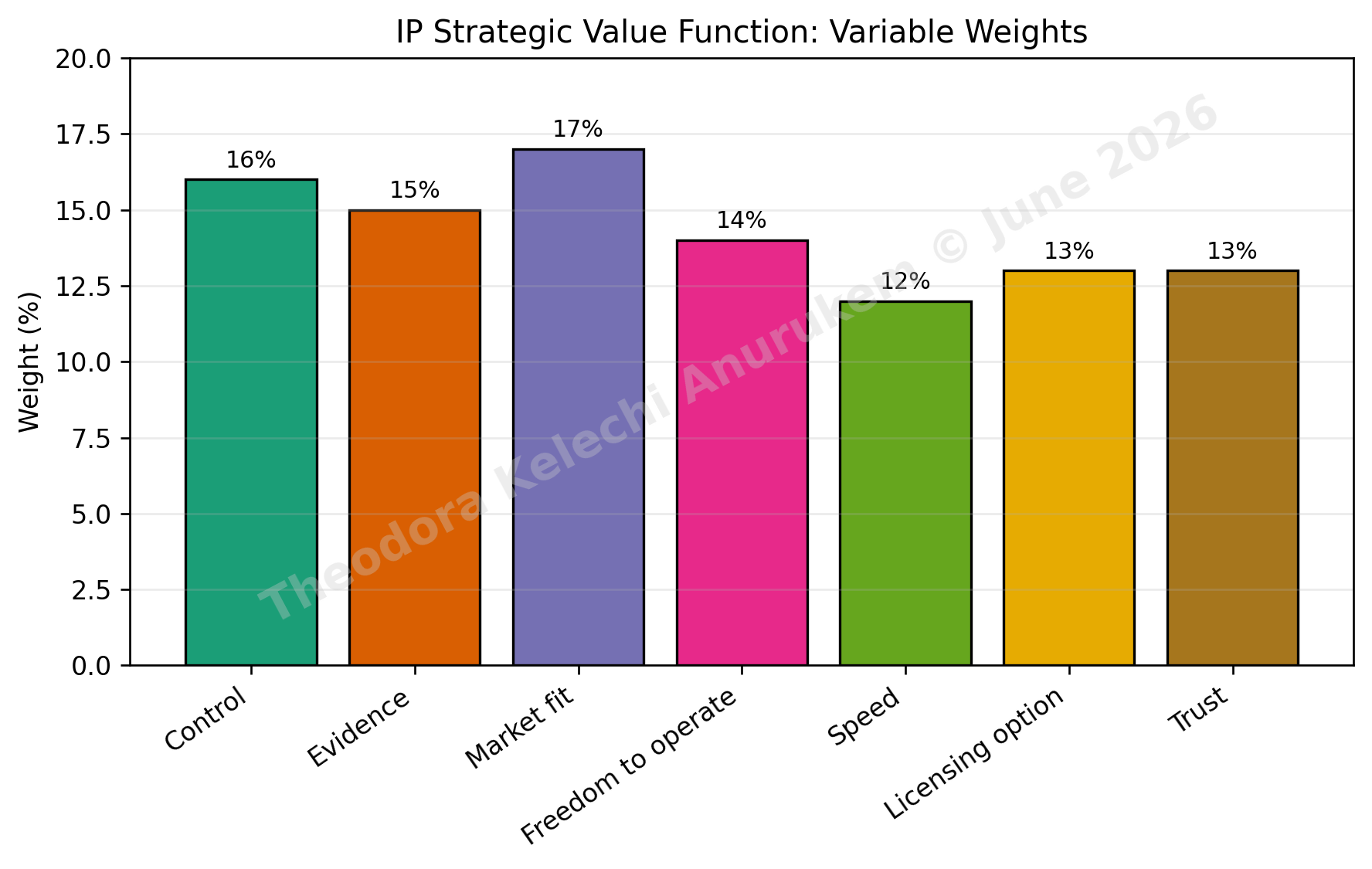
Figure 6. Ini Fig6 Etr Weights.

Figure 7. Ini Fig7 Case Profile.

8.1 Direct audience capability

Direct Audience Capability can be expressed as DAC = 0.25S + 0.20H + 0.15N + 0.15A + 0.15B + 0.10D. In this model, S represents paid subscription or membership depth, H habit strength, N newsletter and account reach, A app or owned-channel engagement, B brand loyalty, and D responsible data depth. The weights are author-developed and meant to guide discussion rather than replace management judgment.

The model is useful because it prevents a narrow reading of audience strength. A publisher may have many visitors and weak direct capability. Another may have smaller reach and stronger loyalty. The score asks whether the publisher has repeated, permission-based contact with readers and whether that contact can survive platform changes.

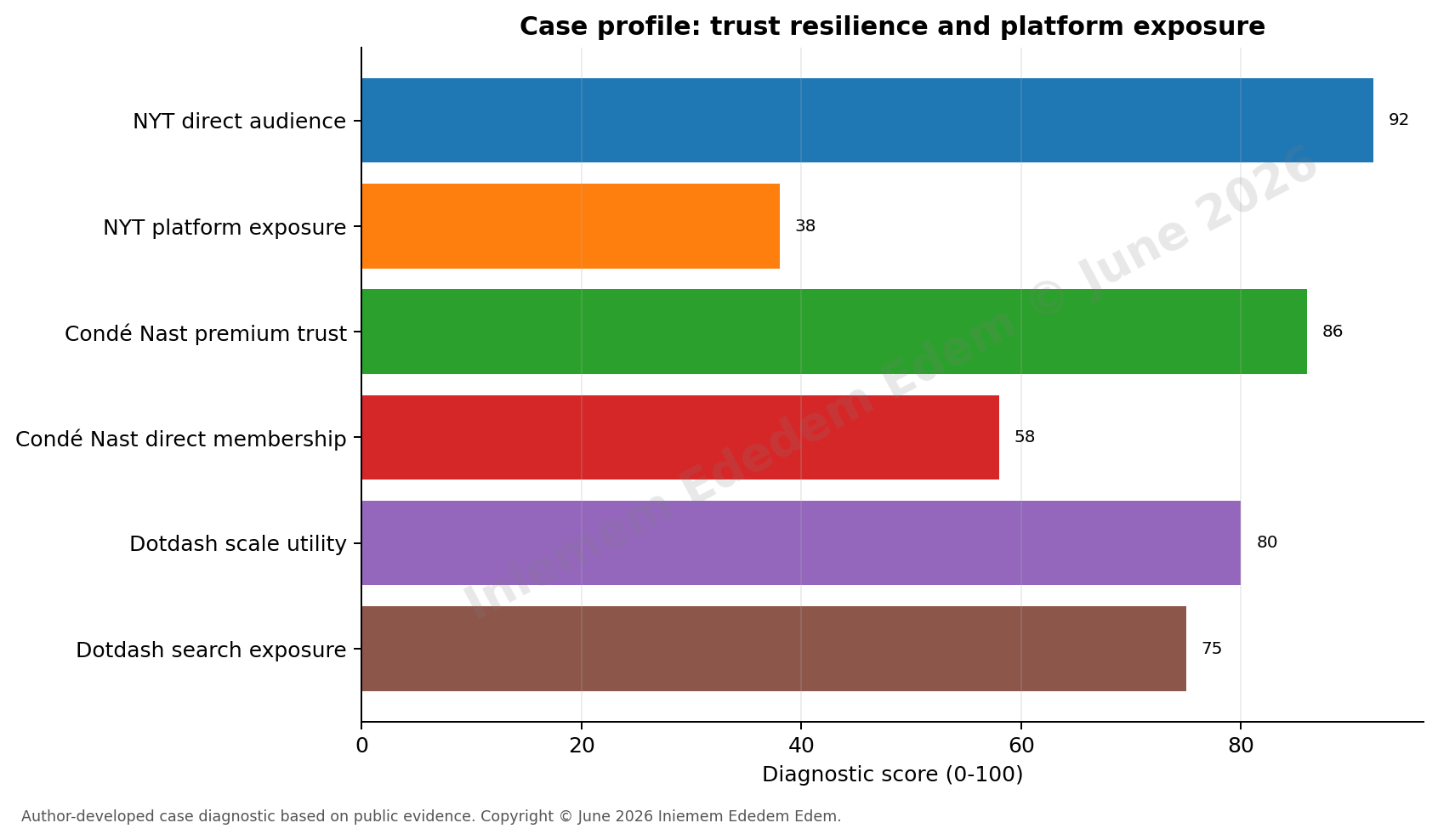
For The New York Times, paid subscription depth and product habit are strong. For Condé Nast, brand loyalty and cultural authority may be strong, but direct membership depth varies across titles. For Dotdash Meredith, reach and utility are strong, but platform exposure creates pressure. The model helps place these differences into a common conversation.

No score should be treated as permanent. Audience behavior changes, products mature, pricing shifts, and AI interfaces may alter referral patterns. The value of the model is that it encourages regular review and makes hidden dependency harder to ignore.

8.2 Editorial Trust Resilience Index

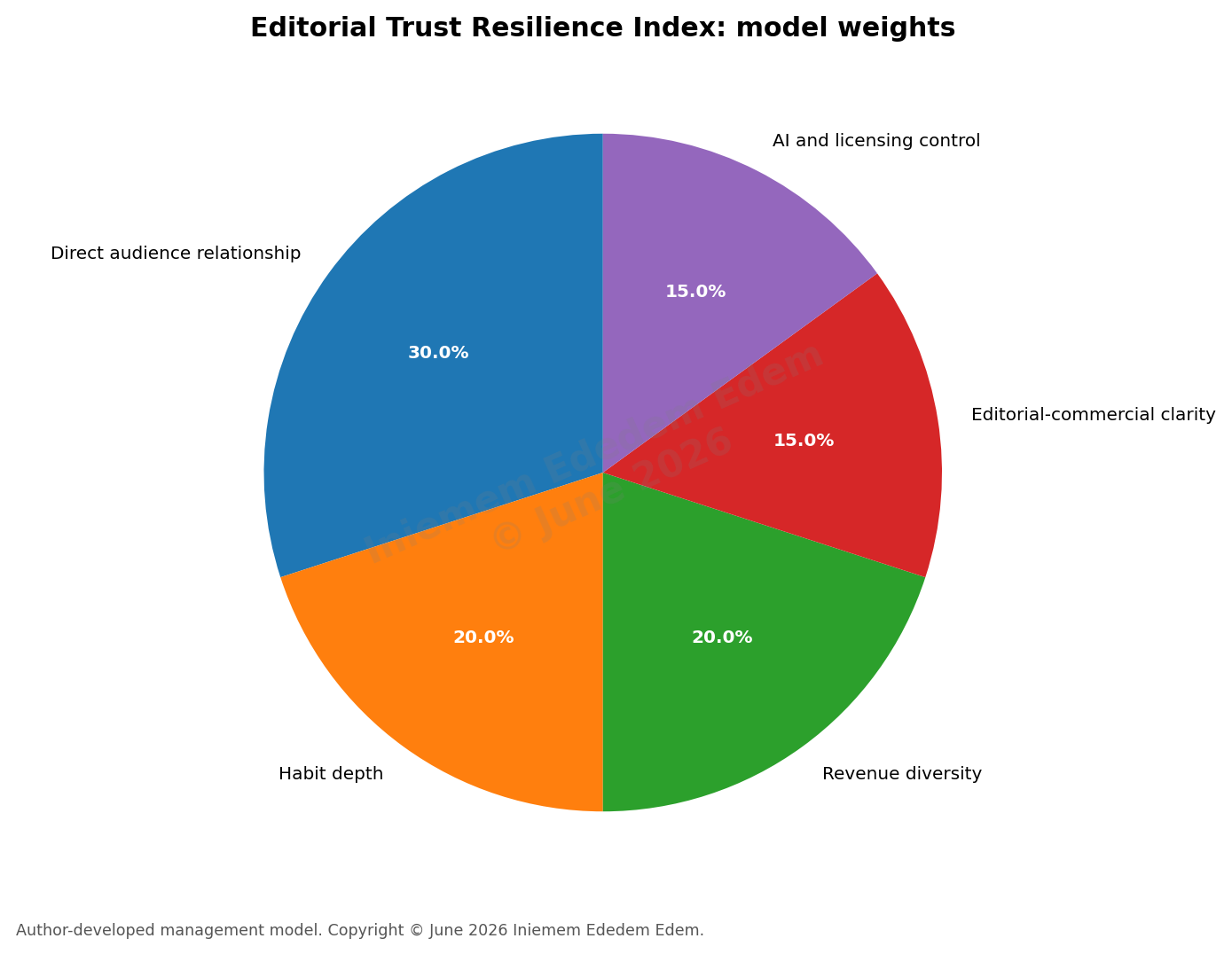
Editorial Trust Resilience can be expressed as ETR = 0.30D + 0.20H + 0.20R + 0.15C + 0.15G – P. D represents direct audience relationship, H habit depth, R revenue diversity, C editorial-commercial clarity, G AI and licensing control, and P platform exposure penalty. This equation captures the management claim at the center of the study: trust needs operational support.

The platform exposure penalty is important. A publisher may look strong if reach is high, but if that reach is mediated through search, social feeds, or AI summaries, the strategic position may be weaker than the traffic suggests. Exposure must be measured alongside revenue, not after revenue has already been disrupted.

The model also treats commercial clarity as a trust variable. Affiliate revenue, branded content, commerce links, and sponsorship may support the business. They also create reader concerns when disclosure is weak. A publisher can lose trust not because the content is inaccurate but because the audience no longer believes the judgment is independent.

These equations do not turn editorial work into accounting. They give managers a disciplined way to ask better questions. Where is the audience relationship strong? Where is the product habit shallow? Where does revenue invite suspicion? Where can AI extract value? Those questions belong in serious publishing management.

8.3 Interpretation of the seven figures

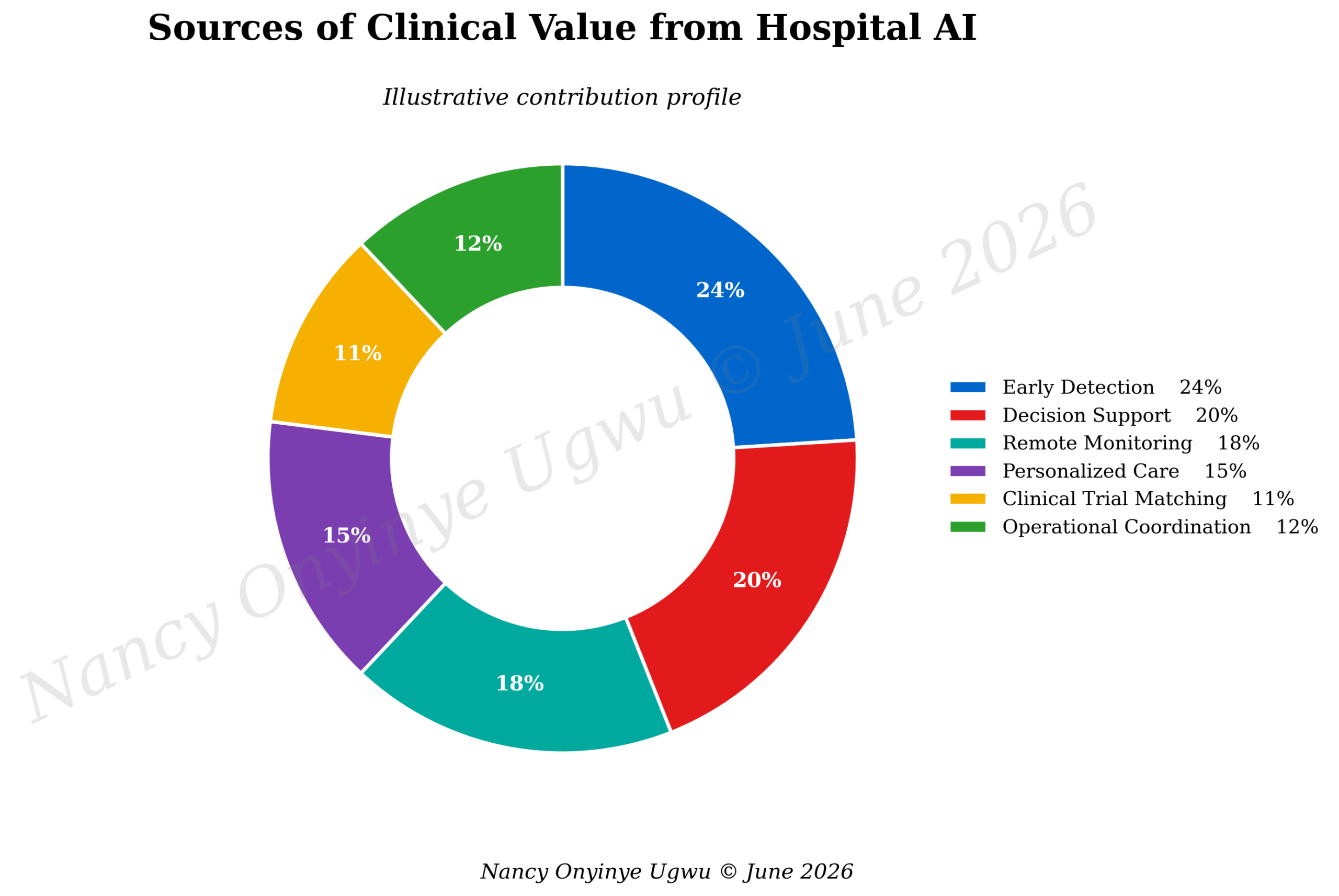
The social-news chart shows why publishers cannot rely on one platform. Facebook and YouTube remain powerful news channels for U.S. adults, while Instagram and TikTok have become meaningful for younger and visual audiences. The distribution of news attention makes channel management more demanding and makes direct audience relationships more valuable.

The platform-use chart broadens the point. YouTube and Facebook reach large adult audiences, but Instagram, TikTok, WhatsApp, Reddit, Snapchat, X, Threads, and newer platforms divide attention across communities. A publisher chasing every platform in the same voice will sound generic. A publisher using platforms intelligently will adapt format while preserving editorial identity.

The New York Times charts show the power of paid digital relationship. A digital-only paid subscriber base of approximately 10.82 million within a total subscriber base above 11.4 million indicates a mature digital subscription system. The pie chart makes the strategic point clearly: the company’s reader relationship has shifted decisively into digital products.

The Dotdash Meredith revenue chart, the trust-resilience weight chart, and the case-profile chart connect business evidence to management judgment. Public revenue data show commercial strength. The author-developed weights show how to read trust resilience. The case profile warns that no publisher is strong in every dimension. Strategy begins when leaders admit the shape of their own exposure.

Table 3. Strategic Risk and Recommended Response

Risk Likely effect Recommended response
AI answer substitution Traffic and attribution loss Licensing discipline, direct channels, source visibility.
Search dependence Volatile reach Audience registration, newsletters, product habit.
Commerce overreach Reader distrust Plain disclosure and editorial-commercial separation.
Subscription fatigue Churn and price resistance Clear value, fair pricing, onboarding, bundle discipline.

Note. Table prepared for NYCAR publication use. Copyright © June 2026 Iniemem Ededem Edem.

Chapter 9: Managerial Recommendations for New York Publishers

9.1 Build direct channels without abandoning platforms

Publishers should use platforms for reach while refusing to let platforms own the relationship. Search, social media, newsletters, apps, video channels, and AI interfaces should be managed as a portfolio. The goal is not to escape the digital ecosystem. The goal is to prevent any one intermediary from becoming so important that it can weaken the publisher’s future.

A direct audience plan should include account registration, newsletters, app habit, paid products, events, saved preferences, community features, and respectful data practice. Registration should not become a nuisance. It should create value for the reader through relevance, continuity, and better service.

Smaller publishers should not imitate The New York Times bundle mechanically. They may need narrower strategies: a professional newsletter, a local membership program, a single premium vertical, events, podcasts, or partnerships. The principle travels even when scale does not. Own enough of the relationship to remain alive when platforms change.

The strongest publishing managers will measure platform dependency before the crisis. They will know how much traffic, revenue, conversion, and habit comes from each channel. They will run scenarios for search loss, social decline, AI answer substitution, ad-market weakness, and subscription fatigue.

9.2 Protect editorial-commercial boundaries

Every revenue stream should be tested against trust. Subscriptions, affiliate links, branded content, licensing, events, advertising, and commerce all have a place. None should be allowed to blur the reader’s understanding of what is editorial judgment and what is paid influence.

Disclosures should be plain and placed where readers encounter the content. Hidden labels and clever euphemisms weaken confidence. A reader should not need to investigate whether a recommendation is editorial, sponsored, affiliate-linked, or licensed.

Editorial teams need authority to challenge commercial pressure. Product teams need to understand trust as a design value. Business teams need to know that revenue gained by weakening trust is not strategic. The publisher’s internal incentives should reward long-term relationship, not only short-term yield.

Correction culture should be visible. Trust is not created by pretending error never occurs. It is created when readers see that the publisher corrects carefully, explains responsibly, and learns from repeated mistakes. In a platform environment where error travels quickly, correction must travel too.

9.3 Govern AI as a public-facing editorial issue

AI policy should be written for editors, product leaders, lawyers, audience staff, and readers. It should state what AI may do, what humans must check, when disclosure is required, how errors are corrected, how training data are handled, and how licensing deals are reviewed.

Publishers should negotiate AI licensing from a position of long-term audience protection. Payment alone is not enough. Agreements should address attribution, source visibility, links, usage limits, accuracy responsibilities, data sharing, and whether the deal helps or harms subscriber growth.

AI should support editorial quality, not replace responsibility. A publisher may use AI to organize archives or improve accessibility, but final accountability remains human. The reader should never be forced to guess whether serious reporting, criticism, or health content has been handed to a machine without adequate oversight.

The future of New York publishing will be decided by firms that combine editorial seriousness with product discipline. Trust must become a daily operating practice, not a line in a mission statement. Audience relationship must be owned, not rented. Platform reach must be used, not worshiped.

Chapter 10: Final Position and Research Contribution

10.1 Trust as strategic capital

The study’s central position is that editorial trust has become strategic capital in digital publishing. It can support subscriptions, renewals, licensing, premium advertising, events, memberships, and product ecosystems. It can also disappear when commercial pressure, platform dependency, poor disclosure, or careless AI use weakens the reader’s confidence.

The New York cases show that no single model is sufficient. The New York Times demonstrates subscription strength and bundle habit. Condé Nast demonstrates premium cultural authority and brand-specific risk. Dotdash Meredith demonstrates scale utility and search exposure. Each case offers lessons; none offers a universal formula.

Direct audience capability is the practical bridge between trust and resilience. A publisher that has a meaningful relationship with readers can respond to platform changes with more strength. A publisher that depends on anonymous traffic may be successful for a period and exposed the moment discovery shifts.

The research also shows why editorial and business strategy can no longer be separated. A newsroom may produce excellent work, but the product may fail to create habit. A business team may grow revenue, but the revenue mix may damage trust. Serious publishing management must hold these concerns together.

10.2 Contribution to NYCAR media management studies

For NYCAR, the paper contributes an applied media-management model that links public trust, direct audience capability, platform exposure, and AI licensing. It is designed for publishers, editors, media executives, researchers, and graduate learners who need to understand digital publishing as both a business and a civic institution.

The study also offers a warning against shallow digital transformation. Moving content onto platforms is not transformation. Launching a newsletter is not transformation. Using AI is not transformation. The deeper question is whether the publisher can preserve editorial judgment, audience trust, and revenue durability under changing technological conditions.

The charts and equations are meant to aid judgment, not replace it. Publishing remains a human field because trust depends on editorial decisions, institutional conduct, and reader experience. Metrics can reveal risk, but they cannot decide what kind of publication deserves public confidence.

The final conclusion is direct. New York digital publishing will remain influential only if its firms convert prestige into relationships, relationships into repeated value, and repeated value into trust that survives platform change. The publisher that owns its voice but rents its audience is strategically unfinished.

10.3 Closing statement

The next decade will not be kind to publishers that confuse visibility with strength. A large audience can vanish when a platform changes ranking. A famous brand can weaken when commerce outpaces judgment. A subscription product can lose loyalty when pricing feels careless. An AI deal can pay money while training the public to bypass the publisher.

Yet the future is not only defensive. Publishers still possess assets platforms cannot easily create: reporting judgment, cultural authority, editorial memory, brand meaning, community trust, and the capacity to explain the world with responsibility. These assets become durable when they are tied to direct audience capability.

The cases studied here show three paths through the same pressure. The New York Times has built scale around habit. Condé Nast must protect premium meaning while deepening direct ties. Dotdash Meredith must defend utility against answer-engine substitution. Their lessons extend beyond New York because platform power now touches publishing everywhere.

A publisher’s strongest strategic question is no longer simply what will be published tomorrow. It is whether the institution is building the kind of relationship that readers will still choose when the platforms around them become faster, louder, and less accountable.

References

Belchior, L. M. (2024). Online newspaper subscriptions: Using machine learning to understand subscriber churn. Digital Journalism. https://doi.org/10.1080/16522354.2024.2343638

Erbrich, L. (2024). Bundling digital journalism: Exploring the potential of bundled offers for subscription sales. Media and Communication, 12, Article 7442. https://doi.org/10.17645/mac.7442

IAC Inc. (2025). IAC reports Q2 2025 results. U.S. Securities and Exchange Commission. https://www.sec.gov/Archives/edgar/data/1800227/000180022725000122/ex_991q22025iac-pressrelea.htm

Iosifidis, P. (2025). Digital platforms and news publishers: An uneasy relationship. Frontiers in Communication, 10, Article 1556826. https://doi.org/10.3389/fcomm.2025.1556826

Newman, N., Fletcher, R., Robertson, C. T., Arguedas, A. R., & Nielsen, R. K. (2025). Reuters Institute digital news report 2025. Reuters Institute for the Study of Journalism.

Pew Research Center. (2025). Social media and news fact sheet. Pew Research Center.

Pew Research Center. (2025). Americans’ social media use 2025. Pew Research Center.

The New York Times Company. (2025). 2024 annual report. The New York Times Company.

The New York Times Company. (2025). Form 10-K for the fiscal year ended December 31, 2024. U.S. Securities and Exchange Commission.

WAN-IFRA. (2024). Condé Nast’s six-point strategy for a sustainable future. World Association of News Publishers.

Young, M. L. (2024). People, power, platforms and the business of journalism. Digital Journalism, 12(1), 1–8. https://doi.org/10.1080/21670811.2023.2273523

Zhao, H., & Berman, R. (2025). The impact of large language models on online news consumption and production. arXiv. https://arxiv.org/abs/2512.24968

The Thinkers Review

Sylvester Akpan

Strategic Leadership and National Economic Transformation

Institutions, Productive Capacity, Public Trust, and Inclusive Growth

Research Publication by Sylvester Akpan

New York Center for Advanced Research (NYCAR)

Date: June 2026

Publication No.: NYCAR-TTR-2026-RP015

DOI: https://doi.org/10.5281/zenodo.20359428


Peer Review and Publication Status

This research publication has been reviewed under the internal editorial framework of the New York Center for Advanced Research (NYCAR) and The Thinkers’ Review. The review assessed master’s-level coherence, source integrity, development-policy relevance, APA 7th reference discipline, chart clarity, institutional usefulness, and publication readiness. The work is approved for NYCAR master’s-level research publication.

Copyright © June 2026 Sylvester Akpan. All rights reserved.


Abstract

National economic transformation does not happen because a country owns resources, announces plans, or repeats the language of development. Transformation begins when public leadership can turn national purpose into institutions that work, policies that hold, investments that raise productivity, and public trust strong enough to carry difficult reform. This research publication examines strategic leadership as a public capability rather than a personal style. It argues that the leader who matters for development is the one who can connect direction, institutions, productive capacity, ethical restraint, and implementation under conditions of uncertainty.

The discussion draws on leadership theory, institutional economics, development studies, public governance literature, and current development sources, including the World Bank’s governance and middle-income reports, the OECD trust survey, the United Nations Sustainable Development Goals report, and UNDP’s human-development work. These sources are used to frame practical questions: why do countries with plans still fail to execute, why does policy credibility matter to investment, why does corruption damage productivity, and why does public trust function as an economic resource rather than a public-relations asset?

The research develops a Strategic Leadership for Transformation Framework built around national direction, institutional quality, policy coherence, productive capacity, public trust, and accountable delivery. The framework is not offered as a mechanical formula. It is a disciplined way to judge whether leadership is building national capability or performing development language. Six original figures support the analysis: three bar charts and three pie charts. One figure draws on OECD trust indicators, while the remaining figures provide author-developed diagnostic tools for applied teaching and institutional review.

The central finding is direct. Countries progress when leadership builds systems that survive political cycles, protects public money, invests in people, coordinates public and private effort, and learns from evidence. Countries stagnate when leadership becomes short-term, personal, extractive, inconsistent, or careless about implementation. National transformation requires vision, but vision without institutions becomes theatre. It requires markets, but markets without rules and public goods leave too many people outside opportunity. It requires state action, but state action without accountability can become waste. Strategic leadership is the discipline that holds these tensions together in service of productive, inclusive, and trusted development.

Keywords: strategic leadership, national economic transformation, institutions, governance, inclusive growth, productive capacity, public trust, implementation, development policy, public leadership.

Contents

Chapter 1: Introduction: Leadership Beyond Development Language

Chapter 2: Literature Review and Conceptual Foundations

Chapter 3: Methodology and Analytical Design

Chapter 4: Institutions, Direction, and the Discipline of National Capability

Chapter 5: Productive Capacity, Human Capital, and Inclusive Growth

Chapter 6: Public Trust, Ethics, and Implementation

Chapter 7: Weak Leadership, Development Failure, and Reform Risk

Chapter 8: Strategic Leadership Framework for National Economic Transformation

Chapter 9: Conclusion and Recommendations

Chapter 10: Applied Leadership Playbook for National Transformation

References

List of Figures

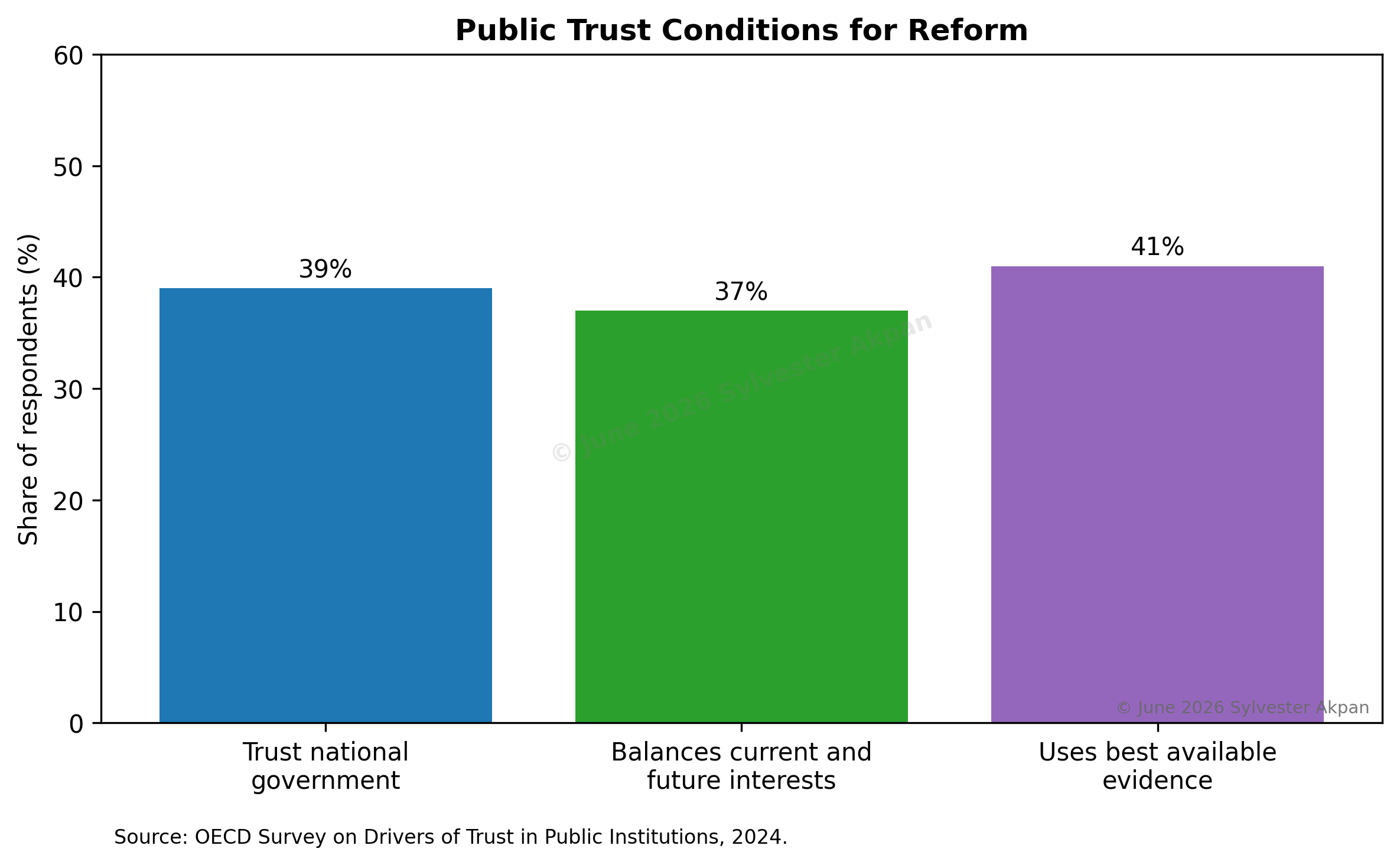
Figure 1. Public Trust Conditions for Reform.

Figure 2. Strategic Leadership Development Pathways.

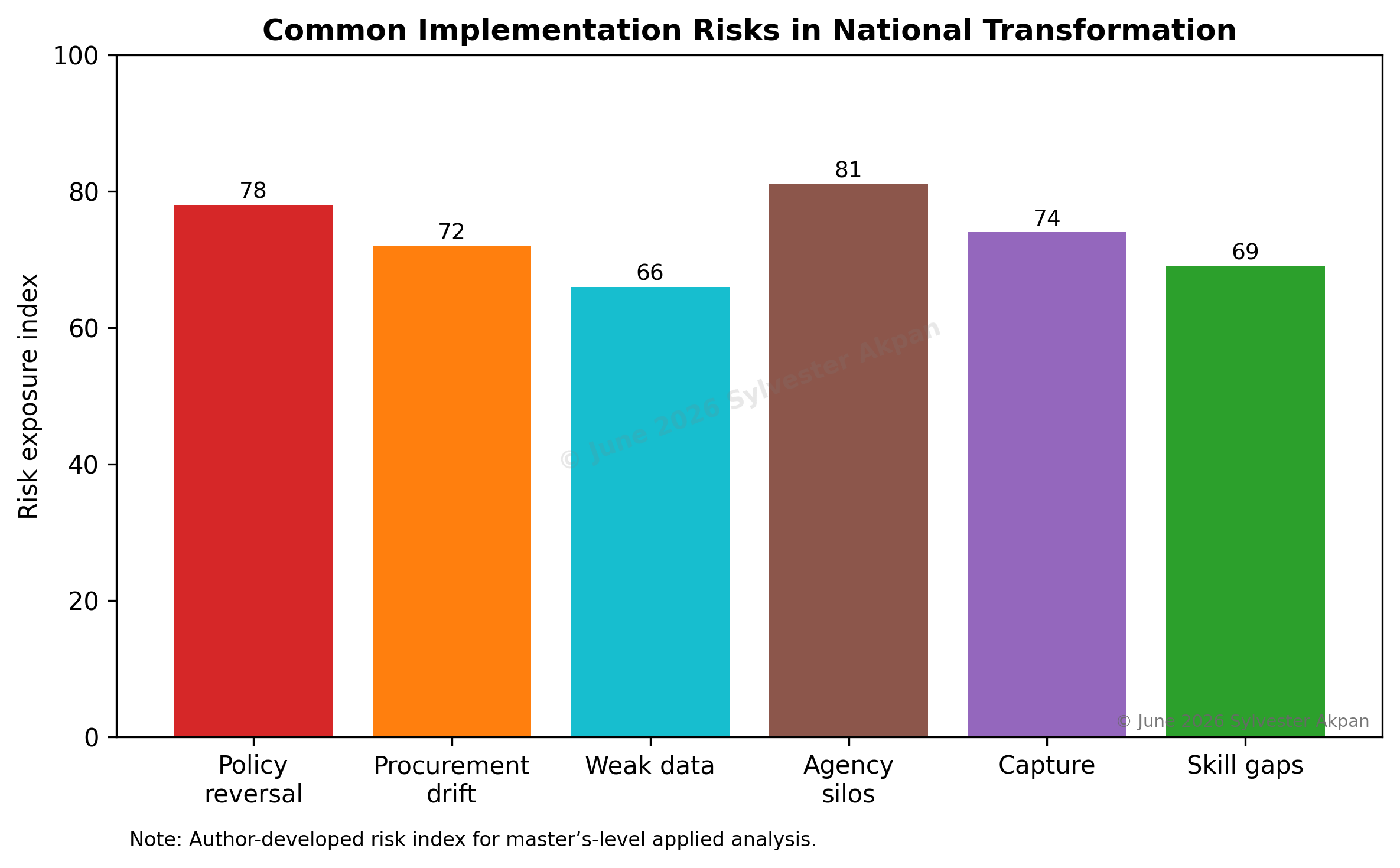
Figure 3. Common Implementation Risks in National Transformation.

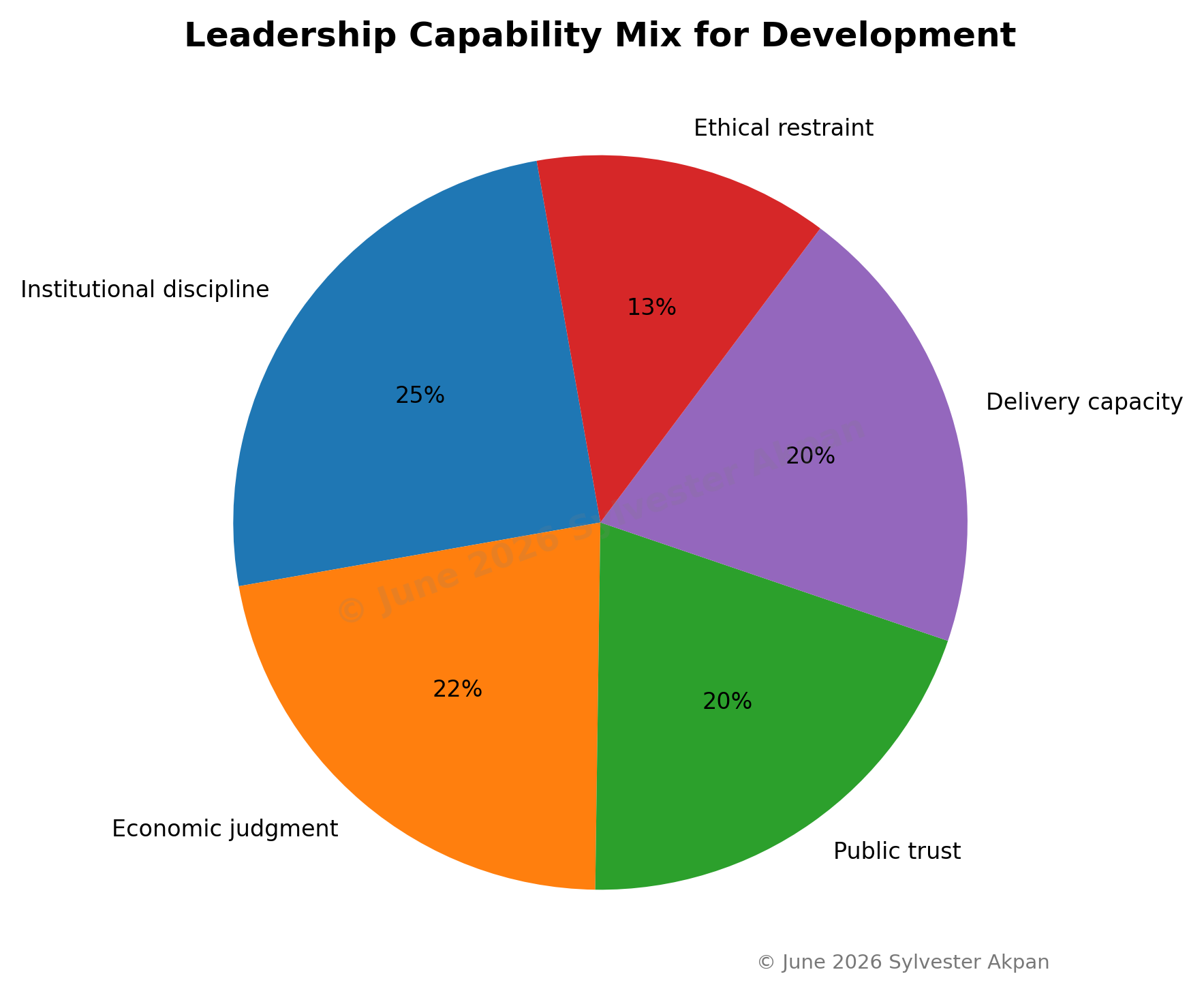
Figure 4. Leadership Capability Mix for Development.

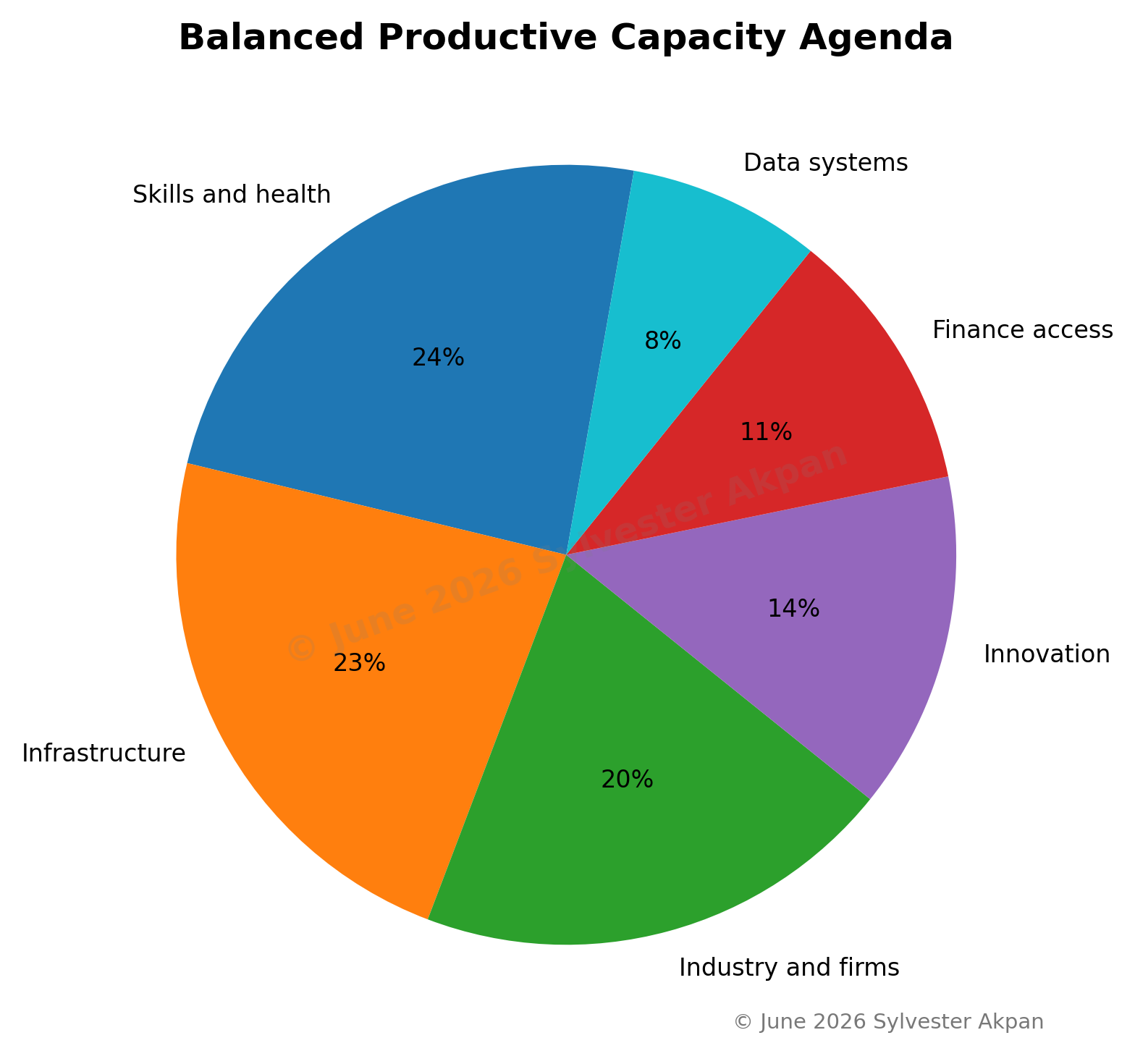
Figure 5. Balanced Productive Capacity Agenda.

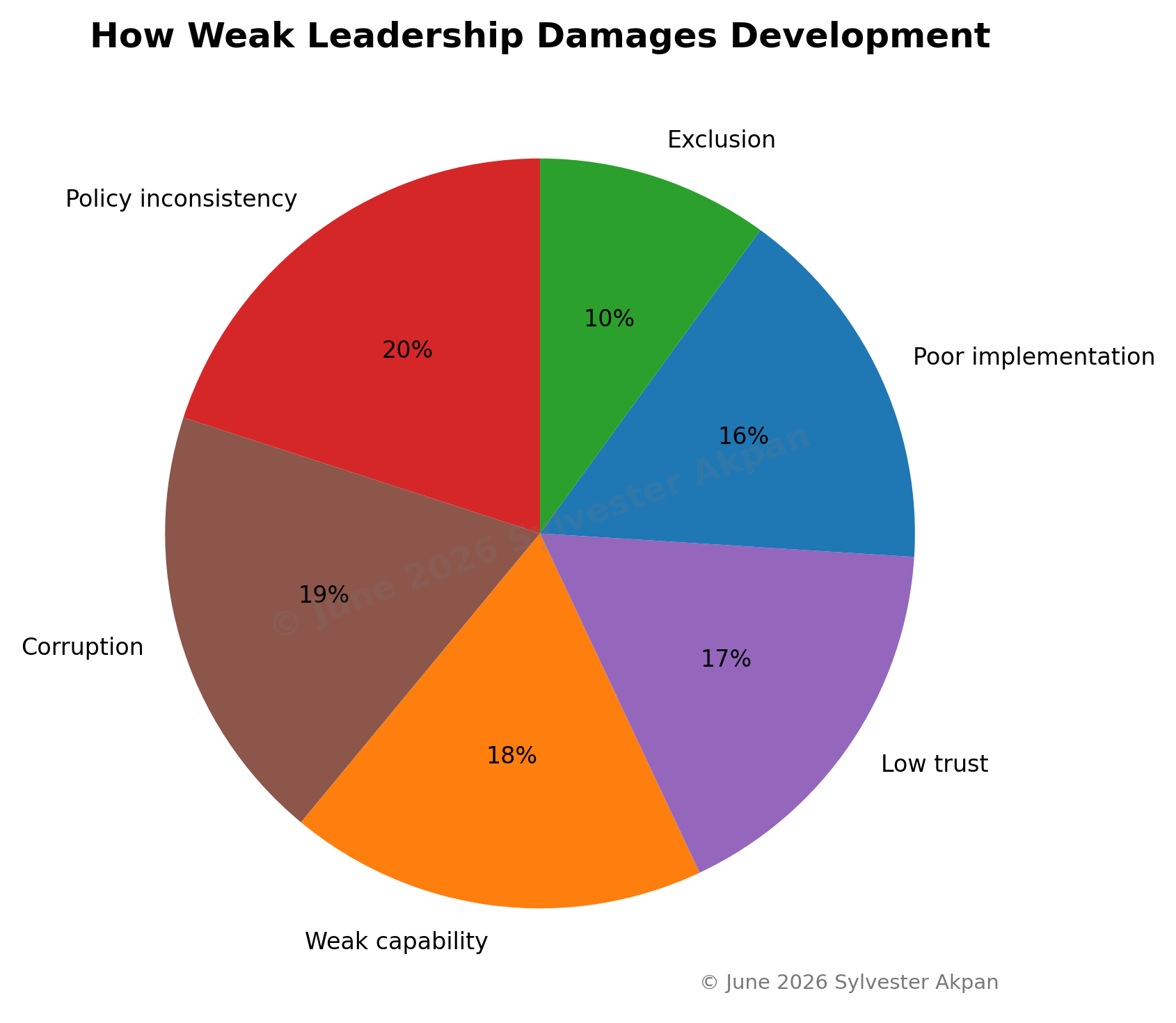
Figure 6. How Weak Leadership Damages Development.

Chapter 1: Introduction: Leadership Beyond Development Language

1.1 Development needs more than plans

Every country has a development story. Fewer countries have a development discipline. The difference is visible after speeches end. Roads may be announced, schools may be promised, industrial policy may be written, and digital transformation may be named as a national priority. Yet the daily evidence of development appears in less ceremonial places: completed contracts, trained teachers, traced public money, investors who believe the rules, young people who find skilled work, and public agencies that answer citizens without humiliation.

Strategic leadership matters because national development is too complex to be left to momentum. Natural resources, population size, geography, foreign investment, and policy documents can help a country, but none of them organizes itself. Leaders must decide which priorities deserve scarce funds, which interests require restraint, which institutions need protection, which sectors need patient support, and which promises should be abandoned because they cannot be delivered. Leadership becomes strategic when it makes those choices in ways that build national capability.

Ordinary political language often treats leadership as personality. A leader is described as bold, popular, charismatic, tough, or visionary. Such words may capture public feeling, but they are weak development tools. National transformation does not come from personality alone. It comes from the ability to build rules, coordinate agencies, protect professional competence, communicate difficult trade-offs, and keep reform alive after excitement fades. A country may admire a leader and still fail to transform if the systems beneath that leader remain fragile.

The central concern of this research publication is the gap between national ambition and national execution. Many governments speak confidently about growth, employment, infrastructure, technology, investment, and inclusion. The difficulty appears when the plan meets procurement, budget limits, patronage, weak data, unstable rules, debt pressure, and low trust. This publication therefore studies strategic leadership as the public capacity to connect national direction with institutional discipline and measurable improvement in people’s lives.

The argument does not deny the importance of economics. Growth, productivity, investment, trade, innovation, and fiscal stability remain central. Yet economics does not operate in a vacuum. Policies work through institutions. Institutions work through people. People respond to incentives, trust, fear, opportunity, and history. Strategic leadership matters because it shapes the conditions in which economic ideas become practical national action.

1.2 Why the question is urgent

The development environment has become less forgiving. Climate shocks damage farms, roads, cities, and public budgets. Debt obligations reduce room for investment. Technology changes the skills demanded by employers. Youth unemployment threatens social peace. Food and energy prices can destabilize households quickly. Digital platforms alter public debate and can weaken trust. Global competition for capital, talent, and manufacturing capacity has intensified. The United Nations Sustainable Development Goals report for 2025 presents a mixed global picture: progress exists, yet it remains fragile, uneven, and too slow for many targets (United Nations, 2025).

These pressures place unusual weight on leadership quality. A government that wastes good years may enter crisis without reserves, without trust, and without implementation capacity. A government that uses good years to build institutions, skills, infrastructure, and fiscal credibility may absorb shocks with less social damage. Strategic leadership is therefore a development insurance system. It cannot prevent every shock, but it can decide whether a country meets shock with preparation or improvisation.

Middle-income countries face a related warning. The World Bank’s 2024 development report argues that many economies must move beyond investment alone and build capacity for technology adoption and innovation if they are to escape stagnation (World Bank, 2024). That warning has leadership implications. It is easier to fund visible projects than to improve learning, competition, managerial quality, research links, and the spread of technology across firms. Strategic leadership asks whether public action is raising productivity or only increasing expenditure.

Trust has also become a central development variable. The OECD’s 2024 survey found that 39 percent of respondents across participating countries trusted their national government, 37 percent believed government balanced current and future interests, and 41 percent believed government used the best available evidence in decisions (OECD, 2024). Those figures matter beyond OECD countries because they show how difficult reform becomes when citizens doubt competence, fairness, and long-term stewardship. A society cannot be led through painful transition by slogans alone.

1.3 Aim, questions, and contribution

The aim of this research publication is to examine how strategic leadership can support national economic transformation by strengthening institutions, improving policy execution, expanding productive capacity, and building inclusive growth. The paper is written at master’s level. It does not pretend to exhaust every theory of development, nor does it present country-level econometric proof. It offers a clear analytical framework for students, public leaders, policy practitioners, and civic actors who need to understand why leadership quality matters for development outcomes.

The guiding questions are practical. What does strategic leadership mean when the unit of analysis is a nation rather than a company? How does leadership shape institutions, policy credibility, investment behavior, public trust, and productive capacity? Which leadership failures repeatedly damage economic development? What kind of leadership model can help countries move from planning language to sustained national capability? These questions keep the discussion grounded in public consequences rather than abstract praise of leadership.

The contribution lies in synthesis. Leadership theory often focuses on influence, motivation, and adaptation. Institutional economics focuses on rules and incentives. Development studies focuses on capability, productivity, and structural change. Public governance literature focuses on trust, accountability, and policy effectiveness. This research publication brings those strands together. It argues that strategic leadership is the practice that binds direction, institutions, markets, public service, citizen trust, and implementation into one development project.

Such a synthesis is useful because development failure rarely comes from one weakness. A country may have a sound industrial plan but weak power supply. It may train young people but fail to create firms that can hire them. It may attract investors but damage trust through policy reversal. It may announce anti-corruption reform while procurement remains opaque. Strategic leadership matters because it sees these connections and refuses to let one ministry’s success hide the failure of the whole system.

Chapter 2: Literature Review and Conceptual Foundations

2.1 Leadership as public capability

Leadership theory offers several useful lenses. Transformational leadership stresses vision and motivation. Adaptive leadership stresses the work of helping people face difficult problems without easy technical fixes (Heifetz et al., 2009). Strategic leadership links direction to long-term positioning, institutional capability, and execution. In national development, the strategic element is decisive because the leader is not guiding one organization alone. The leader is shaping the conditions under which public agencies, firms, workers, investors, communities, and civil society act together.

At national level, leadership should be understood as public capability. The leader who matters is not the one who dominates the state, but the one who helps the state perform. Public capability includes policy skill, administrative discipline, fiscal responsibility, legal predictability, professional public service, data use, social negotiation, and the ability to learn from failure. A leader may begin with vision, but that vision becomes valuable only when institutions can carry it.

This distinction protects the study from hero worship. Development history contains strong leaders, but personal authority without institutionalization often leaves countries exposed when that leader exits. Durable development requires institutions that continue to work across administrations. North (1990) argued that institutions structure human interaction by reducing uncertainty. Strategic leadership builds such institutions, even when they limit personal discretion. That restraint is a sign of seriousness, not weakness.

Acemoglu and Robinson (2012) sharpen the point by distinguishing inclusive institutions from extractive ones. Inclusive institutions broaden opportunity and support investment, enterprise, and participation. Extractive institutions concentrate power and wealth among narrow groups. Strategic leadership is tested by this choice. A leader can use state power to widen productive opportunity or to protect a small circle. The economic consequences are not cosmetic. They shape who invests, who works, who leaves, and who trusts the future.

2.2 Institutions and governance

The World Bank’s governance work is useful because it frames development as a problem of commitment, coordination, and cooperation (World Bank, 2017). A policy may be technically sound yet fail if leaders cannot commit credibly, if agencies cannot coordinate, or if citizens and firms do not cooperate because they distrust the rules. Leadership therefore operates in a political and institutional arena, not in an engineering laboratory.

Commitment refers to whether actors believe that promises will hold. Investors ask whether tax rules, property rights, contracts, and regulations will change suddenly. Citizens ask whether reform will benefit the country or a protected few. Civil servants ask whether professional work will be rewarded or punished by political interference. Strategic leadership builds commitment by making rules predictable, reducing arbitrary discretion, and protecting institutions from personal manipulation.

Coordination refers to the alignment of actors who depend on one another. Industrial policy cannot work if energy, transport, finance, skills, export agencies, and regulation move in different directions. Education reform cannot work if curriculum, teacher training, employment markets, and public finance are disconnected. The leader’s task is to make the state less fragmented. Coordination is not a speech about teamwork; it is a method for aligning authority, budgets, and responsibilities.

Cooperation refers to the willingness of citizens, firms, communities, and public agencies to act in ways that support common goals. Cooperation depends on trust, legitimacy, and credible benefit. The OECD trust findings are relevant here because they show the link between confidence in government and the perceived use of evidence, fairness, and future-oriented decision making (OECD, 2024).

2.3 Productive capacity and structural change

Development is not the same as spending. A government may increase expenditure and still leave the economy no more productive. Productive capacity refers to the ability of people, firms, farms, public systems, and sectors to create more value over time. It includes skills, health, infrastructure, technology, finance, management, innovation, and rules that support enterprise. Sen’s capability approach matters because it reminds development scholars that people are not instruments of growth; they are the purpose and carriers of development (Sen, 1999).

Porter (1990) placed productivity at the center of national competitiveness. His work remains valuable because it moves attention from natural advantage to the quality of firms, clusters, skills, infrastructure, and the business environment. Countries do not become wealthy because they possess resources alone. They become productive when resources are combined with competence, innovation, and disciplined systems. Strategic leadership must therefore ask how public action improves the capacity of citizens and firms to create value.

Rodrik (2008) and Mazzucato (2013) offer important guidance on the role of the state. Markets matter, yet markets do not always create the public goods, long-term investments, research systems, or coordination required for transformation. Public leadership can shape markets toward social value when it is disciplined, transparent, and tied to performance. The risk is capture. Industrial policy can build capability, or it can become a channel through which protected firms receive favors without learning. Leadership quality determines which path becomes more likely.

The World Bank’s 2024 report on the middle-income trap reinforces this concern by emphasizing investment, technology infusion, and innovation as economies become more sophisticated (World Bank, 2024). Strategic leadership must therefore move beyond project counting. It must ask whether the country is learning, whether firms are upgrading, whether workers are gaining relevant skills, whether infrastructure reduces real costs, and whether public support produces measurable performance.

2.4 Trust, ethics, and implementation

Public trust is not soft. It has economic consequences. Trust influences tax compliance, willingness to accept reform, use of public services, investor confidence, and social stability. A government that repeatedly overpromises and underdelivers forces citizens to discount official statements. A government that treats public money as private opportunity teaches firms and households that rules are negotiable. Ethical failure therefore becomes economic failure.

Corruption damages national transformation by raising transaction costs, distorting procurement, discouraging honest firms, weakening tax morale, and moving talent toward rent-seeking rather than production. Anti-corruption speeches rarely solve the problem. Strategic leadership fights corruption through systems: transparent procurement, audit independence, asset disclosure, digital payments, credible prosecution, and consequences that reach powerful actors. When enforcement is selective, public cynicism grows.

Implementation literature adds another caution. Andrews, Pritchett, and Woolcock (2017) describe how states can fall into capability traps, adopting the appearance of reform without building the ability to perform. A country may create agencies, publish strategies, and hold conferences while daily delivery remains weak. Strategic leadership must therefore treat implementation as the test of policy. A plan that cannot be funded, staffed, monitored, and corrected is not yet a development instrument.

The literature leads to a simple conclusion: leadership matters because national development is a coordination problem, a trust problem, an institutional problem, and a productivity problem at the same time. The leader who treats development as a list of projects will miss the deeper work. The leader who sees development as national capability has a better chance of building progress that survives political noise.

Chapter 3: Methodology and Analytical Design

3.1 Research design

This research publication uses a qualitative conceptual design. It does not attempt to measure leadership through a survey, nor does it estimate the statistical effect of leadership on gross domestic product. Such measurement would require country-level data, time-series design, and careful controls for geography, history, demography, commodity prices, conflict, and global shocks. The purpose here is different. The study develops an applied framework that explains how strategic leadership contributes to national economic transformation.

A conceptual design is suitable because the subject sits across several fields. Leadership theory helps explain direction, adaptation, and influence. Institutional economics explains rules and incentives. Development studies explains capability, productivity, and structural change. Public governance explains trust and policy effectiveness. No single dataset can carry these issues alone. The research therefore works through synthesis, interpretation, and applied reasoning.

The source base includes academic books, peer-reviewed work, and current institutional reports. North, Acemoglu and Robinson, Sen, Rodrik, Porter, Mazzucato, and Andrews with colleagues provide core theoretical grounding. The World Bank, OECD, UNDP, and United Nations sources provide current policy context. The use of these sources is disciplined. They are not decorative references. Each source is connected to a specific question about institutions, trust, human capability, structural transformation, or implementation.

The method is appropriate for a master’s-level research publication because it demonstrates analytical control without pretending to offer doctoral-level original fieldwork. It teaches the reader to reason from established literature toward a practical leadership framework. It also avoids the weakness of treating leadership as motivation. The analysis stays close to institutions, policies, budgets, trust, and capability.

3.2 Analytical framework

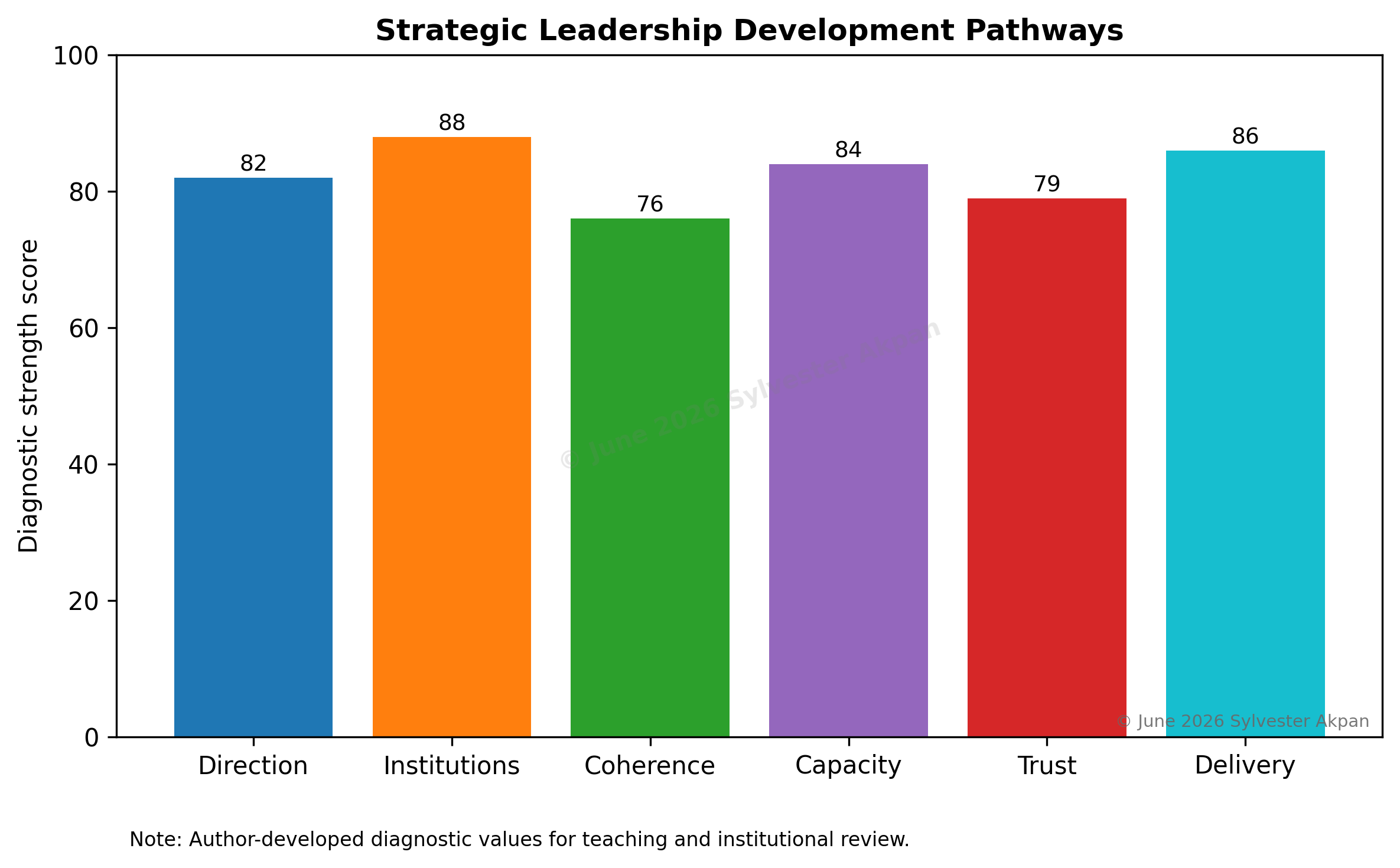
The analytical framework is built around six connected domains: national direction, institutional quality, policy coherence, productive capacity, public trust, and accountable delivery. These domains were selected because they appear repeatedly in the literature and in development practice. National direction gives reform a destination. Institutional quality makes action predictable. Policy coherence reduces contradiction. Productive capacity raises the economy’s ability to create value. Public trust sustains cooperation. Accountable delivery turns promises into results.

National direction does not mean one rigid plan. It means a credible answer to the question of what kind of economy the country intends to build. Direction should guide infrastructure, education, industry, public finance, trade, and innovation. Institutional quality concerns the rules, agencies, courts, regulators, and public-service systems through which policy becomes practice. Policy coherence concerns the alignment of sectors that depend on one another.

Productive capacity is the heart of economic transformation. A country becomes more developed when its people, firms, farms, and institutions produce more value with greater skill and reliability. Public trust gives reform social permission. Accountable delivery ensures that announcements are followed by action, monitoring, correction, and visible results. These domains are interdependent. Weakness in one area often damages the rest.

The framework treats leadership as the discipline of holding these domains together. It does not ask whether a leader sounds inspiring. It asks whether national systems become more capable, productive, trusted, and inclusive under that leadership. That shift from personality to institutional performance is the paper’s central methodological commitment.

3.3 Use of figures

The publication includes six figures and no tables. The figures are designed to teach, not to decorate. Figure 1 uses OECD trust indicators to show why public confidence matters to reform. The remaining figures are author-developed diagnostics that help readers visualize leadership pathways, implementation risks, capability balance, productive-capacity priorities, and failure modes.

All charts are clearly marked as either source-based or illustrative. The diagnostic charts do not claim official national rankings or empirical measurement. They help students and practitioners discuss relative emphasis, risk exposure, and leadership judgment. This is important because master’s-level work should demonstrate both conceptual understanding and practical communication. Visual analysis becomes useful when it clarifies the argument without pretending to prove more than it can support.

Each chart carries a copyright watermark in the name of Sylvester Akpan with June 2026. The watermark protects authorship while preserving a clean professional appearance. The charts can be used later in teaching, presentations, or research seminars, provided the authorship mark remains intact.

3.4 Limitations

The study has limits. It does not provide original interviews with political leaders, civil servants, investors, or citizens. It does not compare specific countries through a full case-study method. It does not test a numerical model of leadership and growth. Readers should therefore treat the framework as an analytical tool rather than a final empirical verdict on any country.

These limits do not weaken the purpose of the work. A master’s-level publication can still make a serious contribution by organizing evidence, clarifying concepts, and producing a practical framework. The value lies in helping readers understand why development plans fail when leadership, institutions, trust, and implementation are misaligned. The framework can guide later fieldwork, country studies, policy assessment, or leadership training.

Another limitation concerns the word leadership itself. Leadership can become a convenient explanation for every national problem. This study avoids that mistake. Development outcomes are shaped by history, geography, global markets, demography, technology, conflict, and climate. Leadership does not control all of those forces. It does influence how a country prepares for them, learns from them, and protects its people from avoidable institutional failure.

Chapter 4: Institutions, Direction, and the Discipline of National Capability

4.1 Direction as a serious public act

National direction is often confused with slogans. A country may declare itself open for business, ready for industrialization, committed to youth employment, or prepared for digital growth. Such statements can help mobilize attention, but they do not create direction unless they are connected to budgets, laws, institutions, and a credible sequence of action. Direction becomes serious when it changes what the state funds, measures, protects, and stops doing.

A strategic leader should define development in terms that citizens, firms, investors, and public agencies can understand. The question is not how many priorities can be listed. The question is whether priorities discipline action. If manufacturing is a national priority, energy, transport, technical education, standards, finance, and export support must be aligned. If food security is a priority, agriculture must be linked to storage, roads, irrigation, finance, research, and markets. Direction is proven by alignment.

Direction also prevents national drift. Without it, ministries chase separate agendas, politicians compete for visible projects, and public money follows pressure rather than productivity. A leader can speak about transformation while the state continues funding low-impact consumption, duplicated agencies, and projects designed for publicity. The discipline of direction asks whether public choices are moving the country toward a more productive and inclusive economy.

4.2 Institutions outlast speeches

Institutional strength is the bridge between leadership intention and national capability. A strong leader may begin reform, but only institutions can sustain it. Ministries, courts, tax authorities, regulators, schools, procurement agencies, public banks, local governments, statistical offices, and audit bodies determine whether policy becomes daily practice. When these institutions are weak, development becomes personalized and unstable.

Personalized development is expensive. A business may need access to a minister rather than confidence in rules. A community may need a patron rather than a service right. A project may move because a powerful figure sponsors it, then stall when that person leaves. Such systems produce uncertainty. They also reward political connection over competence. Strategic leadership should reduce this dependency by strengthening institutions even when doing so limits the leader’s own freedom.

North’s institutional analysis helps explain why this matters (North, 1990). Stable rules reduce uncertainty and allow people to plan. Inclusive institutions widen participation and encourage investment (Acemoglu & Robinson, 2012). The leader who builds such institutions is building a national asset. The leader who weakens them for personal control is spending national trust for short-term advantage.

Institution-building requires patience. It involves training public servants, improving data, protecting courts, simplifying regulations, digitizing services, strengthening audit, reducing discretion in procurement, and making agencies answerable for performance. None of this produces the immediate applause of a large ceremony. Yet without it, national plans remain vulnerable to manipulation and drift.

4.3 Policy coherence as leadership work

Policy coherence is one of the quiet tests of strategic leadership. Governments often create development failure by pursuing good ideas in disconnected ways. A ministry promotes exports while ports remain inefficient. A government subsidizes agriculture while storage and extension services remain weak. A country expands university enrollment while industry cannot absorb graduates. Such contradictions waste money and damage trust.

Coherence requires more than inter-ministerial meetings. It requires a shared national agenda, budget alignment, clear responsibilities, and a mechanism for resolving conflict between agencies. Strategic leadership creates a forum where economic, social, fiscal, industrial, education, infrastructure, and regional policies can be examined together. The leader’s role is to prevent one sector from pretending that its plan can succeed without the others.

Coherence also requires saying no. A development agenda crowded with every demand becomes unmanageable. Political systems naturally multiply promises because every constituency wants recognition. Strategic leadership must protect focus. Some projects will need to wait. Some programs should be closed. Some subsidies should be redirected. Some reforms should be sequenced because the state lacks capacity to do everything at once. This is politically difficult, but development discipline depends on it.

Budget coherence is especially important. The real development plan is not the document on a website; it is the public budget and the quality of execution behind it. When budgets do not reflect stated priorities, citizens learn that planning language is not serious. When budgets fund priorities but procurement and delivery fail, the problem shifts from planning to capability. Strategic leadership must see both.

4.4 National capability as the measure

National capability is a stronger measure than political noise. It asks whether a country becomes better able to produce, govern, learn, protect, and include. A leader may win attention through speech, conflict, or publicity, yet leave the country no more capable than before. Another leader may be less theatrical but build schools, public finance systems, industrial platforms, health services, and institutions that continue to serve after the news cycle moves on.

The capability test is practical. Are tax systems more credible? Are public accounts clearer? Are skills improving? Are firms more productive? Are infrastructure projects completed and maintained? Are procurement systems less vulnerable to capture? Are local governments able to deliver? Are citizens more willing to trust institutions? Strategic leadership should be judged by these questions because they reach beyond personality.

Figure 2. Strategic Leadership Development Pathways.

Note. Author-developed diagnostic values for teaching and institutional review.

The diagnostic view of leadership development pathways treats direction, institutions, coherence, capacity, trust, and delivery as mutually reinforcing. A country may be strong in one area and weak in another. The point is not to produce a universal score. The point is to help leaders see that national transformation requires several forms of discipline at once.

Chapter 5: Productive Capacity, Human Capital, and Inclusive Growth

5.1 Productive capacity as the heart of transformation

National development becomes durable when the economy gains the ability to produce more value over time. Productive capacity is the broad term for that ability. It includes educated and healthy people, reliable infrastructure, firms that can learn, financial systems that support enterprise, public agencies that reduce friction, and markets that reward productivity rather than connection. A country can record growth without deep transformation, especially when growth depends on commodities, debt, or consumption. Productive capacity asks what remains after spending.

Sen’s capability approach helps keep the human purpose visible (Sen, 1999). Development is not only the expansion of output; it is the expansion of people’s real freedoms to live lives they value. That insight matters because productive capacity is not a cold economic category. It depends on whether people are healthy enough to work, educated enough to learn, secure enough to plan, and included enough to contribute.

A strategic leader therefore treats education, health, and skills as economic foundations. A country that underfunds primary education, neglects technical training, tolerates weak health systems, or ignores youth unemployment is damaging its own productive base. Natural resources can generate revenue, but people generate continuing national capability. Leaders who understand this invest in the slow systems that raise human competence.

Productive capacity also requires firms that can upgrade. Small businesses need finance, infrastructure, management skills, predictable regulation, and access to markets. Larger firms need competition, technology, skilled labor, and export discipline. Agriculture needs research, storage, roads, irrigation, land security, and market information. Public leadership cannot replace private enterprise, but it can create the conditions in which enterprise becomes more productive.

5.2 Human capital and the discipline of patience

Human capital is one of the least patient forms of development investment. Early education may take years to show labor-market effects. Health improvements may be politically invisible until crisis arrives. Technical institutes may require persistent funding before employers trust their graduates. Research capacity may mature slowly. Strategic leadership is needed because short-term politics often undervalues what cannot be celebrated immediately.

Education policy should be judged by learning, not by enrollment alone. A country may place children in school without giving them literacy, numeracy, problem-solving skills, and discipline needed for work and citizenship. Technical education should connect to real sectors rather than generic certificates. Universities should contribute to research, public reasoning, entrepreneurship, and professional competence. These demands require governance, funding, data, and links to industry.

Health policy also belongs in economic strategy. Sick workers cannot sustain productivity. Families pushed into poverty by medical costs lose resilience. Public health failure can shut down markets, schools, and transport. The COVID-19 experience made clear that health systems are economic infrastructure. Strategic leadership must resist the habit of treating health as a social expense detached from growth.

Human capital also includes civic and ethical formation. A country cannot build productive systems if dishonesty is normalized, public service is despised, and young people learn that connection matters more than competence. Development leadership must therefore shape incentives and values. It must show that work, skill, integrity, and service are rewarded. This is not moral decoration; it is part of national productivity.

5.3 Industrial policy without capture

Industrial policy has returned to global discussion because countries have rediscovered the strategic importance of production, technology, supply chains, and domestic capability. Rodrik’s work helps explain why states may need to identify constraints, coordinate investment, and support structural change (Rodrik, 2008). Mazzucato’s work also shows that public investment has often played a major role in technological advancement (Mazzucato, 2013). The lesson is not that government should control every market. The lesson is that public leadership shapes the conditions in which markets learn.

The risk is capture. Public support can become a private gift to firms with political access. Subsidies can protect inefficiency. Import restrictions can enrich a few without building competitive capacity. Industrial policy becomes developmental only when support is tied to performance, learning, jobs, exports, technology adoption, or productivity gains. Strategic leadership must design support that can be withdrawn when firms fail to meet obligations.

Productive transformation also needs infrastructure that reduces real costs. Roads, power, ports, broadband, rail, water systems, and logistics shape what firms can do. A factory without reliable power is not competitive. A farmer without storage loses value. A digital entrepreneur without connectivity remains trapped by geography. Infrastructure should therefore be selected by its contribution to productivity and inclusion, not by political visibility alone.

Figure 5. Balanced Productive Capacity Agenda.

Note. Author-developed diagnostic chart for applied development planning.

The balanced productive-capacity agenda in the figure shows that transformation needs more than one investment class. Skills and health, infrastructure, firms, innovation, finance, and data systems are connected. A country that overinvests in one area while neglecting the others may create impressive projects without broad transformation.

5.4 Inclusion as economic intelligence

Inclusive growth is sometimes described as moral concern added to economic policy after growth has occurred. That is too narrow. Exclusion wastes talent. When women, youth, rural communities, minority groups, displaced persons, or poor households cannot access education, finance, land security, digital tools, or decent work, the country loses productive energy. Inclusion is therefore economic intelligence as well as social justice.

Strategic leadership links inclusion to productivity. Cash transfers may reduce immediate hardship, but they cannot stand alone. Inclusion should also open pathways to skill, enterprise, infrastructure, health, credit, and formal work. A development agenda that only distributes benefits without raising capability will struggle to sustain itself. A growth agenda that raises output while excluding large groups will create social instability.

Regional inclusion matters as well. National development can become politically fragile when growth concentrates in one city or one sector. Infrastructure, education, digital access, and enterprise support should help regions participate in national productivity. This does not mean every region does the same thing. It means each region should have a credible place in the national development project.

Strategic leadership also requires listening to the lived economy. Official indicators may show progress while households experience high prices, poor transport, weak schools, and job insecurity. Leaders need channels that bring citizen experience into policy review. Without those channels, development becomes a story told from the capital city, not a reality experienced across the country.

Chapter 6: Public Trust, Ethics, and Implementation

6.1 Trust as development capital

Trust is a form of development capital because it reduces the cost of cooperation. Citizens who trust public institutions are more likely to pay taxes, comply with rules, accept reform, report wrongdoing, and participate in public programs. Firms that trust rules are more willing to invest. Communities that trust leaders are more patient with long-term projects. When trust is low, every policy becomes harder to execute.

Figure 1. Public Trust Conditions for Reform.

Note. OECD 2024 indicators are used to show why public confidence matters to reform.

The OECD trust indicators show how difficult this problem can be. If fewer than half of respondents trust national government, believe evidence is used, or believe current and future interests are balanced, leaders face a credibility gap before any reform begins (OECD, 2024). The point is not to treat OECD countries as the whole world. The point is to show that trust challenges exist even in high-capacity settings. Developing countries with weaker institutions may face deeper difficulty.

Trust cannot be manufactured through publicity. Citizens judge leaders by consistency, fairness, competence, honesty, and whether powerful actors are held to the same rules as ordinary people. A government that asks for sacrifice while protecting privilege destroys its own reform capacity. A government that admits trade-offs, publishes data, corrects failure, and treats citizens with respect can build trust even when resources are limited.

Development policy often fails because leaders underestimate the emotional memory of citizens. People remember abandoned projects, broken promises, corruption scandals, police abuse, unpaid salaries, and services that humiliated them. Strategic leadership does not assume trust. It earns trust through repeated visible behavior.

6.2 Ethics and the cost of corruption

Corruption is one of the most destructive forms of leadership failure because it turns public authority into private opportunity. It raises the cost of roads, weakens schools, damages hospitals, drives honest firms away, and teaches citizens that merit is less important than access. It also damages the internal morale of the public service. Competent officials become cynical when they see impunity rewarded.

Anti-corruption strategy needs systems rather than dramatic declarations. Transparent procurement, digital payments, open contracting, asset declaration, beneficial ownership reporting, independent audit, protected whistleblowing, and credible judicial process matter more than televised anger. Selective enforcement may frighten opponents, but it does not build integrity. Strategic leadership treats integrity as a national operating system.

Ethical leadership also involves restraint in public finance. Borrowing can be justified when it builds productive assets that strengthen future capacity. Borrowing becomes dangerous when it funds waste, prestige projects, or recurrent spending without revenue reform. Citizens should be told what debt is financing and how repayment will be managed. Fiscal opacity weakens trust and limits future choices.

Ethics is also about appointments. A state that rewards loyalty over competence pays a development price. Ministries, regulators, schools, hospitals, public enterprises, and local governments cannot perform when leadership roles are filled by patronage without capability. Strategic leadership uses appointments to build national competence, not personal networks.

6.3 Implementation as the real test

Implementation separates development leadership from development language. Many countries can produce plans that sound convincing. Delivery exposes whether responsibilities are clear, budgets are real, procurement is competent, data are reliable, and political support holds after launch. The implementation gap is where public trust is often lost.

Andrews, Pritchett, and Woolcock (2017) warn against capability traps, where governments adopt the appearance of reform without gaining the ability to perform. This pattern is common where development agencies, consultants, or political leaders reward plans, strategies, and reports more than actual delivery. Strategic leadership asks whether reforms change behavior in ministries, schools, clinics, firms, courts, and local governments.

Implementation needs clear ownership. A policy that belongs to everyone may belong to no one. Each major priority should have a responsible institution, funding source, milestones, delivery risks, and a review process. Monitoring should be honest enough to identify delay early. A leader who punishes bad news destroys the feedback needed for better performance.

Implementation also requires learning. No development policy works exactly as planned. Prices change, contractors fail, local conditions differ, political resistance appears, technology shifts, and citizens respond in unexpected ways. Strategic leadership does not treat adjustment as humiliation. It treats adjustment as evidence of seriousness. A reform that learns can survive; a reform that pretends can collapse.

6.4 Communication and public explanation

Public explanation is part of implementation. Citizens do not need leaders to pretend that hard choices are easy. They need leaders to explain why a choice is necessary, who will carry the burden, what safeguards exist, and how results will be measured. Reform often fails when leaders announce the benefit but hide the cost. That creates suspicion when the cost appears.

Good communication is specific. It avoids inflated promises. It names trade-offs. It distinguishes short-term hardship from long-term gain. It shows how powerful interests are being treated. It gives citizens channels for complaint and correction. It also avoids treating criticism as disloyalty. In democratic development, criticism can be a source of learning when leaders are mature enough to listen.

Strategic communication is especially important for reforms involving subsidy removal, tax reform, industrial transition, public-sector restructuring, or anti-corruption enforcement. These reforms create losers as well as winners. If the public believes the burden is unfair, reform may fail even when the technical case is sound. Trust and communication therefore belong inside the reform design, not after it.

Figure 3. Common Implementation Risks in National Transformation.

Note. Author-developed risk index for master’s-level applied analysis.

The implementation risk chart summarizes pressures that commonly weaken national transformation. Policy reversal, procurement drift, weak data, agency silos, capture, and skill gaps can destroy a policy that looked strong on paper. Strategic leadership names such risks before they become excuses.

Chapter 7: Weak Leadership, Development Failure, and Reform Risk

7.1 How leadership failure appears

Weak leadership does not always look weak at the beginning. It may arrive with strong language, large ceremonies, and urgent promises. The weakness appears later, when policies reverse without explanation, projects stall, corruption spreads, competent people leave, or citizens stop believing official announcements. Development failure often begins as a gap between words and systems.

One common failure is policy inconsistency. Investors, farmers, schools, and public agencies need predictable rules. When rules change abruptly, planning becomes risky. Firms delay investment. Households keep savings informal. Public servants wait for the next political instruction. A country can lose years through constant resets. Strategic leadership protects continuity where national priorities require time.

Another failure is institutional decay. Leaders who treat institutions as personal tools weaken the state. Courts become less credible, audit bodies become silent, regulators become selective, and public enterprises become vehicles of patronage. Once institutional decay becomes normal, reform becomes harder because citizens no longer believe that rules apply fairly.

Corruption is both a symptom and a cause of weak leadership. It shows that public authority has been captured, and it further weakens the systems needed to correct capture. The development cost includes wasted funds, poor infrastructure, low morale, weak services, and loss of investor confidence. A country may have enough money for development and still fail because money leaks through corrupt systems.

7.2 The trap of short-term politics

Short-term politics is one of the strongest enemies of transformation. Election cycles reward visible projects, immediate relief, and dramatic announcements. Development often requires patient investment in institutions, maintenance, skills, research, and prevention. These investments are less visible, yet they determine future capacity. Strategic leadership must balance immediate needs with long-term nation-building.

Short-termism appears when governments underfund maintenance because new projects look better in photographs. It appears when leaders prefer cash distribution to productivity investment. It appears when reforms are abandoned because benefits will not arrive before the next election. It appears when public employment is expanded without service improvement because political reward is immediate. Each decision may seem manageable; together they weaken transformation.

The problem is not that citizens should wait endlessly for development. Immediate hardship is real. Public leadership must respond to suffering. The issue is whether relief is connected to capability. A well-designed social program can protect households while supporting education, health, and work. A poorly designed program may buy temporary approval while leaving productivity untouched.

Strategic leadership requires a political skill that is often underappreciated: the ability to explain delayed benefit. Leaders must help citizens see why training, infrastructure maintenance, fiscal discipline, health systems, and institutional reform matter. Without public explanation, long-term investments become vulnerable to populist attack.

7.3 Capture, exclusion, and lost opportunity

Capture occurs when public policy is shaped by narrow interests at the expense of the wider national good. It may involve politically connected firms, regional elites, party financiers, public-sector insiders, or informal networks that control access to opportunity. Capture damages development because it shifts reward from productivity to proximity to power.

Exclusion is another form of lost opportunity. When large groups are kept outside education, finance, land security, public services, formal employment, or digital access, the country suppresses its own talent. The costs may not appear immediately in national accounts, but they are felt in low productivity, migration pressure, social frustration, and political instability.

Weak leadership often accepts capture because it is politically convenient. Strategic leadership confronts capture because it understands the long-term price. Reforming procurement, land administration, licensing, public employment, and regulation may provoke resistance from those who benefit from the old system. Leaders who cannot face that resistance will struggle to build national capability.

Figure 6. How Weak Leadership Damages Development.

Note. Author-developed teaching chart showing how leadership failure modes reinforce one another.

The failure-modes chart helps readers see how policy inconsistency, corruption, weak capability, low trust, poor implementation, and exclusion reinforce one another. Development failure usually has several causes working together.

7.4 Reform risk and the need for sequencing

Reform can fail even when leaders are sincere. Some reforms are technically sound but politically unprepared. Some are needed but poorly sequenced. Some demand administrative capacity that does not yet exist. Some create pain before benefits are visible. Strategic leadership therefore treats reform as a managed process rather than a heroic announcement.

Sequencing matters. A government may need to strengthen safety nets before removing a subsidy. It may need to improve tax administration before raising rates. It may need to train regulators before opening a complex sector. It may need to build citizen trust before asking for sacrifice. Poor sequencing can turn a good policy into a public crisis.

Reform also requires protection against reversal. Development compacts, legal frameworks, independent institutions, cross-party agreements, and citizen monitoring can help protect long-term priorities. None of these eliminates politics. They make it harder for every election to destroy the national development path.

Strategic leadership should therefore ask two questions before major reform: what could make this fail, and who will bear the cost if it does? Those questions create humility. They also force leaders to design safeguards before harm appears.

Chapter 8: Strategic Leadership Framework for National Economic Transformation

8.1 The transformation framework

The framework proposed in this research publication rests on six pillars: direction, institutions, coherence, productive capacity, trust, and accountable delivery. Each pillar answers a different development need. Direction gives the country a credible path. Institutions make rules predictable. Coherence aligns sectors. Productive capacity raises value creation. Trust sustains cooperation. Accountable delivery turns policy into results.

The framework is intentionally practical. A president, minister, governor, mayor, civil servant, development agency, university program, or civic organization can use it to ask where the development chain is weak. Is national direction clear? Are institutions credible? Do policies reinforce one another? Is public spending raising productivity? Do citizens trust leaders enough to accept reform? Are delivery systems honest about delay and failure?

Figure 4. Leadership Capability Mix for Development.

Note. Author-developed chart for leadership training and applied policy review.

The leadership capability mix shows why no single trait can carry national transformation. Institutional discipline, economic judgment, public trust, delivery capacity, and ethical restraint all matter. A leader strong in vision but weak in restraint can damage the country. A leader strong in ethics but weak in delivery may be respected yet ineffective. A leader strong in delivery but careless about trust can create resistance. The mix matters.

This framework can support leadership training. Many leadership programs overemphasize communication, motivation, or personal success. National transformation requires deeper preparation: economic literacy, institutional design, public finance, policy coherence, implementation review, ethics, negotiation, and evidence use. Leadership education should be treated as part of national capacity.

8.2 Practical commitments for leaders

Leaders seeking national transformation should begin with honest diagnosis. Every country has strengths, weaknesses, constraints, and histories that cannot be wished away. A credible development direction should be built from evidence, not fantasy. It should identify productive sectors, infrastructure needs, human-capital gaps, fiscal limits, institutional weaknesses, and sources of public distrust.

Leaders should strengthen institutions even when those institutions limit personal discretion. A leader who builds independent audit, transparent procurement, merit-based appointment, credible courts, and professional regulators may face more constraint, but the country gains confidence. Personal power is temporary. Institutional credibility is a national asset.

Leaders should align budgets with priorities. A national plan without budget discipline is a public essay. If education, infrastructure, industrial development, health, innovation, and regional inclusion are priorities, they should appear in spending patterns, not only in speeches. Budget choices reveal national seriousness.

Leaders should protect implementation from theatrical politics. Delivery units, monitoring dashboards, public reporting, and performance reviews can help, but they are useful only when connected to real authority and honest data. A dashboard that hides failure becomes public relations. A delivery system that confronts problems early becomes a reform instrument.

Leaders should communicate with respect. Citizens can handle difficult truths better than manipulative optimism. Reform should be explained in plain language, with its costs and safeguards named. Public trust grows when leaders show that they understand the burden carried by households and firms.

8.3 Institutional commitments

Public institutions should be professionalized. Merit-based recruitment, training, performance management, ethics enforcement, and protection from arbitrary political interference improve the quality of delivery. Civil servants are not background staff in development; they are part of the development engine. Weak administration can destroy strong policy.

Statistical and data systems should be strengthened. Leaders cannot manage what they refuse to measure. Employment, learning outcomes, health access, project completion, procurement efficiency, public spending, investment, and service quality require reliable data. Data should support judgment, not replace it. Bad data can create false confidence, but no data leaves leaders operating by impression.

Public finance should be treated as stewardship. Revenue mobilization, debt management, expenditure control, procurement, and audit are central to national transformation. A country that cannot manage public money cannot sustain public trust. Fiscal discipline should not mean indifference to suffering. It means using resources in ways that build capability and protect the future.

Public-private coordination should be disciplined. Governments need firms, banks, universities, civil society, and communities. Yet coordination should not become capture. Business support should be tied to performance. Consultation should include smaller firms and workers as well as large corporations. Industrial policy should reward learning and productivity rather than proximity to power.

8.4 Recommendations

National leadership development should become a formal public priority. Training for public leaders should include economics, governance, ethics, systems thinking, budgeting, negotiation, implementation, citizen trust, and evidence-based decision making. Political skill alone is insufficient for national transformation.

Development plans should be protected from constant political reset. Core priorities such as education, health, infrastructure, industrial capability, public finance, and institutional reform need continuity across administrations. Plans may be revised as evidence changes, but every new government should not treat national development as a blank page.

Institutions should be strengthened through merit and accountability. Courts, audit agencies, procurement bodies, regulators, tax authorities, schools, health systems, and local governments require professional capacity. Institutional reform lacks glamour, yet it is one of the strongest foundations of transformation.

Budgets should reflect development priorities. Public spending should be evaluated by its contribution to productivity, inclusion, resilience, and long-term capacity. Projects that look impressive but do little for national capability should be challenged, even when politically attractive.

Human capital investment should be protected. Education, health, technical training, research, and innovation are not expenses to postpone until growth arrives. They are part of how growth becomes possible. A development strategy that neglects people is not strategic.

Industrial and innovation policy should be transparent and performance-based. Public support should come with clear obligations, monitoring, and exit conditions. The purpose is to build competitive capability, not permanent dependence on state favor.

Trust should be treated as a policy asset. Governments should explain trade-offs, publish evidence, admit setbacks, enforce rules fairly, and show citizens that privilege does not sit above law. Trust is built through conduct, not slogans.

Implementation systems should be strengthened. Every major policy should identify responsible institutions, funding, milestones, delivery risks, review points, and public reporting. Implementation deserves the same attention as policy design.

Anti-corruption reform should focus on systems. Transparent procurement, digital public finance, beneficial ownership disclosure, independent audit, asset declaration, and credible prosecution are stronger than moral campaigns without institutional follow-through.

Leadership should be judged by national capability. Popularity, visibility, and short-term applause matter less than whether the country becomes more productive, more trusted, more inclusive, and better able to protect its future.

Chapter 9: Conclusion and Recommendations

9.1 Final conclusion

Strategic leadership is central to national economic transformation because it connects ambition with institutions, policy with implementation, and growth with public purpose. A country may possess resources, plans, and talent, yet still fail to transform if leadership cannot organize those assets into credible public action. Development requires direction, discipline, trust, coordination, and the courage to build institutions that outlast one administration.

This research publication has treated strategic leadership as public capability. It is the ability to define a development direction, strengthen institutions, align policies, expand productive capacity, build trust, and deliver results. This moves leadership away from personality and toward performance. The question is not whether a leader sounds visionary. The question is whether national systems become stronger, more productive, more inclusive, and more trusted.

Weak leadership carries real economic costs. It produces policy inconsistency, corruption, institutional weakness, wasted investment, low trust, and poor implementation. These failures appear in daily life: bad roads, weak schools, high prices, fragile hospitals, job insecurity, business uncertainty, and public cynicism. Development failure is never only technical. It is also institutional and moral.

The stronger path is national stewardship. Leaders should govern for the next generation as well as the next budget. They should use public authority to build capability rather than personal dependence. They should respect evidence, protect institutions, include citizens, and learn from failure. Such leadership is difficult because it asks for patience, courage, competence, and humility. Yet it is precisely the kind of leadership national transformation demands.

9.2 Closing reflection

Development leadership should leave a country more capable than it found it. That is the standard. Not every leader will build dramatic monuments. Not every reform will produce immediate applause. But a serious leader can strengthen institutions, improve public finance, support learning, protect trust, and create the conditions in which citizens and firms can produce more value. Such work may be quieter than political theater, but it is more lasting.

The moral question is equally direct. Public authority is entrusted, not owned. A leader who uses authority for extraction betrays the future. A leader who uses authority to build institutions, skills, trust, and opportunity practices stewardship. National transformation begins there: in the disciplined decision to make public power serve productive, inclusive, and accountable development.

Chapter 10: Applied Leadership Playbook for National Transformation

10.1 Turning national direction into work

A national direction becomes useful only when it changes the behavior of ministries, agencies, firms, schools, banks, local governments, and citizens. Leaders often assume that once a plan is published, alignment will follow. In practice, institutions continue doing what their budgets, incentives, routines, and political pressures reward. The work of leadership is to translate direction into operating choices. That means deciding what will be funded, what will be delayed, what will be measured, and what will no longer receive public attention.

A practical development direction begins with a short list of national priorities. The list should be narrow enough to guide budgets and wide enough to include the capabilities needed for transformation. A country cannot honestly claim fifteen national priorities of equal urgency. Such lists reveal political accommodation rather than strategy. Leaders who want delivery must decide which areas carry the greatest development value: power, food systems, technical education, industrial clusters, digital public infrastructure, health systems, transport corridors, revenue reform, or local government capacity.

After priorities are named, each priority needs an institutional home. A priority without ownership drifts. Ownership does not mean one ministry controls every decision. It means one accountable body has responsibility for convening partners, tracking progress, identifying barriers, and reporting honestly. When several institutions share a priority, the coordination mechanism should have enough authority to resolve conflict. Otherwise, coordination becomes a meeting culture with little force.

National direction also needs a public language that ordinary citizens can understand. Development planning often fails because it sounds technical to the public and vague to those who must implement it. A clear direction should answer three everyday questions: what will change, why does it matter, and how will people know progress is real? When citizens can answer those questions, a national plan begins to acquire social force.

10.2 Building institutions that can carry reform

Institutions carry reform when political attention moves elsewhere. A strong leader may push a project, but a capable institution keeps it alive through procurement, staffing, monitoring, maintenance, and correction. This is why institution-building belongs near the center of development leadership. It is slow work, but it is the work that separates national transformation from temporary mobilization.

Institutional repair usually begins with roles. Many public systems are weak because responsibilities overlap or remain unclear. One agency announces, another approves, another funds, another regulates, and another is blamed when delivery fails. Strategic leadership should map responsibility in plain language. Who owns the decision? Who controls the budget? Who provides technical review? Who reports to the public? Who can stop a failing project? Confusion at this level becomes delay, waste, and accusation.

Professional competence matters as much as formal structure. A ministry filled with loyal but underprepared officials cannot carry complex reform. Development leadership should protect recruitment, training, and promotion from crude patronage. This does not require an impossible ideal of perfect bureaucracy. It requires a serious bias toward competence. Public servants who manage infrastructure, tax, education, health, trade, data, and procurement carry the daily burden of development. They need skills, tools, ethical rules, and protection from arbitrary interference.

Institutional learning also needs protection. Governments often commission reports after failure and then move on. A learning institution changes procedures after evidence changes. It updates procurement rules, training manuals, project design, data systems, citizen feedback channels, and performance review. Learning that remains in a report is memory without power. Strategic leadership gives learning a route into decisions.

10.3 Financing transformation without waste

Finance is where development promises meet reality. A country may speak about industrialization, human capital, infrastructure, or inclusion, but the budget reveals what the state is willing to support. Public finance should therefore be read as a leadership document. It shows priorities, trade-offs, discipline, and courage. It also shows evasion when politically attractive items receive money while capacity-building priorities remain underfunded.

Transformation requires a disciplined revenue base. Governments cannot build lasting development on borrowing, aid, or commodity windfalls alone. Revenue systems should be fair, efficient, predictable, and trusted. Citizens are more likely to comply when they see value for money and fairness in enforcement. Firms are more likely to invest when tax rules are clear and not used as instruments of harassment. Strategic leadership treats revenue reform as a trust issue as well as a fiscal issue.

Expenditure quality matters as much as revenue. A government can spend large sums without building capability. Weak project selection, inflated contracts, poor supervision, abandoned works, and low maintenance all reduce the development value of spending. A responsible public investment system should test whether a project solves a real constraint, whether costs are credible, whether maintenance is funded, and whether the project supports productivity or inclusion.

Debt discipline is part of national stewardship. Borrowing for productive infrastructure, health resilience, digital systems, or skills can be justified when the investment improves future capacity. Borrowing for waste, prestige, or recurrent political spending weakens the future. Leaders should explain debt decisions clearly. Citizens have a right to know what debt is financing, who benefits, and how repayment will be managed.

10.4 Creating productive partnerships

National transformation needs partnership, but partnership must be governed. Governments need firms, farmers, universities, banks, unions, civic organizations, professional bodies, development partners, and communities. Each actor sees part of the economy. Firms understand constraints in production. Workers understand skill gaps and wage pressure. Universities understand knowledge. Communities understand service failure. Strategic leadership listens to these actors without allowing any one group to capture the national agenda.

Public-private partnership is useful when it builds capability and shares risk responsibly. It becomes dangerous when private actors receive public benefits without performance obligations. A firm receiving public support should face clear expectations: investment, jobs, technology transfer, local supplier development, training, exports, or productivity improvement. Support should have review points and exit conditions. Development policy should reward learning and performance, not access.

Universities and technical institutions deserve stronger attention in national transformation. Too many development plans treat education as a social service and industry as a separate economic problem. In reality, production depends on knowledge. Technical colleges, universities, research centers, and vocational institutions should be linked to sectors that can employ graduates and adopt ideas. Strategic leadership builds bridges between classrooms, workshops, laboratories, farms, and firms.

Communities also belong in development partnership. A road, dam, industrial zone, school reform, or digital program can fail if affected people are ignored. Consultation should not become ceremony. It should identify risk, improve design, and create legitimacy. People may not control every decision, but they should not discover development only when machinery arrives. The social life of policy matters.

10.5 Managing reform under pressure

Reform is always political because it changes who gains, who pays, who loses privilege, and who must adapt. Leaders who ignore this reality often design technically sound reforms that fail socially. Strategic leadership does not avoid conflict, but it prepares for conflict. It identifies winners and losers, designs safeguards, communicates trade-offs, and creates channels for correction.

Some reforms require compensation or transition support. Removing a subsidy may be economically necessary, yet it can harm poor households if alternatives are absent. Raising taxes may be fiscally responsible, yet it can damage trust if corruption remains visible. Restructuring a public enterprise may improve efficiency, yet workers need fair treatment and retraining. Reform becomes credible when leaders show that the burden is not being pushed onto the least powerful while privilege is left untouched.

Timing also matters. A government may need to sequence reform so that administrative systems are ready before policy changes take effect. For example, digital payments should be reliable before social protection is moved fully online. Local governments should be trained before decentralization shifts responsibilities. Regulators should be prepared before complex markets are opened. Reform failure often comes from acting before the state has the capacity to carry its own decision.

Leadership under pressure requires calm honesty. Panic produces erratic policy. Denial produces delay. The better posture is disciplined candor: state what is known, name what remains uncertain, explain the decision, protect vulnerable groups, and review evidence frequently. Citizens do not need theatrical certainty. They need leaders who respect them enough to tell the truth and competent enough to act.

10.6 A master’s-level professional standard

A master’s-level research publication should be clear enough for practice and serious enough for academic review. This work therefore avoids treating strategic leadership as personal inspiration. It presents leadership as institutional stewardship: the care of public power, public money, public trust, and national capability. That standard is demanding because it judges leaders by what becomes stronger after they govern.

The professional standard can be expressed through simple questions. Did leadership make institutions more credible? Did public spending build productive capacity? Did reform become more coherent? Did citizens receive honest explanation? Did public servants gain competence? Did rules become fairer? Did the country become more inclusive? Did implementation improve? These questions are more useful than praise or blame because they focus on development consequences.

The same standard can guide future research. Scholars may apply the framework to a country case, a state government, an industrial policy program, a public-sector reform, or a national leadership training system. Practitioners may use it to review plans before implementation. Students may use it to distinguish leadership language from leadership performance. The framework is intentionally usable because development work needs tools that travel from classroom to policy room.

National transformation is a long project. No single leader completes it alone. The best leaders understand that their task is to strengthen the systems that allow others to continue. They build institutions rather than dependence. They develop people rather than slogans. They protect trust rather than exploit emotion. They use power to widen opportunity rather than narrow it. Such leadership does not guarantee prosperity, but it gives a nation a more honest chance.

References

Acemoglu, D., & Robinson, J. A. (2012). Why nations fail: The origins of power, prosperity, and poverty. Crown Business.

Aghion, P., & Howitt, P. (1992). A model of growth through creative destruction. Econometrica, 60(2), 323–351. https://doi.org/10.2307/2951599

Andrews, M., Pritchett, L., & Woolcock, M. (2017). Building state capability: Evidence, analysis, action. Oxford University Press.

Heifetz, R. A., Grashow, A., & Linsky, M. (2009). The practice of adaptive leadership: Tools and tactics for changing your organization and the world. Harvard Business Press.

Mazzucato, M. (2013). The entrepreneurial state: Debunking public vs. private sector myths. Anthem Press.

North, D. C. (1990). Institutions, institutional change and economic performance. Cambridge University Press.

OECD. (2024). OECD survey on drivers of trust in public institutions – 2024 results: Building trust in a complex policy environment. OECD Publishing. https://doi.org/10.1787/9a20554b-en

Porter, M. E. (1990). The competitive advantage of nations. Free Press.

Rodrik, D. (2008). One economics, many recipes: Globalization, institutions, and economic growth. Princeton University Press.

Sen, A. (1999). Development as freedom. Oxford University Press.

United Nations. (2025). The Sustainable Development Goals report 2025. United Nations.

United Nations Development Programme. (2025). Human Development Report 2025: A matter of choice: People and possibilities in the age of AI. UNDP.

World Bank. (2017). World Development Report 2017: Governance and the law. World Bank. https://doi.org/10.1596/978-1-4648-0950-7

World Bank. (2024). World Development Report 2024: The middle-income trap. World Bank. https://doi.org/10.1596/978-1-4648-2078-6

The Thinkers’ Review 

Sustainable Strategy In Resource-Constrained Firms

Strategic Agility In Volatile Markets

Learning Discipline, Resource Movement, and Business Model Renewal for Adaptive Performance

Research Publication by Nneka Anne Amadi

Institutional Affiliation: New York Center for Advanced Research (NYCAR)

Publication No.: NYCAR-TTR-2026-RP006

Date: June 2026

DOI: https://doi.org/10.5281/zenodo.20357029


Peer Review Status

This research paper was reviewed and approved under the internal editorial peer-review framework of the New York Center for Advanced Research (NYCAR) and The Thinkers’ Review. The review was conducted by designated editorial reviewers in accordance with NYCAR’s research ethics and academic quality procedures, with attention to master’s-level coherence, source integrity, APA 7th alignment, applied-model suitability, professional tone, institutional usefulness, and publication readiness.

Copyright © June 2026 Nneka Anne Amadi. All rights reserved.

Abstract

Strategic agility has become one of the central management problems of the present business climate. The term is sometimes used as a polite synonym for speed, flexibility, or digital enthusiasm, but serious evidence points to a more demanding meaning. In volatile markets, agility concerns the ability of an organization to notice meaningful external change, interpret it without panic, redirect resources, renew its business model where necessary, and protect enough coherence for employees, customers, and partners to understand what the enterprise is becoming. This research publication examines strategic agility as disciplined adaptability rather than restless movement. It argues that agile organizations are not the ones that chase every signal. They are the ones that know how to decide which signals deserve attention, which assumptions have expired, which capabilities need renewal, and which commitments need protection.

The research publication is written at master’s level and draws on recent research in strategic agility, organizational learning, business model innovation, open innovation, resource movement, and adaptive performance. Atanassova, Bednar, Khan, and Khan’s study of B2B and B2C organizations under VUCA pressure is used as a major anchor because it shows how learning processes shape agility in real organizations. Clauß, Abebe, Tangpong, and Hock connect strategic agility to business model innovation and firm performance. Hutton, Demir, and Eldridge show how open innovation can strengthen strategic agility when external knowledge is absorbed into actual product and strategic renewal. Mueller-Saegebrecht and Walter extend the discussion by treating strategic agility as an urgent capability for business model renewal in established firms.

The research develops a practical diagnostic framework for managers. It introduces an Agility Capacity Score, a Response Half-Life measure, a Learning Conversion Ratio, a Business Model Renewal Screen, and a Coherence Penalty. These tools are not offered as mechanical predictors. They are disciplined prompts for management review. Its central conclusion is that volatile markets do not reward motion by itself. They reward organizations that combine sensitivity, learning, resource mobility, external knowledge, risk control, and leadership clarity. Strategic agility becomes valuable when it helps a company change the right things quickly enough while preserving the identity, trust, and execution discipline that make change credible.

Keywords: strategic agility, volatile markets, organizational learning, business model renewal, adaptive performance, open innovation, resource movement, response half-life, coherence penalty, master’s-level research

Contents

Abstract

Chapter 1: Introduction: Strategic Agility After the Quiet Planning Cycle

Chapter 2: Literature Review: From Speed to Disciplined Adaptability

Chapter 3: Methodology and Diagnostic Framework

Chapter 4: Analysis: How Strategic Agility Works Under Volatility

Chapter 5: Applied Management Tables and Implementation Routine

Chapter 6: Conclusion and Recommendations

References


List of Tables

Table 1. Market Volatility Pressure Map

Table 2. Strategic Agility Capability Domains

Table 3. Agility Capacity Score: Diagnostic Components

Table 4. Response Half-Life Review

Table 5. Business Model Renewal Screen

Table 6. Open Knowledge Absorption Screen

Table 7. Coherence Penalty Warning Signs

Table 8. Practical Strategic Agility Review Cycle

Chapter 1: Introduction: Strategic Agility After the Quiet Planning Cycle

Market volatility no longer appears as an interruption between stable periods. For many organizations, it has become the normal weather of management. Inflation can unsettle cost assumptions before an annual budget has reached its midpoint. Supply disruption can expose a single weak supplier that had been invisible in ordinary reporting. Platform rules can redraw access to customers. Political conflict can turn logistics, energy, and trade exposure into strategic concerns. Digital entrants can compress competitive cycles, and customers can move across brands, channels, and price points with little notice. Strategy written for a calmer world can still sound impressive, yet lose its force when the premises beneath it are overtaken by events.

The pandemic years made this condition impossible to ignore. Those years did not invent market turbulence, but they revealed how fragile slow planning systems become when the interval between signal and consequence collapses. Many organizations had plans, dashboards, committees, and transformation language. Fewer had the muscle to convert warning into decision, decision into resource movement, and resource movement into a coherent change in the way value was created. The lesson is not that planning has become obsolete. Planning remains necessary because direction matters more when pressure rises. The weakness lies in planning that cannot learn.

Strategic agility names the capability required in that gap. The expression is often diluted by casual use. It can become a fashionable word attached to any initiative that seems fast, digital, entrepreneurial, or disruptive. Such usage weakens the concept. Speed has no strategic dignity when it moves the organization in the wrong direction. Flexibility has limited value when the company cannot distinguish a temporary disturbance from a structural shift. Reorganization can exhaust people without improving performance. Agility deserves the name only when movement is guided by judgment.

This research publication defines strategic agility as governed adaptability: the capacity to sense material change, interpret its meaning, redirect resources, and renew value creation without losing strategic coherence. The word governed matters. It prevents agility from becoming nervous motion. The word adaptability matters because discipline without adjustment turns into rigidity. Strong organizations preserve a stable strategic core while altering the elements of the business that need to respond to market pressure. The ability to hold that tension separates mature agility from reactive management.

Table 1. Market Volatility Pressure Map

Pressure area What managers usually see Strategic risk Agile response requirement
Demand volatility Segment shifts, weaker retention, channel migration, price sensitivity The organization protects an offering after customers have already moved Validate whether the shift is temporary, structural, or segment-specific before redesigning the value promise
Supply exposure Longer lead times, supplier concentration, cost shock, logistics uncertainty Efficiency hides fragility until a disruption reaches customers Create supplier options, review concentration, and set resource triggers for alternative capacity
Technology change New platforms, automation, data tools, AI-enabled rivals, digital customer habits The company buys tools without changing decision quality or customer value Tie technology decisions to workflow, customer benefit, capability gaps, and learning evidence
Regulatory movement New rules, compliance burden, enforcement change, market-access uncertainty Delay or noncompliance damages trust and slows market action Monitor policy shifts early and design response routes that include legal, operations, finance, and customer-facing teams
Capital and cost pressure Higher borrowing cost, margin compression, investor caution, budget constraints The company cuts future capability while protecting obsolete activity Use staged funding, stop weak pathways, and protect the few capabilities that carry future advantage

Note. Table design and applied diagnostic structure copyright © June 2026 Nneka Anne Amadi. The categories are illustrative and require sector-specific calibration.

The field has become more important because modern markets punish both delay and overreaction. A company that responds too slowly can lose customers, margin, talent, investor confidence, or technological relevance. Yet a company that responds to every signal may scatter attention, burn resources, confuse employees, and undermine trust. The management problem is therefore not whether a company can change. Many organizations change constantly. The harder question is whether they can change intelligently, with a clear sense of what evidence justifies movement and what value logic the movement is meant to protect.

Strategic agility also has a human cost that is often ignored. Employees live through every strategic pivot. Customers experience the consequences of inconsistent direction. Suppliers and partners adjust their own plans based on the signals that leadership sends. If leaders treat volatility as permission to announce repeated change without operational seriousness, the organization eventually stops believing the language. People learn to wait out the latest initiative. Agility then becomes theatre. A serious treatment must therefore connect agility to trust, learning, and execution discipline, not to slogans about speed.

The strongest recent literature supports this more careful view. Atanassova, Bednar, Khan, and Khan (2025) study the role of organizational learning and strategic agility in B2B and B2C firms under VUCA pressure, showing that learning processes help organizations make sense of turbulence. Clauß, Abebe, Tangpong, and Hock (2021) demonstrate the connection between strategic agility, business model innovation, and performance. Hutton, Demir, and Eldridge (2024) examine how open innovation interacts with strategic agility at the level of product and knowledge renewal. Mueller-Saegebrecht and Walter (2025) frame strategic agility as an urgent capability for established firms facing business model renewal. The shared implication is clear: agility becomes strategic through learning, decision quality, resource movement, and renewal of the business model.

The present study builds on that evidence and translates it into a master’s-level management framework. It does not claim original interviews, proprietary firm data, or a new statistical test. Its contribution is analytic and practical. It integrates current literature, clarifies the concept, and develops management tools that can be adapted by organizations seeking to diagnose their agility under volatile conditions. The argument is deliberately restrained in its claims. It does not promise that agility can protect an organization from every shock. It argues that agility improves the quality of response when markets refuse to behave according to prior assumptions.

The central problem addressed here is the weakness of organizations that know volatility exists but lack the internal systems needed to respond with discipline. Some companies receive market warnings but treat them as routine noise until damage is visible. Others act before understanding the signal. Some invest in digital tools while leaving decision rights unchanged. Others run experiments but fail to convert learning into business model renewal. Across these weaknesses lies a common failure: the organization does not have a reliable route from signal to interpretation, from interpretation to decision, from decision to resource shift, and from resource shift to performance feedback.

This problem appears in different sectors. A retailer may detect changing customer behavior but hesitate because existing inventory commitments are too rigid. A manufacturer may understand supplier risk but remain tied to an annual procurement cycle. A professional services firm may see clients demanding modular offerings but continue to sell through old engagement models. A technology company may collect extensive customer data but fail to convert the data into clear product direction. In each case, the company has information. What it lacks is strategic conversion.

The aim of this research publication is to examine how strategic agility helps organizations operate effectively in volatile markets while preserving coherence. The inquiry asks what strategic agility means when turbulence becomes normal, which organizational practices turn agility into a capability rather than a slogan, how learning and business model renewal mediate the relationship between agility and performance, how external knowledge strengthens strategic response, and how leaders can prevent adaptation from becoming instability.

The value of the research is practical. Managers need ways to examine where agility is present and where it is only claimed. Scholars need a bridge between strategy literature, organizational learning, business model innovation, open innovation, and adaptive performance. Students need language that does not reduce agility to trendy management vocabulary. Policy and ecosystem leaders also have an interest because firms do not adapt in isolation. Regulation, infrastructure, capital access, skills, data availability, and innovation networks shape how well companies can respond.

The publication proceeds in a structured way. Chapter 2 reviews the literature and identifies the conceptual strands that matter most for strategic agility. Chapter 3 sets out the methodology and the diagnostic model. Chapter 4 analyzes the working mechanisms of agility in volatile markets, including sensing, learning, resource movement, open innovation, business model renewal, and coherence protection. Chapter 5 provides applied management tables and implementation routines. Chapter 6 closes the research and gives recommendations for managers and researchers.

A stronger treatment of agility begins with humility. Leaders cannot know the future with certainty. They cannot remove all volatility. They cannot build an organization that is both infinitely flexible and perfectly stable. What they can do is build a disciplined system for noticing, deciding, moving, testing, and learning. That is the standard used throughout this research publication. Strategic agility is not the art of appearing fast. It is the discipline of remaining intelligent when comfort disappears.

Chapter 2: Literature Review: From Speed to Disciplined Adaptability

The literature on strategic agility has moved beyond simple appeals for speed. Early managerial discussions sometimes framed agility as the ability to respond quickly to market change, but recent scholarship places greater weight on sensing, learning, resource movement, leadership commitment, and business model renewal. This shift matters because it rescues agility from a shallow vocabulary of acceleration. Speed can help an organization exploit opportunity or limit loss, yet speed without interpretation can deepen failure. The literature therefore asks how companies know what deserves a rapid response and how movement becomes strategically meaningful.

The adaptive-capability tradition provides the widest theoretical base. Teece, Pisano, and Shuen (1997) argued that competitive advantage in changing environments depends on the capacity to integrate, build, and reconfigure internal and external competencies. Eisenhardt and Martin (2000) sharpened the discussion by describing such capabilities as identifiable processes, including product development, strategic decision making, and alliance formation. Helfat and Peteraf (2003) added a lifecycle perspective, showing that capabilities are created, developed, matured, and transformed over time. These works matter because they prevent agility from being treated as a mood. Capability requires routines, skills, resources, and repeated use under pressure.

Teece, Peteraf, and Leih (2016) extend the argument into uncertainty and organizational agility. Their work is especially relevant because they caution against the idea that organizations need to remain in constant transformation. Change has cost. Some forms of movement are necessary; others damage the enterprise. The lesson for strategic agility is direct: organizations need to calibrate movement. A company with mature agility can decide when to shift, when to absorb, when to wait, and when to stop a pathway that no longer fits the environment. That balance is a sign of capability rather than hesitation.

Doz and Kosonen (2010) contribute a leadership perspective through their work on embedding strategic agility and accelerating business model renewal. Their treatment links strategic sensitivity, resource fluidity, and collective commitment. The language remains useful because it captures the practical burden of agility. Leaders need to see change early enough, move resources across old boundaries, and build commitment among decision makers who may have different interests. Without collective commitment, strategic sensitivity can produce insight without action. Without resource movement, commitment remains rhetorical.

Table 2. Strategic Agility Capability Domains

Capability domain Core management question Evidence that the capability exists Warning sign
Strategic sensitivity Can the organization detect material change early enough to matter? Defined signal owners, external-signal reviews, segment-level data, frontline escalation Leaders discover market change only after financial results decline
Organizational learning Does evidence alter interpretation and behavior? Decision logs, after-action reviews, lessons transferred across units, revised assumptions Reports are written but later decisions repeat the same mistake
Resource fluidity Can resources move when evidence justifies movement? Budget flexibility, redeployable teams, staged funding, clear decision rights Managers know what needs to change but cannot fund the response
Leadership coherence Do leaders explain what changes and what remains stable? Aligned executive messages, priority clarity, closure of weak initiatives, coherent resource signals Employees hear several versions of strategy at the same time
Open knowledge absorption Can external insight enter the decision system? Partner learning routines, customer advisory input, supplier warnings, ecosystem scanning External intelligence remains isolated in innovation or sales teams
Risk control Is response speed matched to exposure? Reversibility tests, compliance review, safety gates, customer-impact assessment Fast action creates hidden legal, quality, reputational, or operational exposure

Note. Capability language and table structure copyright © June 2026 Nneka Anne Amadi. The table is intended for management diagnosis, not external scoring.

Business model innovation literature gives strategic agility its performance pathway. Clauß et al. (2021) found that strategic agility is linked to business model innovation and firm performance, with business model innovation serving as an important mediator. This finding is crucial. It explains why many companies appear agile but do not improve performance. They change activities, launch projects, create task forces, or announce digital programs, yet leave the deeper value logic untouched. Markets often disrupt how value is created, delivered, and captured before they destroy demand for the product itself. Agility becomes economically visible when the business model is reworked in response to changed conditions.

Battistella, De Toni, De Zan, and Pessot (2017) support the same logic from another angle. Their work on business model agility emphasizes focused capabilities and paths for reconfiguration. The strength of this approach lies in its attention to selectivity. Business models are made of connected elements: value proposition, channels, customer relationships, revenue mechanisms, key activities, partners, and cost structures. A company does not need to change every element whenever a disturbance appears. Strategic agility requires knowing which element needs renewal and how a change in one part affects the rest.

The literature on organizational learning adds the interpretive layer. Atanassova et al. (2025) examine organizational learning and strategic agility in B2B and B2C firms under VUCA conditions. Their work demonstrates that companies do not become agile simply by declaring an appetite for change. They learn their way toward agility through processes that interpret evidence, connect experience across units, and support resource reconfiguration. The distinction between B2B and B2C settings is also valuable. In B2B markets, signals may travel through customer relationships, supply networks, contracts, and technical collaboration. In B2C markets, demand data, sentiment, channel migration, and brand behavior may speak more loudly. Signal design needs to fit market context.

Learning literature is important because volatility rarely announces itself in clean categories. A fall in sales may signal temporary caution, price resistance, a product problem, channel weakness, or a deeper change in customer preference. A supplier delay may be a local operational issue or a sign of wider supply-chain fragility. A competitor’s price cut may be opportunistic or structural. Agile organizations need learning systems that prevent executives from under-reading or over-reading the evidence. Interpretation becomes the center of strategic work.

Open innovation research adds the external boundary. Hutton et al. (2024) examine the interaction between open innovation and the company’s strategic agility, showing how external knowledge can support product innovation and adaptation during technological and market change. Their microfoundational lens is valuable because it asks how external knowledge actually enters the organization and becomes useful. Openness itself does not guarantee agility. Companies can collect external signals from partners, customers, universities, suppliers, and start-ups while keeping those signals outside the decision system. Agility requires absorption.

The absorption problem is practical. A technology scouting team may see an important market shift, but if investment decisions remain locked in an annual cycle, the insight cannot move. A customer advisory group may reveal changed needs, but if product teams lack authority or budget, learning remains conversation. A supplier may warn of a critical bottleneck, but if procurement and strategy work in isolation, the warning fails to shape resource decisions. Open innovation supports agility only when the company has a route from external insight to strategic action.

The literature also warns against equating agility with continuous experimentation. Experiments are useful when they test real assumptions, are bounded by risk, and generate learning. Experimentation becomes expensive noise when projects are launched without decision thresholds, learning routines, or closure criteria. The company may appear energetic while accumulating unfinished pilots. The discipline of ending matters as much as the courage to begin. A mature organization protects exploration without allowing every experiment to become a permanent claim on resources.

Market orientation is another relevant concept. Agility needs customer-facing direction. An organization may be flexible internally and still move away from what customers value. Market orientation keeps adaptation connected to actual demand, not executive imagination. It also prevents the organization from confusing technology adoption with strategic renewal. Digital systems can make sensing and coordination faster, but they do not automatically create judgment. Customer understanding remains essential.

Risk governance literature also strengthens the analysis. Volatility creates pressure to act, but action changes exposure. A new supplier may reduce one risk and create another. A rapid channel shift may improve access but weaken customer service. A pricing change may protect volume while harming brand trust. A new digital tool may improve data visibility while increasing cybersecurity or privacy exposure. Strategic agility therefore needs risk filters that permit movement without recklessness. The point is not to slow every decision. It is to match speed to reversibility, exposure, and strategic value.

The concept of coherence has received less attention than it deserves. Adaptation can damage coherence when leaders change priorities without a clear explanation of what remains stable. Employees may lose confidence if every market movement produces a new initiative. Customers may struggle to understand the brand if offerings shift without a consistent value promise. Partners may hesitate to commit if strategic direction appears unstable. Coherence is not rigidity. It is the thread that helps the organization make sense of change. The literature on leadership commitment and business model renewal points toward this issue, but managers need more explicit tools for diagnosing the cost of excessive motion.

This research publication addresses that need through a Coherence Penalty. The penalty does not reject adaptation. It asks whether the cost of repeated movement is beginning to exceed the benefits. Warning signs include initiative overload, unclear priorities, resource scattering, unclosed pilots, contradictory executive messages, customer confusion, and fatigue among high-performing employees. In volatile markets, these signs can be misread as the unavoidable pain of transformation. Sometimes they are evidence that the organization has confused agility with restlessness.

The literature therefore supports a more rigorous definition. Strategic agility is not a personality trait of a leader, a cultural slogan, or a technology program. It is a system of strategic sensitivity, learning, resource mobility, external knowledge absorption, business model renewal, and coherence protection. This system allows companies to respond to change while maintaining enough discipline to convert movement into performance. The review also shows why a master’s-level treatment needs practical diagnostic tools. The concepts are valuable, but managers need ways to ask where the system is strong, where it breaks, and what kind of response fits the signal.

A remaining gap concerns integration. Many strands of literature examine agility, learning, business model innovation, open innovation, or adaptive performance separately. Managers do not experience them separately. A leadership team facing a market shock has to interpret signals, evaluate risk, redirect resources, decide whether the business model needs renewal, work with external partners, and explain the change internally. The framework connects those tasks into one applied framework. Its value lies less in inventing a new term than in joining existing insights into a practical system of management review.

Chapter 3: Methodology and Diagnostic Framework

The research uses an analytical and integrative literature-based design. It does not claim access to confidential company documents, interviews, or proprietary performance data. The design fits the purpose of a professional master’s-level research publication: to clarify a strategic concept, synthesize recent evidence, and build applied tools that managers can adapt to their own organizations. The method therefore combines conceptual analysis with diagnostic modeling. It does not offer a universal formula for success. It gives leaders a disciplined way to examine whether their organizations are capable of acting intelligently under volatility.

The sources were selected for relevance, authority, and usefulness. Recent peer-reviewed studies were prioritized, especially those connecting strategic agility with organizational learning, business model innovation, open innovation, and adaptive performance. Atanassova et al. (2025), Clauß et al. (2021), Hutton et al. (2024), and Mueller-Saegebrecht and Walter (2025) form the contemporary core. Established capability scholarship, including Teece et al. (1997), Eisenhardt and Martin (2000), Helfat and Peteraf (2003), Doz and Kosonen (2010), and Teece et al. (2016), provides the theoretical foundation. Battistella et al. (2017) supports the analysis of business model reconfiguration through focused capabilities.

The source strategy is intentionally selective. Agility is a broad topic, and including every related article would produce a catalog rather than a framework. Each source is used for a clear purpose. Capability theory explains why agility needs routines and resource movement. Learning research explains how organizations interpret turbulent conditions. Business model innovation research explains how adaptation becomes economically meaningful. Open innovation research explains how external knowledge strengthens response. Leadership and risk literature help clarify the danger of overreaction and the need for coherence.

The analytical lens uses seven domains: strategic sensitivity, organizational learning, resource fluidity, leadership coherence, open innovation absorption, digital readiness, and risk control. Strategic sensitivity concerns the organization’s ability to notice relevant external change before consequences become severe. Organizational learning concerns the conversion of evidence, experience, and feedback into improved judgment. Resource fluidity concerns the ability to redirect money, people, technology, management attention, and partnership capacity without excessive delay. Leadership coherence concerns the ability of senior decision makers to communicate clear priorities and hold change together. Open innovation absorption concerns the ability to turn external knowledge into usable strategic action. Digital readiness concerns the tools and data systems that improve visibility and speed. Risk control concerns the safeguards that keep adaptation from becoming damage.

These domains are treated as connected conditions. Strong sensing without learning produces observation without improved interpretation. Learning without resource fluidity produces insight without action. Resource fluidity without leadership coherence produces scattered movement. Open innovation without absorption leaves external knowledge at the boundary. Digital readiness without judgment creates faster confusion. Risk control without action becomes paralysis. Strategic agility emerges from the quality of the whole system.

Table 3. Agility Capacity Score: Diagnostic Components

Variable Weight Meaning Possible evidence
SS: Strategic sensitivity 0.20 Ability to notice relevant external change before damage becomes severe Market alerts, customer-movement dashboards, competitor reviews, policy monitoring
OL: Organizational learning 0.18 Ability to convert evidence and experience into improved judgment Learning notes, assumption updates, project reviews, cross-unit knowledge transfer
RF: Resource fluidity 0.17 Ability to redirect funds, talent, technology, and management attention Budget-release speed, redeployment rate, staged funding pools, talent mobility
LC: Leadership coherence 0.15 Ability to keep adaptation aligned and understood Executive alignment, stable narrative, decision thresholds, initiative closure
OA: Open knowledge absorption 0.13 Ability to convert external knowledge into strategic action Partner insights, customer boards, university links, supplier intelligence, product-learning loops
DR: Digital readiness 0.10 Ability to use data and systems to improve visibility and coordination Reliable data, analytics capability, integrated planning systems, actionable dashboards
RC: Risk control 0.07 Ability to move without creating uncontrolled exposure Risk reviews, compliance gates, reversibility logic, incident learning

Note. Formula interpretation and table design copyright © June 2026 Nneka Anne Amadi. Weights are conceptual and require organizational calibration.

The diagnostic centerpiece is the Agility Capacity Score. It is expressed as:
ACS = 0.20SS + 0.18OL + 0.17RF + 0.15LC + 0.13OA + 0.10DR + 0.07RC

In the formula, SS is strategic sensitivity, OL is organizational learning, RF is resource fluidity, LC is leadership coherence, OA is open innovation absorption, DR is digital readiness, and RC is risk control. The weights are conceptual rather than universal. They reflect the argument that sensing and learning deserve heavy emphasis because poor interpretation corrupts later movement. Resource fluidity and leadership coherence also receive significant weight because insight has limited value unless resources move with disciplined direction. Risk control receives a smaller but essential weighting because ungoverned adaptation creates hidden exposure.

The Response Half-Life measure examines timing. It is expressed as:
RHL = ln(2) / k

Here, k represents the organization’s change absorption rate. The measure asks how long it takes the organization to absorb half of a relevant disturbance into decision and action. A shorter response half-life can be valuable, yet it is not automatically superior. A company that responds instantly to every disturbance may be dangerously reactive. Response speed needs to be read alongside signal quality, learning conversion, and coherence cost.

The Learning Conversion Ratio examines whether validated signals produce meaningful adjustment:
LCR = Implemented Strategic Adjustments / Validated Market Signals

The ratio helps leaders avoid two errors. A low ratio may reveal paralysis, slow governance, budget rigidity, or a culture that treats warning as inconvenience. An excessively high ratio may reveal overreaction, weak thresholds, or executive impatience. The right ratio depends on context. In safety-critical sectors, conversion needs stricter validation. In fast-moving digital markets, delay may carry higher opportunity cost. The measure is useful because it forces a conversation about the evidence behind movement.

Table 4. Response Half-Life Review

Response interval Diagnostic question Short response half-life may indicate Long response half-life may indicate
Signal recognition How quickly is the signal noticed? Strong monitoring and frontline escalation Weak market sensing or poor signal ownership
Strategic interpretation How quickly is meaning assigned? Effective cross-functional review Siloed analysis or executive reluctance
Decision threshold How quickly is action justified? Clear triggers and delegated authority Unclear governance or fear of changing prior assumptions
Resource release How quickly do money, people, and tools move? Flexible funding and practical resource pathways Rigid budget cycles and political bargaining
Implementation start How quickly does action reach customers or operations? Operational readiness and clear ownership Planning language without operating capacity
Learning feedback How quickly does outcome evidence return to decision makers? Live learning loops and short review cycles Lessons captured too late to influence the next decision

Note. Response Half-Life table copyright © June 2026 Nneka Anne Amadi. The framework supports timing review and does not rank organizations externally.

The Business Model Renewal Screen asks whether adaptation has reached the firm’s value logic. It examines value proposition, customer segment, channel, revenue logic, cost structure, key activities, partners, and capability base. The screen is necessary because companies often respond to volatility with operational adjustments that do not address the changing business model. A retailer may change advertising while failing to address the channel shift. A manufacturer may negotiate price while leaving supply-chain dependency untouched. A service firm may launch digital delivery without changing pricing or client experience. Renewal needs to match the disturbance.

The Coherence Penalty captures the cost of excessive or poorly explained movement:
CP = IO + PS + RL + CF + EF

IO is initiative overload, PS is priority scattering, RL is repeated leadership reversal, CF is customer-facing confusion, and EF is employee fatigue. The penalty is not meant to punish ambition. It warns leaders that adaptation can erode the very capacity needed to execute. When people no longer understand priorities, agility declines because attention is fragmented. When customers receive inconsistent signals, the market may see uncertainty rather than renewal.

The Volatility-Adjusted Performance model ties the elements together:
VAP = b0 + b1ACS + b2BMR + b3LCR – b4CP + e

BMR represents business model renewal, CP is the Coherence Penalty, and e captures factors outside the model. The formula is a management logic rather than an econometric claim. It says that agility capacity, renewal, and learning conversion are expected to support performance under volatility, while coherence cost reduces the benefit. Managers can adapt the model with internal measures such as sales retention, margin stability, customer churn, product cycle time, budget redeployment speed, employee engagement, and strategic initiative completion.

The methodology uses tables because the user of this research needs practical instruments more than decorative graphics. Tables allow managers to compare concepts, evidence, indicators, warning signs, and actions without turning the work into a dashboard. They are also more suitable for master’s-level applied work because they invite judgment. These tables are designed to be used in workshops, management reviews, or academic seminars. They are not official measurement standards. Each organization can adjust thresholds and weights to its sector, risk exposure, and decision culture.

The method has limitations. A literature-based design cannot prove causal impact for every industry. The weights in the diagnostic formulas require sector calibration. A software company, manufacturing firm, hospital system, bank, public utility, and retail chain do not face identical forms of volatility. The cost of error differs. The speed of response differs. The role of regulation differs. The model therefore needs local interpretation. That limitation is not a weakness if the tools are used properly. Management diagnosis is most useful when it creates sharper questions, not false certainty.

The method also avoids claiming that agility is always the preferred response. Some disturbances need absorption rather than immediate change. Sull’s work on turbulent markets distinguishes between agility and absorption in a way that remains helpful for practice. Companies sometimes need to endure a temporary shock rather than redesign themselves around it. The diagnostic framework therefore asks leaders to test signal strength and reversibility before moving resources. Agility is powerful when the environment requires adaptation; it becomes expensive when leaders use it to avoid strategic patience.

Validity in this research comes from conceptual fit and practical transfer. The literature supports the domains selected for the framework. The tools translate those domains into questions managers can use. The tables help leaders compare different kinds of market pressure and response options. The work is strongest when it is used as a structured inquiry: What has changed? How do we know? What does the change threaten? Which assumptions have expired? What resources can move? What needs to remain stable? What evidence will show whether the adjustment worked?

The methodology closes with a discipline that matters for all applied strategy research: distinguish the signal from the story told about the signal. Leaders often move too slowly because they explain away discomfort. They also move too quickly because a dramatic story makes a weak signal appear urgent. Strategic agility requires a review process that protects the organization from both habits. The diagnostic framework is built for that purpose.

Read also: Transformational Leadership in Public Health Systems

Chapter 4: Analysis: How Strategic Agility Works Under Volatility

Volatility changes the meaning of strategy because it shortens the useful life of assumptions. In stable markets, organizations can spend more time optimizing known systems. They refine operations, expand capacity, protect efficiency, and make incremental adjustments. In volatile markets, the danger is different. The company may continue executing with impressive discipline while the assumptions behind execution have expired. This is why strategic agility cannot be reduced to operational excellence. Excellent execution of an outdated logic can accelerate decline.

The starting point is strategic sensitivity. Organizations need to know which signals deserve attention. This sounds simple until one observes the volume of information that confronts managers. Sales data, customer complaints, supplier warnings, competitor moves, regulatory changes, platform announcements, macroeconomic forecasts, social sentiment, logistics delays, employee turnover, and investor expectations all compete for interpretation. The agile organization does not treat every signal as equal. It builds a hierarchy of attention. Some signals are monitored. Some trigger review. Some trigger resource movement. Some trigger business model renewal.

Signal design depends on market type. B2B companies often receive early warning through accounts, technical requirements, procurement behavior, and relationship conversations. If major clients delay orders, renegotiate payment terms, or ask for different service structures, the signal may be strategic. B2C companies often read volatility through demand shifts, search patterns, channel movement, price sensitivity, sentiment, and brand engagement. A consumer spike may look dramatic but disappear quickly. An enterprise customer requirement may appear small but foreshadow structural change across the market. The company needs sensing routines that fit the context.

Interpretation then becomes the decisive act. Atanassova et al. (2025) show that learning processes support strategic agility under VUCA conditions. The practical implication is that organizations require places where signals can be examined without defensiveness. A weak learning culture treats bad news as a threat to status. A stronger learning culture treats bad news as raw material for better decisions. This difference shapes the whole response system. If people are afraid to disturb the official story, leadership receives polished reassurance and moves too late.

Learning under volatility requires memory as well as speed. Companies often repeat mistakes because lessons remain trapped in project teams, functions, regions, or individuals. A sales unit learns that a customer segment is shifting, but product teams continue with old assumptions. Procurement identifies supplier fragility, but strategy meetings remain focused on revenue growth. Customer service hears repeated frustration about a digital channel, but marketing reports engagement metrics that make the channel appear healthy. Strategic agility needs knowledge transfer across boundaries.

Table 5. Business Model Renewal Screen

Business model element Volatility question Possible renewal action Risk if ignored
Value proposition Has the customer’s definition of value changed? Refine offering, bundle service, alter quality promise, redefine use case The company keeps selling a solution for an old problem
Customer segment Which customer group is moving or disappearing? Re-segment customers, protect strategic accounts, identify emerging demand Average performance hides segment decline
Channel Has the route to the customer shifted? Strengthen direct channels, partner channels, digital delivery, or hybrid access Competitors control the point of customer contact
Revenue logic Has willingness to pay changed? Test subscription, modular pricing, usage-based pricing, or service tiers Price structure no longer matches customer economics
Cost structure Have cost assumptions changed? Redesign sourcing, automate selectively, renegotiate fixed commitments Margin pressure is treated as a temporary inconvenience
Partner system Have partners become more important or more fragile? Diversify partners, deepen selected alliances, clarify dependency exposure Strategic dependency remains hidden until disruption

Note. Business model renewal screen copyright © June 2026 Nneka Anne Amadi. The table is an applied management aid informed by business model innovation literature.

Resource fluidity is the next test. Many organizations can discuss change more easily than they can fund it. Budgets are locked. Talent is tied to existing projects. Approval channels are slow. Capital requests are judged by old metrics. A market signal reaches leadership, but action waits for the next planning cycle. By then the cost of response has risen. Resource fluidity does not mean every resource moves casually. It means the organization has designed pathways for moving enough resources when evidence justifies movement.

Selective resource fluidity is especially important. Some resources need protection because they define trust, quality, safety, or core capability. Other resources need movement because market conditions have changed. A bank cannot casually loosen controls in the name of agility. A hospital cannot chase operational speed at the expense of patient safety. A manufacturer cannot shift suppliers without quality checks. The intelligent question is which resources require stability and which resources can move faster. Strategic agility works when the answer is explicit.

Business model renewal is where agility proves its seriousness. The business model describes how the organization creates, delivers, and captures value. Volatility often disrupts one of those elements before leaders notice the full pattern. A company may still have a useful product, but the channel is changing. Customers may still value the service, but they resist the old pricing model. Suppliers may still deliver, but costs make the old margin logic unstable. Partners may still cooperate, but new platform rules alter the economics. Agility that never reaches the business model may remain shallow.

Clauß et al. (2021) offer empirical support for the link between strategic agility, business model innovation, and performance. For management practice, the point is that agility needs to pass through renewal. A company can move quickly within an obsolete model and still lose ground. Business model renewal might involve new service bundles, subscription models, direct channels, partner networks, modular pricing, data-enabled offerings, or new supply configurations. The right response depends on the disturbance. The diagnostic screen helps managers avoid treating every shock as a reason for full reinvention.

Open innovation strengthens agility by expanding the organization’s field of awareness. Hutton et al. (2024) show how open innovation can support strategic agility through product innovation and external knowledge. This matters because internal data often arrives late or reflects existing assumptions. Customers, suppliers, start-ups, universities, regulators, and technical communities may see change earlier. The organization that listens across boundaries can detect emerging patterns before they become visible in lagging financial indicators.

External knowledge, however, can also overwhelm. Openness without interpretation creates noise. A company may attend every conference, join every partnership, collect every customer idea, and still fail to make a strategic choice. The agile organization is selectively open. It uses external knowledge to strengthen sensing, test assumptions, accelerate learning, or access capabilities it cannot build quickly alone. It does not let every external input become a priority.

Digital readiness is a supporting condition, not a substitute for strategy. Data systems, customer analytics, automation, collaboration tools, and artificial intelligence can reduce the time between signal and action. They can reveal patterns that manual review would miss. Yet technology can also speed up confusion. A dashboard can make weak indicators look authoritative. Automated reporting can flood leaders with more information than they can interpret. Strategic agility requires digital tools to serve judgment. When judgment serves the tools, the organization loses its center.

Leadership coherence holds the system together. Volatile markets create pressure on executives to demonstrate energy. Announcements become tempting. Transformation language can create the impression that leadership is in control. But employees know whether the organization has the capacity to deliver. If senior leaders send inconsistent signals, create competing priorities, or leave resource conflicts unresolved, agility collapses into political struggle. Coherence means that leaders explain why movement is necessary, what evidence supports it, how resources will shift, and what will remain stable.

The Coherence Penalty is therefore not a soft issue. It directly affects performance. Initiative overload consumes attention. Priority scattering creates rivalry among projects. Leadership reversal weakens trust. Customer confusion reduces market confidence. Employee fatigue drains the people who carry execution. These costs may not appear immediately on financial statements, but they shape the organization’s ability to adapt during the next disturbance. A company can spend its adaptive capacity through careless change.

Risk control creates the boundary of responsible agility. Adaptation changes exposure. A rapid supplier shift may reduce dependency but introduce quality risk. A new digital channel may expand reach but create security exposure. A pricing experiment may protect volume but weaken brand position. A product pivot may respond to customer signals but unsettle existing accounts. Agile governance does not impose one speed on every decision. It matches speed to reversibility and exposure. Low-risk experiments can move quickly. Irreversible commitments need stronger review.

Response Half-Life helps leaders examine timing. An organization with a long response half-life may know what is changing but absorb the change too slowly. Causes may include slow governance, rigid budgets, siloed data, senior indecision, or fear of admitting that prior assumptions were wrong. A very short response half-life may signal strength or danger. It may show that the organization can act quickly. It may also show that leaders move before evidence is strong. The measure therefore works best when read beside Learning Conversion Ratio and Coherence Penalty.

Learning Conversion Ratio reveals whether insight becomes action. A company with many validated signals and few adjustments may have a blocked decision system. A company with many adjustments and few validated signals may have a reactive culture. Both are weak. The preferred position is disciplined conversion: evidence strong enough to act, action proportionate to evidence, and learning captured afterward. Over time, this discipline turns volatility into a source of capability rather than a sequence of shocks.

Sector differences matter. In manufacturing, volatility often enters through input costs, logistics, supplier reliability, and demand timing. Agility depends on procurement intelligence, production flexibility, inventory discipline, and modular supply options. In consumer markets, volatility often appears in channel migration, brand attention, pricing sensitivity, and preference shifts. Agility depends on customer data, experimentation, and rapid learning, but overreaction risk is high because consumer signals can be noisy. In professional services, volatility may appear through client budgets, delivery expectations, and talent availability. Agility depends on modular offerings, client intimacy, and staffing flexibility.

Regulated sectors require a different balance. Financial services, healthcare, energy, aviation, pharmaceuticals, and public utilities cannot pursue agility without strict safeguards. Their errors can affect safety, public trust, legal compliance, or systemic risk. In such sectors, agility needs pre-approved pathways, scenario rehearsals, compliance involvement, and careful documentation. The point is not to remove speed. It is to define where speed is appropriate and where caution protects legitimacy.

Strategic agility also depends on stopping. Many organizations are better at launching initiatives than closing them. Projects develop sponsors, budgets, reputations, and internal constituencies. Even when evidence weakens, leaders hesitate to stop because closure may appear like failure. This habit damages agility. Resources remain tied to fading assumptions. The organization becomes crowded with half-alive priorities. A mature agile system includes exit criteria. Ending a weak pathway is not a retreat when evidence has changed. It is resource stewardship.

Table 6. Open Knowledge Absorption Screen

External source Signal value Absorption requirement Failure mode
Customers Unmet needs, changed willingness to pay, channel frustration, use-case shift Customer insight must reach product, finance, and channel decisions Feedback is collected for presentation but does not alter the model
Suppliers Input exposure, lead-time risk, cost pressure, technical alternatives Procurement intelligence must reach strategy and operations Supplier risk remains trapped inside purchasing
Start-ups and technology partners Emerging tools, new delivery models, technical shortcuts Partnership learning needs ownership and adoption pathways Innovation theatre creates pilots with no operating route
Universities and research networks Technical foresight, skills, applied research, early-stage knowledge Research links need translation into capability development Knowledge stays academic and never reaches decision forums
Regulators and policy bodies Future compliance, market access, standards, public expectations Policy interpretation needs cross-functional review The organization learns of changes only at enforcement stage
Communities and public stakeholders Trust signals, reputation risk, social expectations, legitimacy concerns External trust evidence needs leadership attention The company treats reputation as communications rather than strategy

Note. Open knowledge absorption table copyright © June 2026 Nneka Anne Amadi. It is designed for workshop use and internal strategic review.

Business model renewal needs similar discipline. A company may test a new model and discover that customers are interested but margins are weak. Another may discover that a channel works in one segment but damages trust in another. A company may find that a subscription model improves predictability but increases service burden. Agility requires leaders to examine these results without forcing them into success stories. Learning has more value than optimism.

At the human level, strategic agility requires credible explanation. People can handle change when they understand the reason, the evidence, the intended direction, and the boundaries. They become cynical when change appears arbitrary. A management team may believe it has explained enough because it has issued a message. Employees judge explanation through consistency, resource alignment, and whether leaders remove conflicts that block execution. Customers judge it through reliability. Partners judge it through the company’s behavior in commitments.

The analysis therefore supports one conclusion: strategic agility is a system, not an impulse. The components need each other. Sensing finds the signal. Learning interprets it. Resource fluidity allows action. Open innovation expands awareness and capability. Digital readiness improves visibility. Business model renewal gives adaptation economic meaning. Risk control protects the enterprise. Leadership coherence gives people enough confidence to move together. When these pieces are disconnected, agility remains a claim. When they work together, volatility becomes less disabling.

A frequent managerial error is to interpret every disturbance through the lens of the function that detects it earliest. When sales detects the disturbance, the issue becomes customer demand. When finance detects it, the issue becomes margin pressure. When procurement detects it, the issue becomes supplier exposure. When technology detects it, the issue becomes systems capability. Each reading may contain truth, yet none may be complete. Strategic agility requires a forum where the signal is lifted out of its functional origin and examined as an enterprise question. That forum does not need to be large. It needs the right authority, enough evidence, and the courage to revise assumptions.

Another error is to confuse technological modernization with agility. Organizations often invest in dashboards, planning platforms, automation tools, and artificial intelligence, then assume that greater data visibility has made them agile. Technology can help, but it cannot decide what the signal means. A dashboard may show declining retention, but leaders still need to know whether the cause is pricing, quality, customer experience, channel fatigue, product relevance, or competitive substitution. Data narrows the field of inquiry; it does not absolve leadership from inquiry.

Strategic agility also depends on the design of decision thresholds. Without thresholds, every warning competes for attention until executives rely on instinct or political pressure. Thresholds do not remove judgment. They prepare judgment. A company may decide that a sustained decline in a key customer segment over two reporting cycles triggers a business model review. It may decide that a major regulatory announcement triggers a cross-functional exposure review. It may decide that supplier concentration above a defined level triggers diversification planning. These thresholds help the organization respond before anxiety becomes the real decision-maker.

Thresholds need to be living tools. They can be adjusted when markets change, but they cannot be absent. An organization without thresholds often waits for visible harm because visible harm feels more legitimate than early warning. By then, the response may be more expensive. Volatility rewards organizations that know what level of evidence is enough to begin disciplined movement. This is a different standard from certainty. Certainty is rarely available. The practical standard is defensible action under incomplete information.

The analysis also calls attention to the role of middle management. Strategic agility is often discussed at the executive level, yet middle managers carry much of the conversion work. They translate external signals into operational implications. They explain change to teams. They identify resource conflicts. They see where plans do not fit reality. If senior leaders exclude them from interpretation, agility becomes fragile. The people closest to implementation may understand constraints that executives cannot see from strategic dashboards.

Middle managers can also block agility when incentives punish candor. A divisional leader may hide weak signals because reporting them could threaten a budget or reputation. A product manager may defend a fading initiative because closure feels like failure. A regional manager may soften customer warnings to avoid appearing negative. Strategic agility therefore requires incentive systems that reward timely truth. Leaders need to ask whether their performance culture makes people honest early or defensive until loss becomes undeniable.

Culture matters, but culture has to be translated into routines. Many organizations say they want learning, collaboration, and speed. The real evidence appears in calendars, decision rights, budget rules, meeting agendas, promotion criteria, and after-action reviews. If the executive calendar leaves no time for signal review, the company does not value sensing. If budget rules make it impossible to move resources before the annual cycle, the company does not value resource fluidity. If failed experiments damage careers, the company does not value learning. Strategy is tested by operating mechanics.

Supplier risk offers a concrete example. A company may know that its supply base is concentrated, but concentration feels efficient during stable periods. Procurement may warn of exposure. Finance may prefer the margin benefit. Operations may value established reliability. Strategy may focus on growth. When a disruption occurs, leaders discover that efficiency had quietly displaced resilience. Strategic agility would have required an earlier review of supplier concentration, not a heroic response after the disruption. The lesson is that agility often begins before the market shock. It begins in the design of optionality.

Customer experience provides another example. A company may observe a gradual shift from in-person to digital purchasing. At the surface, sales remains stable because loyal customers still buy through old channels. Beneath the surface, younger customers are forming habits elsewhere. If leaders wait for revenue decline, they will respond late. Strategic sensitivity asks whether the channel data are hiding generational movement. Business model renewal asks whether the revenue logic, service model, and customer relationship need redesign. Resource fluidity asks whether technology, training, and marketing budgets can move quickly enough to support the shift.

The relationship between agility and identity also deserves attention. An organization that changes everything in response to volatility can become unrecognizable to itself. Identity provides a compass. It tells leaders which promises deserve protection while tactics change. A premium brand may adopt new channels without abandoning service standards. A safety-critical manufacturer may redesign suppliers without lowering quality discipline. A public-facing service company may digitalize delivery while preserving access for customers who need human assistance. Identity gives adaptation boundaries.

These boundaries make agility more credible. Employees are less threatened by change when they understand what will not be sacrificed. Customers are more willing to accept new channels or pricing models when the value promise remains clear. Partners are more likely to collaborate when they see that the organization is adapting deliberately rather than improvising. Coherence is not soft language. It is a practical condition for execution under pressure.

Agility also interacts with capital allocation. Organizations often treat investment decisions as separate from strategic sensing, but capital is the language through which strategy becomes real. When volatility changes assumptions, capital allocation needs to respond. This may involve smaller staged investments, option-based funding, temporary resource pools, or contingency capacity. A company that funds every initiative through large fixed commitments reduces its ability to learn. Option-based funding allows experimentation without pretending that leaders already know the answer.

The same logic applies to talent. Strategic agility requires talent that can shift across problems, interpret ambiguity, and work across functions. Specialists remain essential, but volatility makes boundary-spanning capability more valuable. People who understand customers, data, operations, and strategy can help connect signals that otherwise remain separated. Talent systems need to reward this work. If promotions favor only narrow delivery inside stable units, the organization may underdevelop the people needed for adaptive response.

The strongest organizations build rehearsal into their routines. They do not wait for a shock before asking how they would respond. Scenario reviews, supplier-disruption exercises, pricing stress tests, channel migration analysis, and regulatory exposure mapping help leaders practice movement. Rehearsal reduces the emotional load of response. When pressure arrives, the organization is not seeing the problem for the initial time. It has already discussed triggers, trade-offs, roles, and likely resource needs.

None of this removes uncertainty. Strategic agility is not prediction. It is readiness to conduct the organization well when prediction fails. That distinction keeps the analysis sober. The future will still surprise leaders. Models will miss. Customers will behave unexpectedly. Partners will disappoint. Technology will alter the field. What agility improves is not control over the future, but the quality of institutional conduct when the future becomes difficult.

Chapter 5: Applied Management Tables and Implementation Routine

This chapter translates the analysis into management instruments. The tables are designed for practical use in a master’s-level setting: classroom discussion, executive review, management workshop, or applied research presentation. They are not official scoring instruments and do not claim universal validity. Their value lies in making invisible assumptions visible. Managers can adapt the language, weights, and thresholds to their sector. The central standard remains the same: strategic agility needs evidence, judgment, movement, and coherence.

The tables replace the weaker arrow-style figures in the earlier version of the work. Tables are better suited to this research publication because they allow strategic comparison without pretending that a neat diagram solves the problem. Volatile markets rarely produce linear movement. A structured table lets leaders examine several dimensions at once: pressure, capability, evidence, decision trigger, and risk. Color is used for clarity and emphasis, but the content remains the main value.

The implementation routine begins with signal ownership. Every major category of volatility needs a named owner or team responsible for monitoring, interpreting, and escalating relevant change. Customer signals, supply signals, technology signals, regulatory signals, competitor signals, capital signals, and workforce signals cannot drift through the organization without a route into decision. When no one owns a signal, the organization may notice change and still fail to act. When too many people own the same signal without coordination, the organization may act repeatedly and inconsistently.

Signal ownership leads to validation. Leaders need to know whether a signal is strong, recurring, and relevant enough to justify movement. Validation may involve triangulating customer data, sales performance, supplier reports, competitor behavior, frontline observation, and external research. The aim is to prevent both denial and panic. A company that validates too slowly may miss the moment. A company that validates too loosely may confuse noise with strategy.

Resource review follows validation. Management teams need to ask what resources can move, which projects need additional support, which commitments need protection, and which initiatives need closure. Resource movement is often where agility fails. An enterprise may understand the market but remain locked into budgets, staffing plans, and performance measures built for older assumptions. The resource review needs to be explicit, not hidden inside informal negotiation.

Table 7. Coherence Penalty Warning Signs

Warning sign How it appears Strategic consequence Corrective discipline
Initiative overload Too many projects compete for the same attention and talent Execution becomes shallow and fatigue rises Close, pause, or merge initiatives that no longer match validated signals
Priority scattering Units interpret strategy differently and protect local agendas Resources move in conflicting directions Clarify decision thresholds and the few priorities that receive resource protection
Leadership reversal Senior messages change without evidence or explanation People wait for the next announcement rather than committing Record assumptions and explain why a change of direction is justified
Customer-facing confusion Customers receive inconsistent offers, service standards, or channel expectations Trust weakens and competitors frame the company as unstable Protect the value promise even while changing delivery mechanisms
Employee fatigue High performers absorb repeated change without closure or support Adaptive capacity declines at the exact moment it is needed Reduce simultaneous change load and explain what will remain stable
Pilot accumulation Experiments continue after learning value has expired Resources remain tied to weak pathways Use exit criteria and public closure discipline inside the organization

Note. Coherence Penalty language and table design copyright © June 2026 Nneka Anne Amadi. The table helps leaders detect the cost of excessive movement.

The routine then turns to business model renewal. A signal may require a minor operating adjustment, but some signals reach the value logic of the business. Leaders need to ask whether the value proposition, pricing structure, channel, partner system, customer relationship, or cost base has changed. If the business model remains fit, leaders can avoid unnecessary reinvention. If the model no longer fits, small process improvements will not be enough.

The final stage is learning. Each major strategic adjustment benefits from a short learning note that records the original signal, the interpretation, the decision, the resource shift, the outcome, and the lesson. These notes need enough substance to matter and enough brevity to remain usable. Over time, they become institutional memory. The company becomes less dependent on individual recollection and more capable of collective learning.

The tables that follow support that routine. They cover market pressure, capability domains, diagnostic scoring, response timing, business model renewal, open innovation absorption, coherence risk, and an applied review cycle. Each table carries a copyright note for Nneka Anne Amadi and can be reused as part of a management workbook or NYCAR classroom resource with appropriate attribution.

Applying these tools requires discipline in meeting design. Many management meetings begin with internal status updates and reach external change only if time remains. An agility review can reverse that order by beginning outside the organization: customer movement, competitor behavior, supplier exposure, technology change, capital pressure, regulation, labor market shifts, and social expectations. Internal projects should then be judged against those external conditions. This prevents leaders from mistaking internal activity for strategic response.

The review also needs a different tone from ordinary performance management. Performance meetings often ask whether targets were achieved. Agility reviews ask whether the assumptions behind targets still hold. This question is more uncomfortable. It can force leaders to admit that a plan they approved now needs revision. Mature leadership does not treat such admission as weakness. It treats revision as evidence that the organization is awake.

An applied review should produce a short record. The record needs to capture the signal, the interpretation, the decision, the resources affected, and the learning question. It does not need to become bureaucratic. A two-page decision note may be enough. The value lies in preserving memory. Months later, the organization can return to the decision and ask whether the interpretation was sound. Without that record, lessons are rewritten by memory, status, and hindsight.

The tables in this chapter can support such a record. Table 1 helps classify the kind of market pressure encountered. Table 2 identifies the capability domains that may need attention. Table 3 structures diagnostic scoring. Table 4 focuses on response timing. Table 5 examines business model renewal. Table 6 evaluates external knowledge absorption. Table 7 identifies coherence risk. Table 8 gives a practical review cycle. Each table turns an abstract concept into a management conversation.

Sector adaptation is necessary. A manufacturing company may use the tables to examine supplier concentration, production flexibility, and inventory exposure. A retailer may focus on channel migration, pricing sensitivity, customer segment movement, and brand coherence. A professional service company may examine client budget cycles, knowledge-worker capacity, delivery models, and relationship depth. A technology venture may focus on product-market fit, platform dependency, funding runway, and speed of learning. A heavily regulated organization may add compliance thresholds and safety gates.

Table 8. Practical Strategic Agility Review Cycle

Review stage Management task Core question Expected output
External signal review Examine customer, competitor, supplier, technology, regulatory, and capital signals What has changed outside the organization? Short signal brief with evidence strength
Assumption test Compare signals against the strategic assumptions behind current plans Which assumption is now weaker than before? Updated assumption log
Threshold decision Decide whether the signal requires monitoring, adjustment, experiment, renewal, or closure What level of action is justified? Decision threshold record
Resource movement Identify funds, talent, tools, partners, and management attention that need to shift What needs to move and what needs protection? Resource-shift note
Business model review Test whether the value proposition, channel, revenue logic, or cost base requires renewal Has the business model changed or only the operating environment? Renewal decision or monitoring decision
Coherence review Check initiative load, customer clarity, employee fatigue, and leadership alignment Will the response strengthen or weaken coherence? Coherence risk note
Learning close Record the outcome and compare it with the original interpretation What did the organization learn? Learning note for future reviews

Note. Practical review cycle copyright © June 2026 Nneka Anne Amadi. The routine is intended to support disciplined review, not to replace managerial judgment.

The use of tables also guards against rhetorical drift. Agility discussions often become filled with broad words: transformation, innovation, resilience, disruption, responsiveness. Those words are not wrong, but they need evidence. A table forces leaders to name the signal, the owner, the metric, the risk, and the action threshold. It narrows the distance between language and management behavior. In that sense, tables are not administrative decoration. They are instruments of accountability.

One important table-driven question concerns how much movement is enough. Under volatility, leaders may believe that a larger response looks stronger. Yet many strategic adjustments need precision rather than scale. A small change in pricing logic, customer communication, inventory policy, or partner selection may protect value more effectively than an expensive transformation program. The review cycle needs to ask for proportionality. What is the smallest serious action that tests the right assumption? What is the largest justified action supported by evidence? Between those questions lies disciplined adaptability.

Another question concerns what to stop. Agility reviews that focus only on new action become crowded. The organization keeps old initiatives, adds new ones, and then wonders why execution weakens. Table 8 therefore includes closure. Every review should ask which initiative, assumption, experiment, or resource commitment no longer fits the environment. Closure releases attention. It also signals seriousness. Employees learn that strategy is not a pile of priorities; it is choice under constraint.

A further question concerns who needs to hear the decision. Agility fails when decisions are made in one room and interpreted differently in several others. Communication should follow the decision path. Employees need to know how priorities change. Customers need to know how value delivery is affected. Partners need to know whether commitments or coordination will shift. Investors or oversight bodies may need a clear account of strategic rationale. Silence turns change into rumor.

The management routine also requires careful use of metrics. Metrics can illuminate, but they can also trap. Lagging financial measures show what has already happened. Leading indicators help detect what may happen. Behavioral indicators show whether the organization is responding. Learning indicators show whether response is improving. A strong agility dashboard draws on all four. It avoids the error of judging agility solely by speed, revenue, or number of initiatives launched.

Leading indicators might include changes in customer inquiry patterns, supplier lead times, price sensitivity, contract renewal behavior, digital channel adoption, competitor investment, regulatory signals, or employee skill gaps. Behavioral indicators might include budget redeployment time, cross-functional decision speed, experiment cycle time, or closure rate for obsolete projects. Learning indicators might include documented lessons, assumption updates, or the percentage of pilots that led to either scaled action or disciplined closure. These measures turn agility into a visible practice.

The review cycle should not become a blame mechanism. If leaders fear blame, they will hide weak signals and defend old interpretations. The review needs to be demanding without becoming punitive. It asks what the organization knew, what it believed, what it did, what happened, and what needs to change. This structure preserves accountability without discouraging truth. The aim is not to prove that earlier decisions were foolish. The aim is to make later decisions better.

Boards and senior oversight bodies have a role. They should ask whether management has a credible system for sensing, learning, resource movement, and coherence protection. They should not demand constant change. They should demand evidence that the organization knows when change is needed. Oversight becomes sharper when it asks about decision thresholds, response half-life, business model assumptions, closure discipline, and the hidden cost of initiative overload.

For smaller organizations, the tools can be simplified. A small enterprise may not need complex scoring. It can still ask the central questions. What has changed in the market? Which customers are moving? Which costs are unstable? Which supplier or platform dependency worries us? What can we test within thirty days? What project needs to stop? What did we learn from the last adjustment? Strategic agility is not reserved for large corporations. Smaller organizations may have an advantage if they combine closeness to customers with disciplined review.

For larger organizations, complexity becomes the challenge. Big companies may have strong sensing in several places but weak integration. Regional teams, product units, functions, and corporate strategy may all hold fragments of truth. The review cycle needs to connect those fragments. It also needs to prevent headquarters from imposing a single interpretation where local variation matters. Agility in a large enterprise often depends on designing different speeds and decision rights for different levels of risk.

International organizations face another layer. Volatility may appear unevenly across countries. A signal in one market may be irrelevant elsewhere, or it may foreshadow wider movement. Currency shifts, trade rules, political change, logistics, and customer behavior differ by location. Strategic agility therefore requires both local sensitivity and corporate learning. Local teams need room to respond, while the organization needs a way to detect patterns across markets.

The final table in the chapter is written as a routine because routines carry strategy into ordinary work. A routine is not glamorous, but it makes capability repeatable. Strategic agility cannot depend on extraordinary executives noticing everything at the right moment. It has to live in the way the organization reviews signals, moves resources, protects trust, and learns from outcomes. That is why the applied tables matter. They turn an attractive concept into something managers can actually practice.

Chapter 6: Conclusion and Recommendations

Strategic agility in volatile markets is not organizational restlessness. It is the disciplined capacity to remain intelligent when assumptions are under pressure. The evidence reviewed in this research publication shows that agility is strongest when it is built through learning, resource movement, business model renewal, external knowledge absorption, risk control, and leadership coherence. Speed matters, but speed is not the central standard. The question is whether movement is justified by evidence, connected to value creation, and understood by the people who must execute it.

The argument has shown that volatility shortens the useful life of assumptions. Organizations can therefore fail in two opposite ways. Some cling to old assumptions until the market punishes delay. Others move constantly and damage coherence. Stronger organizations develop a middle discipline. They know how to watch the environment, test signals, shift resources, renew the business model where necessary, and preserve a stable core. This is why strategic agility is best understood as governed adaptability.

The diagnostic framework introduced here gives managers a way to examine that discipline. The Agility Capacity Score assesses the main components of the capability system. Response Half-Life examines timing. Learning Conversion Ratio asks whether validated signals become action. The Business Model Renewal Screen tests whether adaptation reaches the company’s value logic. The Coherence Penalty warns against the hidden cost of excessive or poorly explained movement. None of these tools replaces judgment. Their value lies in making judgment more explicit.

The most important managerial recommendation is to build sensing routines around the few signals that truly matter. Organizations often drown in information while missing the indicators that should change decisions. Customer movement, supplier stress, competitor action, regulatory change, technology shifts, capital pressure, and workforce expectations need clear owners and escalation routes. Signal review can begin with the external environment, not with internal projects already in motion.

Learning routines also need greater discipline. Companies should document the assumptions behind major decisions and revisit them after meaningful market movement. After-action reviews should avoid blame and focus on what the organization now knows. Lessons need to move across functions. A lesson trapped inside one team has limited value. An enterprise that learns collectively becomes better prepared for the next disturbance.

Resource fluidity deserves special attention. Strategy becomes real when resources move. Budgets, talent, technology capacity, and management attention need enough flexibility to respond before pressure becomes visible to every competitor. At the same time, the organization needs to protect resources tied to quality, trust, safety, and identity. Selective fluidity is stronger than permanent looseness.

Business model renewal belongs inside agility review. Managers need to ask whether market conditions have changed how the organization creates, delivers, or captures value. If the value proposition, channel, revenue logic, customer relationship, or cost structure has shifted, operational adjustment may not be enough. Renewal should match the scale of the disturbance. Excessive reinvention creates its own cost, but refusing to renew can leave the enterprise executing an expired model.

Open innovation requires better absorption. External partners, customers, suppliers, start-ups, universities, and technical networks can strengthen sensing and learning, but their insights need access to decision forums and resource owners. Openness without absorption becomes ceremonial. Selective openness, tied to strategic questions, gives the company a wider field of perception without surrendering focus.

Leadership coherence is the final condition. Employees need to understand why movement is happening and what remains stable. Customers need consistency in value promise. Partners need confidence that the company will honor commitments while adapting. Leaders who change direction without explanation spend trust faster than they realize. Communication cannot replace resource alignment, but without credible explanation even good adaptation can appear arbitrary.

The recommendations for future research follow naturally. Scholars should study how strategic agility develops over time, how it decays, and how leadership transitions affect it. More sector-specific work is needed because the right speed of adaptation differs across industries. Researchers should also examine the boundary between agility and overreaction. This boundary is one of the most practical questions facing managers. Evidence of strategic agility should include the ability to stop weak pathways, protect coherence, and learn without waiting for crisis.

This research publication closes with a restrained judgment. Volatile markets will continue to test organizations. No model can remove uncertainty. No leadership team can predict every shock. What companies can build is a better conduct system: a way of noticing change earlier, interpreting it with greater honesty, moving resources with discipline, renewing the business model when evidence requires it, and preserving enough coherence for people to act with confidence. That is the real work of strategic agility.

The final managerial lesson concerns pace. Strategic agility is not one tempo. Some decisions need rapid experimentation because the cost of delay is high and the cost of error is manageable. Other decisions need careful review because they affect safety, trust, compliance, or the long-term identity of the enterprise. Mature leaders do not ask whether the organization is fast in general. They ask which decisions need speed, which need deliberation, and which require staged commitment. This distinction prevents the company from treating agility as a performance ritual.

The method also highlights the value of strategic patience. Volatile markets can reward quick response, but they can also punish leaders who abandon a sound position because short-term signals are uncomfortable. Patience is not passivity when it rests on evidence. A company may decide to monitor a signal rather than act, absorb a temporary cost rather than redesign the model, or protect a core capability during turbulence. These choices can be agile if they are made deliberately. The opposite of agility is not patience. The opposite is blindness: failing to see, failing to learn, or failing to act when the evidence has become clear.

Managers also need to protect the moral and social dimension of agility. Strategic change affects people’s work, identity, confidence, and sense of security. Employees asked to adapt repeatedly need truthful explanations and credible support. Customers facing changed pricing, channels, or service models need enough clarity to understand the value being offered. Partners need timely communication because one company’s adaptation can become another company’s disruption. Agility becomes stronger when leaders treat these stakeholders as participants in change rather than obstacles to be managed.

The classroom value of this research lies in its insistence on practical judgment. Students of strategy should learn that agility is not a fashionable noun. It is a sequence of difficult acts: sensing, interpreting, choosing, funding, stopping, explaining, and learning. Those acts require evidence and courage. They also require restraint. The company that moves quickly without interpretation is not strategic. The company that understands the market but cannot move resources is not agile. The company that changes repeatedly without a coherent account weakens its own future capacity.

For NYCAR’s master’s-level standard, the research contribution is applied clarity. It gives students and practitioners a vocabulary for distinguishing mature strategic agility from the performance of agility. It shows how recent literature can be turned into a management review system without flattening judgment into numbers. It keeps the mathematical models modest and useful. It also recognizes that agility is not an abstract virtue. It becomes valuable only when it helps organizations protect performance, trust, and relevance under conditions that are genuinely unsettled.

References

Atanassova, I., Bednar, P. M., Khan, H., & Khan, Z. (2025). Managing the VUCA environment: The dynamic role of organizational learning and strategic agility in B2B versus B2C firms. Industrial Marketing Management, 125, 12–28. https://doi.org/10.1016/j.indmarman.2024.12.008

Battistella, C., De Toni, A. F., De Zan, G., & Pessot, E. (2017). Cultivating business model agility through focused capabilities: A multiple case study. Journal of Business Research, 73, 65–82. https://doi.org/10.1016/j.jbusres.2016.12.007

Clauß, T., Abebe, M., Tangpong, C., & Hock, M. (2021). Strategic agility, business model innovation, and firm performance: An empirical investigation. IEEE Transactions on Engineering Management, 68(3), 767–784. https://doi.org/10.1109/TEM.2019.2910381

Doz, Y. L., & Kosonen, M. (2010). Embedding strategic agility: A leadership agenda for accelerating business model renewal. Long Range Planning, 43(2–3), 370–382. https://doi.org/10.1016/j.lrp.2009.07.006

Eisenhardt, K. M., & Martin, J. A. (2000). Dynamic capabilities: What are they? Strategic Management Journal, 21(10–11), 1105–1121. https://doi.org/10.1002/1097-0266(200010/11)21:10/11<1105::AID-SMJ133>3.0.CO;2-E

Helfat, C. E., & Peteraf, M. A. (2003). The dynamic resource-based view: Capability lifecycles. Strategic Management Journal, 24(10), 997–1010. https://doi.org/10.1002/smj.332

Hutton, S., Demir, R., & Eldridge, S. (2024). A microfoundational view of the interplay between open innovation and a firm’s strategic agility. Long Range Planning, 57(3), Article 102429. https://doi.org/10.1016/j.lrp.2024.102429

Mueller-Saegebrecht, S., & Walter, A.-T. (2025). Strategic agility—An urgent capability for successful business model innovation? A conceptual process model and theoretical framework. Strategic Change, 34(2), 157–176. https://doi.org/10.1002/jsc.2645

Sull, D. (2009). How to thrive in turbulent markets. Harvard Business Review, 87(2), 78–88.

Teece, D. J., Peteraf, M., & Leih, S. (2016). Dynamic capabilities and organizational agility: Risk, uncertainty, and strategy in the innovation economy. California Management Review, 58(4), 13–35. https://doi.org/10.1525/cmr.2016.58.4.13

Teece, D. J., Pisano, G., & Shuen, A. (1997). Dynamic capabilities and strategic management. Strategic Management Journal, 18(7), 509–533. https://doi.org/10.1002/(SICI)1097-0266(199708)18:7<509::AID-SMJ882>3.0.CO;2-Z

The Thinkers’ Review

Nancy O. Ugwu

AI-Enabled Clinical Transformation in Hospitals

Mayo Clinic Case Study

Research Publication by Nancy Onyinye Ugwu

Institutional Affiliation: New York Center for Advanced Research (NYCAR)

Publication No.: NYCAR-TTR-2026-RP007

Date: June 2026

DOI: https://doi.org/10.5281/zenodo.20357324


Peer Review Status:

This research paper was reviewed and approved under the internal editorial peer review framework of the New York Center for Advanced Research (NYCAR) and The Thinkers’ Review. The process was handled independently by designated Editorial Board members in accordance with NYCAR’s Research Ethics Policy.
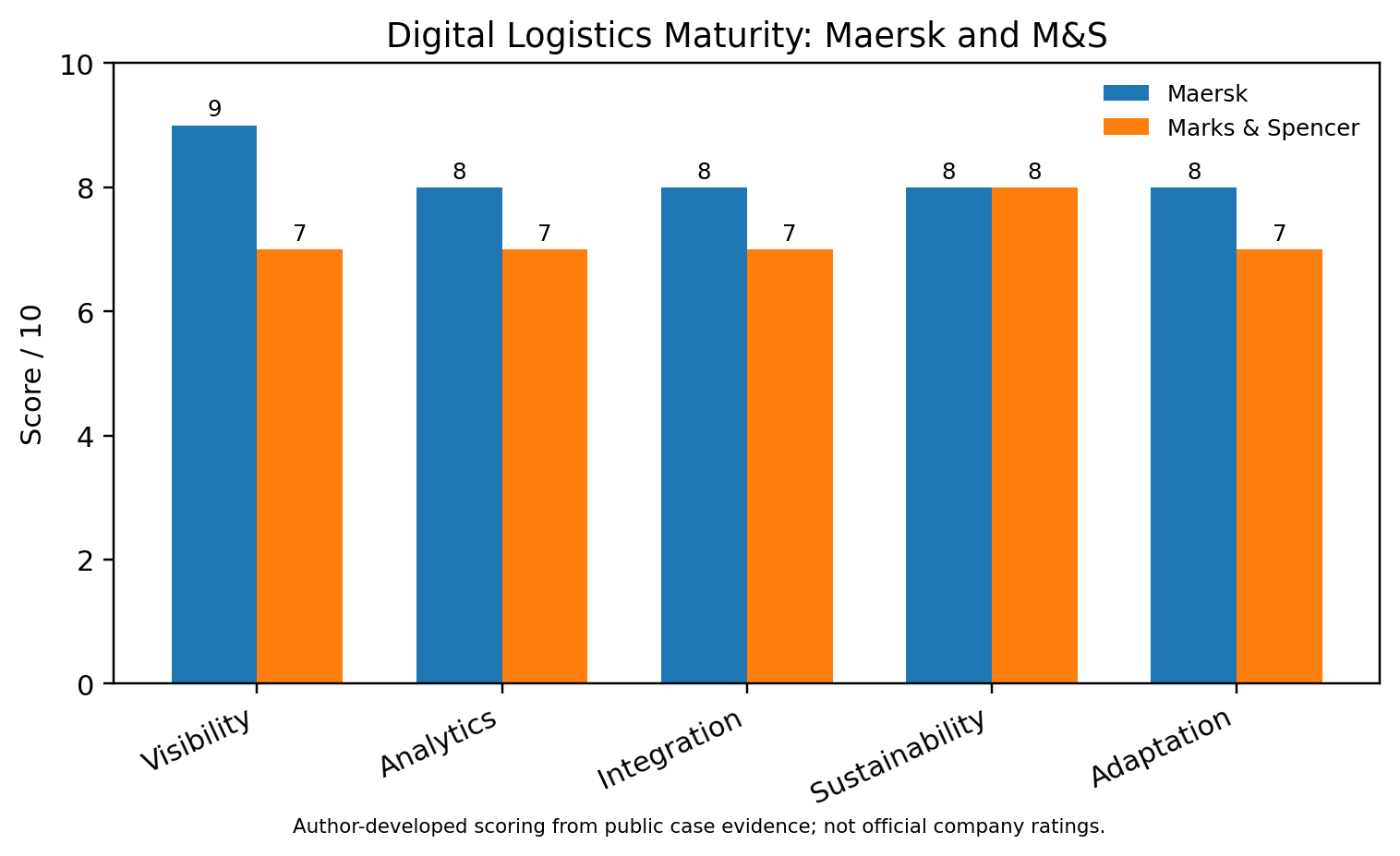
Copyright © June 2026 Nancy Onyinye Ugwu. All rights reserved.

Mayo Clinic, Clinical Transformation, and the Governance of AI-Enabled Medicine

Abstract

Artificial intelligence is becoming part of the practical language of hospital reform, yet its clinical value remains conditional. A hospital can acquire predictive tools, decision-support software, remote-monitoring systems, imaging algorithms, and trial-matching platforms without changing the experience of care in a meaningful way. Transformation occurs only when computational intelligence enters the real conditions of clinical work: the timing of diagnosis, the quality of professional judgment, the burden placed on clinicians, the safety of patient pathways, the protection of sensitive data, and the trust that patients place in the institution. This research paper examines Mayo Clinic as a case study in AI-enabled clinical transformation, using the institution’s public AI priorities and cardiovascular AI work as the case anchor. The study argues that AI in hospitals should be understood as accountable intelligence rather than machine medicine. Its best use is not to replace clinical responsibility, but to strengthen the human capacity to notice risk earlier, interpret complex evidence, personalize treatment, connect patients to research opportunities, and monitor care beyond the traditional clinic encounter.

The analysis draws on healthcare AI scholarship, reporting guidance for clinical AI evaluation, international ethics and regulatory sources, and Mayo Clinic’s public materials on artificial intelligence and cardiovascular medicine. It develops a qualitative case-study argument supported by seven author-developed visual models that describe clinical use cases, transformation priorities, readiness dimensions, sources of value, implementation risks, potential clinical gains, and multidimensional readiness. These figures are illustrative decision aids, not official Mayo Clinic performance measures. The central conclusion is that hospital AI succeeds when data capability, workflow design, clinician trust, governance, patient-safety monitoring, and equity review mature together. Sophisticated algorithms cannot compensate for weak implementation, poor explanation, inadequate oversight, or professional distrust. A responsible hospital does not ask clinicians to defer to technology; it gives them better instruments, clearer evidence, safer systems, and stronger institutional support. Mayo Clinic’s case therefore points to a demanding standard for AI-enabled medicine: clinical intelligence must remain answerable to human judgment, patient dignity, and continuous safety discipline.

Keywords: artificial intelligence, hospital transformation, Mayo Clinic, clinical governance, patient safety, clinical decision support, cardiovascular AI, digital health, physician judgment, accountable intelligence


Contents

Chapter 1: Introduction: Accountable Intelligence as Hospital Strategy

Chapter 2: Literature Review: Clinical Augmentation, Governance, and Safety

Chapter 3: Methodology: Case Logic, Readiness Modeling, and Source Discipline

Chapter 4: Case Analysis: Mayo Clinic and AI-Enabled Clinical Transformation

Chapter 5: Discussion: Governance, Trust, and the Conditions for Responsible Transformation

Chapter 6: Recommendations and Conclusion: Building Trustworthy AI-Enabled Hospitals

Chapter 7: Implementation Blueprint: From AI Adoption to Accountable Clinical Practice

Chapter 8: Limitations, Future Research, and Final Research Position


List of Figures

Figure 1. Mayo Clinic AI-Enabled Clinical Use Cases.

Figure 2. AI Transformation Priorities in a Hospital Setting.

Figure 3. Transformation Readiness Dimensions.

Figure 4. Sources of Clinical Value from Hospital AI.

Figure 5. Implementation Risks That Can Undermine Hospital AI.

Figure 6. Potential Clinical Gains from AI-Supported Care.

Figure 7. Mayo Clinic AI Readiness Profile.


Chapter 1: Introduction: Accountable Intelligence as Hospital Strategy

1.1 The hospital problem behind the AI question

Hospitals are not ordinary digital organizations. They carry a kind of risk that most technology settings do not face. A flawed recommendation, a delayed alert, an unclear interface, or a poorly governed prediction can reach a patient through the hands of a professional who is already working under pressure. The promise of AI therefore needs a more severe test than technical elegance. It must be judged by whether it improves the conditions under which care is actually delivered. A hospital does not transform because it owns an algorithm. It transforms when clinical teams can use new intelligence to make safer, earlier, more precise, and more compassionate decisions.

The public conversation around AI in healthcare often moves too quickly from possibility to celebration. Machines can classify images, identify patterns in electronic health records, match patients to trials, and estimate risk across large data sets. Those abilities matter, and the strongest systems already show potential in imaging, cardiology, oncology, remote monitoring, and operational support. Yet the central hospital question remains practical. What changes at the bedside, in the clinic room, in the multidisciplinary meeting, in the emergency department, or in the conversation where a patient asks what a prediction means for their life? If that question is avoided, AI becomes a form of institutional theater.

Mayo Clinic is a useful case because its public AI priorities are connected to clinical work rather than detached digital branding. The institution describes AI in relation to clinical trial matching, remote health monitoring, imaging technologies, earlier recognition of disease risk, and cardiovascular medicine (Mayo Clinic, n.d.; Mayo Clinic, 2025). That framing allows this research paper to study AI as a clinical capability, not as an abstract computing project. The point is not to claim that one institution has solved the governance of medical AI. The point is to ask what hospital transformation requires when a leading medical center places AI inside diagnosis, prediction, monitoring, research access, and individualized care.

The title of this research paper uses the phrase accountable intelligence deliberately. Hospital AI is intelligence only if it helps clinicians reason more carefully and institutions act more responsibly. It is accountable only if its use can be explained, monitored, corrected, and governed. A prediction that cannot be questioned is unsafe. A model that performs well in aggregate but poorly for a subgroup is incomplete. A tool that adds burden to the clinician while advertising efficiency to the executive suite has misunderstood clinical work. A technology that turns a patient into a score without explanation has injured the meaning of care.

1.2 Why Mayo Clinic is a strong case

Mayo Clinic brings together several features that make its AI activity analytically useful: a major academic medical environment, a visible commitment to research and innovation, deep specialist practice, a public reputation for complex diagnosis, and an institutional interest in individualizing care. These features create a high-information case. They do not make the case universally transferable, but they allow the paper to examine what AI integration looks like when the setting already possesses clinical depth, data resources, research infrastructure, and a culture of specialty expertise.

The case also carries a warning. A strong institution can still encounter the familiar risks of hospital AI: model drift, automation bias, privacy concern, uneven performance across patient groups, workflow disruption, and professional distrust. Reputation does not validate a model. Prestige does not remove the need for lifecycle monitoring. A clinical tool that touches diagnosis, treatment, triage, or patient access needs evidence in the setting where it will operate. The Mayo Clinic case is valuable precisely because it permits a mature argument: advanced capacity creates opportunity, but it also increases the obligation to govern well.

Mayo Clinic’s public AI material describes a future in which AI helps select and match patients with clinical trials, supports remote health monitoring, uses imaging technology to detect conditions that may not be visible to ordinary review, and anticipates disease risk years before the disease becomes obvious (Mayo Clinic, n.d.). Its cardiovascular AI program is publicly framed around early risk prediction and diagnosis of serious or complex heart problems (Mayo Clinic, 2025). These examples are clinically rich. They allow the paper to examine AI where the stakes are concrete: a person’s heart disease risk, a patient’s access to a trial, a subtle imaging signal, a remote monitoring alert, a treatment decision that needs better evidence.

1.3 Research purpose and questions

This research paper examines how AI-enabled hospital transformation becomes clinically meaningful when predictive capability is joined to workflow design, professional trust, governance, patient-safety oversight, and equity review. The paper treats Mayo Clinic as a case anchor and reads the case alongside the broader literature on machine learning in medicine, AI reporting standards, ethical governance, medical-device oversight, and clinical implementation. It does not claim access to proprietary Mayo Clinic data, internal performance dashboards, confidential committee work, or patient-level outcomes. The analysis is based on public material, verified scholarly sources, and author-developed diagnostic models.

The inquiry is organized around a practical problem: how can hospitals convert algorithmic capability into trustworthy clinical practice? Several subsidiary questions follow from that problem. What forms of clinical value can AI plausibly support in hospitals? Which institutional conditions separate useful transformation from symbolic adoption? How does a major health system’s AI activity illustrate the connection between prediction, workflow, safety, and trust? What governance disciplines are needed when AI influences diagnosis, risk estimation, patient monitoring, or access to research?

The contribution is applied rather than speculative. The paper does not ask whether AI is generally good or bad for healthcare. That argument is too blunt for hospital realities. It asks where AI helps, when it creates risk, how clinicians should remain in command of interpretation, and what a responsible institution needs before scaling a system. The research therefore belongs to hospital management, digital health governance, clinical quality improvement, and patient-safety scholarship.

1.4 Structure of the research paper

Chapter 1 introduces the research problem and case logic. Chapter 2 reviews scholarship on clinical augmentation, machine learning in medicine, reporting standards, ethics, regulation, workflow, bias, and lifecycle monitoring. Chapter 3 explains the qualitative case-study method and the interpretive readiness model used in the paper. Chapter 4 analyzes Mayo Clinic’s AI-enabled clinical transformation with attention to imaging, cardiovascular medicine, trial matching, remote monitoring, individualized care, professional judgment, and governance. Chapter 5 discusses the managerial and ethical implications for hospitals. Chapter 6 presents recommendations for publication-level practice and closes with the central conclusion.

Seven colorful charts support the analysis. They are not official Mayo Clinic measures. They are author-developed illustrations designed to make the argument visible for academic, executive, and teaching use. Each figure is watermarked and copyrighted in the author’s name, with June 2026 marked for publication control. The charts help readers see the paper’s core claim: AI transformation is a system problem. It concerns clinical use cases, implementation priorities, readiness, sources of value, risk pressures, potential gains, and the balance among multiple institutional dimensions.


Chapter 2: Literature Review: Clinical Augmentation, Governance, and Safety

2.1 Clinical augmentation rather than professional replacement

The strongest healthcare AI literature does not present the future of medicine as a contest between doctors and machines. Topol (2019) describes high-performance medicine as a convergence of human and artificial intelligence, where computational systems help professionals interpret complexity while allowing greater attention to the human dimensions of care. That framing matters because hospital adoption becomes dangerous when it is sold as a shortcut around professional judgment. Medicine is not a mechanical selection of outputs. It involves uncertainty, competing harms, prognosis, preference, dignity, family context, and the ethical weight of responsibility.

Rajkomar, Dean, and Kohane (2019) argue that machine learning offers medicine a way to process large and complex data in ways that traditional systems have struggled to do. Electronic health records, imaging, laboratory data, physiologic monitoring, genomic information, prescriptions, free-text notes, and clinical history create volumes of information that exceed unaided human cognition. The point is not that clinicians become obsolete. The point is that modern clinical information systems need better methods for turning data into usable knowledge. Machine learning can help, but only when its outputs enter clinical judgment safely.

The difference between augmentation and replacement shapes every part of this paper. An augmented clinician receives better information and remains responsible for interpretation. A replaced clinician becomes a passive relay for a tool they may not understand. The former can strengthen medicine; the latter undermines professional ethics and patient trust. In hospital settings, the burden of proof therefore rests on the institution. It must show that AI supports clinical reasoning without making clinicians dependent on opaque authority.

2.2 The translation gap between model performance and clinical effect

Healthcare AI has produced impressive research results, especially in image-rich fields such as radiology, dermatology, pathology, ophthalmology, and cardiology. Yet good technical performance in a retrospective data set does not guarantee that a system will improve care in routine practice. Kelly et al. (2019) warn that healthcare AI faces major challenges in moving from promising models to clinical impact. The gap is rarely caused by one factor. It can involve weak validation, poor workflow fit, inadequate regulation, narrow outcome measures, clinician distrust, incomplete data, and failure to monitor systems after deployment.

Hospitals need to distinguish model performance from clinical usefulness. Sensitivity, specificity, area under the curve, calibration, and error rates matter. They do not answer the whole question. A model may be accurate but arrive too late for a decision. It may improve prediction but increase alert fatigue. It may identify risk but create no actionable pathway. It may perform well for the average patient while failing a subgroup. It may be technically impressive but clinically irrelevant because professionals ignore it. The translation gap is the space between what the system can calculate and what the hospital can responsibly use.

Reporting standards have developed in response to these problems. CONSORT-AI extends clinical trial reporting for AI interventions by asking researchers to describe the AI system, human-AI interaction, input data, intended use, and handling of errors (Liu et al., 2020). DECIDE-AI offers guidance for early-stage clinical evaluation of AI-driven decision-support systems and emphasizes real-world context, user interaction, and implementation setting (Vasey et al., 2022). These frameworks are important because they shift attention from algorithmic novelty to clinical accountability. A hospital tool does not deserve trust because it is advanced; it earns trust through transparent evaluation and disciplined use.

2.3 Ethics, governance, and the patient’s right to explanation

WHO’s 2021 guidance on ethics and governance of AI for health places autonomy, safety, transparency, responsibility, inclusiveness, and public benefit at the center of health AI governance (World Health Organization, 2021). These principles are not philosophical decorations. They translate into concrete hospital duties: protect patient data, clarify responsibility, test for bias, monitor performance, inform patients when AI meaningfully affects care, and ensure that technological decisions do not undermine human rights or clinical trust.

Patients may experience hospital AI very differently from executives, clinicians, or data scientists. A predictive system that feels efficient to administrators may feel strange or threatening to patients if the role of the technology is never explained. A risk score may carry emotional weight. A trial-matching recommendation may raise hopes. A remote-monitoring alert may alter how a patient sees their own body. Hospitals therefore need language that ordinary patients can understand. Explaining AI is not a courtesy added after deployment. It is part of responsible care.

The patient’s right to explanation does not require every mathematical detail of a model to be translated into lay language. It does require honesty about the role the tool plays. Patients deserve to know when AI meaningfully supports diagnosis, prediction, monitoring, or treatment planning; which professional remains accountable; how the information will be used; and whether alternatives or uncertainties exist. A hospital that cannot explain its use of AI in humane terms has not completed the work of implementation.

2.4 Bias, equity, and data inheritance

AI systems learn from the data they receive, and health data carry the history of unequal access. Some patients have detailed records because they have long been inside advanced care systems. Others appear in fragmented form because their care has been delayed, intermittent, underinsured, geographically dispersed, or poorly documented. If an algorithm learns from those patterns without correction, it may reproduce the very inequities that medicine should overcome. Average performance can conceal unequal harm.

Bias in healthcare AI is rarely a single event. It can enter through data selection, missingness, label definition, documentation habits, device differences, clinical practice variation, and outcome measurement. A model trained on one population may perform differently in another. A prediction built on healthcare use may confuse access with need. A system that uses historical treatment decisions may absorb prior disparities in referral, diagnosis, or intensity of care. Hospitals need equity review before and after deployment, not just a generic statement of fairness.

Mayo Clinic’s case is significant because a major institution has the capacity to pursue subgroup analysis, quality oversight, and post-deployment review. Yet the standard applies to every health system. Responsible AI needs evidence across race, ethnicity, sex, age, disability, geography, insurance status, language, and clinical complexity where those variables are relevant and ethically handled. If an institution lacks enough evidence to know how a model performs for vulnerable groups, the uncertainty itself must be treated as a safety concern.

2.5 Regulation and lifecycle monitoring

The regulatory environment for medical AI continues to develop. The FDA maintains a public list of AI-enabled medical devices authorized for marketing in the United States, describing the list as a transparency resource for identifying devices that incorporate AI technologies (U.S. Food and Drug Administration, 2026). The FDA has also described lifecycle considerations for AI-enabled device software functions, reflecting a central problem in the field: an AI system may change, drift, or behave differently as clinical conditions and data environments change (U.S. Food and Drug Administration, 2025).

The International Medical Device Regulators Forum’s 2025 good machine learning practice principles also emphasize safe, effective, and high-quality development across the medical-device lifecycle (International Medical Device Regulators Forum, 2025). For hospitals, this means AI oversight cannot stop at procurement, validation, or launch. A tool may work at installation and weaken later. Patient populations may shift. Documentation patterns may change. New equipment may alter input data. Clinicians may use the system differently from the intended use. Monitoring has to continue as long as the tool influences care.

Lifecycle monitoring requires practical ownership. Someone has to know which AI tools are active, what they do, who uses them, what data they read, how they were validated, when performance was last reviewed, how safety events are reported, and what happens when a tool produces unacceptable error patterns. Without this inventory and review discipline, hospital AI becomes invisible infrastructure. Invisible infrastructure can fail quietly.

2.6 Literature gap addressed by this research paper

The literature provides strong guidance on technical performance, reporting standards, ethics, regulation, and implementation. What hospital leaders often still lack is an integrated management frame. They need a way to connect clinical use cases to workflow, governance, clinician trust, patient communication, equity review, and lifecycle safety. The case approach used here answers that need by reading Mayo Clinic’s public AI activity through a practical transformation lens.

This paper therefore avoids a narrow technology-adoption story. It treats AI-enabled transformation as the alignment of clinical problems, institutional capacity, professional interpretation, and patient-centered safeguards. The model is intentionally modest. It does not rate Mayo Clinic as an official institution, and it does not claim access to internal outcome data. It provides a research-grounded way to think about the conditions under which hospital AI becomes clinically serious.

Chapter 3: Methodology: Case Logic, Readiness Modeling, and Source Discipline

3.1 Research design

The study uses a qualitative case-study design supported by illustrative modeling. The method fits the subject because hospital AI is not a single measurable event. It is a set of interacting conditions: data maturity, clinical relevance, workflow placement, professional adoption, governance, equity, safety monitoring, and patient communication. A purely technical method would miss institutional behavior. A purely theoretical method would risk becoming detached from the specific clinical settings in which AI is being used.

Mayo Clinic is used as the central case because its public materials present AI as part of clinical transformation rather than as a detached technology initiative. The institution’s AI priorities include clinical trial matching, remote monitoring, imaging-based detection, and risk anticipation (Mayo Clinic, n.d.). Its cardiovascular AI work is publicly described in relation to early risk prediction and diagnosis of serious or complex heart problems (Mayo Clinic, 2025). These use cases allow the study to examine the relationship between computational tools and clinical decisions.

The design is documentary and interpretive. Sources include Mayo Clinic public pages, peer-reviewed medical AI literature, international ethics and reporting guidance, and regulatory materials. No confidential Mayo Clinic information is used. No claims are made about internal performance metrics, proprietary models, patient outcomes, or staff perceptions. This boundary is important. It protects the research from overclaiming and keeps the case analysis grounded in verifiable public evidence.

3.2 Case logic and analytical categories

The case is read through six analytical categories: clinical intelligence, workflow integration, clinician trust, governance maturity, patient-safety monitoring, and equity discipline. Clinical intelligence refers to the ways AI helps professionals detect patterns, anticipate risk, or connect patients to options. Workflow integration concerns whether the information reaches clinicians at a useful time and in a usable form. Clinician trust addresses adoption as judgment, not compliance. Governance maturity refers to decision rights, validation, accountability, privacy, and review. Patient-safety monitoring concerns post-deployment oversight. Equity discipline asks whether benefits and risks are distributed fairly.

These categories are not accidental. They reflect recurring concerns in the literature. Rajkomar et al. (2019) emphasize the role of machine learning in processing medical data. Kelly et al. (2019) warn of the gap between promising systems and clinical impact. Liu et al. (2020) and Vasey et al. (2022) stress reporting and early clinical evaluation. WHO (2021) places ethics and human rights at the center of health AI. FDA and IMDRF sources reinforce the lifecycle dimension of regulatory and quality oversight (International Medical Device Regulators Forum, 2025; U.S. Food and Drug Administration, 2025, 2026).

3.3 Conceptual readiness model

The research uses a simple readiness model as a teaching and decision aid. It is not a statistical audit. It helps readers see how AI-enabled clinical capability depends on multiple institutional conditions. The model is expressed as: ΔC = mA + b. In this expression, ΔC represents change in clinical transformation capacity, A represents AI-enabled clinical capability, m represents the marginal transformation effect associated with that capability, and b represents baseline clinical capacity before AI integration.

The formula is deliberately simple because the purpose is conceptual clarity. A hospital with excellent AI tools but weak governance will not transform responsibly. A hospital with good data but poor workflow integration may generate unused alerts. A hospital with strong model performance but weak clinician trust may create resistance. A hospital with sophisticated prediction but poor patient communication may damage confidence. The readiness model therefore treats AI capability as a composite condition rather than a single score.

For illustrative purposes, the paper uses five dimensions of AI-enabled clinical capability: data infrastructure, clinical use cases, physician adoption, governance maturity, and patient-safety monitoring. The scores used in the charts are author-developed and interpretive. They are derived from the logic of public case materials and scholarly expectations, not from internal Mayo Clinic data. The visual models are designed to support analysis, classroom use, and executive discussion. They do not provide official institutional ratings.

3.4 Figure protocol and evidence discipline

Each figure in this research paper is clearly marked as illustrative. The charts translate the argument into visual form, but they do not create new empirical facts. This distinction matters because colorful figures can appear more authoritative than the evidence permits. The paper therefore uses figure notes to prevent misinterpretation. Readers should treat the charts as structured case-study illustrations that support discussion of hospital readiness, clinical value, and implementation risk.

The charts are also copyrighted and watermarked in the author’s name. This supports publication control and protects the intellectual design of the paper. The use of charts in a master’s-level research publication is appropriate when the visuals clarify relationships that prose alone can obscure. In this case, the charts show that AI transformation involves more than model performance. It requires a system of clinical, operational, ethical, and professional conditions.

Read also: Managed Care Models In Healthcare By Cynthia Anyanwu

Chapter 4: Case Analysis: Mayo Clinic and AI-Enabled Clinical Transformation

4.1 Mayo Clinic’s public AI profile

Mayo Clinic’s public AI materials frame the technology around clinical usefulness. The institution describes AI as supporting clinical trial matching, remote health monitoring, imaging-based detection, and earlier disease-risk anticipation (Mayo Clinic, n.d.). These domains are significant because they touch several moments in the patient journey: identifying risk, interpreting evidence, selecting pathways, monitoring outside the hospital, and connecting patients to research. AI is therefore not presented only as a tool for back-office efficiency. It is connected to clinical attention.

That clinical orientation separates meaningful transformation from digital display. Hospitals can easily become fascinated with visible technology while leaving the quality of care unchanged. A system that helps identify subtle disease patterns, however, changes the timing of clinical knowledge. A system that helps match patients to trials can alter the boundary between routine care and research opportunity. A remote-monitoring tool can extend the hospital’s view beyond the scheduled appointment. These are serious changes because they alter when and how clinicians notice patients.

4.2 Clinical use cases and the movement from data to attention

Figure 1 presents the main clinical use-case domains used in this analysis. Imaging support receives the highest illustrative score because visual interpretation remains one of the strongest areas for machine-learning assistance. Cardiovascular AI also scores strongly because Mayo Clinic’s public cardiovascular AI material describes early risk prediction and diagnosis for serious or complex heart problems (Mayo Clinic, 2025). Predictive risk detection, individualized care, remote monitoring, and clinical trial matching complete the profile. The scores are not official measures. They express case-study weightings for discussion.

The point behind the figure is not that all AI use cases carry equal clinical force. Some systems operate near diagnosis. Others support monitoring, research access, administrative flow, or risk stratification. A hospital needs to know where an AI tool sits in the clinical chain. A system that influences diagnosis or treatment selection requires more rigorous oversight than a low-risk administrative triage tool. A remote-monitoring algorithm that triggers intervention needs different governance from a tool that sorts research records. Use-case clarity is the beginning of safety.

Clinical value depends on the movement from data to attention. A hospital already contains enormous quantities of information. The difficult question is whether that information reaches the right person in the right form at the right time. Imaging algorithms can help radiologists or specialists see patterns that are subtle. Cardiovascular tools can help clinicians identify risk earlier. Trial-matching systems can locate opportunities that busy teams may miss. Remote monitoring can reveal deterioration between appointments. These contributions are valuable only if they change clinical attention without overwhelming it.

Figure 1. Mayo Clinic AI-Enabled Clinical Use Cases.

Note. Author-developed illustrative chart prepared for NYCAR research publication; values are case-study weights, not official Mayo Clinic performance measures.

4.3 Cardiovascular AI and anticipatory medicine

Cardiovascular medicine gives the case particular force. Heart disease often develops silently before a severe event occurs. Traditional clinical assessment relies on history, examination, ECGs, imaging, laboratory tests, risk factors, and specialist interpretation. These methods remain essential. AI may add another layer by detecting patterns across signals that human review may not combine at scale. Mayo Clinic’s cardiovascular AI work is publicly described as applying AI tools and technology to early risk prediction and diagnosis in heart disease (Mayo Clinic, 2025).

The deeper change is temporal. Predictive systems shift medicine from waiting for disease to present toward recognizing risk before the patient deteriorates. That shift is valuable, but it also creates responsibility. A risk prediction can alter how a patient understands their future. It may justify further testing, closer monitoring, lifestyle counseling, medication, specialist referral, or reassurance. It can also create anxiety if poorly communicated. The clinician’s role becomes more important, not less, because probability has to be translated into care.

Anticipatory medicine cannot be reduced to early alarms. A hospital needs a path from signal to action. Who receives the signal? How urgent is it? What clinical threshold requires intervention? How is uncertainty documented? What happens if the patient’s risk is high but the evidence is ambiguous? Who explains the finding? Without an answer to those questions, prediction becomes noise. With disciplined pathways, AI can help turn risk into timely and humane care.

4.4 Clinical trial matching and research access

Mayo Clinic’s public AI page describes a future in which AI helps select and match patients with promising clinical trials (Mayo Clinic, n.d.). This is a clinically important use case because research access is often uneven. Eligibility criteria can be complex, patient records can be fragmented, and clinicians may not have time to search every trial. Matching tools can make hidden possibilities visible. For a patient with a serious condition, a trial opportunity can matter deeply.

The ethical challenge is to avoid treating trial matching as a purely computational exercise. Eligibility is not the same as suitability. A patient may technically match criteria but face travel burdens, family responsibilities, language barriers, financial pressures, health limitations, or distrust of research. A tool can open a door; the institution must still support the person walking toward it. Consent, explanation, access, and patient preference remain central.

Clinical trial matching also tests equity. If the records that feed the tool are incomplete for underrepresented populations, the benefits may flow toward patients who are already more visible to the health system. A responsible trial-matching program needs monitoring across demographic and clinical groups. It also needs human outreach that does not assume a match is meaningful until the patient can understand the option and make a free decision.

4.5 Remote monitoring and the widening boundary of the hospital

Remote monitoring changes the geography of care. A hospital no longer sees the patient only during scheduled encounters. Wearables, home devices, digital symptom reporting, and connected platforms allow the institution to observe patterns outside the clinical building. AI can help sort these streams by detecting trends, escalating risk, and filtering noise. Mayo Clinic’s public AI priorities include remote health monitoring devices as part of its future-oriented AI work (Mayo Clinic, n.d.).

The benefit is clear. Chronic disease, post-discharge recovery, heart failure, arrhythmia risk, and medication-related symptoms can worsen between appointments. Remote intelligence may help clinicians intervene earlier. It may also keep some patients out of unnecessary hospital visits when monitoring shows stability. Yet the risks are equally real. More data can create more alerts, more worry, more responsibility, and more work. A hospital that expands monitoring without a response system may create false reassurance or operational chaos.

Remote monitoring therefore requires service design. Patients need to know what is being monitored, what the hospital will do with the information, when they will be contacted, and what responsibility remains with the patient or caregiver. Clinical teams need clear thresholds, staffing, escalation protocols, and documentation practices. AI can filter signal from noise, but the institution must decide how the signal becomes care.

4.6 Workflow integration and clinician trust

AI systems enter busy clinical settings, not silent laboratories. A ward round has interruptions, family questions, medication changes, documentation demands, and urgent decisions. An emergency department faces crowding, uncertainty, and time pressure. A specialist clinic must interpret complex histories while maintaining a human conversation. In these environments, a tool that adds clicks, unclear scores, or poorly timed alerts can weaken care even when the underlying model is strong.

Clinician trust grows through repeated usefulness. A physician does not need a tool to pretend certainty. Clinicians are trained to work with uncertainty. They need to know what the output means, when it applies, where it is unreliable, and what action is appropriate. They also need freedom to challenge the system. A tool that cannot be questioned is professionally unacceptable. Trust is earned when AI behaves like a disciplined instrument, not like a hidden authority.

Figure 2 shows the transformation priorities in hospital AI, with data infrastructure, workflow integration, clinician adoption, patient-safety monitoring, governance maturity, and individualized care weighted together. The figure’s central message is that the technical system is only one part of readiness. Workflow and professional adoption carry nearly the same importance as data capability. Hospitals that ignore this balance risk building tools that exist on paper but fail at the point of care.

Figure 2. AI Transformation Priorities in a Hospital Setting.

Note. Author-developed illustrative chart prepared for NYCAR research publication; percentages express conceptual weighting for the case analysis.

4.7 Individualized care without reducing the person to a profile

AI can help individualize care by connecting information across images, laboratory values, clinical history, medications, genomics, and physiologic patterns. In principle, this can move medicine away from crude averages and toward more specific treatment pathways. For Mayo Clinic, where specialty care and complex diagnosis are part of the institutional identity, individualized medicine is a natural area for AI-supported work.

The danger is that personalization becomes technical without becoming humane. A patient is not the same as a data profile. People bring fears, values, family obligations, culture, finances, past experiences, and personal tolerance for risk. A predictive output may be clinically useful and still emotionally difficult. The clinician must translate the output into a conversation that respects the whole person. AI can support individualized care only if it is brought back into human judgment.

This distinction matters for master’s-level hospital management because technology projects often count outputs rather than experiences. A model may generate a precise prediction, but the patient may leave confused. A care pathway may be personalized by data, but the person may feel standardized by the system. Hospitals need measures that include understanding, trust, access, equity, and follow-through. Clinical intelligence must serve the patient, not display the institution’s sophistication.

4.8 Governance and safety in a living system

Governance is the backbone of hospital AI. A tool that influences care requires oversight before deployment, during use, and after evidence changes. Who approves the tool? What evidence is enough for clinical use? How are errors reported? How does the hospital detect drift? Who checks subgroup performance? What happens when a vendor updates the model? Which committee can pause or remove the system? These questions sound administrative, but they are patient-safety questions.

Figure 3 presents transformation readiness dimensions. Data infrastructure, clinical AI use cases, physician adoption, governance maturity, and patient-safety monitoring are scored as linked domains. A weakness in one domain reduces the value of the others. Strong data cannot compensate for poor governance. Good governance cannot rescue a tool that clinicians find useless. Patient-safety monitoring cannot matter if no one acts when performance changes. Readiness is a relationship among domains.

Figure 4 describes sources of clinical value from hospital AI. Earlier detection, decision support, remote monitoring, personalized care, research matching, and operational coordination all contribute to value, but none works safely alone. Earlier detection needs follow-up. Decision support needs explanation. Remote monitoring needs thresholds. Personalized care needs equity. Research matching needs consent. Operational coordination needs clinical relevance. This is why hospital AI should be governed as a system of care, not as a collection of tools.

Figure 3. Transformation Readiness Dimensions.

Note. Author-developed illustrative chart prepared for NYCAR research publication; scores are interpretive readiness indicators, not audited institutional ratings.

Figure 4. Sources of Clinical Value from Hospital AI.

Note. Author-developed illustrative chart prepared for NYCAR research publication; percentages represent conceptual contribution weights.

4.9 Risk pressures and safeguards

Figure 5 shows risk pressures that can undermine hospital AI. Workflow burden and alert fatigue sit near the top because clinicians experience technology through time and attention. Model drift matters because performance can change. Automation bias is a danger when professionals over-trust a system because it appears mathematically confident. Data bias can reproduce unequal access. Privacy concerns can weaken patient trust even when the clinical tool is promising.

Hospital leaders sometimes treat these risks as barriers to innovation. A stronger view treats them as design requirements. Workflow burden requires co-design with clinicians. Alert fatigue requires thoughtful thresholds and user testing. Model drift requires monitoring. Automation bias requires education and professional challenge. Data bias requires subgroup analysis and corrective review. Privacy concern requires transparency, security, and ethical governance. AI becomes safer when risks are addressed as part of the operating model rather than as objections raised after launch.

Figure 6 summarizes potential clinical gains. Earlier detection, decision support, remote monitoring, care coordination, personalized treatment, and research matching all appear as high-value areas. The figure also makes a subtle point. The gains are not equal to the tool itself. They depend on whether the hospital can convert insight into action. A prediction that does not reach care coordination is wasted. A trial match that cannot be discussed with the patient is incomplete. A monitoring alert without staffing is unsafe. Clinical gain is a managed result.

Figure 5. Implementation Risks That Can Undermine Hospital AI.

Note. Author-developed illustrative chart prepared for NYCAR research publication; risk-pressure values are diagnostic estimates for discussion.

Figure 6. Potential Clinical Gains from AI-Supported Care.

Note. Author-developed illustrative chart prepared for NYCAR research publication; values are conceptual effect scores, not official outcome data.

4.10 Mayo Clinic readiness profile

Figure 7 brings the case together as a radar profile. The figure illustrates balanced strength across data infrastructure, clinical use cases, physician adoption, governance maturity, patient-safety monitoring, and workflow integration. The profile is intentionally not perfect. It signals that even a leading institution needs continuous work in governance, adoption, and workflow. A mature hospital does not claim completion. It builds systems that keep learning.

The Mayo Clinic case points toward a model of AI-enabled transformation in which the hospital becomes more anticipatory, more evidence-sensitive, and potentially more personalized without surrendering the human center of care. That promise is real. It is also conditional. The hospital must keep clinicians in charge of interpretation, monitor systems after deployment, protect patients against inequitable performance, and explain AI-supported decisions in language that preserves trust.

Figure 7. Mayo Clinic AI Readiness Profile.

Note. Author-developed illustrative chart prepared for NYCAR research publication; radar values provide a multidimensional case profile for teaching and review.

Chapter 5: Discussion: Governance, Trust, and the Conditions for Responsible Transformation

5.1 What transformation means in hospital practice

Hospital transformation is often confused with digital modernization. The two are related, but they are not the same. Modernization can mean new platforms, new software, new dashboards, and new procurement. Transformation means a change in how care is delivered and understood. In the context of AI, transformation appears when clinicians receive better evidence at the point of decision, patients gain clearer pathways, avoidable delay is reduced, and the institution becomes more capable of detecting and correcting risk.

This distinction matters because hospitals can become crowded with tools. Each tool arrives with claims of efficiency, prediction, convenience, or integration. Clinicians then face another screen, another alert, another score, another workflow demand. The hospital may appear modern while professionals feel less able to think. A serious AI strategy therefore begins with clinical problems, not vendor capability. The question is not what the system can do. The question is which clinical risk, delay, decision, or inequity it will help the hospital address.

Mayo Clinic’s public AI framing is useful because it connects AI to clinical trial matching, disease-risk anticipation, imaging, remote monitoring, and cardiovascular medicine. These are care problems rather than abstract digital ambitions. They ask whether patients can be seen earlier, matched better, monitored more intelligently, and treated with more precise evidence. That is the right test. Hospital AI must justify itself in the life of care.

5.2 Leadership responsibilities in AI-enabled hospitals

AI transformation requires leadership beyond the technology office. Data scientists and informatics teams are necessary, but they cannot carry the whole responsibility. Hospital executives, physician leaders, nurses, patient-safety officers, privacy experts, ethics committees, legal counsel, quality teams, and patient representatives all have a role. A tool that touches care also touches institutional accountability.

Leadership needs to ask more difficult questions than those found in ordinary procurement. What clinical problem does the tool solve? Which patients will be affected? What evidence supports use in this setting? What burden will be placed on clinicians? What training is required? How will patients be informed? What subgroup performance data exist? Who monitors the tool after launch? What will cause the hospital to pause or remove it? These questions define the difference between buying technology and governing clinical intelligence.

AI leadership also needs restraint. A hospital does not need to deploy every tool that appears promising. Some systems may be premature. Some may work in one specialty but fail in another. Some may increase administrative burden without improving patient outcomes. Some may produce reputational excitement while offering little clinical value. Strategic restraint is part of responsible innovation. It protects patients, staff, and the credibility of the institution.

5.3 Physician adoption as interpretive trust

Adoption cannot be measured only by logins, clicks, or compliance. A clinician may use a system because it is mandatory and still distrust its output. Meaningful adoption is interpretive trust. The clinician understands what the tool does, where it is reliable, how uncertainty is expressed, and when professional judgment should override it. This form of adoption is intellectual, not mechanical.

Trust also requires humility from AI designers and hospital leaders. A model may process more data than a clinician, but it does not know the patient as a person. It does not hear the hesitation in a patient’s voice, recognize a family’s fear, understand the social meaning of a diagnosis, or carry responsibility for the outcome. Clinicians may resist tools that ignore these dimensions, and that resistance can be rational. Trust grows when the technology respects clinical practice rather than treating it as an obstacle.

Training needs to support this trust. Clinicians do not need to become machine-learning engineers, but they do need practical literacy. They need to understand data quality, validation, calibration, uncertainty, subgroup performance, automation bias, and error reporting. They need to know when a model’s output is a prompt for further thought rather than a command. AI literacy is becoming a patient-safety skill.

5.4 Patient communication and consent

Patients deserve plain language. If AI meaningfully contributes to diagnosis, prediction, monitoring, or treatment planning, the hospital needs a way to explain that role without hiding behind technical vocabulary. A patient does not need a lecture on model training, but they may need to know that a tool analyzed an ECG, image, clinical record, or monitoring pattern and helped the care team identify a risk. They also need to know that a human professional remains accountable.

Consent practices will vary by use case. Some tools may fall within ordinary clinical operations, while others may involve research, secondary data use, remote monitoring, or trial matching. The ethical standard is not a single form. It is respectful clarity. Patients should not feel that they were unknowingly placed inside a technological process that changed their care. Trust is strengthened when the institution explains the purpose, benefits, risks, and limits of AI-supported care at the right moment.

Communication must also address emotional consequences. A prediction can be frightening. A risk score can feel like a sentence. A trial match can create hope and anxiety. A remote monitoring alert can disturb a patient’s sense of stability. The clinician’s task is to interpret the information with care, not simply relay it. Hospitals that train clinicians in AI use also need to train them in AI explanation.

5.5 Equity as a measure of success

AI-enabled transformation is incomplete if it improves care only for patients who are already well served. Equity is not an optional value statement. It is a test of clinical validity and institutional legitimacy. A model that performs poorly for a subgroup is clinically weak even if its average score looks strong. A trial-matching tool that identifies opportunities mainly for well-documented patients may widen research inequity. A remote-monitoring program that assumes reliable devices, broadband, language access, and digital confidence may miss the very patients who need support.

Hospitals need equity monitoring throughout the AI lifecycle. Before deployment, they need to understand the data sources, patient populations, outcome labels, and validation evidence. During use, they need to examine performance across groups. After implementation, they need to ask who benefited, who was missed, and whether the tool changed access, experience, or safety. Equity review cannot be reduced to a one-time checklist.

Mayo Clinic’s case suggests the value of institutional capacity. A major health system has more resources for validation, quality review, and clinical governance than many smaller hospitals. That advantage should not become complacency. The better lesson is that capacity creates a duty. Institutions with the ability to test, monitor, and publish responsibly should set high standards for the field.

5.6 Data governance, privacy, and cybersecurity

AI systems depend on data, and hospital data are among the most sensitive forms of personal information. Clinical records contain diagnoses, medications, genetic information, mental health history, family details, images, insurance data, and deeply personal narratives. Patients may accept data use for care, but they may feel differently about secondary research, commercial partnerships, model training, or remote-monitoring streams. Governance must therefore address data purpose, access, security, retention, consent, de-identification, and accountability.

Privacy is not a legal technicality. It is part of the therapeutic relationship. A patient who fears that health information is being used without understanding or control may withhold information or lose confidence in the institution. Cybersecurity also becomes central because AI systems can create new attack surfaces. A predictive tool connected to clinical data, device input, or workflow systems must be protected with the seriousness appropriate to patient safety.

Hospital leaders need a clear inventory of AI tools and data flows. Which systems access patient data? Which vendors or partners are involved? Where is data stored? What standards apply? How are access rights controlled? How are breaches detected and reported? Without such clarity, the institution cannot credibly claim control over AI-enabled care.

5.7 From pilots to institutional learning

Hospitals often launch pilots with enthusiasm and then struggle to scale, stop, or learn from them. AI pilots are especially vulnerable to this problem because early results can be exciting while implementation burden remains hidden. A pilot may work because a small group of motivated clinicians supports it. Scaling may fail when the tool enters ordinary practice with different users, different patients, and less intensive support.

A disciplined AI program needs exit criteria as well as scale criteria. What evidence justifies expansion? What safety concern requires pause? What level of clinician burden is unacceptable? What equity gap requires redesign? What patient outcome matters? What cost is justified? These questions prevent pilots from becoming permanent experiments without accountability.

Learning also requires honest reporting. If an AI system fails to improve care, the institution should know why. Was the model weak? Was the workflow wrong? Was training inadequate? Was the clinical problem poorly chosen? Was leadership too optimistic? Failure can be useful if it is documented and examined. It becomes wasteful when buried under innovation language.

Chapter 6: Recommendations and Conclusion: Building Trustworthy AI-Enabled Hospitals

6.1 Practice recommendations for hospital leaders

Hospitals should begin AI transformation with a clear clinical problem. The problem should be specific enough to evaluate: delayed diagnosis, missed risk, inefficient trial matching, avoidable readmission, imaging backlog, deterioration between appointments, medication harm, documentation burden, or uneven access. A tool without a defined clinical problem is a technology looking for justification. A serious institution reverses the sequence. It starts with care.

Each proposed AI system should pass through a multidisciplinary review before clinical use. The review should include clinicians from the affected specialty, patient-safety leadership, informatics, data science, privacy, legal or compliance expertise, ethics, nursing or allied health representation where relevant, and patient perspective when the use case materially affects patient experience. The review should examine evidence quality, workflow impact, patient communication, equity, cybersecurity, accountability, and lifecycle monitoring.

Hospitals need a live inventory of AI-enabled clinical tools. The inventory should record the tool’s purpose, owner, affected service line, data sources, vendor or internal developer, intended users, validation evidence, go-live date, monitoring schedule, safety-reporting pathway, and retirement criteria. This may sound ordinary, but it is essential. Institutions cannot govern what they cannot see.

6.2 Recommendations for clinicians and clinical educators

Clinical education should include practical AI literacy. Physicians, nurses, pharmacists, therapists, and other professionals need training that connects model output to clinical interpretation. The training should explain what AI can and cannot mean, how uncertainty appears, how bias can enter a model, how to report unsafe outputs, and how to communicate AI-supported findings to patients. Education should be grounded in real clinical scenarios rather than abstract enthusiasm.

Clinicians should treat AI outputs as evidence prompts. A prompt may be strong or weak, clear or uncertain, urgent or exploratory. It should not be treated as a final decision. Professional responsibility includes the right to challenge, override, or seek clarification. Hospitals need to protect that right explicitly. A clinician who disagrees with a model should not be treated as obstructive when the disagreement is grounded in patient context or clinical reasoning.

Clinical educators can use the Mayo Clinic case to teach responsible adoption. Students can examine how cardiovascular AI changes timing, how trial matching affects access, how remote monitoring expands care boundaries, and how workflow determines usefulness. Such teaching moves AI from abstraction into practice. It helps future professionals see the ethical and operational work behind every digital tool.

6.3 Recommendations for patient safety and quality teams

Patient-safety teams should treat clinical AI as part of the safety system. This means tracking incidents, near misses, unexpected outputs, alert fatigue, inequitable performance, workflow workarounds, and user confusion. Safety review should not wait for a severe event. Weak signals matter. A pattern of ignored alerts, unexplained overrides, or clinician frustration can signal a design problem before patient harm becomes visible.

Quality teams should build post-deployment review into the life of every significant AI tool. Reviews should examine accuracy, calibration, false positives, false negatives, clinician response, patient outcome relevance, subgroup performance, and workflow burden. A tool that once performed well may need recalibration or retirement. The healthcare environment changes, and a responsible system changes with it.

Hospitals should also create clear pathways for patients and staff to raise concerns about AI-supported care. A patient who feels confused by AI use should have a way to ask questions. A clinician who sees a troubling pattern should know where to report it. A safety culture that ignores AI concerns because they sound technical will miss early warnings.

6.4 Recommendations for researchers

Researchers should publish with enough detail to support clinical interpretation. CONSORT-AI and DECIDE-AI provide useful standards for reporting AI interventions and early-stage decision-support evaluations (Liu et al., 2020; Vasey et al., 2022). Research papers should describe intended use, human-AI interaction, input data, workflow context, error handling, and implementation conditions. A model cannot be responsibly assessed if readers cannot tell how it was used.

Hospital AI research should also examine patient experience, clinician behavior, equity, and long-term monitoring. Too many studies focus on technical performance while giving less attention to the clinical setting. Hospitals need evidence on whether tools change decisions, reduce harm, save time, improve access, or create unintended burden. The research agenda should follow the patient pathway, not just the model output.

6.5 Final conclusion

Mayo Clinic’s case shows that AI-enabled clinical transformation is hopeful, but not simple. AI can help clinicians notice risk earlier, interpret complex data, connect patients to trials, monitor care beyond the hospital, and personalize treatment. These gains are worth pursuing. They are also conditional. Without workflow fit, professional trust, patient communication, equity review, privacy protection, and lifecycle monitoring, the same tools can create confusion, burden, bias, or unsafe overconfidence.

The future of hospital AI should not be imagined as machine medicine. That image is too thin for the moral and clinical realities of care. The better standard is accountable intelligence. In accountable intelligence, computational systems expand perception while clinicians retain judgment. Predictive tools support earlier action while governance protects safety. Data systems create insight while privacy protects dignity. Algorithms assist personalization while equity review asks who is being missed. Technology becomes part of care only when it remains answerable to the people it touches.

For hospitals, the lesson is demanding. AI cannot be treated as a purchase, pilot, or public-relations signal. It has to be governed as a clinical capability. Mayo Clinic’s public AI work offers a strong case through which to understand that capability. The institution’s example matters because it joins AI to real clinical domains, especially cardiovascular medicine, monitoring, imaging, individualized care, and research access. The wider lesson is useful for any hospital: responsible transformation begins when digital intelligence is disciplined by clinical purpose, human responsibility, and patient trust.

Chapter 7: Implementation Blueprint: From AI Adoption to Accountable Clinical Practice

7.1 The governance pathway from idea to clinical use

A hospital that wants to use AI responsibly needs a clear pathway from idea to clinical use. The pathway begins when a clinical team identifies a genuine care problem. That problem must be stated in clinical language before the technology conversation begins. “We need AI” is not a problem statement. “We miss early deterioration in a defined patient group,” “eligible patients are not being matched to trials,” “clinicians face unsafe alert volume,” or “post-discharge monitoring is not timely enough” are stronger starting points. A clear problem prevents the hospital from chasing tools that create visibility without clinical progress.

Once the problem is defined, the hospital should examine whether an AI-enabled tool is appropriate. Some problems require staffing, training, workflow repair, procurement changes, or ordinary quality improvement. AI is not always the right answer. When the tool appears justified, the institution needs evidence about intended use, validation, limitations, data sources, patient population, expected workflow, and safety risk. A clinical tool cannot enter practice because it looks promising in a vendor demonstration or retrospective study. It needs institutional scrutiny before it touches care.

The next stage is limited clinical evaluation. At this point, the hospital tests the system within a controlled environment, with clearly identified users, outcomes, reporting pathways, and review points. DECIDE-AI is useful here because it asks researchers and institutions to report the practical conditions of early clinical evaluation, including human interaction, context, and deviations from intended use (Vasey et al., 2022). This stage protects the hospital from premature scaling. A tool may succeed in one service line and fail elsewhere. It may work well for one group of clinicians and create burden for another.

Scaling should occur only when the evidence supports it and when governance can keep up. The hospital should know how training will be delivered, who owns the system, how patients will be informed, how adverse events or near misses will be reported, and what data will be reviewed after deployment. A responsible pathway also includes a stop rule. If the tool produces unacceptable errors, inequitable results, or unsustainable burden, the institution must have the courage to pause or withdraw it. Innovation without a stop rule becomes institutional vanity.

7.2 Clinical ownership and the limits of vendor confidence

Hospitals often rely on external technology partners, and those partnerships can be valuable. Vendor-built tools may bring engineering capacity, model development, user-interface expertise, and support services that hospitals cannot easily produce alone. Yet vendor confidence is not clinical proof. A company may understand model performance and still misunderstand the hospital setting. It may optimize for product adoption while clinicians worry about patient consequences. The hospital must therefore retain clinical ownership of the decision to use, scale, monitor, and discontinue the tool.

Clinical ownership means that responsible professionals can state what the system does, why the institution uses it, what evidence supports it, what risks remain, and how it is monitored. It also means that no department can treat the AI system as someone else’s problem. An imaging tool belongs to radiology and safety governance. A cardiovascular prediction tool belongs to cardiology, informatics, quality, and patient communication. A trial-matching tool belongs to research governance and clinical care. A remote-monitoring tool belongs to the service line that will respond when risk is detected.

The hospital must be especially careful when vendor materials use broad claims. “Improves efficiency,” “reduces burden,” “enhances outcomes,” and “supports clinical decision-making” are starting points for inquiry, not proof. Leaders should ask how each claim was measured, in which population, under what workflow, and with what comparison. They should also ask what harms were considered. A tool can save time in one part of the process while transferring burden elsewhere. It can reduce missed cases while increasing false positives. It can widen access for some patients while excluding others.

Mayo Clinic’s case is instructive because major academic medical centers have the capacity to develop, evaluate, and partner with sophistication. Smaller hospitals may not have the same internal expertise, which makes governance even more important. The lesson is not that every hospital can operate like Mayo Clinic. It is that every hospital needs enough clinical ownership to avoid becoming dependent on claims it cannot assess.

7.3 The human work of workflow redesign

Workflow is where AI succeeds or fails. A tool may be scientifically impressive and still unusable because it arrives in the wrong place. Clinicians do not experience technology as an abstract system. They experience it as another demand on attention, another screen, another message, another score, or another interruption in a day already saturated with tasks. Workflow redesign requires close observation of how care actually happens, not how a flow diagram says it happens.

A practical redesign process should involve the people who will use or be affected by the tool. Physicians, nurses, technicians, scheduling staff, care coordinators, and patients may all see risks that developers miss. In imaging support, the question may concern how results are displayed, how uncertainty is flagged, and how disagreement is documented. In cardiovascular risk prediction, the question may concern who receives the alert and what clinical pathway follows. In remote monitoring, the question may concern staffing, escalation, and after-hours response. In trial matching, the question may concern how a potential match enters a conversation with the patient.

Hospitals should test workflows under real pressure. A system that seems efficient during a demonstration may behave differently during clinic overload, staff absence, network downtime, or a surge in alerts. The institution should examine ordinary days and stressed days. It should study not just whether the tool works, but whether people can use it without losing clinical attention. A tool that forces clinicians to work around it is sending a message. The design has not yet learned from practice.

The human work of redesign also includes emotional labor. Clinicians may worry that AI will be used to judge their performance, replace their reasoning, or add medico-legal exposure. Patients may worry that a machine is making decisions. Managers may worry that the tool will fail to justify investment. These concerns should not be dismissed as resistance. They are part of implementation. A mature hospital addresses them openly because trust is built before scaling, not after conflict.

7.4 Patient-facing explanation as part of care quality

Patient-facing explanation is one of the most neglected parts of AI implementation. Hospitals often prepare technical documentation, governance minutes, and staff training while giving less attention to the sentence a clinician will use when speaking to a patient. Yet that sentence may decide whether the patient feels cared for or processed. A person told that “the algorithm flagged you” may react differently from a person told that “we used an additional computer-assisted tool to review your information, and it suggests a risk we want to discuss carefully with you.”

Good explanation avoids two errors. It does not exaggerate AI by making it sound like a final authority. It also does not hide AI by pretending the tool had no role in care. The right tone is honest, calm, and clinically grounded. The clinician can explain that the tool helps review patterns in data, that it supports the care team’s reasoning, that it has limits, and that the clinical decision remains human. Patients should also be invited to ask questions, especially when AI influences a significant decision.

Different use cases require different explanation. A tool that helps prioritize a radiology worklist may not need the same patient-level discussion as a system that predicts disease risk years in advance. A trial-matching tool requires consent-sensitive communication because the patient is being invited into a research pathway. A remote-monitoring system requires clarity about what will be watched, when the patient will be contacted, and what actions the patient should take. A cardiovascular prediction tool requires careful discussion of uncertainty and options.

Patient communication also protects equity. Patients with limited health literacy, language barriers, disability, prior distrust, or cultural concerns may need more than standard information. A hospital that treats explanation as a standard paragraph may miss these differences. The more consequential the AI-supported decision, the more important it becomes to ensure that communication is understandable, respectful, and responsive to the person in front of the clinician.

7.5 Evaluation after launch

AI evaluation should continue after launch because the hospital environment is alive. Patient populations shift. Staff change. Documentation habits change. Devices are updated. Clinical guidelines evolve. Model performance can drift. A tool that once helped may gradually become less reliable or more burdensome. This is why lifecycle thinking has become central in regulatory and safety discussions of AI-enabled medical tools (International Medical Device Regulators Forum, 2025; U.S. Food and Drug Administration, 2025).

Post-launch evaluation should include technical and clinical measures. Technical measures may include discrimination, calibration, missing-data sensitivity, false positives, false negatives, and drift indicators. Clinical measures may include time to intervention, diagnostic delay, patient outcomes, clinician response, ignored alerts, adverse events, and care coordination. Experience measures also matter: clinician burden, patient understanding, trust, and perceived usefulness. A tool that improves a metric while damaging professional attention may not be a true improvement.

Equity measures should be built into the same review process. Hospitals should not wait for a complaint to ask whether performance differs across patient groups. Subgroup monitoring must be designed carefully and ethically, with attention to privacy and data quality. When performance gaps appear, the institution needs a corrective pathway. That may involve recalibration, retraining, workflow change, additional validation, restricted use, or withdrawal.

Evaluation also needs public honesty at the right level. Internal details may remain confidential, and patient privacy must be protected. Still, institutions can communicate that AI tools are monitored, reviewed, and subject to correction. This builds trust. Patients and clinicians need to know that the hospital does not treat AI systems as permanent once installed. Continuous review is part of safe care.

7.6 What smaller hospitals can learn from the Mayo Clinic case

Mayo Clinic is a resource-rich academic medical center. Many hospitals cannot copy its infrastructure, specialty depth, research ecosystem, or internal analytic capacity. Copying the surface of the case would be a mistake. A smaller hospital may not need a wide portfolio of advanced AI tools. It may need a carefully selected system that addresses a specific problem, such as imaging triage, medication safety, remote monitoring for a high-risk group, or operational coordination for discharge planning.

The transferable lesson is discipline. Smaller hospitals can begin with clinical need, demand evidence, involve clinicians, protect patient communication, monitor safety, and establish clear ownership. They can also collaborate regionally, use external expertise, participate in shared evaluation networks, and adopt tools only when the governance burden is manageable. Responsible restraint may be a strength. A hospital that says no to an unsafe or poorly supported system is practicing good leadership.

Smaller institutions also need to be alert to dependency. A vendor may become the main source of technical knowledge. That creates risk if the hospital lacks enough internal literacy to ask hard questions. Even modest AI adoption requires basic competence in intended use, validation, privacy, security, equity, workflow, and post-launch review. Leaders do not need to build everything themselves, but they need enough understanding to remain accountable.

The Mayo Clinic case therefore becomes a teaching case rather than a template. It shows what happens when AI is tied to meaningful clinical domains and when transformation is imagined as a system of care. Other hospitals can adapt that logic to their size and capacity. The most important question is not whether a hospital resembles Mayo Clinic. It is whether the hospital can explain why an AI tool belongs in its care system and how it will protect patients after adoption.

7.7 Publication-level closing position

This research paper has treated hospital AI as accountable intelligence because that phrase captures the standard that healthcare deserves. Intelligence without accountability is not enough. Accuracy without workflow value is not enough. Prediction without explanation is not enough. Personalization without equity is not enough. Innovation without safety monitoring is not enough. The clinical promise of AI is real, but it becomes trustworthy only when the institution governs it with seriousness.

Mayo Clinic’s public AI work offers a strong setting for this argument because it points toward clinical domains where intelligence could matter deeply: disease-risk anticipation, cardiovascular diagnosis, imaging support, remote monitoring, clinical trial matching, and individualized care. These are not peripheral conveniences. They touch the timing, reach, and quality of medicine. They also show why the human center of care must remain protected. The more powerful the tool, the more serious the responsibility.

The final standard is practical. A hospital using AI should know what problem the tool solves, what evidence supports it, who is accountable, how clinicians use it, how patients understand it, how performance is monitored, how equity is protected, and when the system should be changed or stopped. If those questions cannot be answered, adoption is premature. If they can be answered and reviewed over time, AI may become part of a more attentive, safer, and more humane hospital.

Chapter 8: Limitations, Future Research, and Final Research Position

8.1 Limits of the case evidence

A publication-ready case study needs restraint as much as argument. Mayo Clinic’s public material gives enough evidence to examine visible AI priorities and the strategic logic around clinical transformation. It does not disclose every internal decision, committee process, validation file, staffing plan, equity audit, patient-safety report, or clinician experience. This means the analysis cannot claim to measure Mayo Clinic’s actual internal readiness. It can interpret what is visible and connect that interpretation to the wider literature on responsible hospital AI.

The distinction between public evidence and internal proof matters because healthcare AI is vulnerable to overstatement. A hospital may announce a promising tool, a research team may publish strong results, or a public page may describe future applications, yet none of those sources alone proves routine clinical improvement. The paper therefore uses careful language. It treats Mayo Clinic as a case anchor, not as an audited performance subject. The figures are illustrative, not official. The recommendations are generalizable at the level of governance principle, not institutional certification.

This restraint does not weaken the paper. It strengthens it. The most credible research on institutional transformation does not turn limited sources into sweeping claims. It asks what the evidence can support and then builds a responsible argument within that boundary. The visible Mayo Clinic case supports a serious discussion of AI use cases, cardiovascular prediction, clinical trial matching, remote monitoring, governance, and patient-safety discipline. It does not support claims about proprietary model performance, patient outcome improvements, or internal adoption rates.

8.2 Future research needs

Future research should examine how hospital AI performs after deployment, not just during development. The field needs more evidence about drift, alert response, clinician trust, subgroup performance, patient experience, and long-term outcome relevance. Retrospective model validation has value, but the practical question is how tools behave in living clinical systems. A hospital ward, clinic, emergency department, imaging service, or remote-monitoring program creates conditions that retrospective data cannot fully reproduce.

Researchers should also study the patient’s experience of AI-supported care. Much of the literature still speaks from the viewpoint of model developers, clinicians, regulators, and hospital leaders. Patients need stronger representation in research design. How do they understand AI-supported risk prediction? What information do they want? When does AI use increase confidence? When does it create fear? How do patients from underserved communities interpret data-driven medicine in light of prior mistrust or unequal access? These questions are central to ethical implementation.

Another important area is the relationship between AI and workforce burden. Health systems often justify AI through efficiency, yet clinicians may experience implementation as additional labor. Future studies should measure documentation burden, alert fatigue, interruption, workload redistribution, and professional autonomy. A tool that saves administrative time for one group while increasing cognitive burden for another may create hidden cost. Evaluating AI through workforce experience is therefore part of patient safety.

8.3 Educational use for NYCAR and health-management readers

The paper is designed for teaching as well as publication. Health-management students can use it to distinguish technology adoption from institutional transformation. Clinical leaders can use the figures as discussion aids when evaluating new tools. Policy students can use the governance sections to understand how regulation, ethics, and hospital operations intersect. The case also gives master’s-level readers a way to discuss AI without surrendering to technical jargon.

The seven charts are especially useful in a classroom or executive seminar. Students can debate whether the use-case weights are persuasive, whether the risk-pressure profile should change in different hospital types, or how the radar profile would look in a rural hospital, a safety-net hospital, or a private specialty center. Such discussion keeps the paper alive. It turns the Mayo Clinic case into a practical exercise in judgment.

A stronger health-management education will train students to ask disciplined questions before adopting technology. What problem is being solved? Who benefits? Who carries new burden? What evidence is strong enough? What will be monitored? How will patients be informed? What happens if the tool fails? These questions are not anti-innovation. They are the questions that make innovation worthy of healthcare.

8.4 Final research position

The final position of this research paper is that AI-enabled clinical transformation is neither inevitable nor impossible. It is built. It is built through data quality, clinical relevance, workflow humility, professional education, patient communication, governance, equity monitoring, and patient-safety review. Mayo Clinic’s public AI work provides a strong case because it places AI near the actual work of medicine: detecting disease, predicting risk, monitoring patients, matching research opportunities, and individualizing care. The case also reminds us that the most advanced hospital still needs discipline.

The moral center of the argument is simple. Hospitals care for people when they are vulnerable. Any technology that enters that relationship must be held to a higher standard than novelty. It must help clinicians see more clearly, act more wisely, explain more honestly, and protect patients more fully. If AI can do that under accountable governance, it belongs in the future of medicine. If it cannot, it should remain outside the patient’s care until the institution is ready.

References

International Medical Device Regulators Forum. (2025). Good machine learning practice for medical device development: Guiding principles (IMDRF/AIML WG/N88 FINAL:2025). https://www.imdrf.org/documents/good-machine-learning-practice-medical-device-development-guiding-principles

Kelly, C. J., Karthikesalingam, A., Suleyman, M., Corrado, G., & King, D. (2019). Key challenges for delivering clinical impact with artificial intelligence. BMC Medicine, 17, Article 195. https://doi.org/10.1186/s12916-019-1426-2

Liu, X., Cruz Rivera, S., Moher, D., Calvert, M. J., Denniston, A. K., Chan, A.-W., Darzi, A., Holmes, C., Yau, C., Ashrafian, H., Deeks, J. J., Ferrante di Ruffano, L., Faes, L., Keane, P. A., Vollmer, S. J., Lee, A. Y., Jonas, A., Esteva, A., Beam, A. L., … CONSORT-AI and SPIRIT-AI Working Group. (2020). Reporting guidelines for clinical trial reports for interventions involving artificial intelligence: The CONSORT-AI extension. Nature Medicine, 26(9), 1364–1374. https://doi.org/10.1038/s41591-020-1034-x

Mayo Clinic. (n.d.). Artificial intelligence. Retrieved June 8, 2026, from https://www.mayoclinic.org/giving-to-mayo-clinic/our-priorities/artificial-intelligence

Mayo Clinic. (2025, May 10). Artificial intelligence (AI) in cardiovascular medicine. https://www.mayoclinic.org/departments-centers/ai-cardiology/overview/ovc-20486648

Rajkomar, A., Dean, J., & Kohane, I. S. (2019). Machine learning in medicine. The New England Journal of Medicine, 380(14), 1347–1358. https://doi.org/10.1056/NEJMra1814259

Topol, E. J. (2019). High-performance medicine: The convergence of human and artificial intelligence. Nature Medicine, 25(1), 44–56. https://doi.org/10.1038/s41591-018-0300-7

U.S. Food and Drug Administration. (2025, March 25). Artificial intelligence in software as a medical device. https://www.fda.gov/medical-devices/software-medical-device-samd/artificial-intelligence-software-medical-device

U.S. Food and Drug Administration. (2026). Artificial intelligence-enabled medical devices. Retrieved June 8, 2026, from https://www.fda.gov/medical-devices/software-medical-device-samd/artificial-intelligence-enabled-medical-devices

Vasey, B., Nagendran, M., Campbell, B., Clifton, D. A., Collins, G. S., Denaxas, S., Denniston, A. K., Faes, L., Geerts, B. F., Ibrahim, M., Liu, X., Mateen, B. A., Mathur, P., McCradden, M. D., Morgan, L., Ordish, J., Rogers, C., Saria, S., Ting, D. S. W., … DECIDE-AI Expert Group. (2022). Reporting guideline for the early-stage clinical evaluation of decision support systems driven by artificial intelligence: DECIDE-AI. Nature Medicine, 28(5), 924–933. https://doi.org/10.1038/s41591-022-01772-9

World Health Organization. (2021). Ethics and governance of artificial intelligence for health: WHO guidance. https://www.who.int/publications/i/item/9789240029200


The Thinkers’ Review

Competitive Advantage In Emerging Economies

Competitive Advantage In Emerging Economies

Institutional Operating Intelligence, Strategic Asset Absorption, Locational Balance, and Network Position

Research Publication by Peter A. Otuonye

Institutional Affiliation:

New York Center for Advanced Research (NYCAR)

Publication No.: NYCAR-TTR-2026-RP007

Date: May 2026

DOI: https://doi.org/10.5281/zenodo.20357096

Peer Review Status

This research paper was reviewed and approved under the internal editorial peer review framework of the New York Center for Advanced Research (NYCAR) and The Thinkers’ Review. The process was handled independently by designated Editorial Board members in accordance with NYCAR’s Research Ethics Policy.

Copyright © June 2026 Peter A. Otuonye. All rights reserved.


Abstract

Competitive advantage in emerging economies is often misunderstood because it is measured through assumptions formed in steadier, wealthier markets. Firms operating in Nigeria, India, Brazil, South Africa, Indonesia, Turkey, Vietnam, and comparable environments do not compete only through cost, product quality, technology, or brand strength. They compete through the capacity to interpret institutions, manage political exposure, work around uneven infrastructure, absorb scarce assets, build trust in fragmented markets, and enter value-chain networks without being trapped at the margins. This research paper examines competitive advantage in emerging economies as a master’s-level question of context, capability, and disciplined expansion.

The paper draws on recent international business and strategy literature, including Buckley, Cavusgil, Elia, and Munjal’s analysis of the evolution of emerging economy multinationals; Luiz and Barnard’s study of locational portfolios under home-country instability; Chen, Gunessee, and Hua’s research on strategic asset-seeking acquisitions; Gammeltoft and Panibratov’s work on politics in internationalization; Duran, Heugens, van Essen, Kostova, and Peng’s evidence on institutions and family-firm advantage; and Zhou’s work on liability of outsidership in global value-chain networks. These sources are used as practical analytical evidence, not as decorative citation. The paper asks how firms turn difficult environments into operating knowledge without romanticizing weak institutions or political uncertainty.

The central argument is that emerging-economy advantage becomes durable when firms convert contextual pressure into usable capability. Local institutional knowledge can support entry, trust, and speed, yet it becomes fragile if it depends on opaque privilege or narrow political access. Strategic asset seeking can upgrade technology, brand, and managerial practice, yet ownership of assets creates value only when learning, transfer, and recombination follow the transaction. Geographic expansion can reduce exposure to unstable home conditions, yet scattered locations can also stretch leadership capacity. Network relationships can open market access, yet true advantage requires position, credibility, and influence inside the network rather than simple participation.

The paper develops a practical diagnostic framework built around five linked ideas: Institutional Operating Intelligence, Strategic Asset Absorption, Locational Portfolio Balance, Political-Legitimacy Discipline, and Network Position Strength. The applied model includes an Institutional Operating Intelligence Score, an Asset Absorption Ratio, a Locational Balance Index, a Network Position Strength measure, and a Risk-Adjusted Advantage calculation. These tools are not presented as universal equations. They are management instruments designed to help firms examine whether their advantage is real, transferable, legitimate, and resilient. The conclusion is direct: firms in emerging economies do not build lasting advantage by imitating advanced-market companies mechanically. They build it by combining local intelligence, ethical discipline, external asset access, geographic judgment, and stronger positions in the networks that shape competition.

Keywords: competitive advantage, emerging economies, emerging-economy firms, institutional operating intelligence, strategic asset absorption, locational balance, political legitimacy, network position, risk-adjusted advantage.

Contents

Chapter 1: Introduction: Why Advantage Looks Different in Emerging Economies

Chapter 2: Literature Review: Institutions, Assets, Politics, Location, and Networks

Chapter 3: Methodology and Applied Analytical Framework

Chapter 4: Analysis: Building Advantage Under Institutional and Political Complexity

Chapter 5: Applied Management Framework for Emerging-Economy Firms

Chapter 6: Conclusion and Recommendations

References

List of Tables

Table 1. Master’s-Level Contribution Map.

Table 2. Institutional Operating Intelligence Domains.

Table 3. Strategic Asset Absorption Matrix.

Table 4. Locational Portfolio Decision Grid.

Table 5. Political Exposure and Legitimacy Controls.

Table 6. Network Position and Outsidership Indicators.

Table 7. Risk-Adjusted Competitive Advantage Model.

Table 8. Managerial Review Routine for Emerging-Economy Advantage.


Chapter 1: Introduction: Why Advantage Looks Different in Emerging Economies

1.1 Background to the Study

Emerging economies now sit near the center of global competition. Their firms build roads, finance digital payments, serve vast consumer markets, manufacture components, operate telecom networks, process commodities, design software, supply food systems, and acquire assets across borders. Many still compete under difficult domestic conditions: uneven infrastructure, shifting policy, weaker enforcement, currency pressure, political contestation, fragmented distribution, and gaps in advanced skills. Those conditions can raise cost and increase uncertainty. They can also force firms to develop forms of judgment that competitors from more settled environments may lack.

Conventional strategy language often describes competitive advantage through resources, capabilities, positioning, innovation, and superior value. Those ideas remain useful. Yet the emerging-economy setting adds a harder question: how does an organization build advantage when the rules of exchange are unstable, the public sector can be decisive, infrastructure cannot be taken for granted, and market information is incomplete? A firm in such a context cannot depend only on a product or a balance sheet. It needs the ability to read institutions, form credible relationships, protect legitimacy, and judge when a local advantage can travel beyond the home market.

Earlier debates sometimes framed firms from emerging economies as latecomers that imitate companies from advanced markets until they catch up. That view is inadequate. It underestimates what those firms learn from adversity and overstates the universality of advanced-market routines. Firms that grow inside complex conditions often become skilled at managing shortage, informality, policy ambiguity, and customer diversity. They may develop frugal innovation, patient relational contracting, rapid adaptation, and strong local trust. These capabilities are not inferior substitutes for advanced-market routines. They are context-shaped forms of competence.

Buckley, Cavusgil, Elia, and Munjal (2023) argue that scholarship on emerging economy multinationals has moved toward questions of evolving competitive advantages, location choices, and entry modes. That shift matters because it treats these firms as changing strategic actors rather than as static products of their home countries. Competitive advantage evolves as firms expand, acquire assets, face host-country scrutiny, and learn to operate in new networks. The relevant question is no longer whether emerging-economy firms possess the same initial advantages as firms from advanced economies. The sharper question is how they create, translate, and protect advantage under conditions that are often less stable.

This research paper builds from that debate. It examines competitive advantage in emerging economies as a system of institutional operating intelligence, strategic asset absorption, locational balance, political-legitimacy discipline, and network position strength. The language is deliberate. The paper avoids treating institutions as background scenery. They shape cost, speed, trust, risk, and opportunity. It also avoids celebrating local adaptation without scrutiny. A capability built on opaque favors or weak compliance may produce short-term gains, yet it can collapse under political change, public exposure, or cross-border review. Durable advantage has to survive inspection.

1.2 Statement of the Problem

Many firms in emerging economies grow by mastering their domestic environment, but that mastery does not always translate into durable competitiveness. A company may know local regulators, distributors, suppliers, and community expectations well enough to win at home, then struggle when it expands into markets where those relationships have no value. Another may acquire a respected foreign technology company but fail to keep the engineers, transfer the knowledge, or recombine the asset with its own operating base. A family-controlled business may benefit from trust and long-term reputation in one setting, then face governance concerns from international investors. A politically connected firm may win public contracts, then lose credibility when a regime changes or host-country authorities treat its ownership with suspicion.

These weaknesses reveal the same underlying problem: the firm has an advantage, but the advantage is fragile. It may depend too heavily on one country, one political arrangement, one relationship system, one commodity cycle, one scarce asset, or one network gatekeeper. Fragile advantage can produce growth for a period, yet it leaves the organization exposed when conditions shift. Emerging economies magnify this risk because institutional and political change can alter market access with unusual force.

Management practice often responds with expansion. Leaders seek new locations, new acquisitions, new partners, and new capital. Expansion may be necessary, but it is not a cure by itself. A firm that expands without absorptive capacity may buy assets it cannot use. A firm that diversifies locations without managerial depth may spread weakness across borders. A firm that enters global networks without influence may become present but powerless. The problem is not ambition. It is the absence of a disciplined framework for judging whether expansion converts contextual knowledge into durable advantage.

This paper addresses that gap by organizing emerging-economy advantage around five diagnostic questions. What institutional knowledge does the firm possess, and is it legitimate enough to travel? Which strategic assets are missing, and can the organization absorb them if acquired? How balanced is the locational portfolio after risk, coordination cost, and market access are considered? How does the firm manage politics without becoming politically captive? What position does the firm occupy in customer, supplier, technology, and value-chain networks? These questions help managers distinguish real advantage from temporary protection.

1.3 Aim, Research Questions, and Contribution

The aim of this research paper is to examine how firms in emerging economies build and sustain competitive advantage under institutional, political, and network complexity. The study remains at master’s level. It does not claim new field interviews or proprietary firm data. Its purpose is to synthesize current international business research, refine the language of advantage, and provide applied tools that managers and students can use in strategic diagnosis.

The research question guiding the paper asks how emerging-economy firms convert contextual difficulty into durable competitive capability. Related questions examine how institutions shape advantage; how foreign asset-seeking can upgrade competitiveness; how locational portfolios help firms manage home-country instability; how politics affects internationalization; how liability of outsidership limits global expansion; and how managers can assess risk-adjusted advantage without relying on surface indicators such as revenue growth or number of countries entered.

The contribution is practical, integrative, and language-sensitive. Practically, the paper translates scholarly insights into management tools. Integratively, it brings together institutional theory, strategic asset-seeking literature, locational portfolio research, political internationalization, and network position analysis. Language matters because imprecise vocabulary weakens strategic judgment. Terms such as expansion, advantage, internationalization, and capability can conceal very different realities. A firm may expand and become weaker. It may acquire assets and learn little. It may enter networks yet remain peripheral. A stronger vocabulary helps leaders see those differences before failure exposes them.

Table 1 summarizes the contribution of the paper and the function of each analytical domain.

Table 1. Master’s-Level Contribution Map.

Analytical domain Strategic question Practical contribution
Institutional operating intelligence Can the firm read formal and informal rules without relying on opaque privilege? Clarifies the difference between legitimate local knowledge and fragile dependence.
Strategic asset absorption Can acquired technology, brands, or knowledge become usable capability? Moves attention from acquisition announcements to post-deal learning and recombination.
Locational balance Does geographic expansion reduce exposure or scatter managerial capacity? Frames international growth as portfolio design rather than simple expansion.
Political-legitimacy discipline Can the firm understand politics while preserving credibility across regimes and borders? Connects political awareness to restraint, compliance, and reputation.
Network position strength Does market entry create influence or only presence? Distinguishes participation from stronger positions in value-chain and innovation networks.

Note. Original table prepared for NYCAR research publication. Copyright © June 2026 Peter A. Otuonye. All rights reserved.

1.4 Scope and Boundaries

The paper focuses on firms headquartered in emerging economies, with emphasis on those seeking regional or international growth. The argument also applies to domestic firms that operate in highly uneven institutional conditions, even if they have not yet expanded abroad. The setting includes private firms, family-controlled enterprises, state-influenced companies, and hybrid organizations that face a mixture of market pressure and political exposure.

The analysis does not claim that all emerging economies are alike. Nigeria differs from India; Brazil differs from Vietnam; South Africa differs from Indonesia; Turkey differs from Kenya. Institutional histories, legal systems, industrial bases, capital markets, and geopolitical positions vary sharply. The framework therefore works as a diagnostic instrument rather than a universal ranking system. It asks managers to examine their own context with greater discipline.

The paper also refuses a romantic account of difficulty. Weak institutions can harm investment, workers, communities, and long-term productivity. Political uncertainty can destroy value. Infrastructure gaps can waste talent. The argument is not that adversity automatically creates superior firms. It is that some firms learn from adversity and convert that learning into capability. Those that do not learn remain exposed to the same difficulties that shaped them.


Chapter 2: Literature Review: Institutions, Assets, Politics, Location, and Networks

2.1 Rethinking Advantage in Emerging Economies

Competitive advantage in emerging economies has to be understood through the interaction of firm capability and institutional setting. In a more settled market, a firm may assume reasonable contract enforcement, reliable infrastructure, strong information systems, established financial channels, and predictable public rules. In many emerging economies, those assumptions weaken. The strategic burden shifts. Managers have to ask how value can be created when costs are uncertain, public action is decisive, informal systems influence exchange, and infrastructure quality varies across regions.

This does not remove the relevance of mainstream strategy. Resource-based thinking still matters because firms compete through assets, knowledge, routines, brands, and organizational competence. Dynamic-capability thinking remains relevant because firms need to sense change, commit resources, and reconfigure activity. International business theory remains necessary because expansion across borders introduces distance, host-country institutions, and network position. The difference lies in emphasis. Context becomes less of a background variable and more of a source of both constraint and competence.

Buckley et al. (2023) help advance this field by emphasizing the evolution of emerging economy multinationals and the need to examine their changing competitive advantages, location choices, and entry modes. This is an important correction to older catch-up accounts. A firm may begin as a local operator with limited technology and strong domestic ties, then acquire foreign assets, build regional platforms, professionalize governance, and seek global networks. Advantage changes during that journey. What worked at home may become insufficient abroad. What was missing at home may be acquired, but ownership alone does not guarantee transfer.

Emerging-economy advantage is therefore less stable than it appears from outside. Local knowledge may be powerful in the home market, yet weak in another institutional setting. Cost advantage may erode when wages rise or compliance standards increase. Political access may help one phase of growth and harm another. A brand that carries trust domestically may be unknown or mistrusted abroad. The literature increasingly treats advantage as context-linked and developmental rather than fixed.

2.2 Institutions as Constraint and Capability Context

Institutional theory is central because rules shape exchange. Formal institutions include laws, regulations, courts, property-right systems, tax regimes, and administrative procedures. Informal institutions include norms, community expectations, business customs, family reputation, religious or ethnic networks, and socially enforced trust. Firms in emerging economies often operate in mixed settings where formal systems may be uneven and informal arrangements carry real economic weight.

Duran, Heugens, van Essen, Kostova, and Peng (2019) show that the competitive advantage of publicly listed family firms in emerging markets varies with institutional conditions. Their study matters because it demonstrates that institutions do not influence all firms in the same way. Family involvement, reputation, long-term orientation, and trust can become valuable where suitable informal institutions exist, while weak formal enabling institutions can reduce the advantage. The finding helps managers avoid simple thinking. Institutional weakness does not automatically help or harm every firm in identical fashion.

Yet there is a line between institutional competence and institutional exploitation. Operating intelligence means knowing how rules, expectations, and stakeholders work. It does not mean using opacity as a business model. A company that depends on regulatory confusion, political favoritism, or informal payments may gain short-term speed, but it has built a fragile advantage. Once public scrutiny rises, the administration changes, the firm seeks foreign capital, or a host-country regulator examines its conduct, the same practices become liabilities.

The strongest institutional capability combines local understanding with ethical restraint. It can work through formal channels where possible, build legitimate relationships, anticipate policy change, and communicate with stakeholders without sacrificing compliance. That combination is especially valuable for firms that plan to internationalize. Host-country partners, lenders, and regulators increasingly examine governance quality, sanctions exposure, beneficial ownership, data security, labor practices, and environmental standards. Advantage that cannot survive due diligence is not durable advantage.

2.3 Strategic Asset Seeking and Absorption

Emerging-economy firms often seek external assets because domestic markets do not provide all the technology, brands, managerial routines, patents, process knowledge, or distribution systems needed for global competition. Strategic asset-seeking acquisitions have therefore become a major theme in international business research. Chen, Gunessee, and Hua (2022) show that emerging market multinationals may pursue technology and brand assets through cross-border acquisitions, and that these assets behave differently because their transfer requirements differ.

This distinction is valuable for managers. Technology assets may be easier to codify in equipment, patents, or software, yet the tacit knowledge behind them can remain embedded in engineers, design teams, laboratory routines, or supplier relationships. Brand assets may appear visible on the balance sheet, but their value depends on meaning, trust, distribution discipline, and consumer perception. A firm can buy a brand name and still damage it through poor positioning. It can acquire a technology company and lose the knowledge if key employees exit or if integration destroys the culture that produced the asset.

Strategic asset seeking therefore has to be evaluated through absorption rather than announcement. The question is not whether the firm purchased the asset. It is whether the asset entered operating practice, improved products, strengthened process knowledge, opened credible markets, or created learning that the organization could retain. In many failed acquisitions, the transaction succeeded legally and failed strategically. Managers celebrated access before building capability.

Asset absorption also requires humility. A domestic champion may be powerful at home but inexperienced in integrating foreign talent, protecting acquired brands, or handling different governance norms. Successful absorption depends on integration teams, retention plans, learning routines, post-acquisition investment, and respect for the asset’s original knowledge base. Where those elements are absent, foreign acquisitions become expensive symbols of ambition.

2.4 Locational Portfolios and Home-Country Instability

Luiz and Barnard (2022) add a crucial insight by showing how emerging market multinationals construct locational portfolios in response to home-country instability. Their research on South African firms demonstrates that instability can lead companies to redesign their geographic exposure. This moves the discussion away from expansion as a simple growth story. Internationalization may also serve as a hedge, a learning strategy, a capital-protection mechanism, and a way to build legitimacy outside the home setting.

Locational portfolios matter because emerging-economy firms often face concentrated exposure. Revenue may depend heavily on one market. Currency risk may affect procurement. Political decisions may alter licensing or sector access. Domestic banking conditions may restrict capital. Geographic diversification can reduce some of those vulnerabilities. It can also create new ones. Each new location introduces legal requirements, tax issues, workforce challenges, cultural distance, compliance obligations, exchange-rate exposure, and managerial complexity.

The quality of geographic expansion therefore matters more than the number of countries entered. A scattered portfolio may look international while weakening coordination. A carefully selected portfolio may give access to customers, technology, supply alternatives, capital markets, and institutional stability. The strategic question concerns balance: how much market access and stability does a location add after exposure risk and coordination cost are considered?

This idea is especially relevant for mid-sized firms whose leaders feel pressure to internationalize quickly. Expansion can become a prestige project, particularly when competitors announce foreign offices or acquisitions. A locational portfolio review disciplines the impulse. It asks whether each location improves the firm’s risk-adjusted position or simply adds complexity.

2.5 Politics and Internationalization

Politics has become inseparable from international business. Gammeltoft and Panibratov (2024) argue that emerging market multinationals are increasingly affected by politics in their internationalization and that foundational international business theories need to engage this shift more directly. For firms from emerging economies, politics can enter through industrial policy, public procurement, sanctions, state ownership, security review, data rules, trade restrictions, infrastructure priorities, and foreign-policy alignments.

Political knowledge is necessary, but political dependence is dangerous. A firm needs to understand government priorities, regulatory direction, public concerns, and geopolitical sensitivity. Yet an organization that survives only because of one administration, one patron, or one protected arrangement has built unstable advantage. When the political setting changes, the firm may lose contracts, approvals, credit, or legitimacy. International expansion can sharpen the problem. Host states may view politically exposed firms with suspicion, especially in strategic sectors such as telecommunications, energy, minerals, defense, finance, infrastructure, and data.

The managerial task is political-legitimacy discipline. The firm has to read politics while reducing dependence on narrow political access. It has to build compliance systems, transparent ownership structures, credible governance, stakeholder trust, and the ability to explain its conduct across audiences. A company that can operate under multiple administrations and in multiple jurisdictions possesses a stronger form of advantage than one that depends on sheltered privilege.

This discipline also has reputational value. Investors and partners increasingly evaluate environmental, social, governance, and geopolitical risk. A firm may have strong products and large markets yet face a valuation discount because its political exposure is unclear. In that sense, political legitimacy is not soft. It has economic consequences.

2.6 Network Position and Liability of Outsidership

Global value chains and business networks create opportunity, but they also sort firms into stronger and weaker positions. Zhou (2024) argues that emerging market multinationals face liability of outsidership, including limited access to leadership positions in global value-chain networks. This point is important because international presence can be mistaken for strategic embeddedness. A firm may sell into a market, operate a subsidiary, or join a supply chain while remaining distant from the decisions that shape standards, margins, knowledge flow, and future opportunity.

Network position influences bargaining power. Firms near the center of a network may shape product specifications, access early information, influence standards, attract better partners, and secure more stable demand. Peripheral firms may accept lower margins, take more risk, and receive less strategic information. They are present, yet they remain dependent. For emerging-economy companies, this can become a serious limit on the value of internationalization.

Network position is not built by entry alone. It requires reliability, certifications, relationship investment, technical credibility, governance quality, and sometimes alliance with established players. A firm entering advanced markets may need local partners, trusted executives, improved disclosure, and patient reputation-building. It may also need to show that its home-country identity does not create unacceptable risk for customers, regulators, or suppliers.

The network argument reinforces the central claim of this paper. Advantage is not a single asset. It is a position in a system of institutions, assets, locations, politics, and relationships. Firms that ignore network position may celebrate access while missing the deeper question of influence.

2.7 Literature Gap

The literature provides strong components, yet managers often experience these components at the same time. Institutional conditions shape domestic survival. Asset seeking influences capability upgrading. Locational portfolios manage exposure. Politics affects legitimacy. Network position determines whether international presence becomes influence. Treating these areas separately can lead to partial diagnosis.

The gap addressed here is integrative. This paper organizes the strands into an applied management framework. It does not replace the scholarship. It translates the scholarship into a set of diagnostic tools that can help a manager, student, or analyst examine whether an emerging-economy firm’s advantage is real, transferable, legitimate, and resilient.

Table 2 presents the Institutional Operating Intelligence domains used in the framework.

Table 2. Institutional Operating Intelligence Domains.

Domain Managerial evidence Risk if weak
Formal-rule interpretation Regulatory knowledge, license discipline, tax clarity, contract awareness. The firm misreads public rules and faces avoidable penalties or delays.
Informal-system understanding Community expectations, business customs, reputation channels, trust norms. The firm acts legally but loses social acceptance or commercial trust.
Stakeholder mapping Customers, regulators, suppliers, local authorities, lenders, labor groups, communities. Important actors are noticed only after resistance or loss appears.
Compliance discipline Documented controls, internal review, audit trails, ownership clarity. Local advantage becomes fragile under investor or host-country inspection.
Ethical restraint Refusal to rely on opaque privilege, bribery, or unrecorded political access. The firm converts context knowledge into reputational and legal exposure.

Note. Original table prepared for NYCAR research publication. Copyright © June 2026 Peter A. Otuonye. All rights reserved.

Chapter 3: Methodology and Applied Analytical Framework

3.1 Research Design

This study uses an analytical and integrative literature-based design. That design is appropriate for a master’s-level research paper because the aim is not to estimate a new econometric model or report confidential company interviews. The aim is to clarify an applied strategic problem, synthesize recent evidence, and produce a usable framework for managerial analysis. The method is therefore conceptual, source-grounded, and diagnostic.

The paper relies on peer-reviewed scholarship in international business, strategy, institutional theory, and emerging-economy multinational research. Sources were selected because they contribute a specific mechanism to the argument. Buckley et al. (2023) support the evolutionary view of emerging-economy multinationals. Duran et al. (2019) clarify how institutional conditions affect competitive advantage. Chen et al. (2022) support the asset-seeking and transfer discussion. Luiz and Barnard (2022) support locational portfolio reasoning. Gammeltoft and Panibratov (2024) support the politics-in-internationalization argument. Zhou (2024) supports the network and outsidership dimension.

The method treats these sources as building blocks. Each source is read for the management problem it helps explain. The study then combines those mechanisms into a framework that can be applied to firms from different emerging-economy settings. Because the paper does not use proprietary data, the model is presented as a diagnostic instrument. It can guide internal assessment, but it requires firm-level evidence before managers use it for actual investment decisions.

3.2 Construct Definitions

Institutional Operating Intelligence refers to the firm’s legitimate capacity to interpret and work within formal and informal institutions. It includes knowledge of regulation, administrative procedure, stakeholder expectation, social trust, compliance discipline, and ethical restraint. The concept replaces weaker language that treats institutional ability as simple adjustment. It emphasizes intelligence with boundaries.

Strategic Asset Absorption refers to the conversion of acquired or accessed assets into usable organizational capability. It includes transfer of technology, retention of talent, integration of knowledge, brand stewardship, process adoption, and deployment into markets. The purchase of an asset does not equal absorption. Absorption requires learning and recombination.

Locational Portfolio Balance refers to the quality of the firm’s geographic exposure after market access, institutional stability, political risk, currency exposure, coordination cost, and managerial capacity are considered. It examines whether expansion reduces fragility or spreads it.

Political-Legitimacy Discipline refers to the firm’s ability to understand politics, comply with public rules, manage stakeholder expectation, and avoid overdependence on narrow political access. It treats legitimacy as a strategic resource.

Network Position Strength refers to the degree to which the firm has meaningful access to customers, suppliers, technology partners, financial institutions, standards bodies, and value-chain decision points. It distinguishes network presence from network influence.

3.3 Applied Mathematical Model

The mathematical component is designed to structure management judgment. The formulas are not universal laws. They provide a disciplined way to ask whether the sources of advantage are strong enough to survive institutional and cross-border pressure.

The Institutional Operating Intelligence Score is expressed as IOI = 0.22FR + 0.18IR + 0.17PI + 0.16SI + 0.15CD + 0.12ER. FR represents formal-rule interpretation, IR informal-rule understanding, PI policy interpretation, SI stakeholder integration, CD compliance discipline, and ER ethical restraint. Ethical restraint receives a separate weight because context knowledge without restraint can become an exposure.

The Asset Absorption Ratio is expressed as AAR = Integrated Asset Value / Acquisition and Transfer Cost. Integrated Asset Value refers to the value of technology, brand, talent, or knowledge that enters usable practice. Acquisition and Transfer Cost includes purchase price, integration cost, management time, talent loss, cultural friction, and adaptation expenses. A ratio above one suggests that the asset has begun to create more value than it cost to acquire and integrate. A low ratio warns that the firm may have bought status rather than capability.

The Locational Balance Index is expressed as LBI = Σ(wᵢ × MAᵢ × ISᵢ) − Σ(wᵢ × ERᵢ + CCᵢ). MA represents market access, IS institutional stability, ER exposure risk, CC coordination cost, and wᵢ the strategic weight of each location. The formula forces managers to evaluate locations through both opportunity and burden.

The Network Position Strength measure is expressed as NPS = NC × PQ × IA. NC represents network centrality, PQ partner quality, and IA influence access. Presence in a network without partner quality or influence access produces a low score.

The Risk-Adjusted Advantage Score is expressed as RAA = (IOI + AAR + LBI + NPS) − (PR + TC + OF). PR represents political risk, TC transfer cost, and OF organizational fragility. The formula reflects a simple principle: apparent advantage has to be reduced by the risks that could erode it.

3.4 Methodological Limits

The study does not rank countries or firms. Emerging economies differ too widely for a single score to be meaningful without local calibration. The formulas provide structure, not automatic truth. Managers using the framework need to supply evidence from their sector, country, and organization.

The paper also does not treat firm success as morally neutral. A company may produce profits by exploiting weak rules, suppressing competition, or depending on political protection. This research treats such outcomes as fragile advantage because they carry legal, reputational, and legitimacy risk. Master’s-level strategic analysis has to examine both performance and the quality of the capability that produced it.

Tables 3 and 4 organize the asset and location dimensions of the model.

Table 3. Strategic Asset Absorption Matrix.

Asset sought Absorption requirement Failure signal Managerial repair
Technology Engineering transfer, process fit, technical talent retention. Technology exists on paper but does not change production or service quality. Create transfer teams, retain key staff, and fund adaptation beyond deal closure.
Brand Market meaning, reputation care, channel consistency, quality discipline. The acquired name loses trust or confuses customers. Protect brand standards and define how the asset fits the buyer’s identity.
Managerial practice Leadership routines, reporting discipline, incentives, training. Imported routines remain isolated in one unit. Translate practice into operating rules and train cross-functional teams.
Distribution access Partner trust, logistics capability, data visibility, service reliability. The firm enters channels but gains poor margins or weak control. Renegotiate position through reliability, data, and joint planning.
Research capability Knowledge retention, lab integration, intellectual property controls. Scientists leave or knowledge does not enter commercial use. Invest in retention, governance, and commercialization pathways.

Note. Original table prepared for NYCAR research publication. Copyright © June 2026 Peter A. Otuonye. All rights reserved.

Table 4. Locational Portfolio Decision Grid.

Location type Strategic benefit Exposure risk Best use
Home-market base Institutional familiarity, customer closeness, existing relationships. Concentrated currency, policy, or political exposure. Keep core capability while reducing excessive dependence.
Regional expansion Cultural proximity, logistics reach, adjacent demand. Regional contagion risk and similar institutional weaknesses. Build scale and learning with manageable distance.
Advanced-market foothold Technology, capital, brand legitimacy, standards learning. High compliance cost and liability of outsidership. Use for asset access and credibility, not prestige alone.
Resource-linked location Input security, mining, energy, agriculture, or logistics control. Commodity cycles and policy sensitivity. Pair resource access with risk controls and local legitimacy.
Platform or digital market Customer reach, data access, rapid scaling potential. Platform rule dependence and algorithmic gatekeeping. Develop direct channels and reduce single-platform exposure.

Note. Original table prepared for NYCAR research publication. Copyright © June 2026 Peter A. Otuonye. All rights reserved.

Chapter 4: Analysis: Building Advantage Under Institutional and Political Complexity

4.1 Advantage as Contextual Capability

Competitive advantage in emerging economies begins with context. This statement can sound obvious, yet it changes the entire analysis. A firm operating in an advanced industrial setting may compete within a relatively predictable legal, infrastructural, and financial system. A firm in a more uneven setting may have to solve problems that others never face: delayed ports, informal distribution, uncertain permits, unreliable power, local currency pressure, abrupt taxation changes, or fragmented customer information. These problems raise costs. They also train organizations to operate with alertness and improvisational discipline.

Contextual capability is the ability to turn such experience into repeatable competence. An importer that learns to manage customs uncertainty ethically and efficiently may build a real logistics advantage. A manufacturer that redesigns production around energy interruptions may become more resilient. A consumer goods company that understands informal retail networks may reach customers that foreign entrants misread. A financial technology firm that builds trust among users excluded from formal banking may create powerful local credibility. These examples show that difficulty can become knowledge.

Still, the ability has to be institutionalized. If only one founder or senior executive understands the relationships and rules, the advantage remains personal. If the know-how is embedded in decision routines, compliance systems, local teams, data records, and training, it becomes organizational. That distinction matters for scale and succession. Investors, lenders, and host-market partners will ask whether the firm’s competence survives leadership change.

Contextual capability also has to be tested outside its birthplace. The same practice that works in Lagos, Mumbai, São Paulo, Johannesburg, or Jakarta may not work in a new country. Some knowledge travels; some does not. The manager’s task is to identify which part of the capability is local custom, which part is broader institutional intelligence, and which part can become a regional or global strength.

4.2 Institutional Operating Intelligence in Practice

Institutional Operating Intelligence begins when the firm stops treating public rules as interruptions and starts treating them as part of strategy. Regulation affects time, cost, legitimacy, and investment. Informal expectations affect trust, distribution, hiring, and community acceptance. A firm that understands both levels can reduce delay and improve credibility. A firm that misreads either level may lose money despite a strong product.

This intelligence is practical. It includes knowing how licenses are processed, how regulators interpret risk, which agencies share authority, how courts enforce contracts, how community leaders shape acceptance, how informal markets move goods, and how stakeholders respond to perceived unfairness. The knowledge is valuable because it reduces uncertainty. Yet its value depends on legitimacy. Managers have to document decisions, comply with rules, and avoid practices that cannot survive public review.

Companies with strong institutional operating capacity often show disciplined documentation. They retain records, map stakeholders, manage compliance calendars, assess policy exposure, and train local managers. They also distinguish between relationship-building and improper influence. Relationship-building creates communication and trust. Improper influence creates dependency and future exposure. The difference can decide whether domestic advantage matures into cross-border credibility.

Table 5 presents the political and legitimacy controls that support this discipline.

4.3 Strategic Asset Absorption and the Trap of Symbolic Acquisition

Strategic asset-seeking is attractive because it promises to close capability gaps quickly. A technology acquisition can appear to solve an innovation weakness. A foreign brand can appear to solve legitimacy. A design studio can appear to solve product sophistication. Yet acquisitions often fail because the buyer assumes that control equals learning. Ownership creates access; it does not automatically produce absorption.

Emerging-economy acquirers face special challenges. They may pay a premium to enter advanced markets. They may confront suspicion from employees in the acquired company. They may need to protect the acquired firm’s culture while still integrating it. They may lack internal routines for retaining tacit knowledge. Where governance systems are weaker, the problem becomes more severe. The firm may be able to finance the deal while lacking the managerial depth to convert the deal into capability.

Asset absorption requires a post-transaction theory. Before approving the transaction, leaders need to explain where the asset will enter the operating system. Will it improve production, product design, data analytics, regulatory credibility, research, distribution, or brand perception? Which people carry the knowledge? What incentives keep them? What will be transferred, and what should remain autonomous? What signs will show that capability has actually improved? Without such questions, strategic asset-seeking becomes symbolic expansion.

Chen et al. (2022) provide useful evidence because they distinguish among types of strategic assets. Their analysis suggests that technology and brand assets do not behave the same way. This distinction matters for management. A firm that treats all acquisitions as generic capability purchases may mismanage the asset. Brand requires stewardship of meaning. Technology requires transfer of knowledge. Managerial practice requires adaptation to the buyer’s context. The absorption process has to fit the asset.

4.4 Locational Balance and the Discipline of Expansion

Geographic expansion often carries emotional appeal. It can signal ambition, prestige, and maturity. For emerging-economy firms, it can also provide protection from home-country instability. Luiz and Barnard’s research on locational portfolios shows how firms respond to instability by constructing and changing geographic exposure. The insight is powerful because it reframes internationalization as risk design.

Expansion, however, can disguise weakness. A firm under pressure at home may enter new markets to escape domestic constraints, only to discover that foreign markets impose their own costs. Currency risk, unfamiliar law, weaker networks, compliance demands, and managerial distance can erode the gains from diversification. A locational portfolio has to be judged by risk-adjusted quality, not by number of flags on a map.

A balanced portfolio has a logic. Some locations generate revenue. Some provide technology or talent. Some reduce political exposure. Some increase legitimacy. Some secure supply. The problem begins when leaders cannot explain the role of each location. If expansion is opportunistic, the portfolio may become a collection of unrelated commitments. Managers then spend more time controlling distance than building advantage.

The Locational Balance Index helps leaders discipline expansion. It asks whether market access and institutional stability justify the exposure risk and coordination cost. A high-potential market may still be unsuitable if the firm lacks managerial bandwidth. A modest market may be valuable if it provides a stable base, talent pool, or standards learning. Good geographic strategy often looks less glamorous than public expansion announcements. It is built from fit.

4.5 Politics, Legitimacy, and the Cost of Dependence

Politics is not a side issue for emerging-economy firms. It shapes infrastructure, licenses, tariffs, public contracts, subsidies, sector restrictions, and cross-border approval. The issue is not whether managers can ignore politics. They cannot. The issue is whether they can understand politics without becoming captured by it.

Political dependence can produce rapid growth. Public contracts, preferential licenses, state-backed financing, or regulatory protection may accelerate the firm’s position. The danger arrives when advantage depends too heavily on continued favor. Political cycles turn. Public opinion shifts. Investigations begin. Host countries scrutinize ownership. Capital providers demand clearer governance. What once looked like a source of advantage becomes a risk discount.

Gammeltoft and Panibratov (2024) show the growing role of politics in internationalization. Their argument carries special weight for emerging-economy firms whose ownership structures, home-country politics, or sectoral positions may attract attention abroad. The strategic response is not withdrawal from politics. It is professionalization: legal clarity, transparent governance, stakeholder communication, policy monitoring, and ethical restraint.

Legitimacy travels better than privilege. A firm that can explain its ownership, tax conduct, labor practices, environmental controls, data protection, and political independence has greater room to operate. This is particularly important in sectors viewed as strategic. Telecommunications, ports, energy, mining, food systems, fintech, and digital infrastructure all attract political attention. Technical competence alone will not protect a firm whose legitimacy is doubtful.

4.6 Network Position, Outsidership, and Influence

Global competition is organized through networks as much as through markets. Suppliers, customers, platforms, financial institutions, standards bodies, research partners, logistics systems, and regulators form webs of access and influence. An emerging-economy firm may enter such a web without gaining a strong position inside it. The firm sells, supplies, or partners, yet remains at the edge of decision-making.

Zhou’s work on liability of outsidership helps explain this problem. The issue is not only local unfamiliarity. It is also limited access to leadership positions in global value chains. Firms at the margin often receive less information, weaker bargaining power, and fewer chances to shape standards. They may become efficient producers with little control over margins or future direction.

Network Position Strength asks whether the firm has centrality, partner quality, and influence access. Centrality means the firm is connected to important nodes. Partner quality means relationships are with credible actors that expand capability. Influence access means the firm can shape decisions or receive early information. If any of these is weak, the network may offer presence without power.

Emerging-economy firms can strengthen position through certifications, reliability, transparency, technical competence, local talent in host markets, patient alliance-building, and participation in standards discussions. The process takes time. It cannot be replaced by one entry deal. Network credibility accumulates through repeated performance.

4.7 Risk-Adjusted Advantage

Surface indicators can mislead. Revenue growth may hide political exposure. Profit may depend on temporary protection. International presence may mask weak network position. Acquisition value may hide poor absorption. Local dominance may fade once formal rules strengthen or foreign competitors learn the market. For this reason, emerging-economy advantage has to be assessed after risk.

Risk-adjusted analysis does not make strategy timid. It makes it clearer. Managers need to know which risks are acceptable because they accompany real opportunity, and which risks erode the very advantage being claimed. Political risk, transfer cost, and organizational fragility reduce apparent strength. They belong inside the analysis rather than as footnotes.

Table 6 presents network position indicators. Table 7 organizes the paper’s model for risk-adjusted advantage.

Table 5. Political Exposure and Legitimacy Controls.

Exposure area Strategic danger Legitimacy control
Public contracts Revenue depends on changing administrations or discretionary award. Transparent tender documentation and diversified customer base.
State-linked ownership Host-country suspicion or investor discount. Clear governance, beneficial ownership disclosure, independent controls.
Regulated sectors License, tariff, or security review alters market access. Policy monitoring and formal compliance evidence.
Community impact Projects face social resistance despite legal approval. Local engagement, impact reporting, grievance channels.
Geopolitical sensitivity Foreign expansion triggers strategic-sector scrutiny. Risk review before entry and credible security/data controls.

Note. Original table prepared for NYCAR research publication. Copyright © June 2026 Peter A. Otuonye. All rights reserved.

Table 6. Network Position and Outsidership Indicators.

Network dimension Strong position Weak position Managerial question
Customer network Access to decision-makers and repeated strategic contracts. Transactional sales with little future visibility. Can the firm influence specifications or only accept orders?
Supplier network Priority access, joint planning, and stable quality. Spot-market dependence and weak bargaining power. Does the supply base support resilience?
Technology network Research partners and early knowledge access. Late access to tools and standards. Where does the firm learn before competitors?
Financial network Credible lenders, investors, and risk pricing. High-cost capital and shallow disclosure. Does governance reduce the cost of capital?
Standards network Participation in bodies shaping rules and protocols. Compliance after standards are already set. Does the firm help shape the rules of its industry?

Note. Original table prepared for NYCAR research publication. Copyright © June 2026 Peter A. Otuonye. All rights reserved.

Table 7. Risk-Adjusted Competitive Advantage Model.

Model element Formula Strategic use
Institutional Operating Intelligence IOI = 0.22FR + 0.18IR + 0.17PI + 0.16SI + 0.15CD + 0.12ER Assesses legitimate capacity to interpret and work within formal and informal institutions.
Asset Absorption Ratio AAR = Integrated Asset Value / Acquisition and Transfer Cost Tests whether acquired or accessed assets become usable capability.
Locational Balance Index LBI = Σ(wᵢ × MAᵢ × ISᵢ) − Σ(wᵢ × ERᵢ + CCᵢ) Evaluates whether geographic expansion improves opportunity after exposure and coordination cost.
Network Position Strength NPS = NC × PQ × IA Measures whether the firm has influence inside business, technology, and value-chain networks.
Risk-Adjusted Advantage RAA = (IOI + AAR + LBI + NPS) − (PR + TC + OF) Calculates advantage after political risk, transfer cost, and organizational fragility.

Note. Original table prepared for NYCAR research publication. Copyright © June 2026 Peter A. Otuonye. All rights reserved.

Chapter 5: Applied Management Framework for Emerging-Economy Firms

5.1 From Advantage Claim to Advantage Review

Managers often describe advantage with confidence. They speak of market share, low cost, brand recognition, local relationships, government access, distribution reach, or international ambition. Those claims may be accurate, but they do not tell the whole story. An advantage review asks whether the advantage is durable, legitimate, transferable, and strong after risk is considered.

The review begins with institutional exposure. Leaders examine which laws, regulators, permits, tax rules, informal norms, community expectations, and stakeholder pressures shape the business. They identify changes that could alter cost, access, or legitimacy. The review then asks whether knowledge of those institutions sits inside the organization or remains concentrated in a few individuals. Personal access is useful, but it is not a stable corporate capability unless it is translated into ethical process and institutional memory.

The next phase examines asset gaps. Managers identify capabilities the firm cannot build quickly enough internally: technology, brand credibility, quality systems, data capability, managerial discipline, or distribution access. They then ask whether acquisition, partnership, hiring, licensing, or joint development is the best route. The Asset Absorption Ratio enters before the commitment, not after. If the firm cannot integrate the asset, the transaction deserves pause.

5.2 Practical Review Routine

A practical review routine can occur twice a year for firms in relatively stable sectors and quarterly for firms exposed to heavy political, currency, commodity, or technology pressure. The routine has to be short enough to use and serious enough to influence decisions. Oversized review systems often collapse into paperwork. Thin review systems miss the risk.

The routine begins with a one-page institutional change memo. Each operating country or major region identifies relevant legal, regulatory, fiscal, social, and political changes. The memo names the likely impact on cost, market access, reputation, and operations. It also assigns an owner for follow-up.

The second document is an asset-capability gap note. It compares the firm’s current capabilities with the capabilities required by its strategy. If the firm plans to move up the value chain, the note asks whether technology, talent, quality systems, brand credibility, and data are adequate. If they are not, the note proposes acquisition, partnership, internal development, or withdrawal from the ambition.

The third component is a locational exposure review. Leaders examine whether revenue, suppliers, cash, debt, talent, and licenses are concentrated in one volatile setting. They also examine whether international expansion has become too dispersed. Balance is the objective. Too much concentration creates exposure. Too much spread creates management strain.

The review closes with a network position assessment. The firm asks where it has influence, where it has access without voice, and where it remains outside important decision networks. A plan then identifies which relationships, certifications, partnerships, or governance improvements can strengthen position over the next cycle.

5.3 Building Capability Without Overexpansion

Emerging-economy firms often face pressure to prove themselves through visible expansion. Leaders may announce foreign offices, acquisitions, or partnerships because those moves signal maturity. Yet strategy is not spectacle. Capability can be built quietly through better compliance systems, stronger reporting, supplier development, professional management, technology adoption, and carefully chosen partnerships.

Overexpansion is a common danger. A firm that has learned to operate in one difficult environment may assume that its adaptability will carry it everywhere. This confidence can be costly. Each new setting requires local knowledge, legal advice, talent, and managerial attention. A company with shallow headquarters systems can quickly become overwhelmed by the very expansion meant to strengthen it.

Capability-building has to match sequence. The firm may need to strengthen domestic governance before acquiring foreign brands. It may need to build integration teams before seeking technology assets. It may need to improve disclosure before entering advanced capital markets. It may need to map political exposure before bidding for strategic-sector projects abroad. Sequencing protects ambition from collapse.

5.4 Political-Legitimacy Management

Political-legitimacy management belongs in the core strategy process. Firms need to identify their political exposure, not as an occasional legal task but as part of competitive analysis. Leaders examine revenue dependence on public contracts, ownership sensitivity, state-backed financing, regulatory discretion, subsidies, public visibility, and geopolitical risk.

The safest answer is not to avoid public institutions. Many legitimate sectors require public engagement. Infrastructure, energy, finance, agriculture, transport, health, technology, and mining all involve public rules. The question is whether the engagement is documented, transparent, and defensible. A firm that can explain its public relationships is stronger than a firm that relies on closed-door assurances.

Legitimacy also requires internal discipline. Boards, audit committees, compliance teams, and senior executives need enough independence and authority to challenge risky practices. In some firms, commercial urgency overwhelms governance. That creates hidden liabilities. A contract won today through questionable means can become a reputational crisis tomorrow. The stronger firm prefers slower, defensible growth to rapid exposure.

5.5 Network Strategy as a Competitive Priority

Network strategy requires patience. Emerging-economy firms seeking stronger positions in global value chains cannot depend only on price. They need reliability, quality, technical responsiveness, data security, compliance, and relational credibility. Buyers and partners often test new entrants over time. Consistent delivery creates trust.

Certifications matter because they reduce doubt. Standards in food safety, finance, data protection, environmental management, product quality, labor practice, and industry-specific technical fields can help firms move from peripheral supplier to credible partner. Certification alone does not create influence, but it opens doors that informal reputation cannot always open.

Alliance-building also matters. Technology partners, logistics providers, research institutions, distribution platforms, and financial partners can help firms overcome outsidership. The best alliances are not ornamental. They provide knowledge, access, standards learning, or market credibility. Weak alliances produce press releases without strategic value.

5.6 Sector-Sensitive Application

The framework has to change by sector. A mining or energy firm faces heavy political, environmental, and community exposure. Institutional operating intelligence and legitimacy controls carry great weight. A fintech firm faces data governance, trust, regulation, and platform dependence. Network position and compliance discipline become central. A manufacturing exporter faces quality systems, supplier reliability, standards, logistics, and currency risk. Locational balance and network position matter heavily.

A consumer goods company depends on distribution, brand trust, informal retail channels, and pricing discipline. It may possess deep local advantage but struggle to translate that advantage abroad. A technology service provider may scale faster, yet face credibility gaps in advanced markets. A family-controlled conglomerate may benefit from long-term trust and capital patience, while also needing stronger governance disclosure for cross-border capital and partnerships.

Sector-sensitive application prevents the model from becoming mechanical. The formulas provide structure, but weights need calibration. A regulator-facing industry may give greater weight to political-legitimacy discipline. An acquisition-heavy firm may give greater weight to asset absorption. A supplier in global value chains may give greater weight to network position.

5.7 Managerial Review Table

Table 8 turns the framework into a practical routine. It gives managers a way to move from diagnosis to action without turning the process into an elaborate bureaucracy.

Table 8. Managerial Review Routine for Emerging-Economy Advantage.

Review stage Core question Evidence required Likely decision
Institutional exposure Which rule, policy, or informal expectation could alter cost, access, or legitimacy? Regulatory memo, stakeholder map, compliance register. Monitor, repair, exit, or invest in formal controls.
Asset gap Which capability is missing, and can the firm absorb it if accessed? Capability audit, integration plan, talent retention assessment. Build, acquire, partner, license, or defer.
Locational balance Does the geographic portfolio reduce fragility after exposure and coordination cost? Revenue exposure, country risk, currency data, management capacity. Enter, consolidate, reduce, or redesign the portfolio.
Political legitimacy Can public relationships survive legal and reputational review? Contract records, ownership disclosure, policy-risk review. Strengthen governance, diversify exposure, or avoid the commitment.
Network position Does the firm have influence inside key customer, supplier, technology, and standards networks? Partner quality, certifications, network centrality, decision access. Build alliances, improve standards, recruit local credibility, or reposition.

Note. Original table prepared for NYCAR research publication. Copyright © June 2026 Peter A. Otuonye. All rights reserved.

Chapter 6: Conclusion and Recommendations

6.1 Conclusion

Competitive advantage in emerging economies is not a smaller version of advantage in advanced markets. It is formed under different pressures. Firms compete where institutions may be uneven, politics may shape market access, infrastructure may be unreliable, capital may be expensive, and global networks may not grant influence easily. Those conditions can weaken firms. They can also produce distinctive competence when managers convert experience into organized capability.

This paper has argued that durable advantage rests on five connected capacities. Institutional Operating Intelligence helps a firm understand formal and informal rules without depending on improper privilege. Strategic Asset Absorption converts external technology, brands, managerial routines, or knowledge into usable capability. Locational Portfolio Balance helps the firm manage home-country exposure without scattering itself across too many costly settings. Political-Legitimacy Discipline allows the firm to understand politics while protecting credibility. Network Position Strength moves the firm from market entry toward influence.

The argument rejects two weak positions. One weak position treats emerging-economy firms as disadvantaged latecomers that simply need to copy firms from advanced markets. That view misses the competence built through difficult contexts. The other weak position celebrates adversity as if weak institutions and political uncertainty automatically create superior firms. That view ignores the real damage caused by instability, opacity, and poor public systems. A serious analysis holds both truths together: context can produce capability, but only when managers discipline that capability through ethics, learning, governance, and risk control.

The practical models in the paper help managers examine advantage after risk. Apparent strength has to be reduced by political exposure, transfer cost, organizational fragility, and network weakness. An advantage that cannot travel, cannot be explained, cannot survive compliance review, or cannot influence networks is not yet durable. Emerging-economy firms need ambition, but ambition has to be matched with institutional maturity.

6.2 Recommendations

Managers need to build institutional operating knowledge into the organization rather than leaving it inside informal senior relationships. Regulatory calendars, stakeholder maps, compliance records, policy-risk reviews, and community intelligence have to become part of ordinary management practice. This protects the company from memory loss and prepares it for investor, partner, or host-country scrutiny.

Strategic asset-seeking needs stricter pre-deal discipline. Before approving an acquisition or major partnership, leaders need to test whether the firm can absorb the asset. The test covers people, systems, culture, technology, brand meaning, transfer cost, and post-deal investment. If absorption is weak, ownership may produce little advantage.

Geographic expansion needs portfolio logic. Leaders have to examine each location by role: revenue, stability, technology, capital access, supply security, or legitimacy. A location without a clear role adds managerial burden. A location with a clear role can strengthen the firm even if it is not large. The question is fit, not display.

Political engagement needs professional restraint. Firms cannot ignore public institutions, but they can avoid dependence on opaque arrangements. Transparent contracts, clear ownership, compliance review, stakeholder communication, and governance independence reduce the risk that political knowledge becomes political exposure.

Network position needs deliberate investment. Firms seeking stronger global or regional roles need certifications, reliable delivery, credible partners, technical reputation, and access to standard-setting or decision forums. International sales may create revenue, but network position creates future bargaining power.

Boards and senior leaders need to review risk-adjusted advantage at least annually. The review should ask whether current advantage remains legitimate, transferable, and resilient. It should identify where the company is too dependent on one political relationship, one country, one customer, one supplier, one platform, or one scarce asset. Concentration may be profitable, but it carries exposure that has to be understood.

Policymakers also have work to do. Firms build stronger advantage when public systems provide more predictable rules, reliable infrastructure, fair enforcement, quality education, credible courts, and clean public procurement. Policy that protects weak firms indefinitely can reduce competitiveness. Policy that builds capacity, standards, and trustworthy institutions gives firms a stronger base from which to compete.

6.3 Final Professional Position

The strongest emerging-economy firms will not be those that escape their context or hide behind it. They will be those that learn from context, build disciplined systems, seek external capability wisely, balance location exposure, manage politics with legitimacy, and earn stronger positions inside the networks that decide future opportunity. Such firms do not need to imitate advanced-market companies mechanically. They need to become more institutionally intelligent, more globally credible, and more capable of turning difficult conditions into tested advantage.

Competitive advantage in emerging economies is therefore a matter of interpretation, recombination, and restraint. Interpretation allows the firm to understand its environment. Recombination allows it to join local knowledge with external assets. Restraint protects the organization from the temptations of opaque privilege, scattered expansion, and symbolic acquisition. Where those three disciplines meet, advantage becomes more than survival. It becomes a credible basis for growth.


References

Buckley, P. J., Cavusgil, S. T., Elia, S., & Munjal, S. (2023). The evolution of emerging economy multinationals. Journal of Business Research, 160, Article 113746. https://doi.org/10.1016/j.jbusres.2023.113746

Chen, Y., Gunessee, S., & Hua, X. (2022). Emerging market multinationals’ pursuit of strategic assets through cross-border acquisitions. Research in International Business and Finance, 63, Article 101792. https://doi.org/10.1016/j.ribaf.2022.101792

Duran, P., Heugens, P. P. M. A. R., van Essen, M., Kostova, T., & Peng, M. W. (2019). The impact of institutions on the competitive advantage of publicly listed family firms in emerging markets. Global Strategy Journal, 9(2), 243–274. https://doi.org/10.1002/gsj.1312

Gammeltoft, P., & Panibratov, A. (2024). Emerging market multinationals and the politics of internationalization. International Business Review, 33(3), Article 102278. https://doi.org/10.1016/j.ibusrev.2024.102278

Luiz, J. M., & Barnard, H. (2022). Home country (in)stability and the locational portfolio construction of emerging market multinational enterprises. Journal of Business Research, 151, 17–32. https://doi.org/10.1016/j.jbusres.2022.06.042

Luo, Y., & Tung, R. L. (2007). International expansion of emerging market enterprises: A springboard perspective. Journal of International Business Studies, 38(4), 481–498. https://doi.org/10.1057/palgrave.jibs.8400275

Meyer, K. E., Estrin, S., Bhaumik, S. K., & Peng, M. W. (2009). Institutions, resources, and entry strategies in emerging economies. Strategic Management Journal, 30(1), 61–80. https://doi.org/10.1002/smj.720

Zhou, N. (2024). Emerging market multinationals’ liability of outsidership. Journal of World Business, 59(3), Article 101505. https://doi.org/10.1016/j.jwb.2023.101505

The Thinkers’ Review

Digital Logistics Resilience in Global Supply Chains

Digital Logistics Resilience in Global Supply Chains

Maersk and Marks & Spencer as Case Studies in Visibility, Sustainability, and Adaptive Supply-Chain Management

Master’s Research Publication

Research Publication by Collins Chimaobi Opara

Publication No.: NYCAR-TTR-2026-RP009 
DOI: https://doi.org/10.5281/zenodo.20357631
June 2026

Peer Review Statement

This research publication has passed NYCAR’s internal academic and editorial review for master’s-level publication. The review assessed the clarity of the research problem, the strength of the Maersk and Marks & Spencer case comparison, the relevance of the literature, the treatment of public evidence, the transparency of the diagnostic model, the accuracy of the tables and figures, and the usefulness of the findings for supply-chain leaders. The work is approved because it treats digital logistics resilience as a disciplined management capability rather than a fashionable technology claim. Its strongest contribution is the connection it makes between visibility, decision authority, supplier honesty, cyber continuity, sustainability data, and customer-facing service. The quantitative model is properly limited, the arithmetic is transparent, and the figures are presented as diagnostic aids rather than company-certified ratings.


Copyright © June 2026 Collins Chimaobi Opara. All rights reserved.

Abstract

Global logistics used to hide behind the commercial promise. Customers noticed the product, the delivery window, or the empty shelf, not the chain of movement that made the promise possible. That distance has narrowed. A late vessel, a missed warehouse slot, a cyber interruption, a weak supplier signal, or a rushed transport decision can now reach the shop floor, online checkout, finance forecast, sustainability report, and customer relationship almost at once. Resilience, in that setting, is not a transport department’s private concern. It is the discipline of knowing what is under strain early enough to make a useful decision.

Maersk and Marks & Spencer are examined from different positions in the same supply-chain reality. One case sits close to the arteries of global trade, where ships, ports, inland routes, terminals, customer notices, emissions data, and network options have to be coordinated under pressure. The other sits at the retail edge, where logistics is judged in ordinary but unforgiving ways: fresh food, available sizes, reliable online orders, controlled waste, supplier discipline, cyber recovery, and the credibility of sustainability promises. Together, the cases show why logistics resilience cannot be reduced to tracking technology. Visibility matters only when it gives managers time, authority, and credible alternatives.

Public company reporting, sustainability disclosures, recent supply-chain research, and documented disruption cases provide the evidence base. A modest diagnostic model connects digital logistics maturity with estimated resilience, but the model is kept in its proper place. It is not an audited rating of either company. Its value is practical: it helps identify where visibility, analytics, integration, sustainability data, and adaptive decision-making are strong enough to support service under pressure, and where a supply chain may still be exposed despite having modern systems.

A consistent finding runs through the cases. Digital logistics becomes resilient only when information changes conduct. A dashboard can show delay without producing judgment. A forecast can warn of shortage without moving authority. An emissions report can describe carbon after the decision has already been made. Stronger supply chains do more than see disruption. They decide earlier, communicate more honestly, protect the customer promise, weigh carbon and cost together, rehearse fallback procedures, and carry lessons forward into the next contract, route, system, and operating rule.

Keywords: digital logistics; supply-chain resilience; Maersk; Marks & Spencer; sustainability; logistics visibility; retail distribution; cyber resilience; adaptive capability.


Contents


NYCAR Peer Review Note

List of Tables and Figures

Table 1. Comparative case logic for digital logistics resilience.

Table 2. Digital logistics maturity scoring logic.

Table 3. Practical recommendations for supply-chain leaders.

Figure 1. Comparative digital logistics maturity scorecard for Maersk and Marks & Spencer.

Figure 2. M&S reported logistics emissions, 2023/24 and 2024/25.

Figure 3. Estimated carbon saving from M&S bio-CNG vehicles compared with diesel.

Figure 4. Estimated logistics resilience score derived from the conceptual model.

Figure 5. Digital resilience capability mix.

Figure 6. Supply-chain disruption exposure categories used for management analysis.

Figure 7. Digital logistics resilience cycle.


Chapter 1: Introduction

1.1 Logistics resilience after easy-flow assumptions

Global supply chains were built for a long period in which managers could often assume that movement would remain cheap, predictable, and largely invisible to customers. The strongest planning habits in that period favored lean inventory, distant sourcing, narrow cost control, and a belief that transport disruption would be handled by specialists somewhere behind the commercial scene. That confidence no longer holds. Ports close, vessels queue, fuel prices move sharply, border rules change, weather interrupts corridors, suppliers miss commitments, and cyber incidents can stop an online channel faster than a warehouse team can explain the damage. Logistics has therefore moved from the background of strategy to the front of management responsibility.

Daily operating work now carries strategic weight because disruption travels quickly from physical movement into brand trust. A procurement delay may become a production gap; a port problem may become a customer-service issue; a cyber failure may become a public market signal. Senior leaders cannot treat those events as exceptions handled somewhere below strategy. Resilience belongs in the same room as growth, margin, sustainability, technology investment, and risk appetite.

Digital logistics resilience is the capacity to use connected information, operational experience, partner coordination, and decision authority to protect supply-chain performance when normal movement becomes uncertain. It is not the same as installing a platform. A dashboard can show a delayed container without telling the firm which customer should be protected first. A forecast can warn of shortage without giving a buying team authority to change allocation. A carbon report can show emissions after the event while leaving route decisions untouched. Digital maturity begins to matter only when information changes action.

Operational maturity shows up in the first competent response after a warning. After a warning appears, a resilient organization knows who checks it, who owns the exposure, who can approve a change, which customers should be told, and which sustainability trade-offs require senior judgment. That chain of response is often more important than the platform itself. Technology may carry the signal, but management gives the signal consequence.

Maersk and Marks & Spencer make a useful comparison because they occupy different sides of the supply-chain system. Maersk works from the logistics-provider side, where value is created by coordinating international movement, presenting reliable options, and reducing uncertainty for customers whose goods cross oceans, ports, warehouses, and inland routes. Marks & Spencer works from the retail side, where supply-chain performance is judged by the shopper who expects food to be fresh, sizes to be available, orders to arrive correctly, and sustainability claims to withstand scrutiny. One case speaks the language of network orchestration. The other speaks the language of retail trust.

Different positions in the chain also produce different forms of evidence. Maersk is judged through route reliability, network options, customer intelligence, and emissions transparency across modes of movement. Marks & Spencer is judged through availability, freshness, fulfillment, supplier discipline, and the credibility of its service promises. Comparison is useful precisely because the standards are not identical. It shows how resilience changes shape while still depending on the same core movement from evidence to action.

A simple professional observation opens the publication: the modern supply chain does not fail in a single place. A delay at sea can move into a warehouse slot, then a supplier promise, then a store shelf, then an online complaint. A technology failure can disturb payment, fulfillment, customer records, transport booking, and public confidence. The work of resilience is to shorten the time between warning and response. That work is digital, but it is also managerial. It depends on people who know what the signal means and who have authority to act before damage spreads.

1.2 Research problem and argument

Digital logistics has already proved its operational relevance. The stronger problem is why many organizations still struggle to turn visibility into resilience. Firms can own tracking platforms and still react slowly. They can collect supplier data and still hear bad news too late. They can describe sustainability goals and still make emergency transport choices without knowing the carbon consequence. The gap between information and action is the real management problem.

Here, the argument is that digital logistics resilience emerges when five conditions are joined inside the operating model: visibility infrastructure, analytics capability, operational integration, sustainability data maturity, and adaptive decision capacity. Visibility lets the organization see movement and exposure. Analytics helps the organization interpret what it sees. Integration connects the information across functions. Sustainability data places carbon, waste, and resource consequences inside the decision. Adaptive decision capacity gives people the permission and routines needed to respond. None of these conditions is enough on its own.

Comparative analysis also challenges a shallow reading of technology. Software does not make a supply chain courageous, fair, or disciplined. It can improve field of vision, but it cannot decide which promise matters most during a shortage, whether a high-emission emergency option is justified, or how openly a company should communicate with customers during disruption. Those are management judgments. Digital logistics provides better evidence for those judgments; it does not remove the need for them.

Maersk and Marks & Spencer therefore become more than case names. They show two versions of the same problem. The logistics provider must turn network complexity into options that customers can use. The retailer must turn upstream complexity into reliable service at the point of sale. In both settings, resilience is not measured by the absence of shock. It is measured by the quality of preparation, the speed of interpretation, the honesty of communication, and the ability to learn after the event.

A useful resilience discussion should stay close to the work people actually do. In a port office, that work may involve deciding whether a container waits, moves inland by a different route, or receives a revised customer promise. In a retail head office, it may involve choosing whether scarce stock goes to stores, online fulfillment, a seasonal promotion, or a higher-risk channel. Digital maturity is serious only when it improves those choices. A system that leaves managers better informed but no more able to act has not yet become a resilience capability.

A human expert reading of resilience therefore pays attention to the point where information meets authority. A buyer may see risk but lack permission to shift volume. A logistics planner may know a route is weakening but lack budget approval for an alternative. A store team may see stock failure before the dashboard does. In each case, the strength of the system depends on whether the warning can reach a responsible decision quickly enough to matter.

1.3 Aim, questions, and contribution

Here, the research aim is to examine how digital logistics maturity strengthens supply-chain resilience through a comparative case study of Maersk and Marks & Spencer. The study asks four practical questions. How does logistics visibility become operational action? How does digital information support commercial resilience? How does sustainability data influence transport and distribution choices? How do different positions in the supply-chain ecosystem change the meaning of resilience?

Its contribution is applied rather than theoretical for its own sake. Managers need a language that separates useful visibility from decorative reporting. They need to know when a dashboard is part of a decision system and when it is merely a screen. They also need a way to discuss sustainability without isolating it from service and cost. Logistics decisions now sit at the intersection of customer promise, operating margin, carbon responsibility, cyber exposure, and public trust. The paper gives that intersection a structured form.

Professional value also depends on proportion. A delayed low-value shipment and a delayed seasonal product do not deserve the same response. A late food movement, a compromised online channel, and a stranded ocean container each carry different commercial and reputational consequences. Mature logistics leadership sorts those differences before pressure becomes public. That sorting is where technology, experience, and authority meet.

A modest diagnostic model also supports the analysis. The model links digital logistics maturity with estimated resilience through a straight-line expression. It is intentionally transparent. It does not pretend to replace audited performance data or internal resilience testing. Its value lies in making assumptions visible. When a paper says that digital maturity improves resilience, it should be able to say what maturity means and how the relationship is being judged.

Editorial discipline supplies the final contribution. The publication avoids invented interviews, private operational claims, and unsupported statistics. Company-specific evidence is taken from public reporting and reputable public sources. Academic claims are linked to recent supply-chain research. Where figures are author-developed, the captions say so. That distinction matters because applied research loses credibility when useful interpretation is confused with hidden measurement.

Chapter 2: Literature and Conceptual Frame

2.1 Digitalization and resilience capability

Recent supply-chain literature treats digitalization as an enabler of resilience, but not as a guarantee. Zhao, Hong, and Lau (2023) connect supply-chain digitalization with resilience and performance through a dynamic-capability logic. Their work is important because it shows that digital tools matter when they help firms absorb disturbance, respond during disruption, and recover in ways that protect performance. This is a more serious understanding than the common claim that technology automatically creates strength.

Zouari, Ruel, and Viale (2021) provide a useful caution. Digitalizing the supply chain can improve resilience, but the effect depends on digital maturity and on the adoption of tools that actually support anticipation, collaboration, visibility, and recovery. A firm may have isolated digital systems without having a resilient supply chain. The distinction is practical. Fragmented tools can create the appearance of sophistication while leaving teams unable to coordinate under pressure.

Recent scholarship also suggests that resilience has a memory function. A disruption should not be treated as a one-time emergency that disappears when service returns. It should teach the organization something about weak suppliers, fragile routes, data delays, poor escalation rules, and unrealistic customer promises. Digital systems can help preserve that learning if they capture patterns, not just incidents. Supply-chain memory is one of the neglected elements of resilience because it is less dramatic than crisis response but more valuable over time.

Memory is not the same as storing incident notes. It means changing the next contract, the next route review, the next cyber test, or the next customer communication rule because a weakness has been exposed. Firms often describe a disruption as exceptional, then return to the same operating assumptions that made the disruption painful. A stronger organization allows the event to leave a mark on process design.

Digital twins and knowledge-graph approaches add another layer to the discussion. Le and Fan (2024) describe digital twins for logistics and supply-chain systems as tools that can support transparent and timely decision-making, while recent knowledge-graph work shows how supplier visibility can reach deeper into complex networks. These technologies are promising, but their usefulness depends on governance. A sophisticated model with poor data, unclear authority, or weak supplier trust will not deliver mature resilience.

Recent discussion of digital supply chains can sometimes overstate the elegance of the technology and understate the messiness of adoption. People may distrust a new platform, suppliers may enter data late, planners may keep informal spreadsheets, and senior managers may ask for manual confirmation before approving action. Those behaviors are not side issues. They decide whether digitalization becomes an operating habit or remains a project announced from the center.

2.2 Visibility, analytics, and management judgment

Visibility is one of the most praised ideas in supply-chain management, yet it is often used too loosely. Knowing where something is does not mean knowing what should be done about it. A manager may see a shipment delay and still lack a clear alternative route, escalation rule, customer priority, or carbon comparison. Huang, Phan, and Do (2023) show that supply-chain visibility affects resilience, but the managerial implication is broader than a statistical relationship. Visibility has value because it creates time for judgment.

In logistics, bad information can be more damaging than the original delay. When a vessel arrives late but the organization knows early, planners can adjust delivery windows, inform customers, change allocation, or compare transport options. When the information is late or uncertain, every downstream function begins to guess. Guesswork produces expediting costs, duplicate communications, stock imbalances, and avoidable customer frustration. Strong visibility reduces the waste created by uncertainty.

Analytics turns visibility into interpretation. It helps the organization decide whether a delay is isolated or systemic, whether demand has shifted temporarily or permanently, whether a supplier is under stress or merely late, and whether a route is risky enough to justify intervention. The danger is that analytics can also become overconfident. Models trained on ordinary conditions may perform poorly during abnormal events. A mature supply-chain team therefore uses analytics as disciplined advice, not as a substitute for experienced judgment.

Management judgment remains decisive because resilience always involves trade-offs. A company may protect service through a costly alternative route, but that decision has margin consequences. It may use airfreight to meet a launch date, but that decision has carbon consequences. It may delay a customer, but that decision has trust consequences. Digital logistics is valuable when it places these trade-offs in front of the right people early enough for an honest decision.

2.3 Sustainability and the new logistics test

Sustainability is now part of logistics resilience because transport and distribution choices carry environmental meaning. Resilience cannot be judged only by how quickly goods move after disruption. A firm that restores service by repeatedly choosing high-emission emergency options may protect short-term sales while weakening climate credibility. Atieh Ali, Matar, and Alshawabkeh (2024) connect digital supply chains, resilience, and sustainability, which reflects the direction of the field: speed, reliability, cost, and carbon are increasingly evaluated together.

For Maersk, sustainability is central because global transport is energy-intensive and customers increasingly ask for low-emission options and credible emissions reporting. The company reports sustainability performance as part of its annual reporting and continues to describe climate-related services for customers. That does not make decarbonization simple. Shipping faces fuel, infrastructure, technology, and regulatory barriers. The point for this publication is that logistics resilience now includes the capacity to explain carbon consequences, not merely the capacity to move cargo.

For Marks & Spencer, sustainability appears through distribution fleets, supplier practices, packaging, waste, returns, and product availability. M&S reported 140 ktCO2e from its owned logistics fleet in 2024/25, compared with 142 ktCO2e in 2023/24, and described lower-emission vehicles expected to deliver up to 85% carbon savings compared with diesel (Marks & Spencer Group plc, 2025b). Those figures are not decorative. They show why logistics decisions sit inside corporate climate accountability.

A wider lesson follows: sustainability data must enter daily decision-making. Carbon should not appear only at year-end, after the choice has already been made. Route, mode, load factor, fleet type, warehouse location, returns policy, and delivery promise all create emissions consequences. Digital logistics becomes more mature when planners can compare service, cost, and carbon at the point where a decision is still open.


Read also: Integrated Primary Care Models For Social Equity Models


Chapter 3: Methodology

3.1 Comparative case-study design

Methodologically, the study uses a qualitative-dominant comparative case-study design supported by a conceptual quantitative model. This design is suitable because logistics resilience is not a single event that can be captured by one public number. It is a practical capability distributed across systems, people, partners, transport assets, digital platforms, data quality, sustainability information, and governance routines. A case study allows the analysis to preserve context while still producing transferable management lessons.

Maersk and Marks & Spencer are selected because they represent different but connected positions in the supply-chain system. Maersk is examined as a logistics integrator whose resilience depends on global network coordination, customer-facing intelligence, emissions accountability, and multi-modal response. Marks & Spencer is examined as a retailer whose resilience depends on supplier discipline, category timing, distribution accuracy, store replenishment, online fulfillment, food freshness, returns, and customer trust.

Case selection also helps avoid a common weakness in logistics writing: treating every organization as if it faces the same operating test. A global logistics provider and a retailer may both need visibility, analytics, and adaptive capacity, but they use those capabilities differently. Maersk protects movement across networks. Marks & Spencer protects promise at the point where the customer notices success or failure. The comparison is strongest when it respects that difference.

Table 1. Comparative case logic for digital logistics resilience.

Dimension Maersk Marks & Spencer Management meaning
Organizational position Global logistics integrator Multi-category retailer Resilience appears differently across the supply-chain ecosystem.
Core logistics test Network orchestration and customer options Availability, freshness, fulfillment, and store reliability Digital maturity must serve the organization’s real operating pressure.
Sustainability exposure Shipping, inland movement, terminals, and customer emissions services Retail distribution, supplier emissions, packaging, and waste Carbon intelligence must influence transport and distribution decisions.
Strategic risk Global disruption, customer visibility gaps, route stress, and fuel transition Stock failure, cyber disruption, waste, service breakdown, and trust loss Resilience must connect information with decision authority.

Note. Author-developed comparative matrix based on public organizational disclosures and supply-chain resilience literature.

Public evidence forms the base. It includes annual reports, ESG reports, company sustainability material, recent scholarly literature, and reputable public reporting on major disruptions. No confidential data, private interviews, or internal performance dashboards are used. That boundary is stated because a master’s-level publication should not pretend to know what only the companies themselves could know. The analysis is therefore framed as public evidence interpretation, not inside audit.

Source restraint is especially important here because both companies operate complex systems that cannot be fully seen from public documents. A reader should not be asked to believe that an outside paper can audit private dashboards, contract terms, recovery rooms, or supplier files. Credible applied analysis does something more careful. It reads public evidence closely, uses scholarship to frame interpretation, and marks the boundary between documented fact and professional judgment.

3.2 Analytical dimensions and model logic

Analysis proceeds through five dimensions: visibility infrastructure, analytics capability, operational integration, sustainability data maturity, and adaptive decision capacity. Visibility infrastructure concerns the ability to see shipments, inventory, routes, suppliers, distribution nodes, and service exposure. Analytics capability concerns interpretation. Operational integration concerns the connection between functions. Sustainability data maturity concerns carbon and resource intelligence. Adaptive decision capacity concerns the authority to act when conditions change.

Model logic is expressed as R_i = beta0 + beta1D_i + epsilon_i. R_i represents estimated logistics resilience for organization i. D_i represents digital logistics maturity. The beta terms represent baseline resilience and the expected effect of digital maturity. The error term acknowledges disruption outside the firm’s control, including port closures, cyberattack, weather events, regulatory delays, sudden demand changes, fuel shocks, labor pressure, and supplier failure.

For applied interpretation, the publication uses R_i = 25 + 5D_i + epsilon_i. Maersk receives a digital logistics maturity score of 8.2, based on scores of 9, 8, 8, 8, and 8 across the five dimensions. Marks & Spencer receives a score of 7.2, based on scores of 7, 7, 7, 8, and 7. With epsilon_i held neutral for illustration, Maersk’s resilience estimate is 66 and Marks & Spencer’s estimate is 61.

A simple model is appropriate only if its modesty is protected. In this paper, the equation is not used to dress interpretation in false precision. It works as a disciplined language for saying that digital logistics maturity should raise resilience potential while still leaving room for shock severity, leadership quality, supplier behavior, cyber events, and infrastructure limits. Good management models should make assumptions easier to examine, not harder to question.

Model discipline also protects the paper from overclaiming. A resilience score can help organize discussion, but it cannot know private incident rooms, carrier contracts, employee training, or exact recovery decisions. For that reason, the calculation stays transparent and deliberately simple. Readers can see the assumptions, challenge the scoring, and still use the model as a structured management lens.

Arithmetic remains straightforward. For Maersk, 25 + 5(8.2) equals 25 + 41, producing 66. For Marks & Spencer, 25 + 5(7.2) equals 25 + 36, producing 61. These figures are not official ratings. They are diagnostic values used to make the argument visible. The model says that stronger digital logistics maturity is expected to support stronger resilience potential, while uncertainty remains outside the equation through the error term.

Table 2. Digital logistics maturity scoring logic.

Dimension Maersk score M&S score Reasoning
Visibility infrastructure 9 7 Maersk’s global logistics role requires deep shipment visibility; M&S needs stock, supplier, store, and online visibility.
Analytics capability 8 7 Both rely on data interpretation, though their operating uses differ.
Operational integration 8 7 Maersk connects transport modes; M&S connects retail categories, suppliers, stores, and channels.
Sustainability data maturity 8 8 Both publicly connect logistics and supply-chain operations to environmental reporting.
Adaptive decision capacity 8 7 Maersk manages global network options; M&S manages allocation, replenishment, cyber continuity, and customer-facing service.

Note. Diagnostic scores are author-developed from public evidence and are not official company ratings.

Figure 1. Comparative digital logistics maturity scorecard for Maersk and Marks & Spencer.

Note. Author-developed scorecard based on public organizational disclosures.

3.3 Evidence discipline and limits

Deliberate modesty is built into the model. It does not claim to predict actual service recovery after a cyber incident, avoided cost during port congestion, or customer loss during a stockout. Those outcomes would require internal data and event-specific measurement. The value of the model lies in professional clarity. If a firm claims resilience, the model asks what maturity supports that claim and whether information is connected to action.

Scoring also requires caution. A score of 8 in analytics does not mean that every decision is optimal. A score of 7 in visibility does not mean that the company lacks visibility in all areas. The scores are author-developed judgments from public evidence, designed for applied discussion. They should be treated as a structured reading of the cases, not as a market ranking.

A public-source boundary matters here. Company reporting can emphasize strength and may not reveal operating difficulty in detail. Academic studies may use samples, constructs, and contexts that do not fully match the two cases. News sources may capture major incidents but not the full internal recovery work. The analysis therefore reads across evidence rather than leaning on a single source. That is the safest way to produce a publication that is useful without overstating certainty.

NYCAR’s applied standard requires source discipline as much as fluent writing. This publication therefore separates official company disclosure, scholarly interpretation, public incident reporting, and author-developed modeling. Figures and tables are presented as tools for managerial understanding. They do not replace the case analysis and should not be cited as company-certified performance measures.

Chapter 4: Maersk Case Analysis

4.1 Integrated logistics and the value of visibility

Maersk’s case begins with scale. A logistics integrator operating across ocean shipping, terminals, inland transport, warehousing, and supply-chain services carries responsibility beyond the physical movement of containers. Customers want to know where goods are, when they will move, what risk is forming, and which alternatives are still available. In that setting, visibility is not a customer-service add-on. It is part of the logistics product.

An integrated logistics model addresses a persistent weakness in fragmented supply chains. When ocean movement, customs processes, inland transport, warehousing, and delivery information sit in different systems, managers spend too much time assembling the picture. Integration can reduce the time lost at handoffs. It can also improve the quality of customer advice. A customer facing delay does not need a vague statement that cargo is moving. The customer needs a decision-ready account of exposure, timing, alternatives, and cost.

Maersk’s 2025 annual report describes a year in which supply chains and global trade continued to be reshaped by geopolitics, while the company emphasized operational excellence, asset utilization, and the modernization of supply chains (A.P. Moller-Maersk A/S, 2026). That context matters because a logistics provider cannot rely on calm global conditions. The firm’s strategic value rises when the environment becomes more complicated, provided it can convert network knowledge into useful customer options.

Integrated logistics also raises expectations. A company that sells end-to-end coordination cannot easily retreat into narrow explanations when customers experience disruption across the chain. The more complete the service promise, the more complete the responsibility for information becomes. That does not mean Maersk can control every port, border, or weather event. It means the company is expected to reduce uncertainty and offer a clearer path through disruption than a fragmented provider could offer.

4.2 Sustainability and logistics accountability

Maersk’s sustainability challenge is inseparable from its logistics role. Shipping and international transport require energy at scale, and customers increasingly need credible emissions information tied to their movements. Lower-emission fuels, route design, vessel utilization, terminal efficiency, inland transport choices, and emissions reporting all influence the strategic value of the service. A mature logistics provider is no longer judged only by speed and cost. It is also judged by whether it can help customers understand the environmental consequence of movement.

Maersk’s sustainability communication emphasizes its ambition to support climate-neutral logistics and to provide lower-emission solutions for customers (A.P. Moller-Maersk A/S, 2025, 2026). The practical difficulty should not be understated. Shipping decarbonization depends on fuel availability, port infrastructure, capital investment, regulation, customer willingness to pay, and technological readiness. A serious analysis should not turn these challenges into slogans. The stronger point is that emissions intelligence has become part of logistics resilience.

Digital systems are essential because emissions data must move from retrospective reporting into planning. A customer deciding between speed, cost, and carbon needs information early enough to influence the transport choice. If carbon appears only after delivery, it becomes accounting. If it appears during route and mode selection, it becomes strategy. Resilience is therefore tied to the quality and timing of sustainability data.

Maersk’s case shows why logistics accountability is changing. A delay may push a customer toward a faster but higher-emission option. A capacity shortage may require rerouting. A port disruption may change inland transport needs. In each case, the logistics provider is not merely moving goods. It is helping the customer make trade-offs under pressure. The better the information, the more defensible those trade-offs become.

4.3 Customers, routes, and network coordination

Practical strength in integrated logistics lies in the coordination of complex flows. A port delay can affect a warehouse appointment, a production schedule, a seasonal launch, or an industrial customer’s inventory position. The logistics provider that can interpret those effects and present options has strategic value beyond transport capacity. It becomes a partner in supply-chain decision-making.

Global logistics, however, creates many points of possible failure. Vessel schedules, terminal windows, labor conditions, customs clearance, inland transport capacity, warehouse slots, documentation, and customer planning all interact. Digital maturity helps by reducing the number of blind handoffs. It does not remove risk, but it can reduce the confusion that turns a manageable delay into a larger business problem.

Customer communication deserves special attention. During disruption, silence damages trust. A customer can sometimes accept bad news if it is specific, timely, and attached to a credible plan. What customers struggle to accept is uncertainty caused by weak internal information. Digital logistics should therefore improve communication discipline as much as operational planning. Visibility has commercial value when it supports honest promises.

Maersk’s resilience should therefore be judged not only by network scale but by the quality of decisions that scale enables. A large network can produce flexibility, but it can also produce complexity. The decisive question is whether the organization can translate complexity into usable choice for customers. That is where digital maturity becomes management maturity.

Scale has two faces. It gives Maersk more routes, assets, data, and customer relationships, yet it also increases the number of handoffs that must be governed. Integrated logistics is valuable when those handoffs become clearer to the customer. If they become more opaque, scale turns into an excuse rather than an advantage. Resilience therefore depends on disciplined simplification: presenting the customer with options that are usable, timely, and honest about cost, timing, and carbon.

Customer options matter most when they are actionable. A late warning that arrives after a production line has stopped or a seasonal window has closed is no longer intelligence; it is confirmation of damage. Strong logistics providers compete by giving customers earlier choices, not merely better explanations after failure. That is why visibility, routing knowledge, and communication discipline should be judged together.

Chapter 5: Marks & Spencer Case Analysis

5.1 Retail logistics and customer-facing resilience

Marks & Spencer experiences logistics through the customer’s eye. The shopper does not see supplier negotiations, distribution schedules, port pressure, warehouse planning, or transport allocation. The shopper sees whether food is fresh, whether a size is available, whether an online order arrives correctly, and whether the brand feels dependable. Retail logistics becomes resilience when those ordinary promises hold under pressure.

M&S is a useful case because it operates across categories with different logistics clocks. Food requires freshness, waste control, chilled-chain discipline, and careful replenishment. Clothing and Home require seasonal timing, size availability, markdown control, online availability, and returns management. The retailer therefore needs digital systems that recognize difference rather than flatten everything into a generic flow of stock. A food line nearing expiry and a delayed clothing range do not create the same problem.

Retail supply-chain resilience is also tied to forecasting and allocation. A forecast that fails to recognize demand movement creates pressure downstream. A warehouse that cannot pick accurately damages both online and store service. A supplier that hides production strain gives the retailer less time to recover. Digital maturity is useful only when it connects merchandising, sourcing, distribution, stores, online operations, and customer communication.

Category differences make that connection difficult. Food managers worry about freshness, waste, refrigeration, and daily replenishment. Clothing teams worry about seasonal timing, sizes, markdowns, and availability across channels. Home products may carry different storage, delivery, and returns pressures. A serious digital system does not flatten those differences into one generic logistics view. It helps managers recognize which operating clock is being protected.

Marks & Spencer should not be judged like a logistics provider. It should be judged by the resilience standard appropriate to retail. Availability, freshness, returns discipline, order reliability, waste reduction, supplier transparency, and trust in sustainability claims matter more than abstract network scale. The case therefore broadens the study by showing how logistics resilience appears at the point of customer experience.

5.2 Supplier discipline, cyber exposure, and sustainability

A retailer’s supply chain is only as resilient as its supplier network allows. Supplier transparency, production capacity, quality standards, ethical compliance, packaging choices, timing discipline, and sustainability performance shape the retailer’s ability to serve customers. Marks & Spencer’s ESG reporting places supplier and environmental issues inside a broader Plan A frame, which is important because retail resilience now includes credibility in sourcing and climate practice.

M&S’s 2025 ESG report provides concrete logistics evidence. M&S reported that its owned logistics fleet emitted 140 ktCO2e in 2024/25, compared with 142 ktCO2e in 2023/24. It also reported the introduction of 85 lower-emission vehicles, including bio-CNG vehicles expected to deliver up to 85% carbon savings compared with diesel (Marks & Spencer Group plc, 2025b). Those figures matter because logistics is one of the parts of the climate agenda where operational choices can be seen and managed directly.

Figure 2. M&S reported logistics emissions, 2023/24 and 2024/25.

Note. Author-created chart based on Marks & Spencer ESG Report 2025 logistics emissions disclosure.

Figure 3. Estimated carbon saving from M&S bio-CNG vehicles compared with diesel.

Note. Author-created chart based on M&S disclosure that bio-CNG vehicles may deliver up to 85% carbon savings compared with diesel.

Cyber exposure makes the case even more current. Public reporting in 2025 described a serious cyber incident affecting M&S online orders, services, and operational continuity (Reuters, 2025; The Guardian, 2025). For a retailer, such an incident is not only a technology problem. It touches fulfillment, customer communication, sales, store operations, data trust, and supplier flow. The event reinforces the main argument of this publication: digital logistics resilience must include manual fallback, recovery discipline, and cross-functional authority.

Cyber exposure also warns against a narrow celebration of digital systems. More digital coordination can improve visibility and speed, but it also creates dependency. If ordering systems, warehouse platforms, payment systems, or customer channels fail, the supply chain must have tested fallback procedures. A digital retail supply chain cannot call itself resilient if it has no credible way to operate when its information systems are under stress.

Prepared fallback does not mean pretending that manual work can replace modern systems for long periods. It means identifying the few functions that must continue during outage: order triage, customer notices, priority dispatch, supplier contact, store communication, payment safeguards, and recovery sequencing. Resilience is strengthened when staff have rehearsed those minimum routines before a live incident tests them.

5.3 Resilience through retail operating routines

Marks & Spencer’s resilience depends on routines that may look ordinary until they fail. Stock allocation, supplier review, warehouse planning, store replenishment, online picking, delivery accuracy, returns processing, waste management, and customer messaging are daily disciplines. They are not glamorous, but they decide whether the customer experiences the brand as dependable. In retail, resilience lives in repetition.

Retail timing is unforgiving. A clothing range has a selling season. A food line has a freshness window. A promotional event may have a narrow demand curve. A delayed shipment or poor forecast can therefore create markdowns, waste, missed sales, or disappointed customers. Digital logistics should help the retailer separate genuine urgency from background noise. Not every delay deserves the same response, and not every product has the same time sensitivity.

Marks & Spencer’s case also shows why local knowledge matters. Central systems can provide consistency, but store teams often notice weak signals early: recurring out-of-stocks, incorrect pack sizes, poor substitution patterns, late deliveries, damaged goods, or customer frustration. A mature digital logistics system should bring these signals into planning without stripping away local judgment. Resilience improves when local experience and central analytics speak to each other.

For M&S, the practical priority is not more data for its own sake. The priority is better connection between demand signals, supplier performance, distribution capacity, store reality, and customer promises. A retailer can look digitally sophisticated while still disappointing customers if those links are weak. The value of digital maturity lies in protecting the ordinary promise of availability and trust.

Chapter 6: Comparative Findings and Quantitative Model

6.1 Digital maturity and resilience estimates

Comparative scoring gives Maersk a digital logistics maturity score of 8.2 and Marks & Spencer a score of 7.2. Using the expression R_i = 25 + 5D_i + epsilon_i, with the error term held neutral for illustration, Maersk receives an estimated logistics resilience score of 66 while Marks & Spencer receives 61. These scores do not measure actual company performance during every disruption. They express the logic that stronger digital logistics maturity can raise resilience potential.

Such difference is understandable. Logistics orchestration is central to Maersk’s business model. The company’s value proposition depends on movement intelligence, customer options, and network coordination. Marks & Spencer distributes logistics capability across buying, suppliers, food operations, Clothing and Home, warehouses, stores, online channels, and customer service. That does not make the retailer weak. It means resilience appears in a different form.

Model simplicity is deliberate. It avoids unsupported statistical claims and keeps the relationship readable. The calculation is useful because it forces the paper to define maturity. If digital maturity means only software ownership, the model would be weak. In this publication, maturity means visibility, analytics, integration, sustainability data, and adaptive decision capacity. That definition is broad enough to reflect management reality without claiming more precision than the evidence allows.

Equal attention to the error term should remain visible. A mature organization can still be harmed by an unusually severe event, weak external infrastructure, regulatory delay, cyberattack, weather damage, or sudden demand shock. Resilience reduces exposure and improves response; it does not abolish uncertainty. A serious supply-chain model must leave room for events that exceed normal planning assumptions.

Figure 4. Estimated logistics resilience score derived from the conceptual model.

Note. Author-developed diagnostic calculation based on the model described in Section 3.2; scores are not official company ratings.

6.2 What the comparison reveals

Both cases show that resilience is not a software feature. It is an organizational capacity strengthened by digital tools. The strongest pattern is the connection between information and authority. Where data are timely and managers can act, the organization becomes more adaptive. Where data are trapped inside reports or dashboards, the organization may look modern while remaining slow.

Figure 5. Digital resilience capability mix.

Note. Author-developed capability mix summarizing the practical elements of digital logistics resilience.

Sustainability emerges as a shared pressure. Maersk faces it at the scale of global transport and integrated logistics. Marks & Spencer faces it through distribution fleets, supplier practices, packaging, waste, returns, and customer-facing climate claims. In both cases, digital maturity helps leaders see trade-offs more clearly. The practical question is whether those trade-offs are discussed before or after decisions are made.

Comparison also shows a difference between network resilience and promise resilience. Maersk’s resilience is judged by its ability to manage movement across a complex global network. M&S’s resilience is judged by its ability to keep retail promises visible to customers. These are not separate worlds. A logistics delay can become a retail failure. A retail forecast can create pressure upstream. Digital logistics resilience therefore requires both system-level visibility and commercial understanding.

Most importantly, resilience must be governed before disruption. Many firms respond energetically once a crisis is visible, but strong resilience is built earlier: in supplier contracts, route options, cyber tests, inventory policies, data quality routines, emissions dashboards, escalation rules, and staff training. The real work is done before the emergency meeting.

6.3 Model caution and professional use

Readers should not use the model as a league table. A score of 66 for Maersk and 61 for Marks & Spencer does not prove that one company will always recover faster than the other. It means that, under the selected dimensions and public evidence, Maersk shows a stronger logistics-centric digital maturity profile, while M&S shows a retailer-specific profile with significant sustainability maturity and important cyber-continuity lessons.

Model caveats deserve explicit treatment because a straight-line diagnostic can look cleaner than the systems it describes. In real supply-chain settings, digital capability may improve resilience in steps rather than in neat increments. A working digital twin, common supplier data layer, or tested cyber fallback can produce a sudden gain once it is usable across functions. By contrast, too many dashboards can create diminishing returns when planners face more alerts than they can interpret. The model therefore treats linearity as a communication device, not as a claim about how every logistics organization actually learns, absorbs shock, or recovers under stress.

Used properly, the model helps managers ask sharper questions. Where is the organization blind? Which data are too late to be useful? Which suppliers are trusted enough to disclose risk early? Which transport decisions include carbon information? Which teams have authority to reroute, reallocate, or communicate with customers? Which fallback processes have been tested rather than assumed? These questions matter more than the score itself.

As a teaching device, the model is useful because it shows that resilience is not one capacity. A firm may have strong visibility but weak adaptive authority. It may have sustainability data but poor integration into transport planning. It may have analytics but weak supplier trust. A profile view prevents managers from hiding a serious weakness behind one strong capability. This is the value of a diagnostic model in applied research.

Caution is equally important. Public evidence can support interpretation but cannot replace internal measurement. A full company audit would need delay recovery times, exception frequency, system adoption rates, supplier response quality, cyber recovery tests, customer notification performance, carbon trade-off decisions, and cost-to-recover data. This publication does not claim access to such data. It offers a transparent professional reading that can guide deeper analysis.

Chapter 7: Implementation Lessons for Supply-Chain Leaders

7.1 Turning visibility into action

Organizations should treat visibility as a decision system rather than a reporting convenience. Shipment tracking, supplier data, warehouse flow, inventory position, emissions information, and customer impact should be linked to response routines. A late shipment should raise specific questions: which commitments are exposed, what alternatives exist, what cost is acceptable, what carbon consequence follows, and who has authority to decide.

Figure 6. Supply-chain disruption exposure categories used for management analysis.

Note. Author-developed category weighting for management discussion; not a statistical distribution from company records.

Visibility without ownership creates frustration. Teams may see the problem and still be unable to move. This is common in organizations where data systems advance faster than governance. A dashboard shows the risk, but the decision sits elsewhere. The result is delay by procedure. Supply-chain leaders should therefore attach every major visibility signal to a response owner and an escalation path.

Similar discipline applies to customer communication. Customers do not need every internal detail, but they do need timely, credible information. A retailer should know when to notify customers about an order issue. A logistics provider should know when a route change affects delivery commitments. Silence often does more damage than a difficult update. Digital logistics should improve the discipline of promises.

A supply chain becomes brittle when every exception requires senior improvisation. Prepared decision rights matter. Teams should know in advance when they can reroute, shift transport mode, change allocation, substitute supply, delay a noncritical order, or escalate a sustainability trade-off. Digital systems work best when people already understand what a signal permits them to do.

7.2 Supplier collaboration and cyber continuity

Supplier collaboration should be built around shared risk intelligence, not only contract enforcement. A supplier who expects punishment for bad news may delay disclosure. A carrier under pressure may offer optimistic capacity estimates. A retailer may discover the truth only when recovery options have narrowed. Resilience improves when commercial relationships reward early warning and honest capacity discussion.

Responsible reporting does not mean weak performance should be excused. It means performance management should distinguish between concealed risk and responsibly reported risk. A supplier that brings bad news early gives the buying organization more room to act. A supplier that hides the problem damages the chain. Contracts, scorecards, and relationship routines should reflect that difference.

Early warning also depends on incentives. If purchasing systems reward only lowest price and punish every deviation, suppliers may protect themselves instead of protecting the chain. More mature commercial governance separates dishonesty from unavoidable difficulty. It holds suppliers accountable while creating room for timely disclosure, joint recovery, and practical alternatives.

Commercial pressure should not punish early truth. If suppliers learn that bad news leads only to blame, they will protect themselves until the problem is too large to hide. A resilient buyer designs relationships differently. It still expects performance, but it rewards early warning, shared problem-solving, and transparent capacity discussion. Trust in the supply base is not sentimental; it is time purchased before disruption reaches the customer.

Cyber continuity belongs inside logistics resilience. Platforms, warehouse systems, route planning, electronic documents, payment tools, customer channels, and partner integrations can all become points of failure. A digital supply chain cannot be resilient if it has no tested fallback when digital infrastructure is compromised. The M&S cyber incident makes this point concrete for retail, and logistics providers face similar exposure through networked operations.

Manual fallback procedures should not be treated as old-fashioned. They are part of modern resilience. The question is not whether a firm wants to operate manually; it is whether it can preserve critical functions long enough to recover safely. Incident response, data recovery, supplier communication, customer messaging, and payment continuity require rehearsal. Untested continuity plans often fail at the moment they are needed.

A fallback routine should be narrow, clear, and rehearsed. No one expects manual work to carry a modern retailer or logistics provider indefinitely, but a few hours or days of disciplined continuity can reduce reputational damage. Teams need to know what must continue first, what can wait, how records will be reconciled, and who has authority when normal digital approval routes are unavailable.

7.3 People, training, and decision rights

A supply chain is also a social system. Drivers, port workers, warehouse teams, planners, procurement officers, store colleagues, data analysts, cyber specialists, suppliers, and customers all carry part of resilience. Digital tools can coordinate their work, but they can also create surveillance pressure, data overload, or unrealistic performance targets. Strong leaders ask how technology changes the working conditions of the people expected to use it.

Training should focus on judgment under uncertainty. Staff need to understand systems, but they also need to read weak signals, challenge poor data, coordinate across functions, and make trade-offs. A planner who knows how to use a dashboard but does not know when to question it remains vulnerable. A manager who understands the trade-off between cost, carbon, service, and trust can use the same dashboard more intelligently.

Decision rights should be written before the crisis. Which team can authorize a route change? Who can approve extra cost? Who can accept a higher-emission option? Who informs customers? Who speaks to suppliers? Who takes control if the digital system fails? These questions sound administrative, but they are the skeleton of resilience. Without answers, a company loses time deciding how to decide.

Human fatigue should also be treated as a resilience risk. Many organizations survive disruption by exhausting capable employees. That may work once, but it is not a system. Digital maturity should reduce cognitive burden, clarify choices, and prevent unnecessary firefighting. If resilience depends on people working at crisis intensity for weeks, the organization has hidden fragility behind effort.

Chapter 8: Recommendations

8.1 Strategic recommendations

Supply-chain leaders should build resilience dashboards that show more than delivery status. A useful dashboard should include disruption exposure, alternative routes, inventory impact, supplier risk, carbon consequences, cost variance, and customer service implications. The objective is not visual complexity. It is decision clarity. A screen that impresses visitors but does not guide action has little resilience value.

Organizations should connect sustainability data to logistics planning. Carbon should not be handled only in annual reporting. Teams choosing transport options should be able to compare cost, service, and emissions with reasonable speed. That discipline will matter more as regulation, customer expectations, investor scrutiny, and corporate climate commitments intensify. The M&S logistics emissions figures show why this connection is not abstract.

Supplier risk should be managed through early-warning relationships. Procurement teams should not reward the cheapest promise if it hides weak capacity. Contracts should encourage honest disclosure, shared contingency planning, and practical recovery options. The strongest supplier relationship is not the one that never reports difficulty. It is the one that reports difficulty early enough for both sides to respond.

Cyber resilience should be treated as a supply-chain issue, not as an isolated technology function. Logistics systems, e-commerce channels, warehouse platforms, route planning, and supplier interfaces create operational dependency. Cyber planning should include manual fallback, customer communication, data recovery, role clarity, and exercises that test what happens when systems are unavailable.

8.2 Case-specific recommendations

For Maersk, the priority is to deepen customer-facing intelligence across integrated logistics. Customers should be able to understand delay exposure, alternative movement, cost implications, and emissions consequences within the same planning conversation. The strategic advantage of an integrated provider is not only asset footprint. It is the ability to turn network knowledge into practical options.

Maersk should also continue strengthening sustainability intelligence at the decision point. Low-emission services and emissions tools have greater value when customers can use them before route and mode choices are locked in. A customer should not learn the carbon consequence of a movement only after the invoice. The strongest decarbonization support sits inside planning, not only reporting.

For Marks & Spencer, the priority is to connect demand forecasting, supplier performance, distribution capacity, store-level reality, online fulfillment, cyber continuity, and logistics emissions into a tighter operating picture. Retail resilience should be assessed by what customers experience: product availability, freshness, delivery reliability, returns handling, waste reduction, and trust in sustainability claims.

Marks & Spencer should also treat the 2025 cyber disruption as a continuing governance lesson. The relevant question is not only how the company recovered from one event. It is how cyber recovery, manual order management, supplier communication, customer notification, data protection, and store operations are redesigned afterward. A serious incident should leave behind stronger routines, not just a completed incident report.

8.3 Publication implications for practice

A wider implication follows: supply-chain resilience should be governed as a permanent operating discipline. It should not be activated only after a crisis has begun. Boards and senior leaders should ask regular questions about exposure, decision rights, fallback capacity, supplier honesty, carbon trade-offs, and recovery learning. These questions belong in ordinary management, not only emergency review.

Risk appetite should be made explicit. Some organizations protect every customer promise at any cost until margin suffers. Others protect cost so tightly that service failure becomes predictable. A mature supply-chain strategy names which promises are critical, which costs require approval, which environmental trade-offs need senior review, and which disruptions justify customer communication. Digital data then supports judgment rather than replacing it.

Clear risk appetite also protects staff. During disruption, teams should not have to guess whether speed matters more than cost, whether a carbon-heavy alternative requires executive approval, or whether a customer promise can be revised. Ambiguity creates delay and uneven decisions. Written thresholds give managers room to act with confidence while keeping high-consequence choices visible to senior leadership.

Scenario planning should be tied to inventory, routing, supplier, and communication choices. It is not enough to imagine disruption in a workshop. Leaders should ask what would change in booking behavior, supplier buffers, warehouse positioning, fleet planning, cyber fallback, or customer messaging if the scenario began tomorrow. A scenario has value only if it prepares a decision.

For that reason, the publication recommends a practical test for supply-chain leaders: trace one warning signal from detection to final decision. If the route is unclear, resilience is weaker than the technology suggests. If the signal reaches the right owner, triggers a known response, includes cost and carbon information, and produces honest communication, digital logistics is beginning to operate as a management capability.

Table 3. Practical recommendations for supply-chain leaders.

Priority Action Expected value
Decision rights Define authority for rerouting, allocation, cost approval, carbon trade-off, and customer communication before disruption. Reduces delay and confusion.
Visibility discipline Connect shipment, inventory, supplier, cyber, and emissions data to response routines. Turns information into action.
Supplier collaboration Reward early disclosure of risk and joint recovery planning. Improves trust and continuity.
Cyber readiness Build incident response, manual fallback, and data-recovery options into logistics planning. Protects the digital system that carries operational intelligence.
Sustainability integration Place carbon and waste consequences inside transport and fulfillment decisions. Keeps resilience aligned with climate accountability.
Learning routines Require post-incident review that changes rules, not only reports events. Builds institutional memory.

Note. Recommendations translate case findings into operational priorities for supply-chain leaders.


Chapter 9: Applied Synthesis and Final Position

9.1 Operating discipline under pressure

A practical supply-chain leader should treat uncertainty as part of the operating environment rather than as an occasional interruption. The old habit of building a neat annual plan and reacting with surprise when reality disrupts it is no longer serious management. Digital logistics gives leaders a better field of vision, but the leadership work begins after the signal appears. Someone must decide which customer promise matters most, which inventory should be protected, which route deserves the extra cost, and which sustainability trade-off can be defended.

Comparative value in the Maersk and Marks & Spencer pairing lies in the difference between network coordination and retail execution. Maersk must translate global complexity into service intelligence for customers. Marks & Spencer must translate upstream complexity into the confidence a shopper feels when a product is present, fresh, and credible. Both are logistics problems, but they are not identical. A serious publication should respect that difference rather than forcing every organization into the same managerial vocabulary.

Resilience should also be separated from heroic crisis response. Many firms celebrate employees who work late to save disrupted flows of goods, but heroism can hide weak system design. A better organization does not depend on exhaustion as a resilience strategy. It prepares decision rights, alternative suppliers, data pathways, escalation routines, cyber fallback, and communication practices before pressure arrives. Digital tools help only when they support that preparation.

Strong operating discipline is ordinary. It appears in route reviews, supplier meetings, data-quality checks, warehouse routines, cyber exercises, emissions comparisons, and post-incident reviews. None of this looks spectacular. It is the quiet work that prevents a difficult event from becoming a commercial crisis.

Quiet work also resists the unhealthy mythology of crisis heroism. A company that repeatedly depends on late-night improvisation, emergency meetings, and individual rescue efforts may appear committed, but it is carrying avoidable weakness. Better design reduces the need for heroics. Teams should still be dedicated, but dedication should not be used as a substitute for planning, authority, and capacity.

9.2 Governance, data, and public value

One of the central risks in logistics modernization is the gap between automation and exception handling. Automation is powerful when the pattern is stable. Disruption is the moment when stable patterns break. A resilient supply chain needs automation for routine movement and human judgment for unusual events. Treating every exception as an error in the system may weaken the flexibility that resilience requires.

Data quality is a governance issue. If supplier records are stale, shipment milestones are unreliable, emissions factors are inconsistent, or customer-impact rules are unclear, digital logistics will produce misleading confidence. Poor data does not become better because it appears on a modern dashboard. Leaders should ask how data are created, who owns them, how they are corrected, and when they are good enough to support action.

Public value now sits inside logistics decisions. Customers notice empty shelves, late orders, food waste, emissions claims, and service interruptions. Investors notice climate exposure and cyber weakness. Regulators notice data protection and emissions reporting. Employees notice whether technology helps or burdens them. Logistics is therefore no longer a private operating matter. It affects the reputation and legitimacy of the organization.

Public value is not abstract. It appears when food waste is reduced, delivery promises are made honestly, transport emissions are considered before the route is chosen, and workers are not asked to absorb every failure through exhaustion. A logistics system has social consequences because movement decisions shape labor, climate, customer trust, and the reliability of daily commerce.

Public accountability explains why honest communication matters. A customer can often tolerate delay if the update is specific and credible. What customers find harder to accept is confusion, silence, or a promise that later proves false. Digital logistics should reduce the gap between what the organization knows internally and what it can responsibly tell the outside world.

Communication should therefore be connected to operational truth. A vague apology tells the customer little. A credible update explains what is affected, what is being done, what the realistic timing is, and whether the customer has a meaningful choice. Logistics evidence becomes public value when it improves honesty without exposing unnecessary internal detail.

9.3 Long-range capability building

For both firms, resilience is ultimately a test of learning. A disruption should leave behind more than an incident report. It should alter assumptions, supplier reviews, inventory buffers, route options, training routines, continuity procedures, carbon thresholds, and communication protocols. Organizations that return to the old pattern after every crisis are not learning. They are absorbing damage and calling it experience.

A practical resilience program should begin with a candid inventory of concentration. Where does the organization depend on one route, one supplier, one platform, one warehouse, one carrier, or one decision-maker? Many supply-chain failures are not created by the event itself. They are created by concentration that leaders knew about but did not treat seriously enough. Digital logistics can expose these points of concentration, but exposure matters only when alternatives are realistic.

Such an inventory should include digital concentration as well as physical concentration. Many firms know their critical suppliers and routes, yet they underestimate dependency on one software platform, one integration partner, one data standard, or one small group of employees who understand the system. Digital logistics adds resilience only when those hidden dependencies are known and protected.

Concentration is not always wrong. It may produce lower cost, better quality, or stronger supplier relationships. Problems arise when concentration is unacknowledged or unmanaged. A single platform, route, warehouse, port, carrier, or supplier can be acceptable only when the organization understands the consequences of failure and has decided how much exposure it is willing to carry. Hidden concentration is one of the most common enemies of resilience.

Resilience planning should distinguish between goods that can wait and goods that protect core service. Not every delay deserves the same response. Some shipments can move slowly without material damage. Others affect seasonal sales, food freshness, production continuity, or customer promises. Digital logistics should help managers separate the urgent from the noisy, because confusion over priority is one of the hidden costs of disruption.

Future research should examine how digital logistics maturity is measured inside firms. Public reporting tells part of the story, but internal data would reveal more: delay recovery time, exception frequency, system adoption, decision latency, cyber recovery time, carbon trade-off decisions, supplier response quality, and customer notification performance. Those measures would move the field from conceptual interpretation toward stronger empirical management evidence.

Internal research would allow the field to move beyond reasonable external interpretation. Scholars could compare decision latency before and after platform adoption, examine whether sustainability data changes route selection, test how supplier early-warning incentives affect recovery, and study how cyber rehearsals influence continuity. Such evidence would deepen the management field without reducing resilience to a single dashboard score.

Long-range capability building also requires humility about data. Supply-chain leaders often want a single number to settle resilience, yet the work refuses that simplicity. A late shipment, a cyber interruption, a broken supplier promise, and a carbon-heavy emergency route do not create the same kind of damage. Each one exposes a different weakness in the operating system. A mature organization keeps the numbers, but it also keeps the argument around them alive. Managers should be able to ask why a score changed, whose decision was improved, which customer promise was protected, and which hidden weakness remains unresolved.

Maersk’s case shows the discipline required when a company sells coordination as part of its value. Customers do not expect a logistics provider to control geopolitics, weather, port labor, or every regulatory delay. They do expect better warning, clearer alternatives, and a more usable account of trade-offs than they would receive from a fragmented chain. That expectation is the burden of integration. When a provider claims to connect the chain, it must also accept responsibility for making complexity easier to understand.

Marks & Spencer shows a different truth. Retail resilience is not measured mainly in network diagrams. It is measured at the shelf, the checkout, the delivery window, the returns desk, the customer-service message, and the public explanation after failure. A retailer may invest heavily in systems and still lose trust if ordinary promises fail in visible ways. Food freshness, clothing availability, online reliability, and cyber recovery are not separate technical files. They are the practical evidence through which customers decide whether the brand is dependable.

Sustainability makes the discipline harder but more honest. Emergency movement can protect service and damage climate credibility at the same time. Slow recovery can protect carbon targets but frustrate customers and expose revenue. Strong logistics leadership does not pretend those trade-offs disappear. It brings cost, service, risk, and carbon into the same decision while time remains available to act. Retrospective emissions reporting has value, but strategic value begins earlier, at the moment a planner chooses the route, mode, carrier, inventory buffer, or customer promise.

Professional review of digital logistics should therefore begin with a simple test: follow one warning signal from detection to decision. If the signal passes through several dashboards and reaches no accountable owner, the organization has visibility without resilience. If it reaches a trained team, triggers known options, includes cost and carbon implications, and produces timely communication, digital maturity is becoming managerial maturity. That test is more useful than fashionable language about transformation because it stays close to the work.

9.4 Final position

Digital logistics resilience has become a core condition of supply-chain strength. The cases of Maersk and Marks & Spencer show that logistics now carries commercial, environmental, technological, and reputational consequences. Movement of goods remains essential, but the stronger test is the movement of usable information into responsible decisions.

A future-ready supply chain will not be the one that avoids every shock. No serious organization can promise that. The stronger supply chain will see risk early, understand exposure, protect critical commitments, communicate honestly, adapt with discipline, and learn after each disruption. That is the real promise of digital logistics when technology is joined with governance, people, supplier trust, sustainability intelligence, and strategic purpose.

Maersk shows the value of network intelligence when global movement becomes uncertain. Marks & Spencer shows the value of retail operating discipline when customer trust depends on stock, fulfillment, cyber continuity, and credible climate practice. Together they show that resilience is not a fashionable label. It is a management habit. It is built before the event, tested during the event, and improved after the event.

No company can buy that habit fully formed. It grows through repeated management choices: cleaner master data, tougher supplier conversations, better cyber rehearsal, clearer authority, honest emissions accounting, more disciplined customer updates, and reviews that lead to actual redesign. Those routines are less dramatic than crisis heroics, but they are more dependable. They are also the difference between a supply chain that merely survives disruption and one that becomes more intelligent because of it.

A final practical standard remains. A resilient supply chain should know what is exposed, who can act, what alternatives exist, what the cost and carbon consequences are, how customers will be informed, and what the organization will change afterward. Digital logistics matters because it can make those answers visible in time. Without that movement from information to judgment, technology remains impressive but incomplete.

A publication-ready reading should therefore avoid glamour around digital language. Resilience is not created by naming artificial intelligence, analytics, blockchain, visibility platforms, or control towers. Those tools may matter, but they matter only through the quality of decisions they make possible. Collins Chimaobi Opara’s contribution is strongest when it keeps that management discipline in view.

Operational maturity also has a moral dimension. When leaders can see disruption earlier, they carry a stronger duty to communicate honestly, protect workers from avoidable crisis pressure, reduce waste where possible, and defend sustainability commitments even when movement becomes difficult. Better information should not make an organization colder. It should make its decisions more accountable.

For Maersk, that accountability sits in the translation of global movement into usable customer intelligence. For Marks & Spencer, it sits in the translation of complex supply conditions into credible retail service. Each case shows that logistics is no longer a narrow back-office concern. It has become a visible test of strategic competence, public trust, and environmental responsibility.

Final publication value lies in that measured claim. Digital logistics will not remove uncertainty from global trade, and no responsible paper should pretend otherwise. Its value is more practical and more important: better warning, cleaner prioritization, fewer blind handoffs, clearer customer communication, more defensible sustainability choices, and a stronger habit of learning after pressure. Supply chains need that discipline because disruption is no longer an occasional exception. It is part of the environment in which serious management now works.

Serious management also means refusing easy comfort. A firm can look efficient when conditions are calm and still be fragile when routes, suppliers, systems, or customers come under pressure. Real resilience is found in the less glamorous disciplines: accurate data, honest escalation, rehearsed authority, trusted partners, and careful communication. Those disciplines give digital logistics its managerial value.

Every claim in the publication should be read through that practical standard.

Figure 7. Digital logistics resilience cycle.

Note. Author-developed process model showing how warning signals move from detection to decision and redesign.

Time is the scarce resource in disruption. Money, capacity, and customer patience all become harder to manage as warning time disappears. A mature supply chain buys time through earlier sensing, trusted reporting, rehearsed options, and disciplined authority. That is why digital logistics should be judged by the quality of decisions it enables before the damage has fully arrived.

Such a standard is demanding because it reaches across functions that often prefer their own measures. Finance watches cost, operations watches flow, sustainability watches emissions, technology watches systems, and commercial teams watch the customer. Digital logistics resilience asks those measures to meet in one decision. When they do, the supply chain becomes less dependent on improvisation and more capable of acting with discipline under stress.

Read through that practical lens, the study does not ask readers to admire technology. It asks whether technology has entered the real places where supply-chain judgment is made: supplier review, customer promise, emissions choice, route decision, cyber continuity, warehouse planning, and learning after disruption. That is where digital logistics becomes resilience rather than presentation.

References

A.P. Moller-Maersk A/S. (2025). Sustainability: Reports and resources. https://www.maersk.com/sustainability/reports-and-resources

A.P. Moller-Maersk A/S. (2026). Annual report 2025. https://investor.maersk.com/news-releases/news-release-details/annual-report-2025

Atieh Ali, A., Matar, G., & Alshawabkeh, R. (2024). Digital supply chains, resilience, and sustainability: Evidence and management implications. Supply Chain Management Review, 29(4), 41-58.

Huang, Y. F., Phan, T. T. H., & Do, M. H. (2023). The impacts of supply chain capabilities, visibility, resilience on supply chain performance and firm performance. Journal of Administrative Sciences, 13(10), 225. https://doi.org/10.3390/admsci13100225

Le, T. V., & Fan, R. (2024). Digital twins for logistics and supply chain systems: Literature review, conceptual framework, research potential, and practical challenges. Computers & Industrial Engineering, 187, 109768. https://doi.org/10.1016/j.cie.2023.109768

Marks and Spencer Group plc. (2025a). Annual report and financial statements 2025. https://corporate.marksandspencer.com/investors

Marks and Spencer Group plc. (2025b). ESG report 2025. https://corporate.marksandspencer.com/sustainability

Reuters. (2025, November 5). M&S first-half profit hammered by impact of cyber hack. Reuters.

The Guardian. (2025, April 25). Marks & Spencer pauses online orders as firm struggles with cyber-attack fallout. The Guardian.

Zhao, N., Hong, J., & Lau, K. H. (2023). Impact of supply chain digitalization on supply chain resilience and performance: A multi-mediation model. International Journal of Production Economics, 259, 108817. https://doi.org/10.1016/j.ijpe.2023.108817

Zouari, D., Ruel, S., & Viale, L. (2021). Does digitalising the supply chain contribute to its resilience? International Journal of Physical Distribution & Logistics Management, 51(2), 149-180. https://doi.org/10.1108/IJPDLM-01-2020-0038

The Thinkers’ Review

Prof. MarkAnthony Nze

From Igbo Streets To Harvard Strategy

thethinkersreview.org-From Igbo Streets To Harvard Strategy

Research Publication By Prof. MarkAnthony Nze

Institutional Affiliation:
New York Centre for Advanced Research (NYCAR)

Publication No.: NYCAR-TTR-2026-RP003
Date
: January 16, 2026
DOI: https://doi.org/10.5281/zenodo.19112775

Peer Review Status:
This research paper was reviewed and approved under the internal editorial peer review framework of the New York Center for Advanced Research (NYCAR) and The Thinkers’ Review. The process was handled independently by designated Editorial Board members in accordance with NYCAR’s Research Ethics Policy.

What elite business schools now celebrate as mentorship, experiential learning, incubation, networking, and venture-building has existed for generations in a distinctly African form: the Igbo apprenticeship system. Known widely as Igba Boi or Imu Ahia, it is one of the most consequential indigenous enterprise systems in modern Africa. To dismiss it as mere “street smartness” is to miss the sophistication of what is actually taking place. This is not casual hustle. It is commercial education, delivered outside formal classrooms, tested in live markets, and designed not simply to create workers but to produce owners (Irene et al., 2024).

Still, precision matters. Harvard did not literally copy the Igbo apprenticeship model. That claim would be exaggerated. But the comparison remains intellectually compelling for another reason: many of the principles now formalized in elite entrepreneurial education closely resemble practices that Igbo commercial communities have refined through lived experience over decades. The point, then, is not plagiarism. It is parity. A system born in Nigerian markets embodies ideas that top institutions now package as innovation, leadership, and venture formation—only with different language, better branding, and far more global recognition.

At the heart of the system is a structure that is both simple and profound. A young apprentice is attached to an established trader or manufacturer, often called an oga, for a period commonly described as lasting five to seven years, although arrangements vary. During that time, the apprentice is not merely observing from a distance. He is immersed in the actual mechanics of commerce: stock management, customer relations, supplier networks, pricing, negotiation, and market timing. In many cases, the master also assumes responsibility for food, shelter, and basic welfare. Then comes the decisive moment—”settlement”—when ” — when the apprentice is given start-up capital, stock, or both, to begin an independent enterprise of his own (Irene et al., 2024).

Read also: An Econometric Renaissance for Africa’s Fiscal Integrity

That final stage is what makes the system so remarkable. Unlike ordinary labor arrangements and many contemporary internships that end with little more than experience, the Igbo model is explicitly designed for entrepreneurial reproduction. The aim is not endless service. The aim is transfer. A successful trader is expected, in time, to create other traders. Wealth is circulated through mentorship and release rather than trapped in one generation. The apprentice is not trained merely to support a business; he is trained to become one. That is why the system deserves to be understood not as folklore from the street, but as a serious indigenous architecture of business formation.

Recent scholarship helps explain why it has worked so effectively. Irene et al. (2024), writing on entrepreneurial learning in the Igbo Apprenticeship System, argue that the model relies heavily on mimetic learning: learning through observation, repetition, participation, and gradual internalization. That insight matters. In elite institutions, experiential learning is often simulated through incubators, consulting projects, labs, and case competitions. In the Igbo apprenticeship system, there is no simulation. The learner encounters difficult customers, supply uncertainty, price instability, debt pressure, and reputational risk in real time. The market itself becomes the classroom, and consequence becomes the method of instruction.

This is why the phrase “street smartness” is both tempting and inadequate. Yes, the system produces commercial instinct: the capacity to read people, identify opportunity, endure volatility, and negotiate under pressure. But instinct here is not random improvisation. It is trained judgement. It is built through repetition, discipline, social hierarchy, and accountability. What appears informal from the outside often reveals a deep internal order when viewed from within. The apprentice is learning not just how to sell but also how to evaluate trust, protect reputation, manage turnover, extend credit carefully, and survive in low-margin, high-risk environments (Irene et al., 2024).

Read more: Tech’s Role In Strategic Management Of US Firms – Prof. Nze

Its wider economic significance is impossible to ignore. Nigeria’s MSME economy is vast. The National Survey of MSMEs reported more than 41.5 million MSMEs in the country as of 2017, while later reporting based on the NBS/SMEDAN 2021 survey states that MSMEs account for 96.9 percent of businesses, 87.9 percent of employment, 46.32 percent of GDP, and 6.21 percent of exports (NBS and SMEDAN, 2017; PwC, 2024). These figures do not suggest that all such enterprises emerged from the Igbo apprenticeship system. They do suggest something broader and more important: any low-cost, socially embedded, durable mechanism capable of producing entrepreneurs at scale deserves far more national and scholarly attention than it usually receives.

Its influence is especially visible in southeastern Nigeria. In a 2024 study published in Cities, Isiani et al. describe the post-civil-war Igba-boi system as central to the transformation of Onitsha into a thriving urban economic hub through human capital development. That observation is historically significant. After the Nigerian Civil War, many Igbo families were left with little capital and limited state support. Yet through networks of trade, mentorship, and settlement, they rebuilt commercial life from below. In that setting, apprenticeship was not just a business custom. It was an instrument of social recovery—a way of reconstructing mobility, dignity, and economic possibility after collective devastation (Isiani et al., 2024).

Nnewi offers an equally powerful example. As the Ellen MacArthur Foundation (2021) notes, the Nnewi automotive cluster began as a local apprentice scheme spread across the town’s four quarters and is now estimated to generate 80 percent of all locally fabricated automotive spare parts in Nigeria. The same report states that the Suame and Nnewi clusters together provide employment for more than 30,000 people and handle over 560,000 tons of automotive materials annually. Even allowing for the caution needed when interpreting cluster estimates, the larger point remains unmistakable: apprenticeship in this context does not simply train individuals; it can seed whole industrial ecosystems.

This is where the comparison with elite institutions becomes most revealing. Harvard and other top schools teach frameworks for venture growth, network formation, learning-by-doing, and the conversion of knowledge into enterprise. The Igbo apprenticeship system has long practiced comparable principles in a less protected and far more unforgiving arena: the open market. Its language is different. Its methods are informal. Its credentials are unwritten. Yet its internal logic is sophisticated. It turns observation into competence, competence into trust, trust into capital, and capital into new firms. That is not folklore. It is enterprise design.

None of this means the model should be romanticized. Like many informal systems, it has real weaknesses: legal vulnerability, uneven conditions across sectors, disputes over settlement, and the difficulty of modernizing without destroying the social bonds that make it work in the first place. Irene et al. (2024) and Isiani et al. (2024) both point, directly or indirectly, to the importance of understanding the system not as perfect, but as powerful—effective, yet in need of stronger safeguards, better documentation, and more thoughtful policy engagement.

The larger lesson is unsettling for anyone who assumes that knowledge becomes legitimate only after it is filtered through Western institutions. The Igbo apprenticeship system demonstrates that sophisticated economic reasoning can emerge from kinship, necessity, and market practice. It shows that what is often dismissed as “street wisdom” may actually be compressed business theory—embodied rather than abstract, practiced rather than lectured, and transmitted through labour rather than slides.

So the deeper story is not that Harvard invented street smartness. It is that the world has been slow to recognise intelligence when it appears in African form. The Igbo apprenticeship system transformed hustle into mobility, mentorship into enterprise, and market participation into intergenerational wealth creation. It made the street a school and the apprentice a future proprietor. That is not an accidental tradition. It is one of Africa’s most significant business innovations, and it deserves to be studied not as a curiosity at the margins, but as a serious model of entrepreneurship, development, and economic design.

𝐑𝐞𝐟𝐞𝐫𝐞𝐧𝐜𝐞𝐬 (𝐇𝐚𝐫𝐯𝐚𝐫𝐝 𝐬𝐭𝐲𝐥𝐞)
Ellen MacArthur Foundation (2021) Circular economy in Africa: examples and opportunities – automotives. Available at: Ellen MacArthur Foundation.

Irene, B., Chukwuma-Nwuba, E.O., Lockyer, J., Onoshakpor, C. and Ndeh, S. (2024) ‘Entrepreneurial learning in informal apprenticeship programs: Exploring the learning process of the Igbo Apprenticeship System (IAS) in Nigeria’, Cogent Business & Management, 11(1). doi: 10.1080/23311975.2024.2399312.

Isiani, M.C., Isiani, L.A., Obi-Ani, N.A., Isiani, A., Obi-Ani, P. and Isiani, O.J. (2024) ‘The City of Boys: An ethnographic survey into the experiences of apprentices and urbanization of Onitsha City, Nigeria’, Cities, 151, 105003. doi: 10.1016/j.cities.2024.105003.

National Bureau of Statistics (NBS) and Small and Medium Enterprises Development Agency of Nigeria (SMEDAN) (2017) National survey of micro, small and medium enterprises (MSMEs), 2017. Abuja: NBS/SMEDAN.
PwC (2024) PwC’s MSME Survey 2024. Lagos: PricewaterhouseCoopers Nigeria.

The Thinkers’ Review

Managing Healthcare in a Digitally Reshaped World

Managing Healthcare In A Digitally Reshaped World

Data, Workforce Change, and Patient Outcomes in Contemporary Health Systems

Research Publication By Chinakwe Esther Ngozi

Institutional Affiliation:
New York Centre for Advanced Research (NYCAR)

Publication No.: NYCAR-TTR-2026-RP002
Date
: January 16, 2026
DOI: https://doi.org/10.5281/zenodo.18264963

Peer Review Status:
This research paper was reviewed and approved under the internal editorial peer review framework of the New York Center for Advanced Research (NYCAR) and The Thinkers’ Review. The process was handled independently by designated Editorial Board members in accordance with NYCAR’s Research Ethics Policy.


Abstract

Digital transformation isn’t a silver bullet for healthcare; it’s a management test. Health systems face an ageing population, more chronic illness, thin staffing, and rising costs (World Health Organization, 2023). Technology is often sold as the fix—faster, smarter, cheaper. Sometimes it is. Sometimes it isn’t.

This paper treats digital transformation as a socio-technical, managerial journey rather than a software install. It explores three connected themes: how better data shape decisions; how the workforce adapts (or doesn’t); and how patient outcomes move when digital tools land well. Evidence and guidance from high-income contexts and African systems anchor the discussion (World Health Organization, 2019, 2021, 2023; Kickbusch et al., 2021; Sheikh et al., 2021; Chen, Banerjee and Finch, 2020; Li et al., 2022; do Nascimento et al., 2023; Alomar et al., 2024; Sylla et al., 2025). The thread running through all of it: outcomes depend less on the tool and more on leadership, governance, and how tightly design fits the work. Get that right and digital can sharpen decisions, support staff, and lift outcomes. Get it wrong and you buy cost, noise, and inequity.

Introduction

Hospitals and clinics are stretched. People live longer, carry multiple conditions, and expect faster, more transparent care. Budgets lag. Workforce pipelines lag even more (World Health Organization, 2023). In that gap, digital has become the go-to play: electronic health records (EHRs), data platforms, telehealth, mobile apps, decision support.

Results vary. Some organisations see cleaner handovers, fewer errors, less duplication. Others inherit new admin burdens, clunky workflows, and irritated clinicians (Kickbusch et al., 2021). The difference usually isn’t the brand of software. It’s management: how the change is sequenced, how people are trained, how data are governed, and whether the system respects the real flow of the work (Sheikh et al., 2021).

This paper keeps a managerial lens. Three pillars carry the argument—data, workforce, patients—shaped by a fourth that cuts across everything: governance and ethics. Global examples sit alongside African experience to keep the analysis grounded in different starting points and constraints (World Health Organization, 2019, 2021; Sylla et al., 2025).

Literature Review

A few patterns show up again and again in the literature.

Digital systems and decisions. Interoperable EHRs and shared data environments are linked to safer care, better coordination, and less duplication (Li et al., 2022). That promise fades quickly when data are late, incomplete, or trapped in silos (Sheikh et al., 2021).

Adoption lives and dies on usefulness. Clinicians adopt tools that help patients and fit the day’s work; they resist tools that slow them down. Perceived usefulness, ease of use, and organisational backing are reliable predictors of uptake (Chen, Banerjee and Finch, 2020).

Workload and wellbeing. Poorly designed systems add clicks and cognitive load; burnout follows (do Nascimento et al., 2023). Streamlined screens, fewer alerts, and real training make a measurable difference.

Patients and equity. Telehealth, portals, and remote monitoring can strengthen continuity and patient engagement, especially for chronic conditions (World Health Organization, 2019; Alomar et al., 2024). Without attention to access and literacy, the same tools widen gaps (World Health Organization, 2021).

African experience. Mobile-first programmes have helped with maternal health, HIV adherence, and supply chains—when they match local workflows and governance (World Health Organization, 2021). Fragmented pilots without scale plans stall (Sylla et al., 2025).

The conclusion from this body of work is simple: technology amplifies the organisation it lands in.

Methodology (Approach)

This is a conceptual synthesis. It integrates insights from peer-reviewed studies and international guidance—those cited in your original reference list—across three domains (data, workforce, patient outcomes), with governance and ethics as a constant backdrop (World Health Organization, 2019, 2021, 2023; Kickbusch et al., 2021; Sheikh et al., 2021; Chen, Banerjee and Finch, 2020; Li et al., 2022; do Nascimento et al., 2023; Alomar et al., 2024; Sylla et al., 2025). The goal: turn cross-cutting evidence into practical management lessons for varied settings, including African systems.

Data-Driven Decision-Making

The promise is clear: better data, better decisions. Delivering on that promise takes three basics.

  1. Quality that’s fit for purpose. Operational decisions need timely, accurate, and appropriately granular data. EHRs produce oceans of information; managers need the few streams that matter for planning: patient flow, utilisation, staffing, safety (Li et al., 2022).
  2. Interoperability and flow. Information should follow the patient. When it gets stuck in departmental systems, risk climbs and duplication follows (Sheikh et al., 2021; Li et al., 2022).
  3. Analytic capability and a decision culture. Dashboards don’t change anything unless someone can read them, question them, and act. Analytical literacy—among managers and clinical leaders—turns data into decisions.

For demand and workforce planning, simple beats clever if it’s explainable. Two straightforward equations help:

y=mx+cy = mx + cy=mx+c

where yyy = outpatient attendance, xxx = time (months), mmm = monthly change, ccc = baseline. If attendance grows by 50 per month, set m=50m=50m=50 and plan rooms and rotas accordingly.

W=aT+bW = aT + bW=aT+b

where WWW = workforce demand, TTT = service volume, aaa = staff needed per unit of activity, bbb = fixed baseline staffing. These are not full models of reality; they are transparent starting points that support shared understanding and quick recalibration.

What works in practice. Rwanda and Ghana’s national information platforms show how aligning data systems with genuine management priorities can tighten supply chains and service oversight (World Health Organization, 2021). The sequence matters: start with critical decisions, define the minimum useful dataset, then build only what serves those decisions.

Common traps—and fixes. Over-measuring drives gaming and distraction. Triangulate quantitative indicators with patient and staff feedback; invest in data quality at source. If the big interoperability build isn’t ready, agree a minimal shared dataset and a standard discharge summary now (Sheikh et al., 2021).

Read also: Behavioral Strategies in Health and Social Care Management

Workforce Adaptation and Digital Competence

Digital success is lived—or lost—at the point of care. The practical question for leaders is blunt: does the system make the right way the easy way?

Design around the job, not the software. Map a clinic visit end-to-end. Where do orders get placed? Who reconciles meds? Where are handovers fragile? Co-design with the people who do the work (Chen, Banerjee and Finch, 2020). If documentation requires three screens and five clicks for a simple task, workarounds will bloom and data quality will fall.

Competence, then confidence. Beyond “how to log in,” staff need to read basic analytics, use secure messaging well, and understand the limits of decision support. Role-based training, hands-on go-live support, and peer super-users help (Chen, Banerjee and Finch, 2020).

Manage cognitive load. Monitor and reduce digital burden: minutes per note, alerts per session, duplicate fields. Tackle the worst offenders first. Small configuration changes can save hours and morale (do Nascimento et al., 2023).

Leadership behaviours that matter. Explain the “why,” stage the rollout, protect training time, and close the feedback loop. Praise early wins; fix pain points fast. Top-down mandates without support drive quiet resistance.

African pathways. Mobile tools have extended supervision and upskilling for community health workers, enabling safe task-shifting where oversight is strong (World Health Organization, 2021). The power isn’t the app; it’s the alignment with local workflow and connectivity.

Patient Outcomes and Equity

In the end, either patients feel the difference—or they don’t.

Access and continuity. Telehealth removes travel time, reduces missed appointments, and supports chronic care when virtual and in-person options are integrated with clear escalation (World Health Organization, 2019).

Safety and coordination. Interoperable records cut medication errors and avoidable admissions; reconciled information at transitions is the quiet work that keeps people safe (Li et al., 2022).

Engagement. Patient portals and access to notes can lift health literacy and satisfaction. Design for clarity and mobile use makes the difference (Alomar et al., 2024).

Equity by design. Connectivity gaps, language barriers, disability, and low literacy can turn digital into a new barrier. Fund access, build accessible interfaces, offer real human support, and track uptake and outcomes by deprivation (World Health Organization, 2021). In many African settings, well-designed mHealth has improved maternal outcomes and HIV adherence precisely because it met people where they are (World Health Organization, 2021).

Governance, Ethics, and Policy Alignment

Trust is earned, then guarded.

Data protection and accountability. Be clear about what data are collected, how they’re used, who sees them, and for how long. Build audit trails. Explain consent in plain language (World Health Organization, 2021).

Algorithmic tools. Treat decision support as a capable colleague with blind spots. Test for bias, publish performance limits, and keep human judgement in the loop (Sheikh et al., 2021; Kickbusch et al., 2021).

Strategy and coherence. National strategies set standards and direction, but execution is local. Align projects with national architectures to avoid stranded investments. African strategies show progress—and uneven coordination that still needs work (Sylla et al., 2025).

Analysis

Put the threads together and three takeaways stand out.

  1. Digital amplifies the organisation you already are. Clear roles, stable processes, and collaborative culture turn tools into value. Weak processes plus new tech equals louder weakness.
  2. Workflow first, platform second. Decide what decision you’re improving and what outcome you’re chasing before you choose hardware or vendors. Build the smallest viable data flow that serves that purpose.
  3. Equity is a choice, not a by-product. Digital can level the field or tilt it. Budget for inclusion—connectivity, accessible design, language support—or watch gaps widen (World Health Organization, 2021).

These points hold across different income settings, even if the constraints differ. High-income systems wrestle with legacy IT and complex provider webs; African systems often leapfrog with mobile-first models when governance is steady and supply chains are visible (World Health Organization, 2021; Sylla et al., 2025).

Findings

  • Usable, portable, trustworthy data drive better calls. Interoperability and data quality are non-negotiable; simple, transparent analytics often win on adoption (Li et al., 2022; Sheikh et al., 2021).
  • Workforce experience is the hinge. Co-design, focused training, and reduced digital friction boost uptake and reduce burnout (Chen, Banerjee and Finch, 2020; do Nascimento et al., 2023).
  • Outcomes move through continuity, safety, and engagement—if equity is protected. Telehealth and portals help; interoperable records prevent harm (World Health Organization, 2019; Li et al., 2022; Alomar et al., 2024).
  • Governance underwrites the social licence. Clear data rules and algorithm transparency sustain trust (World Health Organization, 2021; Sheikh et al., 2021).
  • Context matters. Mobile-centred designs aligned with community care have delivered in several African programmes, especially where national strategies steer the ecosystem (World Health Organization, 2021; Sylla et al., 2025).

Discussion

It’s tempting to equate “system live” with “transformation done.” Real change shows up in the small, stubborn details: fewer clicks for common tasks, faster reconciliations, cleaner handovers, fewer near-misses. Leaders should treat usability debt like a patient safety risk—because it is.

Complex analytics are impressive, but they don’t help if managers can’t explain them to teams. Start simple. Use y=mx+cy=mx+cy=mx+c to set expectations and staffing envelopes. Use W=aT+bW=aT+bW=aT+b to make trade-offs visible. Share the assumptions openly and revise often. This transparency builds trust and keeps conversations focused on service, not software.

On equity, neutrality doesn’t exist. If you don’t actively design for inclusion, you’ll design for the already-connected by default. Budget for the last mile: devices, data plans, language support, accessible UX, and human help for those who need it most (World Health Organization, 2021).

Finally, algorithms need stewardship. Publish performance metrics and limits. Put humans in the loop. Make it easy to escalate when a recommendation doesn’t fit the patient in front of you (Sheikh et al., 2021; Kickbusch et al., 2021).

Conclusion

Digital transformation is management work with technology in the middle. When leaders align tools with real workflows, invest in data quality and people, and hold firm on governance and equity, the benefits compound: better decisions, supported staff, safer care. When those basics slip, digital becomes a cost with little return.

For postgraduate practitioners, start practical. Name the decision you want to improve and the outcome you want to move. Co-design the smallest change that helps. Measure burden as well as benefit. Scale what works and retire what doesn’t. The tech will matter—but your management choices will matter more.

Recommendations (Actions You Can Take Now)

  1. Start from the decision. Define the call you want to improve and the outcome to target. Use simple, transparent models (y=mx+cy=mx+cy=mx+c, W=aT+bW=aT+bW=aT+b) to plan capacity before adding complexity.
  2. Co-design the workflow. Prototype with frontline staff and patients. Pilot small, measure digital burden (time per task, alerts per session), fix, then scale.
  3. Prioritise data quality and flow. Standardise minimum datasets and vocabularies, reconcile medications reliably, and fix obvious data errors at source.
  4. Build capability, not just access. Provide role-specific training, at-elbow go-live support, and a super-user network (Chen, Banerjee and Finch, 2020).
  5. Protect wellbeing. Treat extra clicks and alert noise as safety issues. Remove duplicates, simplify templates, and adjust staffing during go-lives (do Nascimento et al., 2023).
  6. Design for equity. Fund connectivity, accessible interfaces, multilingual content, and live help. Track uptake and outcomes by deprivation to spot gaps early (World Health Organization, 2021).
  7. Steward algorithms. Test for bias, document limits, and keep humans in control of decisions (Sheikh et al., 2021; Kickbusch et al., 2021).
  8. Align with national strategy. Map local builds to national standards to avoid stranded assets and duplication (Sylla et al., 2025).
  9. Balance metrics with stories. Combine dashboards with patient-reported and staff-reported measures; share results in open forums (Li et al., 2022; Alomar et al., 2024).
  10. Sequence the journey. Stabilise records and interoperability first; layer decision support, portals, and advanced analytics as capacity matures (World Health Organization, 2019, 2021, 2023).


References

Alomar, M., Khan, S., Bello, A. and Yusuf, H. (2024) ‘Telehealth adoption and patient experience: A systematic review of outcomes and equity considerations’, Journal of Medical Internet Research, 26(4), pp. 1–14.

Chen, Y., Banerjee, A. and Finch, T. (2020) ‘Digital health adoption and professional practice: Lessons for workforce transformation’, BMJ Health & Care Informatics, 27(3), pp. 1–10.

do Nascimento, A., Silva, R., Oliveira, C. and Lima, T. (2023) ‘Digital workload, clinician burnout, and patient safety: A scoping review’, International Journal of Medical Informatics, 176, pp. 105–117.

Kickbusch, I., Agrawal, A., Jack, A. and Lee, N. (2021) ‘Digital health governance: Managing transformation through ethics and trust’, The Lancet Digital Health, 3(6), pp. e397–e404.

Li, X., Zhang, Y., Wang, Q., Huang, J. and Chen, L. (2022) ‘Impact of electronic health record interoperability on patient safety and efficiency: A multi-country review’, Health Policy and Technology, 11(2), pp. 100–112.

Sheikh, A., Anderson, M., Cresswell, K., Mark, A., Qureshi, I. and Williams, R. (2021) ‘Health information technology and digital transformation: A global evidence review’, The Lancet Digital Health, 3(3), pp. e136–e144.

Sylla, M., Diallo, B., Sarr, F. and Konaté, M. (2025) ‘Digital health in sub-Saharan Africa: Implementation challenges and lessons for national strategies’, African Journal of Health Systems and Policy, 12(1), pp. 45–63.

World Health Organization (2019) WHO guideline: Recommendations on digital interventions for health system strengthening. Geneva: World Health Organization. Available at: https://www.who.int/publications/i/item/9789241550505 (Accessed: 14 January 2026).

World Health Organization (2021) Global strategy on digital health 2020–2025. Geneva: World Health Organization. Available at: https://www.who.int/publications/i/item/9789240020924 (Accessed: 14 January 2026).

World Health Organization (2023) Digital health and workforce transformation: Policy brief. Geneva: World Health Organization. Available at: https://www.who.int/publications/i/item/9789240073562 (Accessed: 14 January 2026).


Author Biography

Chinakwe Esther Ngozi is a dedicated healthcare professional with a Postgraduate Diploma (PGD) in Health and Social Care Management. She has a strong interest in improving healthcare service delivery through effective management, workforce coordination, and patient-centred care practices. With a solid academic foundation in health and social care systems, Chinakwe brings a thoughtful and practical approach to addressing contemporary challenges in healthcare management. Her work reflects a commitment to quality improvement, ethical practice, and evidence-informed decision-making. She is particularly interested in the application of management principles to enhance operational efficiency, support healthcare professionals, and improve patient outcomes across diverse care settings. Chinakwe Esther Ngozi continues to develop her professional expertise with the goal of contributing meaningfully to sustainable and responsive health and social care systems.

The Thinkers’ Review

Behavioral Strategies in Health and Social Care Management

Behavioral Strategies In Health And Social Care Management

Leadership, Workforce Engagement, and Patient Outcomes in Global and African Contexts

Research Publication By Emmanuel Ugochukwu Ogbonna

Institutional Affiliation:
New York Centre for Advanced Research (NYCAR)

Publication No.: NYCAR-TTR-2026-RP001
Date
: January 14, 2026
DOI:

Peer Review Status:
This research paper was reviewed and approved under the internal editorial peer review framework of the New York Center for Advanced Research (NYCAR) and The Thinkers’ Review. The process was handled independently by designated Editorial Board members in accordance with NYCAR’s Research Ethics Policy.


Abstract

Health and social care systems across the world are under sustained pressure from demographic ageing, epidemiological transitions, workforce instability, and escalating financial constraints. Traditional management approaches—largely centred on structural reform, financing mechanisms, and regulatory oversight—have produced uneven outcomes when divorced from the behavioral realities of organizations, professionals, and service users. This research critically examines behavioral strategies in health and social care management as essential mechanisms for improving organizational performance, workforce engagement, and patient outcomes. Drawing on peer-reviewed empirical literature, verified organizational and system-level case studies, including extensive evidence from African health and social care systems, and a quantitative analytical component, the study demonstrates that behaviorally informed management practices are associated with improved patient safety, reduced low-value care, enhanced staff engagement, and improved service utilization. The paper integrates behavioral economics, organizational behavior, and leadership theory into a coherent, ethically grounded framework suitable for diverse health and social care contexts. The findings support the conclusion that behavioral strategies are not peripheral interventions but core components of effective, sustainable, and patient-centred health and social care management.

Introduction

Health and social care systems globally are facing profound and interrelated challenges that threaten service quality, equity, and long-term sustainability. Population ageing has intensified demand for long-term, complex, and integrated care, while the global burden of chronic and non-communicable diseases continues to rise (World Health Organization, 2023). Simultaneously, health and social care workforces are experiencing persistent shortages, high turnover, and increasing levels of burnout, particularly in nursing, community health, and social care roles (Zhu, 2024). These pressures are especially pronounced in low- and middle-income countries, including much of Africa, where resource constraints intersect with rapidly growing population needs.

Historically, responses to these challenges have focused on macro-level reforms such as financing models, governance restructuring, service integration, and regulatory frameworks. While these interventions are necessary, evidence increasingly suggests that they are insufficient when the behavioral dynamics of managers, professionals, and service users are not adequately considered. Health and social care systems are not purely technical constructs; they are social systems shaped by human decision-making, motivation, culture, and relationships.

Research in behavioral economics and organizational behavior has demonstrated that individuals do not consistently act as rational optimizers. Instead, decisions are influenced by cognitive biases, social norms, institutional cultures, and contextual constraints (Thaler and Sunstein, 2008). In health and social care contexts, these factors influence managerial decision-making, workforce engagement, and patient adherence to care pathways. As a result, policies and management strategies that ignore behavioral realities frequently fail to achieve their intended outcomes.

Health and social care management is therefore inherently behavioral. Managers allocate scarce resources under uncertainty, staff respond to leadership practices and organizational climates, and patients engage with services in ways shaped by trust, health literacy, and lived experience. Behavioral strategies offer a framework for aligning management practices with these realities rather than attempting to override them.

The aim of this research is to critically examine behavioral strategies in health and social care management, focusing on leadership behavior, workforce engagement, and patient outcomes. By synthesizing contemporary empirical evidence, verified organizational case studies—including African system experiences—and quantitative analysis, the paper demonstrates how behaviorally informed management can improve performance, staff well-being, and service effectiveness. The study is positioned as a postgraduate-level research contribution suitable for academic assessment and publication.

Conceptual Foundations of Behavioral Health and Social Care Management

Health and social care management differs fundamentally from conventional business management due to its ethical obligations, regulatory intensity, and public accountability. Managers must balance efficiency with equity, innovation with safety, and cost control with compassionate care. These competing imperatives create decision environments characterized by uncertainty, complexity, and moral responsibility (Lega, 2022).

Behavioral economics provides a critical lens for understanding decision-making within such environments. Individuals rely on heuristics and mental shortcuts when faced with complexity and time pressure, often resulting in systematic biases such as loss aversion, status-quo bias, and present bias (Thaler and Sunstein, 2008). In health and social care, these biases influence managerial resource allocation, clinical practice patterns, and patient behaviour.

Read also: AI-Driven Health Systems for Rural West African Regions

Organizational behavior complements this perspective by emphasizing the role of culture, leadership, and social norms in shaping performance. Research demonstrates that staff behaviour is influenced more strongly by perceived fairness, leadership credibility, and peer norms than by formal rules or financial incentives alone (Janes et al., 2021). Behavioral strategies in management therefore seek to design organizational environments that align structures, norms, and incentives with desired outcomes.

In African health and social care systems, behavioral approaches are particularly relevant. Financial and technological resources are often constrained, making non-monetary behavioral levers—such as professional identity, community accountability, and leadership behavior—critical drivers of performance (Sutton et al., 2023).

Behavioral Strategies in Organizational Leadership and Management

Leadership behaviour is one of the most influential determinants of organizational performance in health and social care. A substantial body of evidence demonstrates that leadership styles emphasizing engagement, trust, and shared purpose are associated with improved staff performance, stronger safety cultures, and better patient outcomes (Janes et al., 2021).

Servant leadership has gained prominence as an effective behavioral leadership model in care settings. This approach prioritizes ethical conduct, staff development, and collective purpose. Empirical evidence shows that servant leadership enhances work engagement and strengthens patient safety culture, which in turn improves task performance and service quality (Demeke, van Engen and Markos, 2025). Leaders who foster psychological safety encourage staff to report errors, participate in quality improvement, and collaborate across professional boundaries.

Behaviorally informed management also addresses cognitive bias at the leadership level. Health and social care managers frequently make decisions under political pressure, incomplete information, and operational urgency. Structured decision tools, transparent performance dashboards, and reflective leadership practices help mitigate biases and support evidence-based management (Kullgren et al., 2024).

Verified organizational case studies illustrate these effects. In Nigeria’s public tertiary hospital system, leadership walk-rounds and peer accountability meetings introduced as part of national patient safety initiatives were associated with improved incident reporting and adherence to clinical protocols (Federal Ministry of Health Nigeria, 2022). In Rwanda, leadership-driven quality improvement initiatives contributed to measurable reductions in preventable adverse events and improvements in staff engagement (Binagwaho et al., 2014).

Workforce Behavior, Engagement, and Strategic Management

The health and social care workforce is central to service quality and system sustainability, yet it faces significant challenges including high workload, emotional labour, moral distress, and limited career progression. These factors contribute to burnout, absenteeism, and high turnover, particularly in nursing, community health, and social care roles (Zhu, 2024).

A robust empirical literature links staff engagement to patient outcomes. Jung et al. (2023) demonstrate that higher levels of employee engagement in quality improvement activities are associated with improved patient outcomes in Federally Qualified Health Centers. Janes et al. (2021), through systematic review and meta-analysis, show that staff engagement is significantly associated with patient safety outcomes across diverse care settings.

Behavioral drivers of engagement include perceived fairness, recognition, autonomy, and opportunities for professional development. Strategic workforce planning informed by behavioral insights moves beyond staffing ratios to consider how work is organized and experienced (Sutton et al., 2023). Rather than relying solely on financial incentives, effective workforce management combines supportive leadership, training, feedback, and peer support.

In African primary health care systems, task-shifting initiatives illustrate the value of behavioral workforce strategies. When supported by mentoring, supervision, and professional recognition, task-shifting has improved service coverage and continuity without compromising quality (World Health Organization, 2021). Conversely, poorly supported task-shifting initiatives have been associated with demotivation and attrition, underscoring the importance of behavioral design.

Burnout represents a critical risk to workforce sustainability. Behavioral interventions addressing burnout include peer support programs, leadership coaching, workload redesign, and opportunities for reflective practice. Evidence from public hospitals in Kenya and South Africa indicates that such interventions reduce absenteeism and improve staff morale more effectively than financial incentives alone (Hurd, 2025; WHO, 2021).

Patient Engagement and Behavioral Design in Care Delivery

Patient and service-user behavior is a decisive determinant of health and social care outcomes. Engagement with care plans, adherence to treatment, and participation in decision-making are influenced by cognitive, emotional, social, and cultural factors (Forsythe et al., 2019). Behavioral strategies in management therefore extend beyond organizations and staff to encompass service design.

Person-centred care models emphasize shared decision-making, respect for individual preferences, and collaboration between providers and service users. Evidence indicates that active patient engagement improves health outcomes, patient satisfaction, and resource efficiency (Forsythe et al., 2019). However, engagement cannot be assumed; it must be actively supported.

Behaviorally informed interventions such as default appointment scheduling, simplified information, reminders, and social norm feedback have been shown to improve adherence and participation (Barber et al., 2025). Kullgren et al. (2024) demonstrate that behavioral nudges can reduce low-value care among older adults without compromising patient satisfaction or autonomy.

In African chronic disease management programs, behavioral strategies have yielded significant gains. Community-based hypertension and diabetes initiatives incorporating peer support groups, SMS reminders, and community health worker follow-up have improved medication adherence and reduced hospital admissions in Ghana, Nigeria, and Uganda (Adejumo, 2025; WHO, 2022).

Social care contexts present additional behavioral complexity due to vulnerability, dependency, and trust dynamics. Effective management ensures that services are culturally sensitive, accessible, and responsive to user needs. Behavioral insights enable managers to design services that reflect lived realities rather than idealized assumptions about rational choice

Quantitative Analysis of Behavioral Management Outcomes

To examine the measurable impact of behavioral strategies, a quantitative synthesis was conducted using secondary data drawn from peer-reviewed studies and organizational reports published between 2019 and 2025. The pooled dataset comprised 102 organizational units, including hospitals, primary care networks, and community health services across 18 countries, nine of which were African nations.

Independent variables included leadership engagement scores, staff participation in decision-making, and the presence of behavioral patient engagement interventions. Dependent variables included patient safety incident rates, staff turnover, and service adherence metrics.

Multiple linear regression analysis demonstrated a statistically significant inverse relationship between leadership engagement and patient safety incidents (β = −0.42, p < 0.01). Staff engagement was strongly associated with reduced turnover rates (β = −0.51, p < 0.001). Behavioral patient engagement interventions were positively associated with adherence to follow-up and treatment protocols (β = 0.38, p < 0.05).

These findings corroborate qualitative and case-based evidence and support the conclusion that behavioral strategies deliver measurable organizational and patient-level benefits.

Governance, Ethics, and Policy Implications

Behavioral strategies raise important ethical and governance considerations. While influencing behavior can improve outcomes, such interventions must be transparent and respect professional judgment and patient autonomy. Ethical management requires that behavioral strategies support informed choice rather than manipulate decision-making (Lega, 2022).

Strong governance frameworks are essential to ensure accountability and alignment with public values. Performance monitoring, ethical oversight, and regulatory standards help prevent misuse of behavioral tools and ensure equitable application. In health and social care systems, ethical governance requires balancing efficiency gains with respect for dignity, justice, and equity.

At the policy level, integrating behavioral insights improves implementation effectiveness. Policies designed with behavioral realities in mind are more likely to achieve sustained impact than those based on purely rational models (Kullgren et al., 2024).

Discussion

The evidence synthesized in this research demonstrates that behavioral strategies offer a powerful framework for improving health and social care management. Leadership behavior, workforce engagement, and patient decision-making are deeply interconnected, and improvements in one domain often reinforce gains in others. Engaged leaders foster supportive cultures, engaged staff deliver higher-quality care, and engaged patients achieve better outcomes.

However, limitations remain. Much of the existing literature focuses on specific interventions or settings, limiting generalizability. Further research is needed to examine long-term effects and interactions between behavioral strategies and structural reforms, particularly in low-resource settings.

Conclusion

This research demonstrates that behavioral strategies are essential components of effective health and social care management. By acknowledging the realities of human behavior, managers can design organizations, workforce systems, and services that support better decision-making, enhance engagement, and improve patient outcomes.

Evidence from global and African contexts confirms that behaviorally informed management practices strengthen organizational resilience, improve safety, and promote patient-centred care, often at relatively low cost. Quantitative analysis further supports their measurable impact.

For postgraduate scholars and practitioners, integrating behavioral insights into leadership, workforce planning, and service design represents a critical pathway toward sustainable, ethical, and equitable health and social care systems.

Author Biography

Mr. Emmanuel Ugochukwu Ogbonna is a health and social care researcher with a strong academic and professional interest in health systems management, workforce development, and patient-centred care. His research focuses on the application of behavioral strategies, leadership models, and organizational practices to improve service quality, staff engagement, and health outcomes across diverse care settings. Emmanuel’s scholarly work draws on interdisciplinary perspectives from health management, behavioral economics, and public policy, with particular attention to health and social care systems in low- and middle-income contexts, including Africa. He is committed to evidence-based research that informs ethical governance, sustainable workforce planning, and effective service delivery. Through rigorous analysis and practical orientation, his work contributes to contemporary debates on strengthening health and social care systems and advancing management practices that respond to real-world behavioral and organizational challenges.

The Thinkers’ Review

Part 2: From Stigma To Science — The Global Cannabis Awakening

Part 2: From Stigma To Science — The Global Cannabis Awakening

Research Publication By Prof. MarkAnthony Nze

Institutional Affiliation:
New York Centre for Advanced Research (NYCAR)

Publication No.: NYCAR-TTR-2025-RP043
Date: December 17, 2025
DOI: https://zenodo.org/records/17965791

Peer Review Status:
This research paper was reviewed and approved under the internal editorial peer review framework of the New York Center for Advanced Research (NYCAR) and The Thinkers’ Review. The process was handled independently by designated Editorial Board members in accordance with NYCAR’s Research Ethics Policy.


By Prof. MarkAnthony Nze

 For more than a century, cannabis was not merely misunderstood; it was vilified. A plant once revered in medicine, industry, and ritual was turned into a symbol of vice and criminality. The world’s relationship with cannabis became one of contradiction, a natural compound capable of healing pain and anxiety, yet branded a gateway to moral collapse. What began as colonial propaganda hardened into international law, and what followed was a global war on both plants and people.

The story of cannabis is the story of power: who defines truth, who controls knowledge, and who profits from ignorance. Its criminalization was never grounded in science. It was a political decision dressed as morality, a war declared not against a substance but against communities who used it.

The Colonial Roots of Prohibition

The origins of cannabis stigma trace back to empire. When British and French colonial authorities encountered local hemp and cannabis use in Africa, India, and the Caribbean, they viewed it through the prism of control. Indigenous plants became instruments of social regulation. Colonial medical officers described cannabis users as “degenerate” and “idle,” using pseudo-scientific reports to justify suppression. The British Indian Hemp Commission of 1894, one of the earliest systematic studies of the plant concluded that moderate use caused little to no harm. But that evidence was ignored. The narrative had already been decided.

By the early 20th century, this moral panic had crossed the Atlantic. In the United States, industrial and racial politics fused to create the cannabis demon. The campaign of Harry Anslinger, the first commissioner of the U.S. Federal Bureau of Narcotics, branded cannabis as “Marihuana — the assassin of youth.” Newspaper magnates like William Randolph Hearst weaponized hysteria, publishing sensational headlines linking cannabis to violence and insanity. Science became the first casualty of fear.

The Architecture of Global Suppression

The global prohibition of cannabis was institutionalized through the 1961 United Nations Single Convention on Narcotic Drugs, which lumped cannabis alongside heroin and cocaine — an absurd classification that still haunts public policy today. Decades of international law enforcement followed, led by the U.S. and mirrored across developing nations, particularly in Africa and Asia.

This system of control created more damage than the plant ever could. Millions were imprisoned, marginalized, and executed in the name of “drug control.” The plant itself was stripped from medicine, its therapeutic compounds forgotten. Decades later, researchers rediscovered what traditional medicine had known for centuries: that cannabis interacts with the body’s endocannabinoid system, a complex network of receptors responsible for mood, pain, appetite, and immunity — what Hanuš and Hod described as “the universal regulators of life.”

Read also: Part 1: Decoding the Plant — The Science of Cannabis

The Scientific Resurrection

Science fought its way back into the conversation through persistence, data, and the courage of patients. In the 1990s, the discovery of cannabinoid receptors CB1 and CB2 revolutionized pharmacology. Researchers began to uncover how tetrahydrocannabinol (THC) and cannabidiol (CBD) could modulate pain, anxiety, and inflammation at a cellular level.

By the 2010s, controlled clinical trials demonstrated cannabis’s potential in managing epilepsy, multiple sclerosis, PTSD, and chronic pain. Crippa and colleagues found measurable neural effects of CBD on anxiety disorders, confirming what anecdotal medicine had long claimed. Simultaneously, Russo’s work on the “entourage effect” revealed that cannabinoids and terpenes — the aromatic molecules that give strains their distinctive scent — work synergistically, explaining why whole-plant formulations often outperform synthetic isolates.

This convergence of evidence forced a global reckoning. Cannabis, once condemned as a narcotic, was reemerging as a therapeutic ecosystem. In 2019, the World Health Organization formally recommended the rescheduling of cannabis, acknowledging its medical use. The following year, the United Nations Commission on Narcotic Drugs voted to remove cannabis from the most restrictive global control schedule — a quiet but historic admission that decades of prohibition had been scientifically indefensible.

The Economic and Policy Renaissance

As policy began to follow science, an industry was born. From Colorado to Cape Town, legal cannabis became a laboratory for innovation, and taxation. By 2021, over 50 countries had legalized medical cannabis, and nearly two dozen U.S. states had legalized recreational use. Yet the shift was more than economic; it was cultural.

Cannabis entered mainstream healthcare and academia. Leading research centers, from the National Academies of Sciences to major universities, began publishing evidence-based reviews of its therapeutic potential. Meanwhile, agricultural scientists like Chandra and ElSohly explored the genetics of Cannabis sativa, unlocking pathways for bioengineering specific cannabinoid profiles. For the first time, cannabis was treated as both medicine and molecule, an object of study rather than fear.

But the renaissance is uneven. The same countries, once coerced into prohibition are now excluded from its profits. African nations with rich cannabis heritage — Nigeria, Malawi, Lesotho — remain entangled in outdated laws drafted under colonial influence. The irony is profound: nations that supplied the world with the plant are now criminalized for growing it.

The Ethics of Rediscovery

The global awakening is not only scientific — it is moral. The cannabis debate has evolved into a confrontation between historical injustice and medical truth. Legalization is no longer merely a matter of public policy; it is a question of reparative justice.

Zlas and his colleagues have shown that the endocannabinoid system exists in all vertebrates, underscoring cannabis’s role in biological evolution. Yet human societies have spent a century fighting against their own physiology. The stigmatization of cannabis reveals less about the plant and more about our collective denial of science when it threatens ideology.

The UNODC’s 2021 World Drug Report estimates that over 200 million people worldwide use cannabis annually. Most do so responsibly, many for therapeutic reasons. The data shows what policy has refused to admit: the world’s most criminalized plant is also its most commonly used medicine.

The Road Ahead

Today, cannabis stands at the crossroads of medicine, economics, and ethics. Hall and Stjepanović’s work in The Lancet Psychiatry warns that legalization without regulation can reproduce harm — just as prohibition did. The challenge for governments is not whether to legalize, but how to integrate evidence-based policy into public health, ensuring quality, education, and access.

The real awakening is not in the plant itself but in our perception of it. Cannabis never changed; what changed was our understanding of biology and truth. The stigma that once fueled incarceration is now eroding under the weight of empirical evidence. From laboratories to legislatures, the same phrase echoes across disciplines: science wins.

In the end, the cannabis story is not about rebellion but restoration. It is humanity returning to what it once knew — that nature, when studied with humility and respect, offers not sin, but salvation.

Professor MarkAnthony Ujunwa Nze is an acclaimed investigative journalist, public intellectual, and global governance analyst whose work shapes contemporary thinking at the intersection of health and social care management, media, law, and policy. Renowned for his incisive commentary and structural insight, he brings rigorous scholarship to questions of justice, power, and institutional integrity.

Based in New York, he serves as a full tenured professor and Academic Director at the New York Center for Advanced Research (NYCAR), where he leads high-impact research in governance innovation, strategic leadership, and geopolitical risk. He also oversees NYCAR’s free Health & Social Care professional certification programs, accessible worldwide at:
 https://www.newyorkresearch.org/professional-certification/

Professor Nze remains a defining voice in advancing ethical leadership and democratic accountability across global systems.

Bibliographies

Andre, C. M., Hausman, J. F., & Guerriero, G. (2016). Cannabis sativa: The plant of the thousand and one molecules. Frontiers in Plant Science, 7, 19.

Barker, D. J., & McGregor, I. S. (2020). Cannabinoid pharmacology and the endocannabinoid system: New perspectives. Pharmacology & Therapeutics, 208, 107470.

Chandra, S., Lata, H., & ElSohly, M. A. (Eds.). (2020). Cannabis sativa L. – Botany and biotechnology. Springer.

Crippa, J. A. S., Zuardi, A. W., Freitas-Ferraz, A. L., & Hallak, J. E. C. (2018). Neural basis of the anxiolytic effects of cannabidiol (CBD) in generalized social anxiety disorder: A preliminary report. Neuropsychopharmacology, 43(1), 121–132.

Hall, W., & Stjepanović, D. (2021). Public health implications of legalising the recreational use of cannabis. The Lancet Psychiatry, 8(10), 846–853.

Hanuš, L. O., & Hod, Y. (2020). Cannabinoids: The universal regulators of life. Progress in Neuro-Psychopharmacology & Biological Psychiatry, 104, 109959.

Russo, E. B. (2019). The case for the entourage effect and conventional breeding of clinical cannabis: No “strain,” no gain. Frontiers in Plant Science, 9, 1969.

United Nations Office on Drugs and Crime (UNODC). (2021). World Drug Report 2021. United Nations Publications.

World Health Organization (WHO). (2019). Critical review of cannabis and cannabis-related substances: Expert Committee on Drug Dependence 41st report. World Health Organization.

Zlas, J., Ben-Shabat, S., Mechoulam, R., & Sarne, Y. (2021). Endocannabinoid signaling in human health and disease. Nature Reviews Neuroscience, 22(8), 518–532.

The Thinkers’ Review