

Microsoft’s Cloud, Energy, Data Center, and Sustainability Discipline in the Age of Enterprise AI
Master’s Research Publication
Research Publication by Wisdom Anyanwu
New York Center for Advanced Research (NYCAR)
Institutional Review
Publication No.: NYCAR-TTR-2026-RP059
Date: June 2026
DOI: https://doi.org/10.5281/zenodo.20630951
Peer Review Status: Approved for publication release. This master’s research publication meets the New York Center for Advanced Research (NYCAR) standard for applied scholarship, source discipline, APA 7th accuracy, public presentation quality, and practical institutional value. It is approved as a complete research publication without appendix material.
Copyright © June 2026 Wisdom Anyanwu.
Abstract
Sustainable AI infrastructure is now a central management question for technology firms that compete through cloud platforms, enterprise software, and artificial intelligence services. Microsoft provides an important case because its AI growth is tied directly to Azure, data centers, energy contracts, chips, cooling systems, security, and capital spending. This research publication examines Microsoft’s strategic growth through the practical conditions that allow AI services to scale credibly: compute capacity, renewable energy procurement, data-center planning, carbon discipline, water stewardship, customer trust, and stakeholder approval.
Using a mixed-methods case-study design, the analysis interprets Microsoft’s AI and cloud position, its sustainability commitments, and the managerial pressures created by rapid infrastructure expansion. Quantitative evidence uses public data from Microsoft’s fiscal year 2025 annual report and sustainability reporting, including revenue of $281.7 billion, operating income of $128.5 billion, Azure revenue above $75 billion, Azure growth of 34 percent, and renewable or carbon-free electricity contracting that reached 34 gigawatts across 24 countries. The research applies a straight-line strategic alignment model to show how growth pressure and sustainability capacity should be read together rather than separately.
A direct finding emerges: AI leadership is no longer judged only by software performance or product adoption. It is increasingly judged by whether a firm can build the physical systems behind AI without losing environmental credibility, community acceptance, regulatory trust, or customer confidence. Microsoft’s case shows that sustainability is not a decorative layer around growth. It is becoming a condition of durable AI strategy.
Keywords: artificial intelligence, cloud infrastructure, sustainability, strategic growth, Microsoft, digital strategy, management, public evidence
Contents
Chapter 1: Introduction
1.1 Background to the Study
Artificial intelligence is often described through models, agents, automation, and new forms of productivity. That language is useful, but it hides the physical burden beneath the service. Enterprise AI depends on data centers, specialized chips, power contracts, cooling systems, fiber routes, security architecture, land use, construction supply chains, and engineering teams that keep systems available at global scale. For a company such as Microsoft, AI growth is inseparable from infrastructure growth. A Copilot prompt may look weightless to the user, yet it rests on a chain of compute, electricity, software orchestration, and service reliability.
Microsoft provides a strong case because its AI position is tied to Azure, Microsoft 365, GitHub, Dynamics, security tools, developer platforms, and enterprise relationships. The company’s fiscal year 2025 revenue reached $281.7 billion, operating income reached $128.5 billion, and Azure surpassed $75 billion in annual revenue while growing 34 percent. These figures place infrastructure near the center of Microsoft’s strategic future. They also raise a harder management question: can a firm scale AI services while protecting environmental credibility, community acceptance, and customer trust?
Sustainability becomes more than a report when AI demand accelerates. A data center cannot operate without stable electricity. Cooling choices affect water use and local relations. Hardware carries supply-chain and lifecycle burdens. Renewable energy procurement can support progress, but it cannot erase every pressure created by construction, grid capacity, emissions accounting, and regional resource limits. Microsoft’s case therefore brings technology, finance, environment, and legitimacy into one strategic problem.
1.2 Problem Statement
The central problem is not whether Microsoft can sell AI services. Commercial demand is already visible across cloud, productivity software, developer tools, and enterprise transformation. The deeper issue is whether the infrastructure behind that demand can grow with enough discipline to remain credible over time. Credibility means more than avoiding criticism. It means showing customers, regulators, investors, employees, and host communities that AI expansion is planned, measured, governed, and linked to material resource realities.
AI growth can move faster than internal control systems. New workloads require capacity. Capacity requires capital spending, sites, equipment, power, cooling, security, and long-term maintenance. Each expansion decision carries environmental consequences and local effects. When the pace of commercial ambition outruns sustainability capacity, growth becomes a source of strategic exposure rather than strategic strength. The management task is to keep the two sides in one frame.
1.3 Aim, Objectives, and Research Questions
This research publication examines sustainable AI infrastructure as a condition of Microsoft’s strategic growth. It analyzes Microsoft’s AI and cloud position, interprets public financial and sustainability data, and uses an applied alignment model to connect revenue momentum with infrastructure responsibility. The purpose is not to praise Microsoft or accuse it. The purpose is to read the case as a practical example of how AI strategy now depends on energy, water, carbon, capital, security, and stakeholder consent.
The guiding questions are practical. How does AI infrastructure contribute to Microsoft’s growth position? What sustainability pressures arise from AI-scale computing? How should public data on revenue, Azure growth, and renewable energy contracting be interpreted together? What lessons does Microsoft’s case offer to technology firms that want durable AI growth under environmental constraint?
1.4 Significance of the Study
The significance lies in the changing meaning of technology leadership. A firm that leads in AI is no longer judged only by model performance, user adoption, or developer enthusiasm. It is judged by whether it can build the systems needed to deliver AI at scale without shifting unacceptable burdens onto grids, water systems, communities, suppliers, or customers. That standard matters to corporate strategy, public policy, enterprise procurement, sustainability reporting, and the future credibility of AI itself.
Microsoft’s case is useful because the company is commercially powerful, publicly visible, and deeply exposed to the infrastructure burden of AI. Smaller firms may not own the same assets, but they still depend on the same cloud infrastructure. The case therefore speaks to the whole sector. It shows why sustainability should not be attached after capacity plans are made. Energy, water, emissions, hardware, and local approval belong inside the strategy room from the beginning.
Chapter 2: Literature Review
2.1 AI as an Infrastructure-Dependent Business Strategy
Much of the public discussion of artificial intelligence gives primary attention to algorithms, data, automation, and productivity. Those topics matter, but they do not fully explain the strategic position of a company operating AI at global scale. AI services require compute capacity, cloud platforms, chips, power systems, cooling, networking, cyber protection, and data governance. For Microsoft, this means AI strategy cannot be separated from Azure, data centers, enterprise distribution, developer ecosystems, and capital allocation.
Resource-based theory helps explain why this connection matters. Competitive advantage can come from resources that are valuable, difficult to imitate, and organized for use. Microsoft’s relevant resources include Azure capacity, enterprise relationships, software distribution, engineering talent, security capability, capital strength, partnerships, and energy procurement. Sustainable infrastructure strengthens this resource base because it protects the company’s ability to keep expanding while addressing the environmental limits of growth.
Dynamic capabilities theory adds a further point. The advantage must keep adapting. AI demand, chip supply, energy markets, regulation, customer expectations, and climate accountability are changing at the same time. A fixed infrastructure plan can become obsolete quickly. Microsoft needs investment discipline, site-level judgment, energy-market knowledge, and the ability to reconfigure operations as conditions move.
2.2 Sustainability as Operating Legitimacy
Sustainability has become part of operating legitimacy for large technology firms. Legitimacy refers to the confidence that stakeholders place in an organization’s right to grow, operate, and shape markets. AI infrastructure affects stakeholders beyond customers and shareholders. It touches electric utilities, host communities, regulators, suppliers, workers, water systems, land-use authorities, and enterprise clients with climate targets of their own.
Microsoft’s public commitments to become carbon negative, water positive, and zero waste by 2030 create a high standard. They also create a management burden. The company must report progress while AI demand makes the task harder. A firm that claims climate leadership but expands without credible environmental discipline risks separating language from practice. Microsoft’s case shows why sustainability must be embedded in infrastructure planning rather than treated as a communications function.
Customer pressure is also important. Many enterprise customers have sustainability targets and need technology partners whose services do not undermine their own reporting. When a customer runs workloads in Microsoft’s cloud, the customer’s emissions profile and procurement decisions may be affected. Clean energy procurement, transparent reporting, and energy-efficient operations therefore support market trust, not only public reputation.
2.3 AI Growth, Energy Pressure, and Strategic Risk
AI growth can be economically attractive while increasing environmental pressure. Training, inference, storage, network traffic, and redundancy all require capacity. The most visible cost may be capital spending, but the broader exposure includes power availability, grid constraints, water stress, cooling design, hardware supply, permitting, and long-term community acceptance. Data-center energy and water questions now belong to strategic risk management.
The commercial side of the story is clear in Microsoft’s fiscal year 2025 results. Revenue grew 15 percent, operating income grew 17 percent, and Azure grew 34 percent while surpassing $75 billion in annual revenue. The difference between total company growth and Azure growth signals the intensity of cloud momentum. That momentum is strategically valuable, but it also concentrates attention on the infrastructure that keeps cloud and AI services functioning.
Strategic risk appears when business indicators are read without environmental indicators. Revenue can rise while emissions pressure increases. Cloud demand can grow while grid relationships become more difficult. Renewable energy contracts can expand while local water concerns remain unresolved. A serious analysis must read these measures together.
2.4 Literature Gap
The gap in many discussions is the separation of AI adoption from infrastructure responsibility. One stream of analysis focuses on business transformation, productivity, and software value. Another focuses on sustainability reports, emissions, energy markets, and environmental targets. The Microsoft case requires the two streams to be read together. Sustainable AI infrastructure is not a side topic. It is one of the practical conditions that determines whether AI growth remains durable.
This research publication addresses that gap by treating Microsoft’s cloud growth, AI demand, renewable energy contracting, and sustainability commitments as parts of one management problem. The contribution is applied rather than speculative. It uses public evidence to show why strategic growth in AI must be judged by infrastructure discipline.
Chapter 3: Methodology
3.1 Research Design
The research uses a qualitative-dominant case-study design supported by quantitative interpretation. The case-study method is appropriate because Microsoft’s AI infrastructure position cannot be understood through a single metric. It requires an integrated reading of revenue, cloud growth, sustainability commitments, renewable energy procurement, operating capacity, stakeholder pressure, and managerial control.
The qualitative analysis examines Microsoft’s strategic position as an AI and cloud infrastructure firm. It asks how infrastructure supports market advantage and how sustainability pressure shapes the terms of that advantage. The quantitative analysis uses public figures to clarify scale and alignment. The figures do not claim to reveal internal planning. They provide a disciplined way to interpret the visible relationship between growth and sustainability capacity.
3.2 Data Sources and Scope
The evidence base uses public information from Microsoft’s annual reporting, sustainability reporting, data-center sustainability materials, and official public statements. Financial figures include fiscal year 2025 revenue, operating income, Azure revenue, and Azure growth. Sustainability figures include renewable or carbon-free electricity contracting and Microsoft’s 2030 environmental commitments.
The scope is limited to Microsoft as a strategic case in sustainable AI infrastructure. It does not compare Microsoft statistically with every cloud competitor. It does not evaluate private contracts, unreleased internal emissions forecasts, or confidential site-level planning. The analysis is therefore careful about what public evidence can and cannot prove.
3.3 Analytical Model
The analytical model treats strategic alignment as a straight-line relationship between growth pressure and sustainability capacity. In simple form, strategic infrastructure alignment can be read as SIA = β0 + β1G + β2C + ε. SIA represents the quality of alignment between AI growth and infrastructure responsibility. G represents growth pressure, including cloud demand, revenue expansion, and AI service adoption. C represents sustainability capacity, including clean energy procurement, carbon discipline, water stewardship, efficiency, and stakeholder trust. The residual term ε captures uncertainty and unobserved factors.
The model is not presented as a predictive econometric estimate. It is a management model. Its value is that it prevents growth and sustainability from being read in isolation. A high growth score with weak sustainability capacity signals exposure. Strong sustainability capacity with weak growth may signal underused capability. Durable strategy requires the two to move together.
3.4 Limitations
The study relies on public data and cannot verify confidential operational details. Public sustainability reporting is useful, but it is not the same as independent field observation. Company-level figures can also conceal regional differences. One data center may face water stress while another does not. One grid may be cleaner or more flexible than another. These limitations do not weaken the value of the case; they define the boundary of responsible interpretation.
A further limitation is that AI infrastructure is changing quickly. Chip efficiency, cooling techniques, energy markets, regulation, and customer demand are all moving. The findings should therefore be read as a strategic interpretation of current public evidence rather than a permanent judgment about Microsoft’s future position.
Read also: Health Administration and Social Development in the Caribbean
Chapter 4: Case Analysis and Findings
4.1 Microsoft’s AI Growth Position
Microsoft’s growth position rests on the connection between AI services and the company’s existing enterprise base. Microsoft 365, Azure, GitHub, Dynamics, security tools, and developer platforms create multiple channels through which AI can be embedded into work. This matters strategically because Microsoft does not need to build demand from nothing. It can place AI inside workflows that organizations already use.
Azure is central to this position. Cloud infrastructure provides the capacity through which many AI services are trained, deployed, secured, and monitored. The fiscal year 2025 report that Azure surpassed $75 billion in annual revenue and grew 34 percent shows how important this channel has become. The figure also shows why infrastructure capacity is now a board-level issue. Growth of this size cannot be managed as a narrow technical matter.
4.2 Infrastructure Behind the AI Experience
The user experience of AI hides the systems beneath it. A manager asking Copilot for a draft, a developer using GitHub Copilot, or an enterprise team running models on Azure sees a digital service. Behind that service are facilities, servers, GPUs, networks, cooling equipment, power systems, security controls, data governance practices, and support teams. Reliability depends on the quiet performance of this infrastructure.
This hidden layer is strategically important because failure becomes visible quickly. Slow response times, outages, privacy concerns, security failures, or capacity shortages can weaken trust. AI customers often place sensitive work inside these systems. They need confidence that Microsoft can deliver performance while controlling operational risk. Infrastructure quality therefore becomes part of the product itself.
4.3 Sustainability as a Condition of Growth
Microsoft’s sustainability commitments are not decorative in the AI era. The company’s ambition to be carbon negative, water positive, and zero waste by 2030 interacts directly with cloud and AI growth. More AI demand may require more facilities, more hardware, more energy, and more cooling. The company’s renewable and carbon-free electricity procurement is therefore a strategic operating instrument, not simply a reporting item.
The reported increase from 1.8 gigawatts of renewable energy procurement in 2020 to 34 gigawatts by 2024 or 2025 shows serious scale. Yet the figure should not produce complacency. Energy procurement is only one dimension of infrastructure responsibility. Carbon accounting, water stewardship, equipment lifecycle, construction emissions, site selection, and community relationships must be managed with equal discipline.
4.4 Stakeholder Pressure
Stakeholder pressure comes from several directions. Regulators want clearer evidence that AI growth will not strain public systems without accountability. Communities want assurance about land, water, noise, jobs, and local value. Enterprise customers need services that support their own climate and governance commitments. Investors want growth, but they also want risk control. Employees may expect the firm’s technology ambition to align with public responsibility.
These pressures are not obstacles to strategy; they are part of strategy. A company that builds large-scale AI infrastructure must earn permission to keep building. Permission comes from credible planning, transparent reporting, community engagement, and operational discipline. Microsoft’s advantage will depend partly on how well it converts stakeholder pressure into better infrastructure governance.
4.5 Case Findings
The case produces several findings. AI growth has made infrastructure a central strategic asset. Sustainability has become part of operating legitimacy. Renewable energy procurement is important, but it does not resolve every environmental exposure. Enterprise trust depends on the quality of the infrastructure behind AI services. Finally, the strongest route is not faster expansion at any cost. It is disciplined expansion, with sustainability integrated into capital planning and customer value.
The practical finding is direct: AI leadership now requires physical accountability. Microsoft can gain advantage from its scale, capital strength, and enterprise relationships, but the same scale makes it more visible. The firm’s growth story must therefore be supported by evidence that energy, water, carbon, security, and stakeholder concerns are governed as core management issues.
Chapter 5: Quantitative Analysis and Original Figures
5.1 Strategic Calculations
The public figures show the scale of Microsoft’s position. Revenue of $281.7 billion and operating income of $128.5 billion indicate strong company-wide performance. Azure revenue above $75 billion and growth of 34 percent show the intensity of cloud momentum. Renewable or carbon-free electricity contracting of 34 gigawatts across 24 countries shows substantial sustainability capacity. Read together, the figures reveal both strength and pressure.
A simple comparison is useful. Azure’s 34 percent growth was more than twice the total revenue growth rate of 15 percent. This indicates that cloud momentum is pulling faster than the company average. Because cloud momentum is infrastructure-heavy, faster growth increases the need for power, cooling, hardware, security, and capital discipline. The alignment question becomes whether sustainability capacity can keep pace with the growth channel that is carrying AI expansion.
The straight-line model used here does not claim statistical precision. It clarifies managerial reading. Growth pressure should raise investment in sustainability capacity, and sustainability capacity should reduce the risk that growth becomes fragile. Where the two diverge, management should treat the gap as a warning signal.
Source Integrity Note
| Evidence item | Public figure used | Source basis |
| Revenue | $281.7 billion | Microsoft fiscal year 2025 annual report |
| Operating income | $128.5 billion | Microsoft fiscal year 2025 annual report |
| Azure annual revenue and growth | Above $75 billion; 34% growth | Microsoft fiscal year 2025 annual report |
| Carbon-free or renewable electricity contracting | 34 GW across 24 countries | Microsoft 2025 sustainability reporting and data-center sustainability materials |
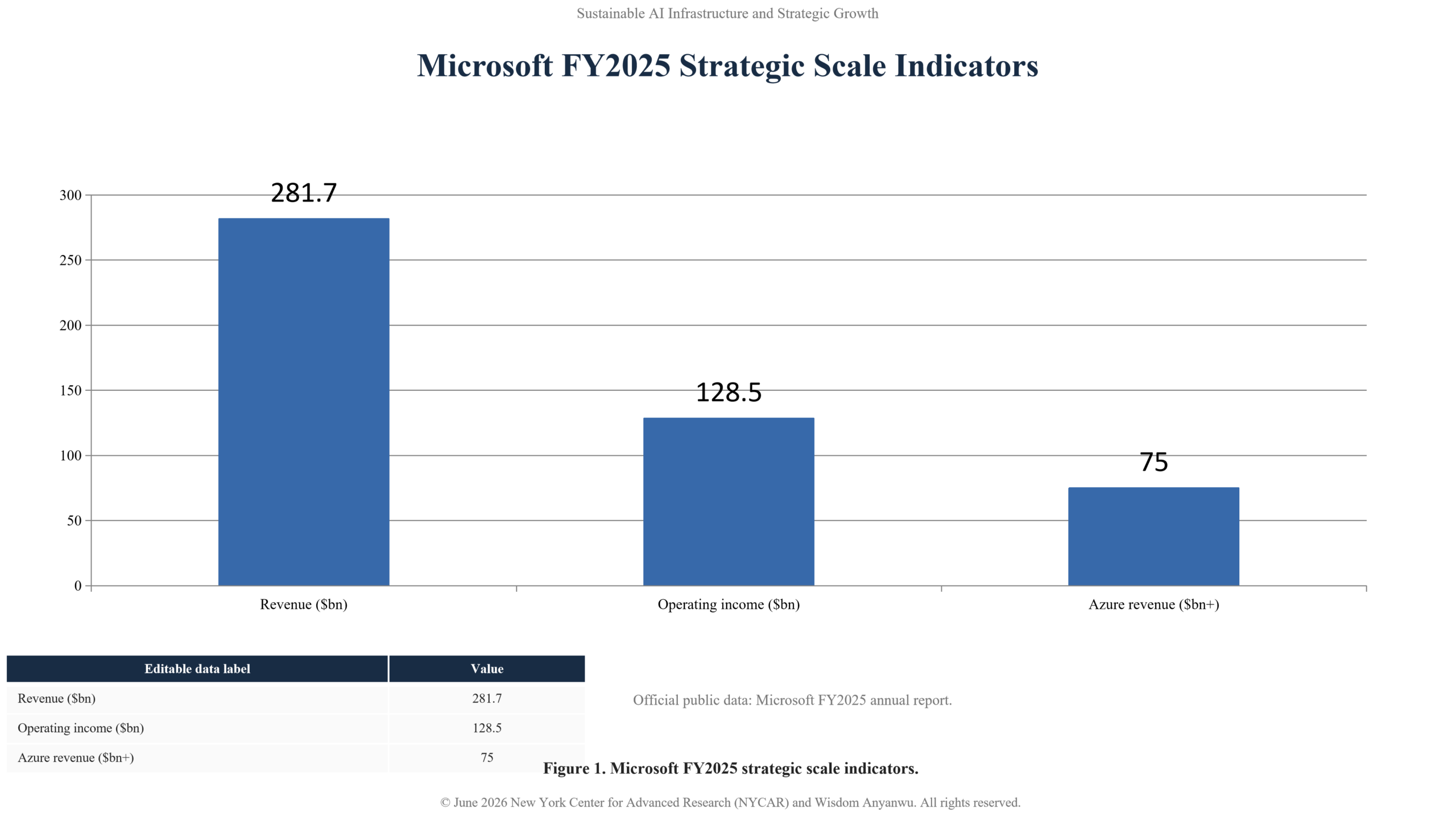
Figure 1. Microsoft FY2025 strategic scale indicators.
© June 2026 New York Center for Advanced Research (NYCAR) and Wisdom Anyanwu. All rights reserved.
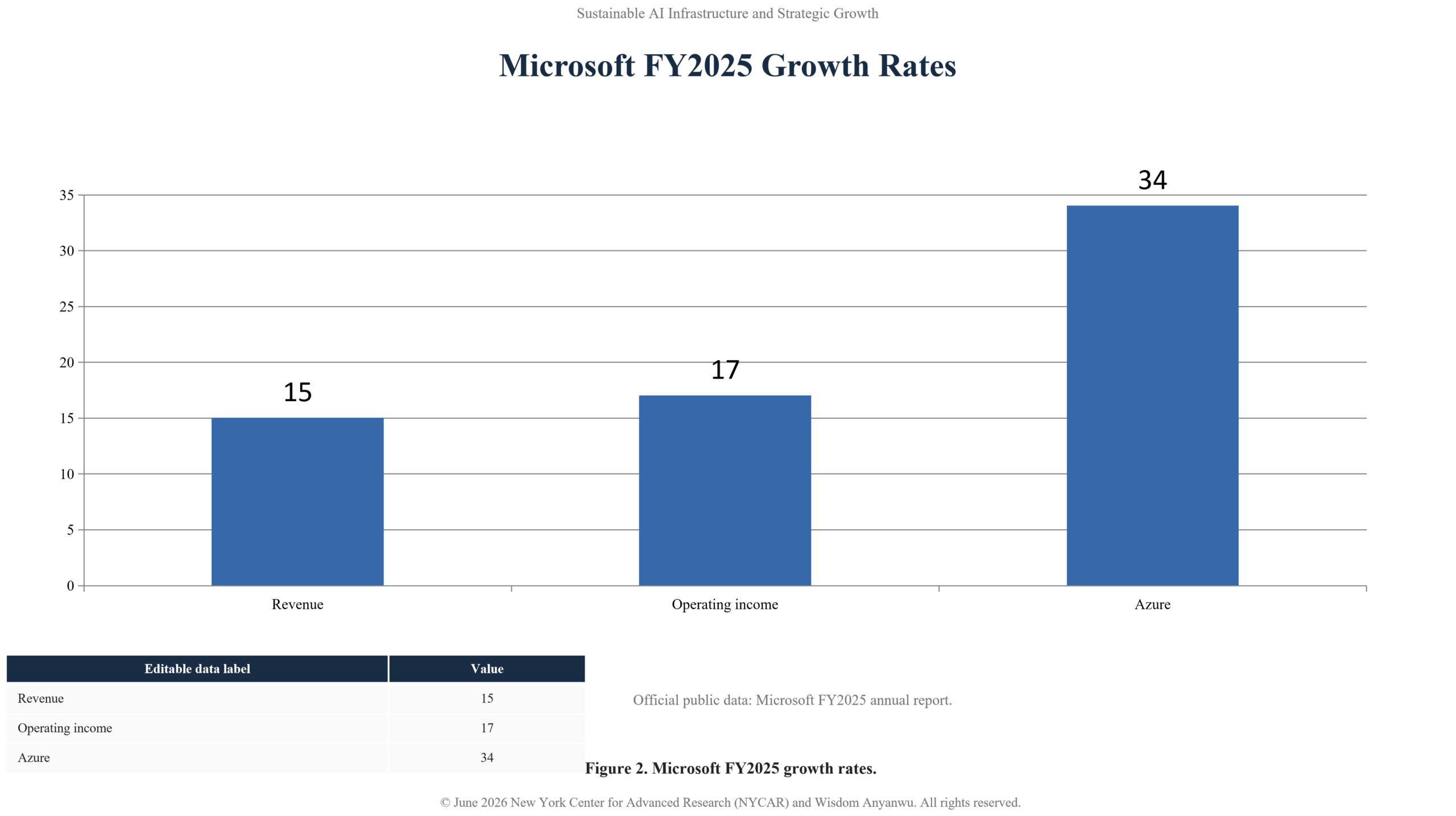
Figure 2. Microsoft FY2025 growth rates.
© June 2026 New York Center for Advanced Research (NYCAR) and Wisdom Anyanwu. All rights reserved.
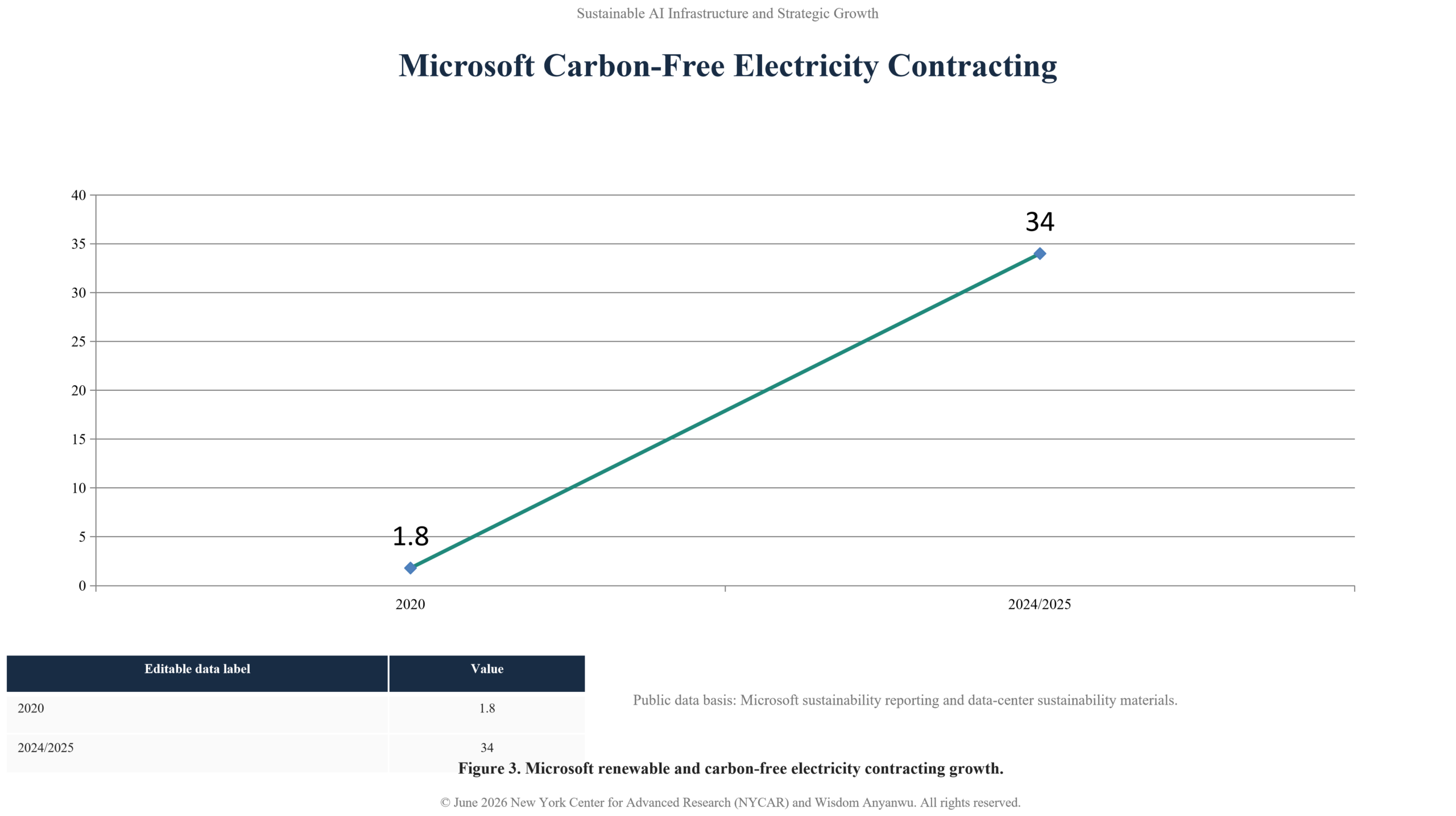
Figure 3. Microsoft renewable and carbon-free electricity contracting growth.
© June 2026 New York Center for Advanced Research (NYCAR) and Wisdom Anyanwu. All rights reserved.
5.2 Chart Interpretation
Figure 1 shows Microsoft’s fiscal year 2025 scale through revenue, operating income, and Azure revenue. Figure 2 isolates growth rates and makes Azure’s momentum visible. Figure 3 shows the expansion of carbon-free electricity contracting. Figure 4 translates the strategic argument into a simple alignment model. Figure 5 presents the governance fields that should be monitored when AI infrastructure expands.
The figures are not decorative. They organize the management problem. A reader can see that Microsoft’s AI growth is commercially powerful, infrastructure-heavy, and sustainability-dependent. The figures also show why a single success measure is insufficient. Revenue, growth, energy contracting, and governance controls must be read together.
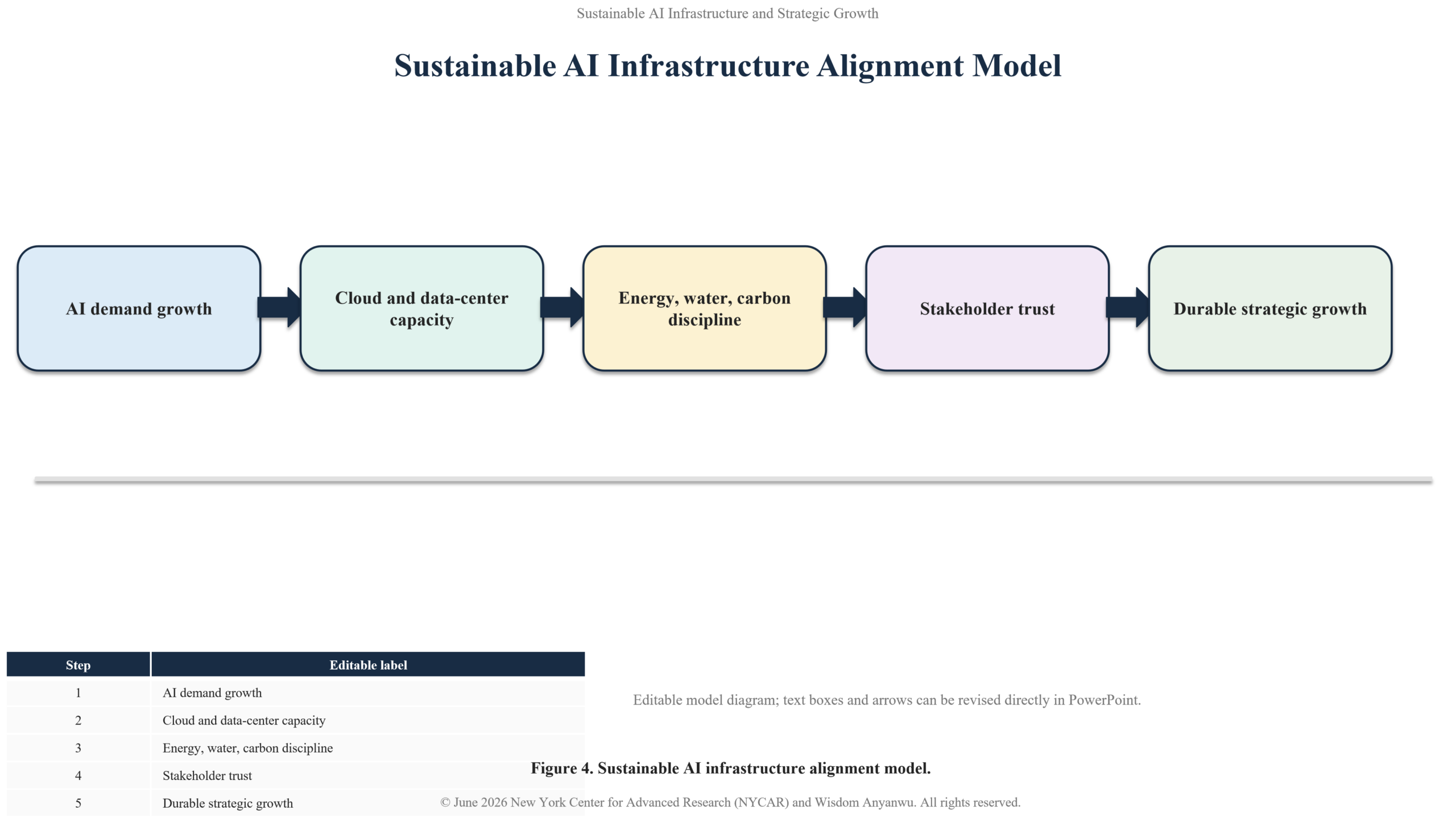
Figure 4. Sustainable AI infrastructure alignment model.
© June 2026 New York Center for Advanced Research (NYCAR) and Wisdom Anyanwu. All rights reserved.
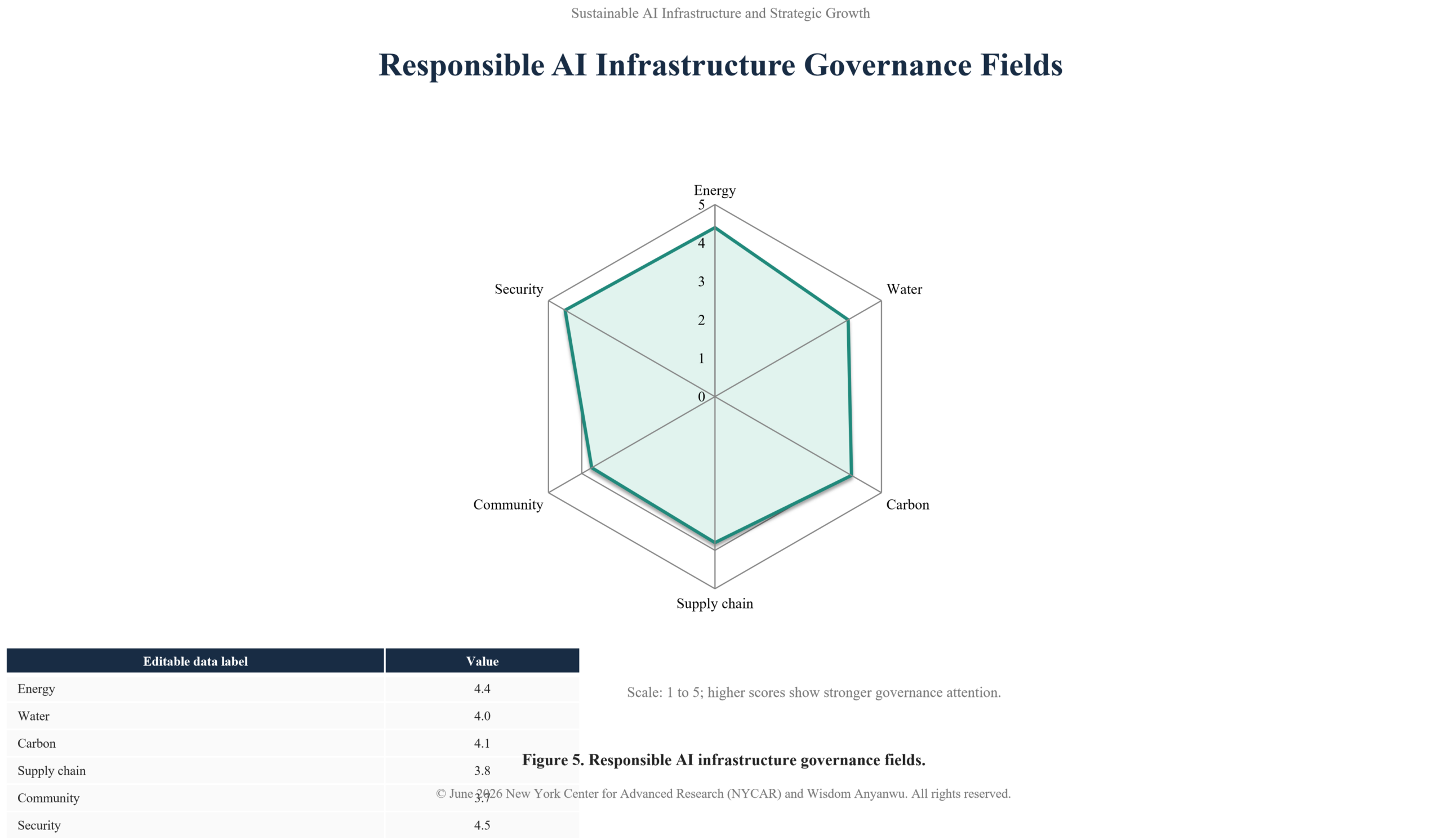
Figure 5. Responsible AI infrastructure governance fields.
© June 2026 New York Center for Advanced Research (NYCAR) and Wisdom Anyanwu. All rights reserved.
Chapter 6: Discussion
6.1 What the Microsoft Case Teaches
Microsoft’s case teaches that AI strategy has entered an infrastructure era. Software capability remains vital, but the company that cannot secure capacity, power, cooling, security, and customer confidence will struggle to sustain leadership. The infrastructure layer is no longer invisible background. It is a competitive platform and a public accountability field at the same time.
The case also shows why strategic management must resist narrow success stories. Strong revenue growth is important, but it does not answer every question. Clean energy procurement is important, but it does not remove every environmental burden. The mature reading is integrated: growth creates duties, and duties shape the terms on which growth can continue.
6.2 The Risk of Separating Growth from Responsibility
The greatest strategic risk is separation. If commercial teams pursue demand while sustainability teams manage consequences after the fact, the organization will eventually face credibility gaps. Site decisions, energy procurement, carbon accounting, cooling systems, customer reporting, and community engagement must be connected to product and growth decisions. The infrastructure burden is too large for after-the-fact correction.
Separation also weakens customer trust. Enterprise clients increasingly ask how technology services affect their own risk profile. They want reliability, privacy, security, and climate discipline. A cloud provider that treats sustainability as a communications function may lose credibility with serious customers. Microsoft’s advantage depends on making infrastructure responsibility visible and practical.
6.3 Managerial Implications
Managers should treat AI infrastructure as a strategic control system. Capital allocation, capacity forecasting, energy procurement, water stewardship, cyber resilience, supplier selection, and stakeholder communication should be reviewed together. No single team can own the whole problem. Finance, engineering, sustainability, legal, public affairs, procurement, and customer-facing teams need a shared governance rhythm.
Another implication concerns measurement. The firm should not rely only on revenue, utilization, or speed of deployment. It should track growth-footprint ratios, carbon-free energy matching, water-risk exposure, supplier emissions, community approval, service reliability, and customer sustainability reporting support. The purpose of measurement is not ceremony. It is early warning and better decision-making.
6.4 Policy Implications
Public policy will shape the future of AI infrastructure. Governments must consider grid capacity, permitting, clean energy supply, water stress, data-center clustering, local economic value, and reporting standards. A poor policy response can either block useful investment or allow growth without accountability. A better response sets clear expectations and rewards firms that build responsibly.
The Microsoft case suggests that policy should not treat AI as only a digital sector. It is also an energy, land, water, construction, and workforce issue. Regions that want AI infrastructure investment should develop transparent planning rules, clean energy pathways, water safeguards, and community-benefit expectations. These measures can protect public interest while giving firms clearer conditions for investment.
Chapter 7: Recommendations
7.1 Strategic Recommendations for Technology Firms
Technology firms should place infrastructure responsibility inside core strategy. AI growth plans should include energy, water, carbon, hardware, security, permitting, and community implications before expansion commitments are made. Firms should use governance gates that require evidence of resource readiness, environmental controls, and stakeholder engagement. Growth should be approved when capacity and responsibility move together.
Firms should also build customer-facing sustainability tools. Enterprise customers need clear information about the footprint of cloud and AI services. Better reporting can become a source of trust and differentiation. Firms that help customers understand and reduce technology-related emissions will have an advantage over firms that treat sustainability data as a defensive compliance issue.
7.2 Recommendations for Microsoft
Microsoft should continue to connect AI growth with transparent infrastructure planning. The company’s public commitments are ambitious, and the growth of AI makes them harder to meet. That difficulty should be acknowledged plainly. Credibility improves when a firm reports progress, explains constraints, and shows how capital decisions are being adjusted. Perfect language is less useful than disciplined evidence.
Microsoft should strengthen integrated review of AI infrastructure projects. Each major expansion should be assessed for energy security, carbon-free electricity matching, water exposure, supplier footprint, community acceptance, cyber resilience, and customer reporting value. The company should also make the strategic link between sustainability and product trust more explicit. In the AI era, responsible infrastructure is part of the service promise.
Chapter 8: Strategic Risk Governance for Sustainable AI Infrastructure
8.1 Energy Security and Growth Discipline
AI services cannot scale on ambition alone. They require power that is stable, affordable, and increasingly clean. Energy security should therefore sit beside product demand in growth decisions. Microsoft’s clean electricity procurement gives it a stronger base, but growth discipline requires constant comparison between new capacity commitments and energy availability in specific regions.
8.2 Water, Cooling, and Local Acceptance
Water use is a sensitive part of data-center expansion. Cooling technology, climate conditions, local water stress, and community perception all matter. A technically efficient facility can still face opposition if the local public believes resource burdens are unfair. Microsoft should treat water-positive commitments as operating requirements that shape site design and community dialogue.
8.3 Carbon Accounting and the Problem of Scope
Carbon accounting becomes harder as AI infrastructure expands. Scope 2 electricity emissions, Scope 3 supplier emissions, construction materials, chips, logistics, and customer use all affect the credibility of claims. A serious governance model should avoid narrow accounting comfort. It should ask where emissions are actually rising and where management can intervene.
8.4 Procurement, Suppliers, and Hardware Lifecycle
AI infrastructure depends on hardware with complex supply chains. Servers, chips, cooling equipment, batteries, and construction materials carry environmental and geopolitical exposure. Procurement should evaluate cost and performance alongside emissions, labor standards, repairability, reuse, and end-of-life handling. The lifecycle of AI hardware is now part of AI ethics.
8.5 Community Consent and Public Value
Data centers enter real places. They use land, connect to grids, affect local planning, and sometimes strain public patience. Community consent cannot be reduced to legal permission. It requires clear information, fair engagement, local benefits, and willingness to hear objections early. A firm that earns public trust will build with less friction and greater legitimacy.
8.6 Cyber Resilience and Infrastructure Trust
AI infrastructure is also security infrastructure. Customers place sensitive data, business processes, and intellectual property in cloud systems. Cyber resilience is therefore part of sustainability in the broad sense of durable operation. A responsible infrastructure strategy must protect availability, confidentiality, integrity, and recovery capacity.
8.7 Operational Playbook for Responsible AI Scaling
A responsible scaling playbook should connect demand forecasts to power, water, carbon, hardware, security, and community readiness. The playbook should require evidence before capacity decisions are finalized. It should also create a review rhythm that continues after deployment. Responsible scaling is not a one-time approval; it is operating discipline.
8.8 Linking Demand Forecasting to Resource Planning
Demand forecasting should not end with expected revenue or compute utilization. Forecasts should be translated into energy needs, cooling needs, hardware replacement cycles, grid relationships, and emissions implications. When demand forecasts change, resource plans should change with them.
8.9 Designing Growth-Footprint Indicators
A growth-footprint indicator compares commercial expansion with environmental pressure. Examples include revenue per unit of energy, AI workload growth against carbon-free electricity matching, and capacity expansion against water-risk exposure. Such indicators help managers see whether growth is becoming cleaner, heavier, or simply less visible.
8.10 Building AI Infrastructure Review Gates
Review gates should sit at major decision points: site selection, procurement, energy contracting, cooling design, launch readiness, and post-launch performance. Each gate should test whether the expansion is commercially justified, technically sound, environmentally credible, and socially acceptable.
8.11 Customer-Facing Sustainability Products
Microsoft can strengthen trust by helping customers understand the footprint of AI and cloud use. Customer-facing dashboards, emissions estimates, workload-efficiency guidance, and procurement support can make sustainability part of product value. Customers need more than slogans; they need usable evidence.
8.12 Workforce Capability for Sustainable AI Operations
Sustainable infrastructure requires skilled people. Engineers, facilities teams, procurement officers, sustainability analysts, finance leaders, lawyers, and customer teams must understand the same problem from different angles. Training should prepare them to make decisions where cost, speed, carbon, water, security, and trust intersect.
8.13 Measuring Success Beyond Revenue
Revenue remains essential, but it is not enough. Success should include service reliability, carbon-free energy progress, water stewardship, supplier discipline, community acceptance, customer trust, and audit readiness. A mature AI infrastructure strategy measures what could damage future growth, not only what proves present success.
8.14 Strategic Lessons for the AI Sector
The sector should learn that AI is not weightless. Every firm promoting AI depends on physical systems. The firms that admit this and govern it honestly will be better positioned than those that sell digital transformation while ignoring energy and environmental realities.
8.15 AI Leadership Requires Physical Accountability
AI leadership now requires a willingness to account for the physical base of digital services. Models, software, and agents matter, but they depend on facilities and resources. A responsible leader should be able to explain how the service is powered, cooled, secured, and governed.
8.16 Sustainability Should Shape Innovation Choices
Sustainability should influence product design and infrastructure architecture. Efficient models, workload optimization, hardware reuse, clean energy matching, and water-smart cooling can shape innovation itself. The strongest firms will not treat sustainability as a constraint after innovation. They will use it to improve innovation.
8.17 Transparency Will Become Competitive
Transparency can become a competitive advantage. Customers, regulators, investors, and communities will increasingly reward firms that provide clear, credible information. In a crowded AI market, trust may become as important as technical novelty.
8.18 Smaller Firms and the Cloud Dependence Problem
Smaller firms may not own data centers, but they still depend on them. Their AI products inherit the infrastructure choices of cloud providers. They should therefore ask harder questions about cloud sustainability, reporting quality, regional resilience, and customer disclosure.
8.19 Public Policy and AI Infrastructure Planning
Public policy should encourage useful AI infrastructure while protecting local resources. Governments should coordinate energy planning, water safeguards, permitting transparency, workforce development, and reporting rules. The goal should be responsible capacity, not either uncontrolled expansion or reflexive obstruction.
8.20 The Leadership Standard Ahead
The leadership standard ahead is practical and demanding. AI growth must be fast enough to serve customers, disciplined enough to survive scrutiny, and honest enough to acknowledge physical limits. Microsoft’s case shows that the next phase of AI competition will be fought not only in models and applications, but in the infrastructure choices that make them possible.
8.21 Advanced Applied Perspective
At an advanced management level, the Microsoft case should be read as a test of whether a technology firm can keep strategic ambition, capital allocation, and environmental accountability in the same operating conversation. The issue is not sentiment. It is whether the organization has enough internal discipline to see physical constraints before they become public controversies, customer objections, or regulatory burdens.
A mature applied reading also avoids easy praise or easy condemnation. Microsoft has scale, resources, and public commitments that many firms lack. Those strengths do not remove risk; they raise the standard. The larger the firm becomes in AI infrastructure, the more its infrastructure choices become signals for the whole sector.
8.22 Reading AI Demand as Institutional Pressure
AI demand should be interpreted as institutional pressure, not only market opportunity. Every rise in use creates pressure on capacity planning, hardware availability, power procurement, emissions accounting, and service reliability. Demand can therefore expose weaknesses that were hidden when workloads were smaller or less compute-intensive.
Managers should resist the temptation to describe demand only in the language of growth. Demand is also a claim on the organization. It asks whether the firm can honor performance promises, protect trust, and build enough capacity without creating a resource burden that later damages the business case.
8.23 The Hidden Cost of Convenience
AI products are often sold through convenience: faster drafting, faster analysis, faster coding, faster service. Convenience has value, but it carries an infrastructure cost that users rarely see. The smoother the experience becomes, the easier it is for customers and firms to forget the systems that make it possible.
A responsible AI provider should make the hidden layer manageable rather than invisible. Customers do not need every engineering detail, but they need credible information on efficiency, reliability, data protection, and environmental footprint. Trust grows when convenience is connected to accountability.
8.24 Price, Value, and Infrastructure Burden
Pricing AI services is not only a commercial decision. It reflects assumptions about compute cost, energy cost, capital recovery, customer value, and future efficiency. If prices are set without a sober view of infrastructure burden, the firm may chase adoption while weakening margins or underfunding sustainability controls.
Microsoft’s advantage comes partly from its ability to spread infrastructure costs across a large customer base and product portfolio. Even so, pricing discipline matters. A service that is popular but resource-heavy must earn its place through durable value, not novelty alone.
8.25 Grid Relationships and Regional Planning
Grid relationships are now strategic relationships. Data centers depend on utilities, transmission planning, clean energy availability, and local regulatory conditions. A firm with global infrastructure cannot treat the grid as a passive supplier. It must understand regional constraints and contribute to long-term planning.
Regional planning also protects communities. When capacity is built without clear discussion of electricity demand, local residents may interpret investment as extraction. Better planning shows how growth connects to clean energy, resilience, jobs, tax base, and public benefit.
8.26 Efficiency as a Competitive Weapon
Efficiency is not merely an environmental virtue. In AI infrastructure it becomes a competitive weapon. More efficient models, servers, cooling systems, and workload management can reduce cost, reduce pressure on power supply, and improve service resilience. Efficiency helps sustainability and strategy at the same time.
The strongest firms will treat efficiency as a design discipline from model architecture to data-center operation. They will not wait for public criticism to look for savings. They will make lower resource intensity part of how products are built and sold.
8.27 Avoiding Sustainability Overstatement
Sustainability overstatement is dangerous because it creates a gap between claim and experience. AI infrastructure is visible enough that unsupported claims will be challenged. A company should report progress with confidence where evidence is strong, but it should also explain remaining constraints plainly.
Credibility is not damaged by admitting difficulty. It is damaged by pretending difficulty does not exist. Microsoft’s reporting should continue to distinguish commitments, progress, setbacks, and operational trade-offs. Serious stakeholders respect honesty more than polished certainty.
8.28 AI Infrastructure and Strategic Patience
AI markets encourage speed, yet infrastructure requires patience. Sites, power contracts, construction, hardware supply, and sustainability controls cannot always move at software speed. Strategic patience means building with enough foresight that growth does not become chaotic.
Patience should not mean hesitation. It means sequencing decisions properly. A firm can move quickly while still refusing to approve capacity that lacks energy clarity, water planning, security readiness, or community engagement. The discipline is in the sequence.
8.29 The Role of Finance in Responsible Scaling
Finance has a central role in responsible AI scaling. Capital budgets should not only approve expansion; they should test the full cost of capacity. That includes energy contracts, cooling design, lifecycle costs, carbon exposure, supplier risk, security investment, and possible delays caused by public opposition.
A finance function that understands infrastructure risk can prevent false savings. Cheap design choices may become expensive if they produce inefficiency, higher emissions, unreliable service, or local conflict. Responsible scaling is therefore an investment-quality issue.
8.30 Microsoft’s Case as an Industry Signal
Microsoft’s case sends a signal beyond Microsoft. Other technology firms, enterprise customers, investors, and policymakers watch how a leading cloud provider handles AI infrastructure. The company’s choices can normalize stronger standards or reveal weaknesses that others must avoid.
The signal is especially important for firms that do not own major infrastructure. They rely on cloud providers and inherit parts of their energy, carbon, security, and resilience profile. Microsoft’s discipline can therefore shape the credibility of many smaller AI businesses.
8.31 Summary of the Applied Perspective
The applied perspective is simple: AI strategy must be managed through physical accountability. Growth, energy, water, carbon, supply chain, security, and community consent belong in one decision system. Separating them creates blind spots and later conflict.
Microsoft has the resources to lead in this area, but leadership requires more than resources. It requires internal governance, transparent reporting, and willingness to let sustainability shape the pace and design of growth. That is the practical standard.
8.32 Management Controls and Future Research
Management controls should convert broad commitments into repeated decisions. Dashboards, review gates, audit routines, scenario planning, and executive accountability can make infrastructure discipline visible. Without such controls, sustainability commitments may remain too far from operating choices.
Future research should examine how AI infrastructure firms measure workload efficiency, local water exposure, customer emissions reporting, and the social license to build. The next stage of scholarship should move closer to site-level and customer-level consequences.
8.33 Governance Controls
Governance controls should assign responsibility across functions rather than leave sustainability isolated. Engineering, finance, procurement, legal, public affairs, operations, and sales all shape infrastructure outcomes. Shared governance prevents the common problem where one team sells growth and another team explains its consequences.
A useful control system should be simple enough to use and serious enough to matter. It should identify thresholds that require executive review, such as high water exposure, weak clean-energy availability, unusual supplier risk, or major community concern.
8.34 Internal Audit of AI Footprint
Internal audit should have a role in reviewing AI infrastructure footprint. The audit should not only check whether reports were prepared correctly. It should examine whether data, assumptions, and controls are strong enough to support public claims and investment decisions.
A credible audit function can help management see where confidence is justified and where evidence remains thin. In a field as sensitive as AI infrastructure, weak internal evidence can become public vulnerability.
8.35 Stakeholder Communication
Stakeholder communication should be clear, specific, and locally informed. Communities deserve plain explanations of water use, energy demand, jobs, construction effects, and public value. Customers deserve practical information about reliability, security, and sustainability performance.
The tone matters. Communication should not sound like promotion when people are asking operational questions. The stronger approach is direct explanation, transparent evidence, and willingness to respond to concerns without treating them as obstruction.
8.36 Research Needs
Research is needed on the real resource intensity of AI services across use cases. Not every workload has the same footprint. Training, inference, storage, retrieval, and redundancy differ. Better measurement would help firms and customers make informed choices.
Additional research should examine regional effects. A global company may report progress at corporate level while local conditions vary widely. Site-level analysis can show where infrastructure creates public value and where it creates avoidable pressure.
8.37 Management Note for Practice
The practical note for managers is direct: do not let AI demand outrun governance. Growth teams should welcome discipline because it protects the business from later shock. Sustainability teams should speak in operating language, not only reporting language.
A good management routine asks the same questions repeatedly. What capacity is needed? How will it be powered? What resource risks exist? Who is affected locally? What evidence supports the claim? What happens if demand doubles? Those questions belong in ordinary management work.
8.38 Applied Synthesis
The Microsoft case brings together growth and constraint. Azure growth, AI adoption, and enterprise demand create opportunity. Energy, water, carbon, supply chain, and public trust create conditions. Strategy lives in the space between them.
A firm that can manage that space well will have an advantage beyond technology. It will be trusted to scale. In the AI era, trust to scale may become one of the most valuable strategic assets a technology company can possess.
8.39 Integrated Strategic Reading
An integrated reading prevents false comfort. Revenue growth alone may hide infrastructure strain. Renewable energy contracting alone may hide water or supply-chain problems. Customer adoption alone may hide future regulatory pressure. Serious management reads all of these together.
Microsoft’s case is valuable because the evidence is strong enough to show both capability and tension. The firm is not weak. The challenge is that strength increases responsibility. A high-capacity organization must govern high-capacity consequences.
8.40 Strategic Value of Evidence
Evidence has strategic value because it disciplines ambition. Public data, internal metrics, audits, and customer-facing reports help the firm make better decisions and defend them when challenged. Evidence also helps avoid vague sustainability language.
The figures in this research publication serve that purpose. They do not settle every question, but they organize the management problem. They show why scale, growth, clean energy, and governance need to be interpreted together.
8.41 Enterprise Customer Implications
Enterprise customers should ask how AI services affect their own governance responsibilities. They should consider reliability, security, emissions reporting, regional data issues, and long-term infrastructure credibility. AI procurement is no longer only a software selection exercise.
Microsoft can strengthen customer trust by giving clients clearer tools and explanations. The customer who understands the service better is more likely to use it responsibly and defend its use inside the organization.
8.42 Long-Term Competitive Advantage
Long-term advantage will belong to firms that combine product usefulness with infrastructure credibility. Model features will change. User interfaces will change. Competitive claims will change. The ability to build reliable, efficient, trusted capacity may be harder to copy.
Microsoft’s advantage is therefore not only in software distribution. It is in the systems that allow distribution to remain dependable. Sustainability discipline helps protect that advantage from environmental, social, and regulatory erosion.
8.43 Integrative Synthesis
The integrative synthesis is that sustainable AI infrastructure is both a strategic asset and a public obligation. It supports growth, but it also requires restraint, evidence, and accountability. The better firms will not treat those duties as a burden on strategy. They will treat them as strategy.
Microsoft’s case shows the direction of the field. AI leadership will be measured by the quality of products and by the quality of the infrastructure choices behind them.
8.44 Publication-Level Analysis
At publication level, the case should be read as an applied management study, not a technology celebration. The relevant issue is how a large firm governs the conditions of growth. Microsoft is a useful case because the scale is large enough to make the management problem visible.
The analysis also provides a standard for other cases. Future work on AI firms should ask how business models connect to energy, water, carbon, security, and community. A purely digital reading is no longer enough.
8.45 Why the Case Matters
The case matters because AI has moved from experiment to infrastructure. Once a service becomes embedded in work, education, government, health care, and finance, the systems beneath it become public concerns. The company that provides those systems carries wider responsibility.
Microsoft’s role in enterprise technology makes this especially important. When its infrastructure choices change, the effects can travel through many organizations. That gives the case sector-wide relevance.
8.46 Policy Insight
Policy should encourage responsible capacity. AI infrastructure can support economic growth, research, public services, and business productivity. It can also strain electricity systems, water resources, and local planning. Good policy recognizes both sides.
Policymakers should require transparency without creating unnecessary paralysis. Clear permitting standards, resource safeguards, reporting expectations, and clean-energy pathways can help firms invest with confidence while protecting communities.
8.47 Managerial Insight
The managerial insight is that infrastructure decisions are leadership decisions. They should not be buried inside technical departments or treated as routine facilities work. Senior leaders need to understand the resource consequences of AI strategy.
A board that asks only about AI revenue is asking too little. It should also ask about power, water, carbon, capital, security, customers, suppliers, and local legitimacy. Those questions determine whether growth can last.
8.48 Authorial Position
The authorial position taken here is balanced but firm. AI growth has real value, and Microsoft has made substantial commitments. Those facts deserve recognition. At the same time, high growth in an infrastructure-intensive field requires scrutiny.
Responsible scholarship should not confuse criticism with hostility. The purpose is to strengthen management judgment by making the full strategic problem visible.
8.49 Concluding Statement
Sustainable AI infrastructure is no longer a secondary matter. It is one of the central strategic questions of the AI economy. Microsoft’s case shows why cloud growth, clean energy, water stewardship, carbon accounting, security, and stakeholder trust must be governed together.
The durable route is disciplined expansion. A firm can grow quickly and still become exposed if its physical systems lag behind its promises. The stronger path is to build AI capability with evidence, restraint, and public credibility.
8.50 Capital Spending, Time Horizon, and Board-Level Discipline
Capital spending on AI infrastructure should be judged over a long time horizon. Data centers, energy contracts, and hardware systems create commitments that last beyond a product cycle. Board-level discipline is needed because today’s investment choices can shape risk for years.
Directors should require scenarios that test demand growth, energy price changes, regulatory pressure, water stress, and technology shifts. A strong board does not slow innovation; it protects innovation from avoidable strategic shock.
8.51 Infrastructure Risk and Scenario Pressure
Scenario pressure helps managers see what ordinary forecasts miss. What happens if AI demand grows faster than expected? What if clean energy supply becomes delayed? What if communities resist new sites? What if customers demand deeper emissions reporting? These questions expose vulnerabilities early.
Scenario planning should lead to action, not binders. It should influence site choices, contract terms, supplier strategy, customer communication, and capital timing. Infrastructure risk becomes manageable when it is rehearsed before it arrives.
8.52 Ethical Dimension of AI Infrastructure
AI ethics is often discussed through bias, privacy, transparency, and accountability. Those issues remain vital, but infrastructure adds another ethical dimension. Energy demand, water use, emissions, land use, and supply-chain labor are also part of the moral footprint of AI.
A serious ethical framework should therefore include the material systems that make AI possible. Microsoft’s case helps widen the conversation from model behavior to infrastructure responsibility. That wider view is necessary for credible AI leadership.
References
Microsoft Corporation. (2025a). Microsoft annual report 2025. https://www.microsoft.com/investor/reports/ar25/index.html
Microsoft Corporation. (2025b). Environmental sustainability report 2025. https://www.microsoft.com/en-us/corporate-responsibility/sustainability/report/
Microsoft Corporation. (2025c). Microsoft datacenter sustainability. https://datacenters.microsoft.com/sustainability/
Microsoft Corporation. (2025d, May 29). Our 2025 environmental sustainability report. Microsoft On the Issues. https://blogs.microsoft.com/on-the-issues/2025/05/29/environmental-sustainability-report/
Teece, D. J. (2018). Business models and dynamic capabilities. Long Range Planning, 51(1), 40-49.
World Resources Institute and World Business Council for Sustainable Development. (2015). The greenhouse gas protocol: Scope 2 guidance. https://ghgprotocol.org/scope_2_guidance