

A Doctoral Research Publication on Legal Governance, Public Trust, and Platform Accountability
Research Publication by Emmanuel I. Nwachukwu
New York Center for Advanced Research (NYCAR)
| Field | Detail |
| Publication No. | NYCAR-TTR-2026-RP068 |
| Date | June 2026 |
| DOI | https://doi.org/10.5281/zenodo.20751562 |
| Peer Review Status | Reviewed and accepted |
Peer Review Status:
This research was assessed under the editorial review framework of the New York Center for Advanced Research and passed both internal and external independent review. Reviewers examined legal currency and source integrity, academic coherence, professional voice, the suitability of the diagnostic model, APA 7th alignment, and fit with the NYCAR doctoral research standard. Review type: internal and external (independent). The external reviewer held no role in drafting the work and declared no conflict of interest.
Copyright © June 2026 Emmanuel I. Nwachukwu. All rights reserved.
Abstract
Media law now lives inside the daily work of media management. It is no longer a reserve function called in only after a regulator writes, a plaintiff threatens, or a story begins to damage the outlet that published it. In a contemporary newsroom, legal judgment appears in ordinary decisions: whether a corruption allegation has enough support, whether a photograph has been cleared, whether a sponsored post is labeled plainly, whether a confidential source is protected, whether audience data is handled lawfully, whether a platform takedown should be appealed, and whether artificial intelligence has been used in a way an editor can still defend.
This doctoral research publication treats media law and strategic media management as one field of institutional responsibility. It draws on recent public court decisions, statutes, regulator materials, and documented case studies from the United States, the European Union, the United Kingdom, and Nigeria. The discussion covers Moody v. NetChoice, TikTok Inc. v. Garland, Dominion Voting Systems v. Fox News Network, The New York Times litigation against Microsoft and OpenAI, Thomson Reuters v. Ross Intelligence, the Federal Trade Commission’s privacy and endorsement materials, the Digital Services Act, the European Media Freedom Act, the Online Safety Act, Reuters Institute data on social and video news use, Pew Research Center data on social-media behavior, and Nigerian broadcast and data-protection developments.
The central finding is practical. A media company that waits until publication to think legally will publish too carelessly in moments of growth and too timidly in moments of pressure. The stronger answer is not legal fear. It is governed editorial freedom: clear evidence files, risk tagging, rights records, transparent sponsorship, lawful data use, accountable AI practice, proportionate moderation, and a correction culture that treats error as an institutional signal rather than a private embarrassment.
The paper develops a Stratified Media-Law Risk Priority Score. The model separates defamation, privacy, copyright, advertising, platform, national-security, labor, safety, and trust risks so that management can decide where to place time, counsel, training, and board attention. It is not offered as a court test and does not replace legal advice. It is a triage device for organizations that need a disciplined way to see risk before risk becomes litigation, sanction, audience loss, or public disgrace.
Keywords: media law; strategic media management; editorial governance; defamation; data protection; copyright; artificial intelligence; platform regulation; public trust; Nigeria media regulation; advertising disclosure
Contents
List of Tables
Table 1. Core legal-governance domains for media organizations.
Table 2. Public-law instruments and management implications.
Table 3. Platform-dependence risks and management responses.
Table 4. Privacy, data, advertising, and audience analytics controls.
Table 5. Copyright, AI, and archive-governance controls.
Table 6. Public case-study portfolio.
Table 7. Stratified media-law risk variables.
Table 8. Implementation sequence for media legal governance.
List of Figures
Figure 1. U.S. adults regularly getting news on social platforms, 2025.
Figure 2. U.S. news access by main route, 2025.
Figure 3. Growth in video news consumption across markets.
Figure 4. U.S. adult use of major online platforms, 2025.
Figure 5. Major privacy enforcement penalties cited in FTC public materials.
Figure 6. Editorial legal review and publication-control flow.
Figure 7. Stratified Media-Law Risk Priority Score.
Figure 8. Illustrative review allocation after risk scoring.
Chapter 1: Introduction: Law as an Operating Condition in Media Management
1.1 The managerial problem behind legal exposure
A slower newsroom could afford a more distant relationship with legal review. Editors decided what mattered, reporters gathered the story, producers shaped the package, the commercial desk sold space, and lawyers entered when a demand letter arrived or a story grew dangerous. That sequence no longer describes how media work is made. A single report may now pass through search tools, social cards, video edits, newsletters, podcast clips, databases, automated advertising systems, audience dashboards, and AI-assisted production before much of the public meets it. Legal risk moves through those same channels. A manager who sees law only at the end of the chain is not controlling the institution; he is waiting for the next failure to announce itself.
The problem is not that every story requires a lawyer. Most media work would collapse if counsel had to approve every ordinary sentence. The problem is that modern media organizations need a working sense of which decisions carry legal weight. A photograph is not just a visual choice; it may be a copyright, privacy, or source-safety issue. A headline is not just a traffic tool; it may turn a carefully attributed allegation into a statement of fact. A podcast clip is not simply a promotional asset; it may move a guest’s untested accusation into a wider channel without the caution that surrounded the full conversation. A sponsorship label is not a cosmetic item; it is part of the public’s ability to know who is trying to influence it.
Law, in this setting, does not simply say no. It asks the organization to be able to prove what it has done. If an allegation is published, the outlet should be able to show the reporting file that supported it. If audience data is collected, the organization should be able to explain why the data was needed, where it went, who had access, how long it will remain, and whether any vendor touched it. If AI assisted production, an editor should be able to say what the tool did and what a human checked. If a correction was necessary, the outlet should know where the original error traveled and how the repair will be made. Those questions are legal, but they are also managerial. They involve workflow, staff training, records, budget, authority, and leadership temperament.
The old phrase ‘legal risk’ can be misleading because it suggests one category of danger. In practice, media-law exposure is layered. A political allegation may raise defamation, election, platform, security, and safety concerns. A sponsored health segment may raise advertising, professional-liability, privacy, and consumer-protection concerns. A documentary may raise copyright, source protection, image rights, privacy, and public-order risks. A newsroom that uses generative AI to search archives may raise licensing, confidentiality, data retention, attribution, and output-verification questions before the opening public line is written. These risks do not wait their turn. They arrive together inside the same production day.
The burden on managers is therefore not to memorize every rule in every jurisdiction. That would be impossible and, in any event, poor use of leadership time. The burden is to build a newsroom and media business that knows when risk has appeared. The organization needs signals. It needs a way to classify high-risk material. It needs a record of who owns the decision. It needs a culture that allows editors, producers, data teams, and commercial staff to stop and ask whether the next step is supportable. When those signals are absent, the institution depends on individual caution. Some individuals are careful; some are rushed; some are tired; some are under commercial pressure. Systems exist because personal vigilance alone is not enough.
1.2 Legal fear is not legal governance
There is a real danger in confusing legal governance with legal fear. Fear makes a newsroom timid, slow, and easy to intimidate. It can turn a public-interest investigation into a memo that never leaves the server. It can make editors more attentive to wealthy complainants than to evidence. It can make lawyers seem like enemies of journalism instead of protectors of publishable work. That is not the argument advanced here. Good legal governance should make media work stronger, not smaller. It gives reporters a better record, counsel a better basis for advice, managers a clearer escalation route, and the public a better reason to trust the outlet when it publishes difficult material.
The most mature media organizations avoid two opposite failures. One is reckless publication: a rush toward speed, provocation, ratings, traffic, or audience loyalty without evidence strong enough to defend. The other is institutional cowardice: retreat whenever a powerful subject threatens litigation or a regulator speaks sternly. Both failures damage public life. Reckless publication injures people and erodes credibility. Institutional cowardice leaves wrongdoing hidden and teaches power that pressure works. The better path is disciplined independence. It protects strong reporting by making the process around that reporting harder to attack.
Legal literacy is therefore a management competence. It does not require editors to become lawyers or lawyers to become editors. It requires leaders to know which decisions carry legal weight, what level of review is needed, what records must exist, who has authority to stop or approve publication, and when outside counsel should be called. A newsroom that cannot answer those questions may still publish brave work, but it does so with unnecessary fragility. The real test comes when the earliest serious challenge arrives. A weak organization scrambles. A prepared organization opens the file.
The point also matters for commercial leadership. Media companies need revenue. They need subscriptions, advertising, licensing, sponsorship, events, donors, memberships, syndication, and platform distribution. But each revenue path carries rules and reputational consequences. A sponsored newsletter that hides commercial influence may generate money while injuring trust. A data-driven subscription strategy that collects more than it needs may strengthen retention metrics while weakening privacy credibility. A licensing deal that gives an AI company broad access to archives may create short-term cash while reducing long-term bargaining power. Legal governance is not the enemy of revenue; it is the discipline that keeps revenue from eating the institution that earned it.
None of this means treating every commercial decision as a threat. A media business that flinches at each sponsorship or data partnership will starve as surely as one that sells its credibility. The discipline is proportion: knowing which revenue choices touch the institution’s independence and which are routine. A banner advertisement rarely tests the character of a newsroom; an exclusive content-licensing deal with the very company that newsroom must cover does. Leadership earns its keep by telling the two apart and reserving its scrutiny for the decisions that can quietly change what the organization is willing to publish.
1.3 Why public trust now belongs inside media-law analysis
Media-law discussions sometimes stop at liability. That is too narrow. A media organization can win a legal point and still lose public trust. It can avoid a lawsuit and still appear careless. It can comply with a privacy notice and still make readers feel used. It can label content legally but so poorly that the audience feels tricked. It can defend free expression while treating corrections as grudging admissions rather than evidence of integrity. Public trust is not identical to legal safety, but the two now meet often enough that media managers should study them together.
The Reuters Institute’s Digital News Report 2025 describes a difficult environment for professional journalism, with traditional media struggling to connect with parts of the public while social video and platform-native personalities gain influence. Pew Research Center’s 2025 data show that U.S. adults encounter both platforms and news through a fragmented mix of Facebook, YouTube, Instagram, TikTok, X, Reddit, WhatsApp, and newer services. A story that once lived mainly on the outlet’s own page now travels into spaces where context is thin and audience trust may already be weak. The media company must prepare for that journey.
Trust is also affected by what the organization does away from the published story. If a reader sends a tip and later receives marketing emails that seem unrelated, the trust problem may begin before any article appears. If a whistleblower’s identity is poorly protected, the legal issue is also a moral failure. If an outlet uses AI to summarize sensitive material and the summary introduces error, the public will not care that the tool was efficient. If a platform removes a story and the outlet cannot explain the appeal process, readers may see weakness or manipulation. Legal governance is one of the ways a media organization protects its public standing when attention systems move faster than institutions can explain themselves.
Trust, once treated as a soft concern, has become a measurable asset that legal governance either protects or erodes. An audience that believes an outlet hides its corrections, buries its sponsorships, or handles tips carelessly will discount even its strongest reporting, and that discount is paid in subscriptions, in shares, and in the willingness of sources to come forward. The legal file and the trust ledger turn out to be the same ledger viewed from two angles. A record that can defend a story in court is usually the same record that lets the outlet explain itself honestly to readers when the story is questioned.
1.4 Method, scope, and central claim
The research uses documentary and applied analysis. It works from court decisions, statutes, regulator materials, institutional reports, public datasets, and case studies. The jurisdictions are selected because they shape much of the present media-law debate: the United States for constitutional speech, defamation pressure, advertising law, privacy enforcement, and platform litigation; the European Union for platform accountability and media-freedom regulation; the United Kingdom for online-safety implementation; and Nigeria for broadcast regulation, data protection, political communication, and the realities of media management in a large African democracy.
The study does not claim to give legal advice for any single newsroom or jurisdiction. It does not decide pending cases beyond what public records support. Where litigation remains active, the paper treats claims carefully and focuses on the management questions raised by the dispute. That discipline matters. A paper about media law must not commit the same overstatement it tells media organizations to avoid. It should distinguish allegation from finding, settlement from judgment, regulatory concern from proved violation, and public reporting from confidential fact.
The central claim is straightforward: modern media organizations need legal governance embedded in ordinary management. Not as a late veto. Not as a performance of caution. Not as a set of policies no one reads. It must exist in assignment, reporting, editing, product design, data handling, rights clearance, advertising review, platform management, AI use, moderation, correction, and board oversight. The organization that does this well will not be perfect. It will still make mistakes. But its mistakes will be easier to identify, correct, learn from, and defend. In a media environment crowded with speed, suspicion, and technological pressure, that discipline is no longer optional.
Table 1. Core legal-governance domains for media organizations.
| Domain | Management risk | Core control |
| Defamation and verification | False or weakly supported reputation-harming claims | Evidence file, source assessment, right of reply, senior review, correction protocol |
| Privacy and data protection | Unlawful collection, exposure, tracking, or publication of personal data | Data inventory, lawful basis, vendor review, retention limits, security controls |
| Copyright and AI | Unlicensed use, unclear archive rights, training-data or output disputes | Rights register, licensing policy, AI-use rules, human verification |
| Advertising and endorsements | Hidden sponsorship or misleading commercial influence | Plain disclosure, commercial-editorial separation, approval record |
| Platform governance | Algorithmic dependence, takedowns, moderation, online-safety duties | Platform-risk map, appeal route, direct audience strategy, moderation record |
| Public trust | Opaque corrections, weak accountability, perceived capture | Corrections log, transparency notes, board reporting, reader complaint pathway |
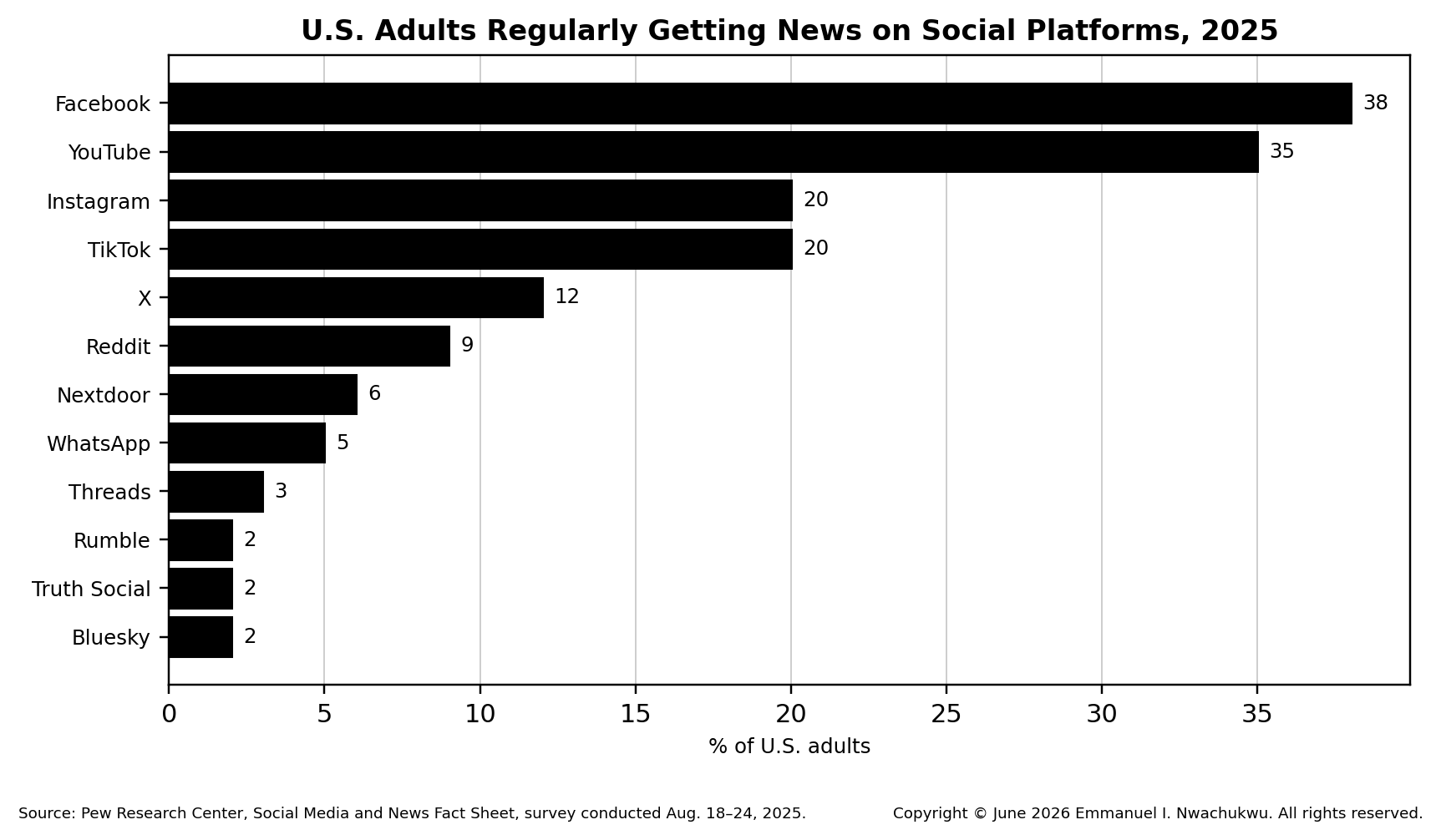
Figure 1. U.S. adults regularly getting news on social platforms, 2025.
Chapter 2: Legal Foundations for Contemporary Media Organizations
2.1 Publication law and organizational law
The legal foundation of a media organization is broader than publication law. Publication law concerns what may be said, shown, hosted, amplified, reproduced, or monetized. Organizational law concerns how the outlet collects data, stores archives, protects workers, contracts with contributors, licenses material, moderates users, handles vendors, and reports to regulators. In a modern outlet those categories meet every day. A data-driven investigation may require privacy review. A documentary may depend on rights clearance. A sponsored newsletter may require advertising disclosure. A comment section may create moderation duties. A newsroom’s use of AI may create copyright, confidentiality, and accuracy questions before the opening public line is written.
This overlap explains why a final legal review cannot carry the whole burden. A lawyer can read a story before publication, but that lawyer cannot repair a missing interview, a lost document trail, an unlicensed image embedded early in production, or a social caption that turns a careful allegation into an unsupported assertion. Legal control has to start where the work starts. It belongs in commissioning, reporting, editing, product design, advertising review, platform management, and post-publication correction. Waiting until the last hour turns counsel into a crisis filter rather than a partner in sound publication.
The distinction also protects speech. If legal review appears only as a late-stage veto, editors may experience it as obstruction. If legal awareness is built into routine, the review becomes less dramatic and more useful. The aim is to move from surprise to preparation. A reporter who knows how to keep an evidence file will not treat legal review as punishment. A producer who understands image clearance will not resent a question about rights. A social editor who knows that a headline can create independent exposure will write sharper and safer copy. Good systems make caution ordinary enough that it does not feel like panic.
The same foundation applies to management outside the newsroom. Marketing teams need disclosure rules. Product teams need privacy and accessibility review. Events teams need consent and image-use policies. Podcast teams need guest releases, music clearance, and correction pathways. Audience teams need limits on behavioral data and segmentation. Corporate leaders need board-level visibility into patterns of claims, corrections, takedowns, privacy complaints, and AI exceptions. Media law is therefore not a legal department’s private territory. It is a condition of the institution’s public work.
The reach of organizational law also explains why legal exposure so often surfaces far from the newsroom. A breach is more likely to begin in a marketing vendor’s database than in a reporter’s notebook; a copyright dispute is more likely to start with a social clip than with the article it was cut from; an employment claim is more likely to arrive through a contract than through an editorial decision. A media organization that polices only its publishing surface while leaving its contracts, vendors, and data practices ungoverned has secured the front door and left the side of the building open.
2.2 Freedom of expression and the limits of protection
Freedom of expression remains the central condition of media work. Without protection for reporting, criticism, satire, dissent, investigation, and publication, media organizations become vulnerable to state pressure, private intimidation, and commercial capture. The United States gives unusually strong constitutional protection against government restraint, and recent platform cases show that courts continue to treat digital curation and content selection as serious speech questions. In Moody v. NetChoice, the U.S. Supreme Court vacated lower-court judgments concerning Florida and Texas content-moderation laws because the courts had not carried out the kind of First Amendment analysis required for the full range of covered platform functions (U.S. Supreme Court, 2024).
Freedom of expression does not remove legal responsibility. A person still has an interest in not being falsely accused. A child still has an interest in safety and dignity. A photographer still has rights in a protected image. A reader still has an interest in knowing when a recommendation is paid for. A user still has an interest in not having personal data processed secretly. Media leadership must hold these interests together without allowing any one of them to become a weapon against public-interest reporting.
The practical test is not whether the law makes editors nervous. Serious reporting often does. The test is whether the organization can explain its decision: the evidence, the public interest, the language used, the review completed, and the correction path if new facts emerge. That is where editorial independence and legal governance meet. Independence without evidence becomes bravado. Evidence without independence becomes sterile compliance. The best media organizations need both.
This balance is especially important in polarized political climates. Public officials may use defamation threats, access denial, broadcast regulation, or security language to push media houses away from scrutiny. Private actors may use lawsuits, demand letters, or advertising pressure. A newsroom that lacks disciplined legal records is easier to frighten because it does not know how strong its own file is. A newsroom that keeps evidence properly, gives fair opportunity to respond, separates fact from opinion, and corrects cleanly can make better decisions about when to stand firm and when to repair.
There is an asymmetry here that favors the prepared. A powerful subject contemplating litigation is making a calculation about cost, exposure, and the likelihood of an embarrassing discovery process. An outlet whose file is thin invites the suit, because the subject senses that pressure alone may force a retraction. An outlet whose file is complete changes that calculation, because the same discovery that frightens the unprepared newsroom becomes the disciplined newsroom’s strongest defense. Governance, in this sense, is not only protection after a challenge arrives. It is deterrence before one does.
2.3 Regulation as a planning signal
The European Union’s Digital Services Act, the European Media Freedom Act, and the United Kingdom’s Online Safety Act show that media and platform governance is becoming more procedural. Regulators increasingly ask organizations to demonstrate systems: risk assessments, transparency reports, advertising records, complaint routes, recommender-system information, child-safety measures, and editorial-independence protections. Even organizations outside Europe should study this direction because platform distribution crosses borders and because many global technology companies apply policy changes widely.
The Digital Services Act creates a single framework for online intermediaries operating in the European Union, including obligations tied to illegal content, transparency, advertising, complaint handling, and, for the largest platforms and search engines, systemic risk (European Commission, 2026). The European Media Freedom Act entered into force in 2024, with most provisions applying from August 2025, and it places media pluralism, ownership transparency, editorial independence, and safeguards against undue interference closer to the center of European media regulation (European Commission, 2025). The United Kingdom’s Online Safety Act introduces duties for in-scope services that host user-generated content or search, with Ofcom responsible for phased implementation and enforcement.
Nigeria adds a different but equally important lesson. Broadcast regulation, data-protection enforcement, electoral communication, platform conflict, and press-freedom concerns do not sit in separate boxes. They meet in newsroom decisions. A Nigerian broadcaster preparing for an election cycle must manage accuracy and incitement risk while also guarding against political overreach. A digital publisher gathering audience data must comply with data-protection law while protecting sources and subscribers. The law is local, but the management problem is now global: media organizations need legal maps before crisis.
Regulation should not be read only as threat. It can also reveal where public expectation is moving. When regulators ask for transparency, complaint records, advertising clarity, data protection, or child-safety systems, they are often responding to harms the public already understands. A media company that treats every rule as hostile may miss the chance to build trust ahead of enforcement. The organization that builds clear correction routes, rights registers, data inventories, and moderation logs is not simply obeying law. It is building institutional memory.
2.4 Legal literacy across the media workforce
Legal literacy should be tailored to role. A reporter needs to know how to verify allegations, contact subjects, handle confidential sources, and avoid overstating evidence. A video producer needs to know music licensing, image rights, minors’ identities, and caption risk. A social-media editor needs to know that a short caption can carry the legal meaning of the whole story. A product manager needs privacy and accessibility awareness. A commercial manager needs advertising and endorsement rules. A board member needs to understand how legal-risk patterns affect institutional strategy.
Training should be practical, not theatrical. Staff learn from real files. A disputed headline, a rights problem, a correction failure, a takedown notice, a sponsored-content complaint, or an AI-generated error teaches more than a generic slide deck. The best training creates shared language: high-risk claim, evidence file, subject response, rights register, disclosure, derivative asset, platform appeal, correction route. When staff share that language, legal awareness becomes part of the newsroom’s ordinary speech.
Legal literacy also reduces unequal power inside organizations. Junior staff often see risks early but feel unable to stop work moving toward publication. A researcher may know that a source is unreliable. A producer may know a clip lacks context. A data analyst may know a customer segment is too sensitive for a campaign. A legal-governance system should give these staff a way to raise concern without being treated as obstacles. Media failure often begins when the person who notices the problem lacks authority to slow the machine.
The legal foundation of media management, then, is not only a set of rules. It is a working arrangement among people who make public claims under pressure. It should tell staff when to move quickly, when to pause, when to escalate, when to correct, and when to defend. That arrangement is the difference between an organization that relies on luck and one that can explain itself when challenged.
Legal literacy spread across roles also corrects a structural weakness in most media organizations, which is that the people who notice risk earliest are rarely the people empowered to act on it. The junior researcher who doubts a source, the producer who spots a missing clearance, the analyst uneasy about a data segment, each sees the problem before it reaches the public, and each is often too junior to halt a process already gathering momentum toward publication. A governance system that gives those voices a defined route to pause and escalate converts scattered private misgivings into an institutional early-warning system, which is worth more than any after-the-fact review.
Table 2. Public-law instruments and management implications.
| Instrument | Legal concern | Management implication |
| Moody v. NetChoice | Platform moderation and First Amendment analysis | Treat content curation as both legal and product governance. |
| TikTok Inc. v. Garland | Foreign-adversary control, data, and platform reach | Build contingency plans when one platform carries high audience value. |
| EU Digital Services Act | Platform transparency, systemic risk, advertising, illegal content | Track platform duties and dependence by market. |
| European Media Freedom Act | Editorial independence, pluralism, ownership transparency | Document safeguards against political, owner, and advertiser interference. |
| UK Online Safety Act | Illegal content duties and protection of children | Review comment spaces, youth-facing services, and moderation controls. |
| Nigeria Data Protection Act | Lawful processing and regulatory oversight | Maintain data inventory, consent records, vendor controls, and complaint handling. |
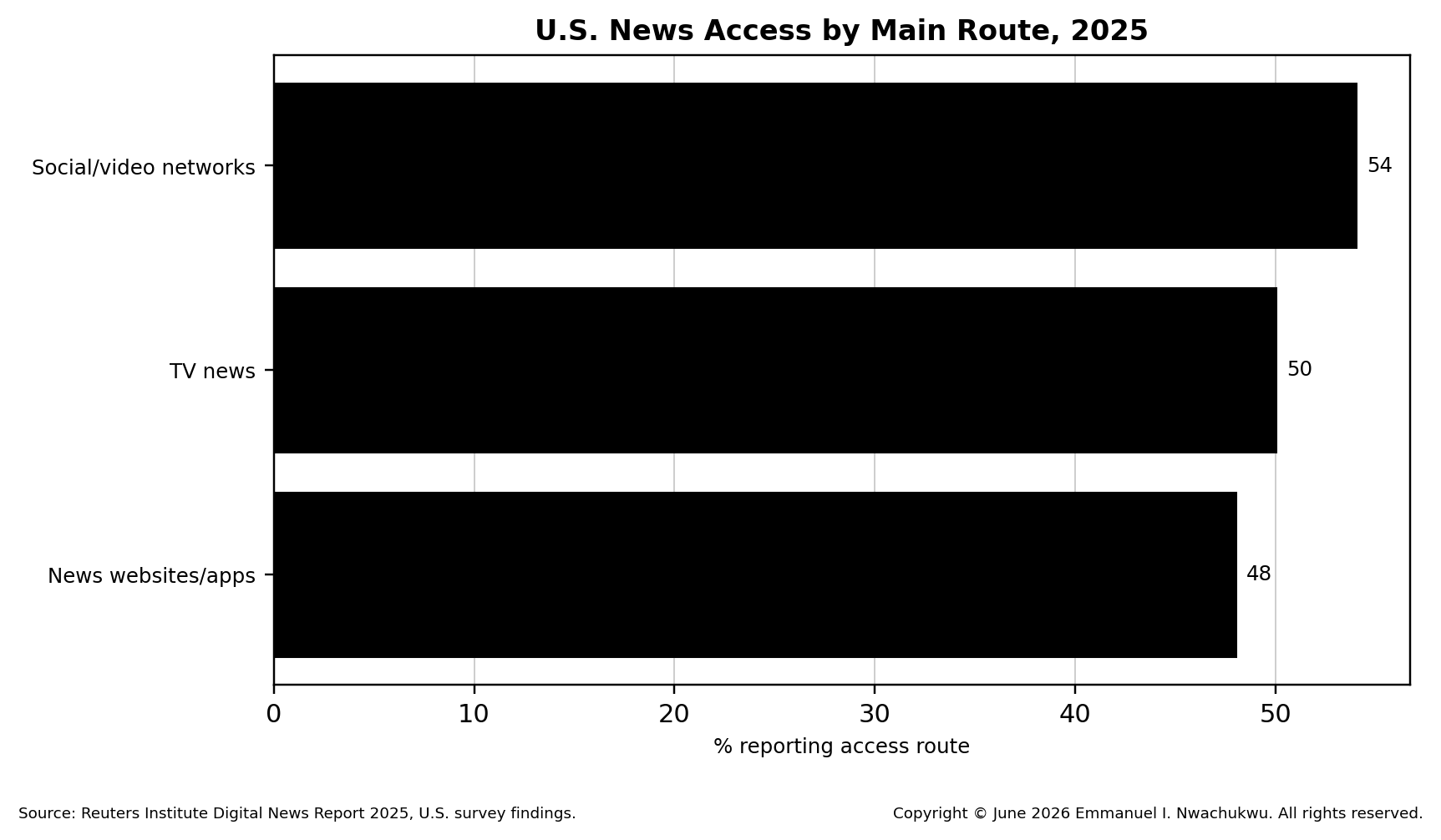
Figure 2. U.S. news access by main route, 2025.
Read also: Editorial Trust and Platform Power in New York Digital Publishing
Chapter 3: Audience Pressure, Platform Dependency, and Editorial Control
3.1 Attention is not evidence
Audience behavior has changed faster than many newsroom controls. The Reuters Institute reported in 2025 that social media and video networks have become major gateways to news in the United States, overtaking TV news and news websites/apps as reported access routes in its U.S. survey findings (Newman et al., 2025). Pew Research Center also found that large shares of U.S. adults regularly encounter news through Facebook, YouTube, Instagram, TikTok, X, Reddit, and other services (Pew Research Center, 2025a). These findings matter for legal management because a story no longer travels only as an article, broadcast, or full segment. It travels as a clip, thumbnail, quote card, repost, push alert, newsletter subject line, search extract, and AI summary.
Each derivative can change risk. A cautious paragraph can become a reckless headline. A qualified allegation can become a social caption that reads like a finding. A licensed image in one context can be reused in another without permission. A sponsored segment can be cut into a clip with the disclosure missing. A live guest can make a claim that a social team later amplifies without context. The legal review of the main story is not enough if the surrounding distribution system is unmanaged.
The cardinal rule of audience strategy is therefore uncomfortable but necessary: attention is not evidence. Traffic does not prove accuracy. Shares do not cure defamation. Engagement does not clear copyright. A trending claim does not become safe because many people have already repeated it. Media executives must not confuse performance metrics with editorial validation. The audience can tell an organization what moved; it cannot always tell the organization what is true.
This matters because platforms reward movement. A claim that produces outrage may travel farther than a careful explanation. A dramatic quote may outperform the paragraph that qualifies it. A misleading thumbnail may generate more clicks than a fair one. The logic of attention, left alone, can teach a newsroom to become less careful in the very places where the public sees the work soonest. A mature media organization must place legal and editorial controls at the same points where audience optimization takes place: headlines, thumbnails, metadata, teaser copy, social captions, clips, newsletters, and mobile alerts.
The structural problem is that attention optimization and legal exposure usually live in different teams with opposing incentives. The audience desk is rewarded for reach; the editorial and legal functions are rewarded for not being sued; and the format with the widest reach is frequently the one the careful reviewers saw last, if at all. When those incentives are never reconciled, the organization reliably ships its riskiest phrasing in its most-travelled containers. Reconciling them is not a matter of goodwill between departments. It means giving the risk tag that governs the article real authority over the clip, the caption, the thumbnail, and the alert that will carry it further than the article ever will.
3.2 Platform dependence as a managerial risk
Platform reach is valuable. It brings new readers, younger viewers, diaspora audiences, and people who may never visit a home page. Yet dependence on a platform the outlet does not own is a strategic vulnerability. Algorithmic changes, account suspension, demonetization, copyright strikes, national-security restrictions, content moderation, or legal action can sharply reduce visibility. TikTok Inc. v. Garland is a direct warning. The U.S. Supreme Court upheld the challenged law requiring divestiture or restriction of TikTok’s U.S. operations against national-security concerns tied to data collection and foreign-adversary control (U.S. Supreme Court, 2025). A publisher does not need to be TikTok to feel the management lesson: a platform can carry enormous audience value and still remain outside the publisher’s control.
Platform dependence should be measured, not guessed. The outlet should know the share of traffic, subscriptions, revenue, audience development, video views, newsletter sign-ups, and brand discovery tied to each major platform. It should also know what would happen if access were lost for thirty days. A distribution plan that cannot survive the temporary loss of one platform is not a strategy; it is a dependency.
Dependency does not mean platforms should be avoided. That would be naïve. A serious media organization needs to reach audiences where they already are. The issue is whether it converts borrowed attention into owned relationships. Newsletters, apps, direct memberships, searchable archives, events, podcasts, RSS, community partnerships, and direct reader support are not old media habits. They are resilience tools. When platform reach is treated as the beginning of a relationship rather than the whole relationship, the institution has more control over its public future.
The risk is not only traffic loss. Platforms impose speech and safety rules, advertising rules, copyright systems, political-content policies, and data restrictions. A publisher may discover that a lawful story is demoted because a platform’s automated system misreads it. A documentary clip may be blocked because licensed material triggers a rights tool. An election investigation may be labeled or limited. A page may be demonetized. A live feed may be interrupted. The media company needs a platform-risk register, not only a social-media calendar.
Dependence is not an argument for abandoning platforms, which would be useless counsel for any outlet that needs to be read. It is an argument for refusing the illusion of ownership. A publisher that has built its entire relationship with its readers on a network it does not control has, in effect, leased its audience on terms it cannot see and cannot appeal. The durable response is unglamorous: cultivate the direct channels a platform cannot revoke, treat platform reach as borrowed rather than owned, and keep an honest figure for how much audience, revenue, and influence would vanish if a single account were suspended without warning.
3.3 Editorial independence under commercial pressure
Commercial pressure can enter quietly. A ratings target may affect guest booking. A subscriber-retention goal may soften coverage of a favored audience group. An advertiser may prefer friendly branded content near editorial work. A founder may want sympathetic coverage of allies. A donor may expect silence on a topic. A platform may reward anger over accuracy. These pressures do not always arrive as instructions. Often they arrive as incentives.
That is why editorial independence has to be written into management practice. It should be clear who can approve sponsored content, who can request a correction, who can access sensitive analytics, who can speak with advertisers about editorial projects, who can overrule a legal concern, and how conflicts are recorded. Independence is not simply the absence of censorship. It is a set of working rules that gives editorial judgment room to breathe.
Economic weakness makes the problem harder. Reporters Without Borders warned in 2025 that economic pressure had become a severe global threat to press freedom (Reporters Without Borders, 2025). The point is not abstract. Poorly funded newsrooms are easier to intimidate, easier to influence, and less able to verify, litigate, insure, train, or protect staff. Sustainable business planning is not separate from legal and editorial freedom. It is one of its conditions.
The relationship between business and editorial work should therefore be honest. A media organization cannot pretend money does not matter. It also cannot allow money to become the hidden editor. The stronger approach is governed separation: the business side can build revenue, but the rules around sponsorship, audience data, advertising placement, conflicts, corrections, and editorial authority must be explicit. Where those rules are vague, pressure will find the weak point.
3.4 The derivative-publication problem
The derivative-publication problem deserves special attention because it is where many contemporary risks appear. The main story may be carefully edited. The quote card may not be. The full video may contain context. The short clip may not. The podcast may include an attribution. The promotional caption may drop it. The article may include a correction. The screenshot that travels across platforms may not. A modern publication is therefore not a single object. It is a family of objects, and the weakest member of that family can become the version the public remembers.
Media managers should require high-risk content tags to travel with all derivative assets. If a story involves alleged criminal conduct, corruption, sexual misconduct, election fraud, public-health danger, minors, confidential sources, or national-security claims, the tag should appear in the production system and follow the content into social editing, newsletters, video, archiving, and updates. The tag does not mean the story should not publish. It means the institution knows the story needs a higher standard of care.
This also applies to AI-generated summaries. Search tools, chat interfaces, and internal newsroom assistants may compress a story into a few sentences. Compression is dangerous when the original includes caution, attribution, or unresolved facts. An AI summary that removes legal nuance can create reputational harm even if the full article is defensible. Newsrooms that experiment with AI summaries should test them against high-risk stories before exposing them to readers.
The deeper issue is discipline. Speed is not going away. Platforms are not going away. Video is not going away. Audience teams will continue to test formats. The question is whether the institution can bring legal and editorial judgment into the same places where attention is engineered. If not, the organization will keep producing carefully edited originals and risky derivatives. That is a management failure hiding inside a distribution success.
Speed deserves a more honest accounting than media strategy usually gives it. The benefit of being early is real but short-lived, measured in minutes of advantage that the rest of the field erases by the end of the news cycle. The cost of being wrong is durable, measured in corrections that trail the story for years, in the subject’s grievance, and in the audience’s memory. Weighed honestly against each other, the case for the extra hour of verification is rarely close. The newsroom that loses a small race cleanly will outlast the one that wins it carelessly and spends the following month explaining itself.
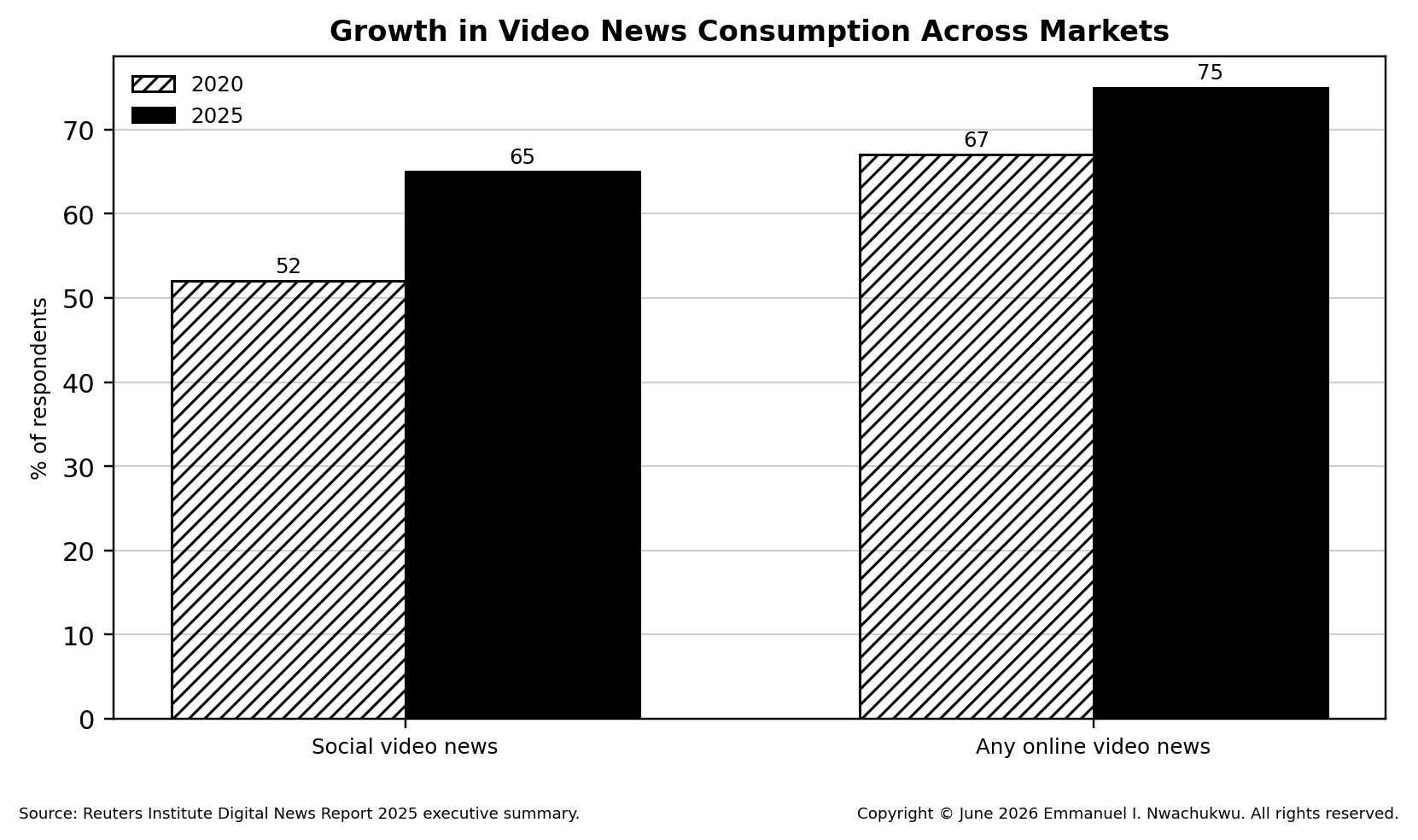
Figure 3. Growth in video news consumption across markets.
Table 3. Platform-dependence risks and management responses.
| Dependence type | Risk | Management response |
| Referral dependence | Traffic can collapse after algorithmic or legal change | Build owned audience channels, search resilience, newsletters, and multi-platform publishing. |
| Revenue dependence | Ad, creator, or platform income can disappear quickly | Diversify subscriptions, events, licensing, sponsorship, and direct membership. |
| Moderation dependence | Content may be removed, limited, or demonetized without warning | Keep archives, appeal records, legal escalation routes, and alternative publication channels. |
| Youth-audience dependence | Short-form platform disruption may weaken future audience growth | Convert social audiences into newsletters, podcasts, communities, and owned products. |
| Jurisdictional dependence | A law or court decision in one country can affect global distribution | Maintain a country-level platform and legal-risk map. |
Chapter 4: Defamation, Verification, and the Discipline of Evidence
4.1 Defamation begins before publication
Defamation is often discussed as an event after publication: a complaint, a demand letter, a lawsuit, a settlement, a judgment. Inside a newsroom it begins earlier. It begins when an allegation is assigned, when a source is trusted too quickly, when a phrase is sharpened beyond the evidence, when a subject is not contacted, when a guest is allowed to repeat a dangerous claim, when a social editor removes the cautious language, or when a correction request sits unanswered. The legal exposure may appear later, but the management failure usually appears earliest.
A serious organization should keep a reporting file for high-risk claims. The file does not have to be theatrical. It should answer basic questions: who made the claim; what document supports it; whether the source has a conflict; whether the subject had a fair chance to respond; what remains unproven; what language avoids overstating the evidence; and who approved the final form. Months later, when memory has faded and the story is challenged, that file may be the difference between a defensible process and a dangerous gap.
What separates the two is rarely the strength of the underlying truth; it is the strength of the record showing that the truth was pursued carefully. A reporter may be entirely correct and still leave the organization exposed if the file shows no attempt to reach the subject, no contemporaneous notes, and no separation between what was known and what was assumed. The law of defamation does not reward correctness alone. It rewards demonstrable care, which is why building the evidence file is a legal control and not merely a journalistic habit.
The distinction between allegation and established fact must survive every stage of publication. It is common for careful reporting to become less careful as it moves into headlines, lower thirds, teasers, social cards, and clips. That is where governance matters. A high-risk story should carry its risk tag into every derivative form. If the main article says a company denies allegations and no court has made findings, the social caption should not imply that guilt has been proved. If the main interview challenges a guest’s accusation, the short clip should not remove the challenge and leave the accusation to stand alone.
Defamation governance is also a matter of time. Deadline pressure can become an excuse for weak verification, but the law does not become more forgiving because a newsroom wanted to win the race. If the story is not ready, management should know what can be published safely and what must wait. Sometimes the responsible decision is to publish a narrower story: the fact that an investigation has begun, the fact that a lawsuit has been filed, the fact that a public official has made a claim, or the fact that documents show a limited point. Accuracy is often strengthened by restraint. A story does not become stronger by saying more than the evidence can carry.
4.2 The Dominion lesson
Dominion Voting Systems v. Fox News Network remains one of the clearest recent public lessons in defamation governance. The Delaware Superior Court’s 2023 summary-judgment opinion found that challenged statements about Dominion were false and left issues concerning actual malice and responsibility for trial before the parties settled. The case should not be reduced to partisan commentary. Its management lesson is sharper than that: when internal knowledge raises doubts about a claim, the organization must have enough discipline and authority to stop, challenge, or rewrite the publication before the claim becomes the brand’s act.
An outlet does not lose its courage by refusing to air unsupported accusations. It loses its authority when it publishes what it cannot defend. Election fraud, corruption, criminality, public-health danger, abuse, professional misconduct, and national-security betrayal are not ordinary claims. They need stronger evidence and senior review. A newsroom that treats them as content inventory invites legal and reputational consequences.
The case also warns management about records. Discovery may expose drafts, messages, emails, ratings discussions, and internal warnings. The wrong answer is to avoid documentation. That invites a different kind of disorder. The right answer is to create records that reflect honest professional conduct: concern, verification, escalation, correction, and reasoned decision. Good records should follow good practice. A record showing that editors asked hard questions can protect the institution. A record showing that staff knew a claim was weak but published because audience demand was high can do the opposite.
The Dominion lesson applies far beyond election coverage. A health outlet publishing claims about a drug, a business desk reporting allegations against a company, a local station broadcasting claims about a school official, or a podcast discussing accusations against a private citizen all face the same basic discipline. The organization must know when a claim can injure reputation and what evidence supports it. It must distinguish the right to discuss controversy from the temptation to convert controversy into certainty. That distinction is one of the marks of professional media work.
4.3 Opinion is not a hiding place for false fact
Opinion, commentary, satire, criticism, and analysis are essential to media work. A publication that cannot criticize power is not serving public life. But the opinion label does not cleanse a false factual assertion. A columnist may draw a harsh conclusion from disclosed facts. A host may attack a public policy. A satirist may exaggerate. Risk rises when the speaker implies undisclosed facts, alleges criminal conduct, or repeats a defamatory claim as though ‘opinion’ is a universal shield.
Opinion desks therefore need fact-checking, especially for names, dates, documents, statistics, quotes, images, and factual allegations. The voice may be strong. The factual spine must still hold. That standard protects writers as much as subjects because careful opinion is harder to silence. The best opinion writing does not need factual sloppiness to carry force. It gains force because the reader can see what the judgment rests on.
Live commentary carries special risk. A host may speak freely, respond to a guest, and use emotional language. That is part of the form. But producers should have rules for guests known to make dangerous claims. They should know how to interrupt, challenge, label uncertainty, correct after the segment, and avoid clipping the most inflammatory line without context. Live media does not remove editorial responsibility. It changes the timing of that responsibility.
The rise of creator-led commentary makes the issue more urgent. Many creators operate outside traditional newsroom structures while still influencing public understanding. Media companies that partner with creators, republish creator content, or use creator clips should not assume that the creator bears all responsibility. If the outlet benefits from the distribution, it needs standards for verification, disclosure, and correction. Borrowed personality does not excuse weak governance.
4.4 Corrections as institutional intelligence
A correction is not only a public apology. It is institutional intelligence. A digital error may continue to circulate through search, social posts, newsletters, video clips, podcasts, and archives long after the original article is corrected. A mature correction policy must therefore identify where the error traveled and how it should be corrected in each place. A correction buried on a page that few readers will see may not repair harm created by a viral clip.
Corrections should be logged and studied. If errors cluster around live programming, crime reports, sponsored content, statistics, translations, or AI-assisted summaries, management has a training, staffing, or workflow problem. The corrections log should feed learning, not simply close complaints. A newsroom that corrects without learning will repeat the same mistake under a new headline.
The public also reads correction behavior as a trust signal. Some outlets treat correction as humiliation. Serious outlets treat it as evidence that the work remains accountable after publication. The tone matters. Defensive corrections that hide the error or minimize the change may satisfy internal pride but fail the reader. A clear correction tells the audience what was wrong, what has been changed, and when the change occurred. It does not over-admit, but it does not hide.
A correction culture is one of the few places where legal protection and public trust point in exactly the same direction. An outlet that corrects promptly, visibly, and without defensiveness narrows its legal exposure, because a timely correction can blunt a defamation claim, and at the same time it signals to readers that the institution treats its own errors as a matter of record rather than reputation management. The outlet that treats every correction as a humiliating concession achieves the opposite on both fronts, hardening its legal position into brittleness and teaching its audience that the published version can never be fully trusted.
Post-publication discipline should include review of hostile correction demands as well. Not every demand is honest. Some are pressure tactics. Some seek to remove accurate reporting. Some try to use privacy, copyright, or defamation language to suppress public-interest material. The correction system should be strong enough to correct real error and strong enough to reject intimidation. That requires records, counsel where needed, senior editorial judgment, and a public standard the outlet can apply consistently.
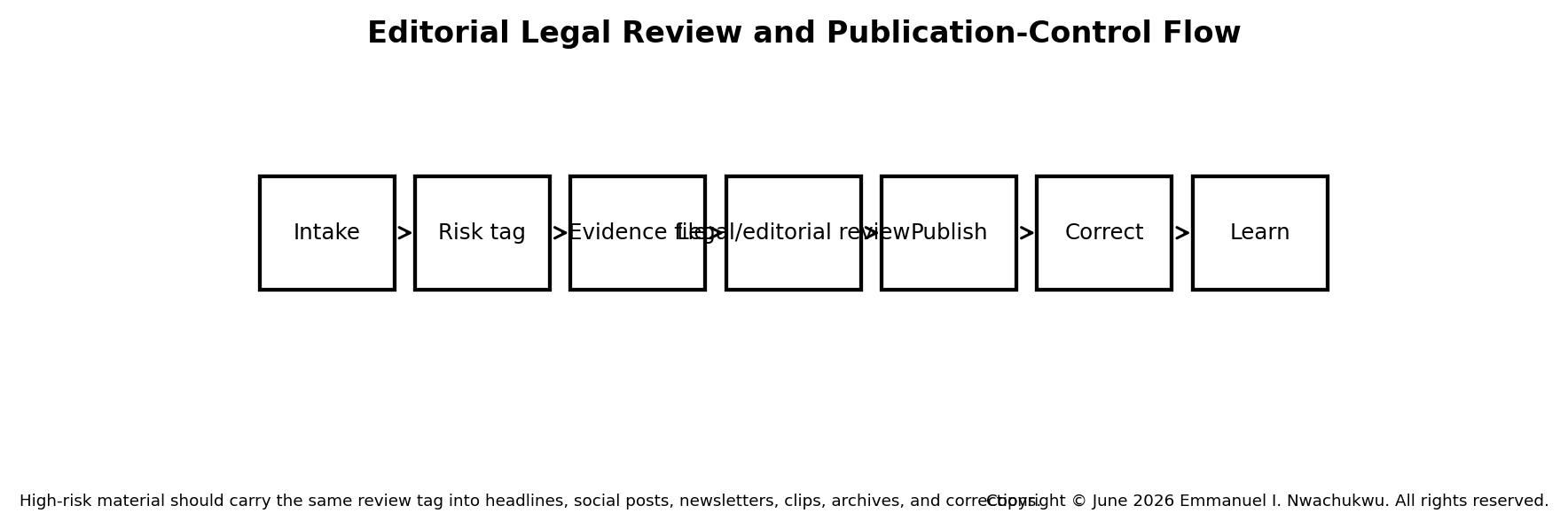
Figure 6. Editorial legal review and publication-control flow.
Chapter 5: Privacy, Data Protection, Advertising, and Audience Analytics
5.1 Audience data is not just a marketing asset
Media organizations ask audiences for trust before they ask for money. Readers subscribe, send tips, join events, comment on stories, download apps, accept cookies, open newsletters, and sometimes reveal sensitive interests through what they read. The outlet may hold information about identity, location, payment, politics, health interests, employment, community ties, and communication habits. Even where the law does not describe this relationship as fiduciary, the ethical expectation is close: the organization should not use audience trust in a way that would feel dishonest if explained plainly.
A privacy notice by itself is not management. Many privacy notices are too abstract to guide staff. The practical starting point is a data inventory: what is collected, why it is collected, where it is stored, who can access it, which vendors receive it, how long it is retained, and whether it is used for advertising, personalization, product decisions, or editorial planning. Without that inventory, the organization is making promises it may not be able to verify.
Privacy also touches editorial work. Reporters hold source information, victim identities, unpublished documents, images of private people, and sensitive locations. Data journalists may combine public datasets in ways that expose private lives. Podcast producers may reveal details in conversational formats that would have been removed from print. A website privacy policy does not manage these newsroom risks. Editorial teams need rules, escalation routes, and training.
Audience analytics can improve service when used carefully. It can reveal whether public-interest reporting reaches the communities it is meant to serve, whether newsletters are useful, whether subscribers are receiving value, and whether a product design creates friction. But analytics becomes dangerous when it replaces editorial judgment or pushes teams toward sensational framing. A headline that performs well may still be unfair. A topic that performs poorly may still be important. A reader segment may be valuable without becoming a license for intrusive profiling.
5.2 Enforcement examples and the Nigerian setting
The FTC’s 2019 Facebook settlement remains a major public warning. The Commission announced a five-billion-dollar penalty and new privacy restrictions after allegations that Facebook violated a prior order and misled users about control over personal information (Federal Trade Commission, 2019). The point for media organizations is not simply the size of the penalty. It is that privacy failure became governance failure. Data collection, vendor control, product design, executive accountability, and public trust met in one case.
Nigeria’s Data Protection Act of 2023 gives similar issues local legal force by establishing a statutory data-protection framework and the Nigeria Data Protection Commission. Recent enforcement and public reporting show that Nigerian organizations cannot treat audience or customer data casually. Reuters reported in 2024 that Nigeria fined Meta $220 million for consumer, data-protection, and privacy violations, and that the Nigeria Data Protection Commission fined Fidelity Bank over unlawful data processing concerns. A media company that collects subscriber, donor, viewer, or whistleblower data in Nigeria should treat these developments as planning signals, not distant corporate stories.
Audience trust is fragile in markets where citizens already suspect institutional misuse of information. Transparent data practice can therefore become a competitive advantage. It tells readers that the outlet asks for trust in public and practices restraint in private. For investigative or diaspora media, the obligation is even stronger because sources and readers may fear political exposure, immigration consequences, social stigma, or employer retaliation.
The Nigerian media context also shows why privacy cannot be separated from press freedom. A state may demand data in the name of security. A platform may disclose information under legal pressure. A newsroom may hold messages from sources whose safety depends on confidentiality. Data governance should therefore include both compliance and resistance planning. The organization must know what it can lawfully protect, when it must respond to process, and when it should seek counsel before disclosing information.
5.3 Advertising, endorsements, and paid influence
Advertising law matters because paid persuasion can easily dress itself as editorial judgment. Native advertising, affiliate links, sponsored newsletters, creator partnerships, podcast reads, product reviews, event sponsorships, and staff social-media endorsements all create disclosure questions. The FTC’s revised endorsement guides make clear that material connections must be disclosed clearly and that social-media and creator marketing remain subject to truth-in-advertising rules (Federal Trade Commission, 2023).
The management rule is plain: the audience should not have to investigate whether a message was paid for. The disclosure should be near the claim, visible in the format where the audience encounters it, and written in ordinary language. It should follow the content when that content is clipped, reposted, embedded, or turned into a newsletter. A vague label such as ‘partner content’ may not tell enough. A serious outlet should prefer clarity over cleverness.
Commercial and editorial separation also needs records. Who approved the sponsor? What review rights were granted? What claims were checked? Which data was shared? Could the sponsor influence editorial coverage? These questions do not prevent revenue. They protect credibility while revenue is earned. A media organization that treats disclosure as a burden is misunderstanding its own product. The product is not only attention; it is trust.
The separation of commercial and editorial judgment is one of those principles that sounds obvious and erodes quietly. It rarely fails through a single corrupt decision. It fails through a sequence of small accommodations: a sponsor granted copy approval as a courtesy, a favorable review nudged by an advertising relationship, a disclosure shrunk to satisfy a commercial partner. Each step is defensible alone; the sum is an outlet whose readers can no longer tell where the selling stops and the reporting begins. Protecting the boundary therefore takes written rules rather than good intentions, because intentions bend under revenue pressure while rules, if leadership enforces them, hold.
Creator partnerships require particular care because the trust being monetized is often personal. A creator may speak with a voice that feels intimate to audiences. If a media house uses that voice to sell products, politics, services, courses, health claims, or financial opportunities, the outlet must know what claims are being made and how payment is disclosed. The creator’s authenticity cannot become a loophole for weak review.
5.4 Audience analytics and editorial restraint
Audience analytics should serve editorial purpose, not govern it. A newsroom may learn that readers care deeply about housing costs, local corruption, diaspora remittances, immigration policy, public health, or school performance. That knowledge is useful. It becomes unhealthy when analytics turns every story into a performance contest. Some stories need time to find readers. Some serve small communities whose needs are serious even if the traffic is modest. Some investigative pieces protect public accountability without delivering immediate scale.
The legal danger appears when analytics rewards extremity. The sharper headline, the more accusatory thumbnail, the shorter clip, and the more emotional push alert may all produce better numbers. They may also carry less truth. Managers should require risk checks for audience-facing changes to high-risk content. If the headline, caption, thumbnail, or excerpt changes the legal meaning of the piece, the change should be reviewed as a new publication decision.
Privacy and analytics also meet in personalization. A reader’s behavior may reveal sensitive interests: health concerns, religion, political anxiety, job insecurity, sexual violence, debt, or family conflict. A publisher may be tempted to use those signals to target content or advertising. Law sets part of the boundary, but brand integrity should set more. The question is not only what data can be used. It is whether the reader would feel respected if the use were explained plainly.
The media company that handles audience data well will not reduce every reader to a target. It will see data as permission held on trust. That stance may appear less aggressive than some growth strategies, but it is stronger over time. Readers who trust an outlet with their attention and information become more than traffic. They become a community the organization is responsible to serve.
Privacy, handled well, is a competitive position rather than a compliance burden. In a market where audiences increasingly assume that any free service is harvesting them, an outlet that collects only what it needs, explains its data practices in language an ordinary reader can follow, and honors deletion requests without friction holds an asset its data-hungry competitors cannot easily copy. The discipline is to treat the privacy notice as a promise the organization can keep rather than a legal shield drafted to be unreadable, because a promise readers understand builds trust while an unreadable shield only defers the moment of betrayal.
Table 4. Privacy, data, advertising, and audience analytics controls.
| Area | Risk | Control |
| Audience analytics | Over-collection, unclear consent, or reuse beyond the stated purpose | Data minimization, lawful basis, retention schedule, privacy review. |
| Targeted advertising | Sensitive profiling or misleading segmentation | Ad-policy review, documented approvals, restrictions on sensitive categories. |
| Sponsored and creator content | Hidden commercial influence | Plain disclosure before publication and preservation of disclosure in derivative formats. |
| Newsletter and membership data | Weak security or unclear reuse | Access controls, vendor review, deletion rules, complaint pathway. |
| Comments and community spaces | Harassment, doxing, illegal content, defamation | Moderation policy, escalation route, appeal process, user-safety records. |
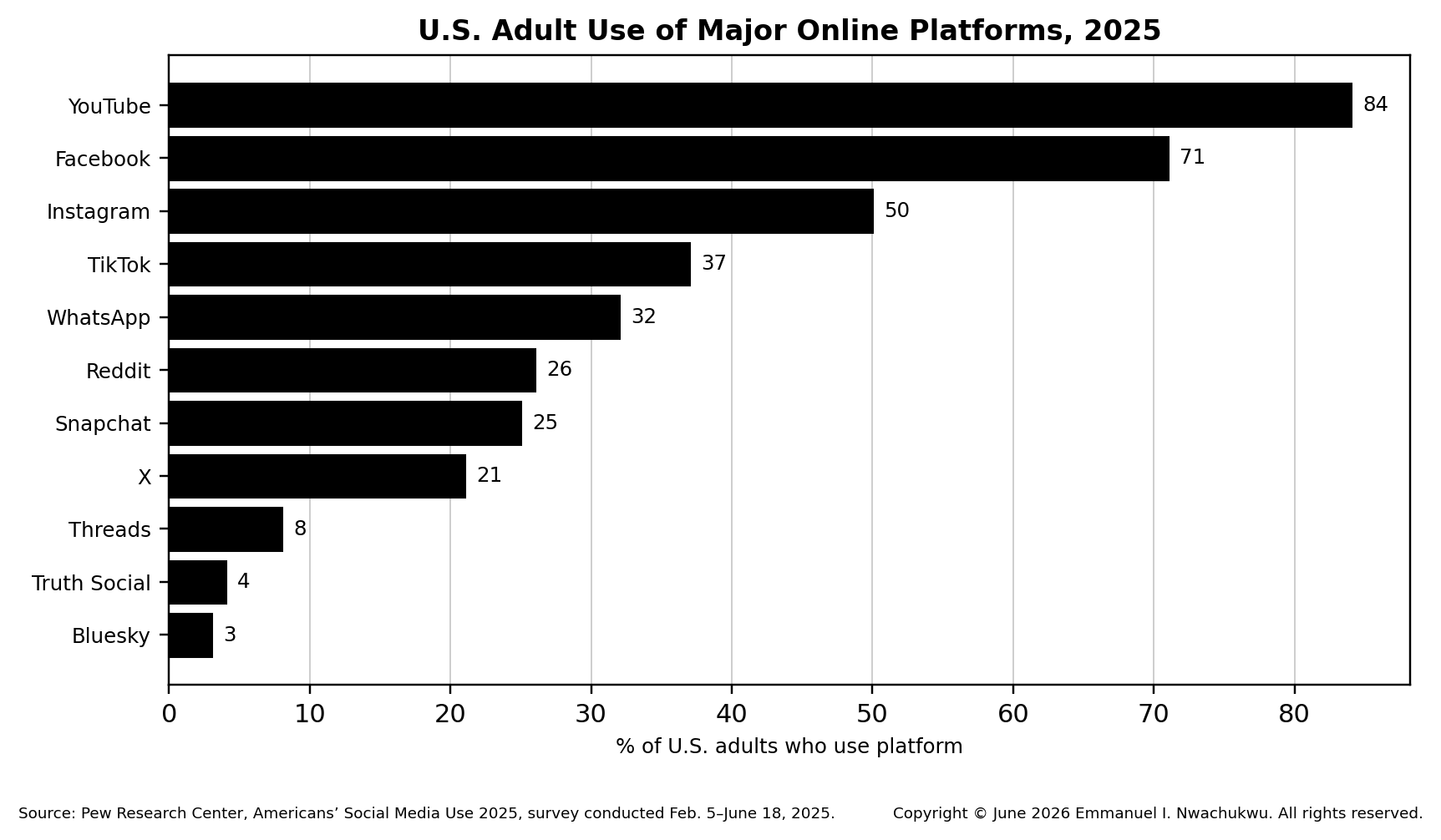
Figure 4. U.S. adult use of major online platforms, 2025.
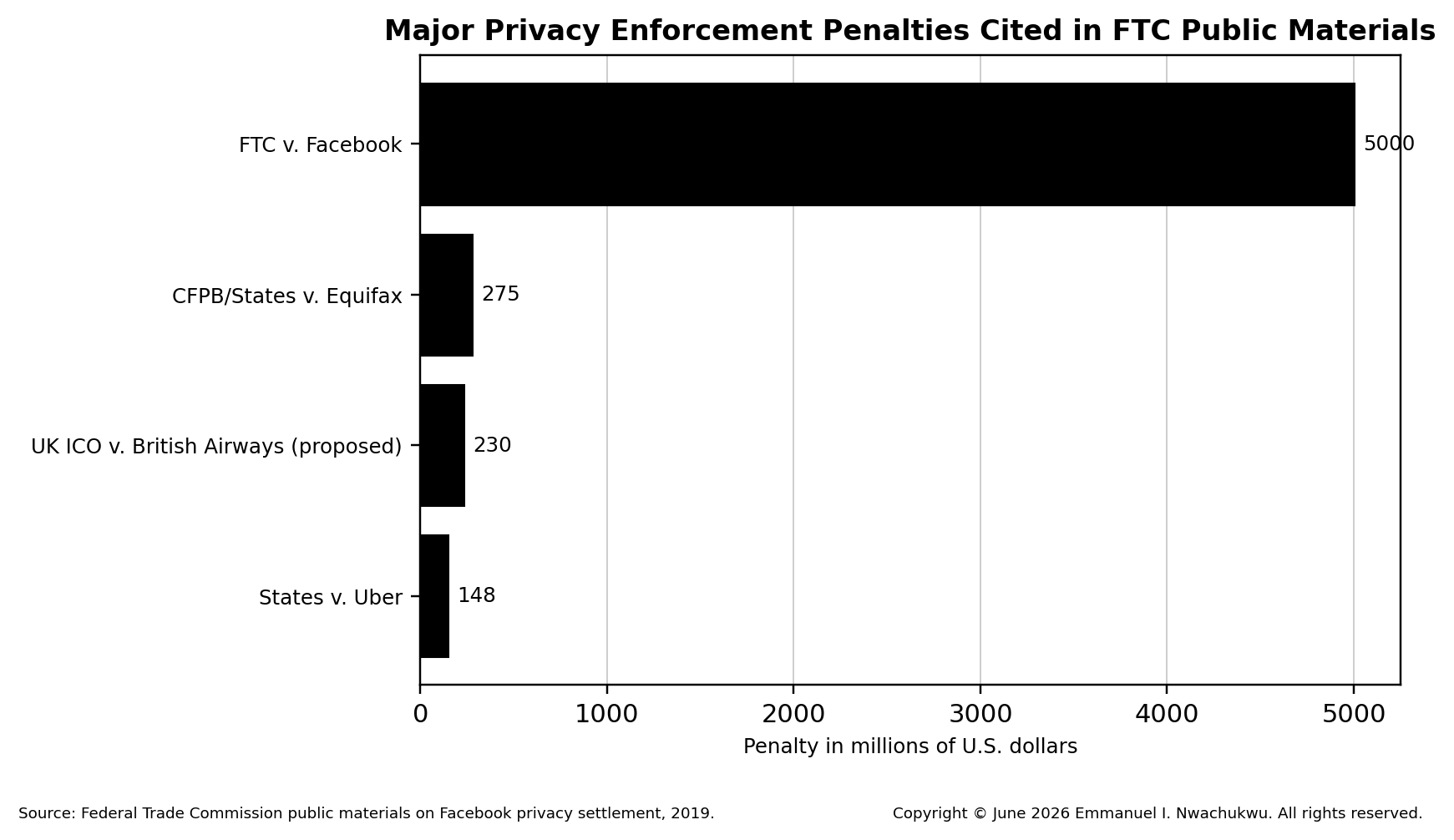
Figure 5. Major privacy enforcement penalties cited in FTC public materials.
Chapter 6: Copyright, Licensing, Artificial Intelligence, and Archive Value
6.1 Copyright as asset management
Copyright should not be treated only as permission paperwork. For a media organization, copyright is asset management. Reporting, photographs, video, audio, scripts, databases, newsletters, podcasts, graphics, archives, and metadata can produce value long after initial publication. They can be licensed, syndicated, taught, republished, translated, searched, adapted, and used in products. If the outlet does not know what it owns, what it licenses, and what it cannot reuse, it cannot defend its value or exploit it wisely.
A rights register is therefore not an administrative luxury. It should identify owned material, freelance contributions, agency material, restricted images, music licenses, archive footage, third-party excerpts, territorial limits, platform limits, moral-rights issues, and AI-use restrictions. The work is slow, but the payoff is substantial. A publisher with a serious rights register negotiates from knowledge. A publisher without one negotiates from hope.
The archive has become more valuable because AI systems, search tools, and summary products need high-quality text, images, transcripts, and structured facts. Verified journalism is expensive to produce and valuable to reuse. That value will be lost if management treats the archive as a cupboard rather than an asset. The same archive that supports public memory may also support licensing income, educational products, documentaries, books, training materials, local databases, and internal research. Rights discipline decides how much of that value remains available.
Copyright management is also a fairness issue. Photographers, freelancers, illustrators, musicians, videographers, and data workers may depend on proper rights treatment for income and professional respect. A media organization that demands respect for its own work while casually misusing the work of others weakens its moral position. Rights-aware production should protect the outlet and the creative people whose material allows the outlet to publish at all.
6.2 Generative AI and the publisher’s dilemma
Generative AI can help media organizations. It can assist transcription, translation, archive search, accessibility, metadata tagging, pattern review, headline testing, and internal research. It can also fabricate facts, blur authorship, mishandle confidential material, reproduce protected work, weaken referral traffic, and make it harder for readers to know who is responsible for the final publication. The sensible question is not whether a newsroom is for or against AI. The question is whether its use is controlled, disclosed where necessary, and held to the same factual standard as any other editorial tool.
The New York Times litigation against Microsoft and OpenAI has made this issue unavoidable for publishers. The Times alleges that its copyrighted journalism was used without permission and that AI outputs can compete with or reproduce Times content. In 2025, a federal court allowed several copyright claims to proceed while dismissing others, leaving the litigation as a continuing reference point rather than a final answer. Thomson Reuters v. Ross Intelligence adds a further warning from a different context. In 2025, the District of Delaware granted partial summary judgment to Thomson Reuters in a dispute involving Westlaw headnotes used to train a legal research tool and rejected the defendant’s fair-use argument on the record before it.
Media leaders should not draw crude lessons from these cases. Training-data disputes turn on facts, markets, uses, rights, and jurisdiction. What the cases do show is that casual assumptions about AI and copyright are unsafe. It is no longer responsible for a media company to say that AI use is only a technology matter. It is an editorial, legal, commercial, and strategic matter.
The publisher’s dilemma is difficult. Refuse all AI use and the organization may lose efficiency, accessibility, search capability, and product innovation. Use AI carelessly and it may lose trust, rights control, and editorial authority. The answer is governed use: clear categories of permitted assistance, prohibited use, secure-tool requirements, documentation, human review, output testing, and licensing policy. AI should be treated as a tool that can help serious work, not as a substitute for seriousness.
The litigation gathering around generative AI and news archives should be read by media managers less as a spectator sport and more as a pricing signal for their own holdings. Whatever the courts ultimately decide about training data and fair use, the disputes have already established that a well-documented, rights-cleared archive is a negotiable asset and a poorly documented one is a liability waiting to be exploited. A publisher that cannot say what it owns, what it licensed, and on what terms is negotiating its most valuable long-term property from a position of ignorance, and ignorance is the one position from which no party negotiates well.
6.3 Rules for newsroom AI use
A newsroom AI policy should begin with accountability. Human editors remain responsible for what is published. Staff should not publish AI-generated facts without checking them against reliable sources. They should not paste unpublished investigations, legal advice, source-identifying material, or sensitive personal data into public tools. AI summaries should not replace reading underlying documents in high-risk work. Synthetic images, audio, or video should be labeled when their nature could mislead audiences.
The policy should distinguish internal assistance from public output. Using AI to transcribe an interview is not the same as using it to draft a published story. Searching an internal archive is not the same as training a model. Translating a public document is not the same as publishing a translated quote without review. A one-sentence permission or ban will not do. The policy must be specific enough for desk editors, producers, product staff, and freelancers to apply under deadline pressure.
AI contracts also deserve legal review. The organization should know whether vendor inputs are used for training, where data is stored, what security standards apply, what rights the outlet keeps, how outputs can be audited, and what happens if a tool produces infringing or defamatory content. Technology does not remove managerial responsibility. It changes where that responsibility must be placed.
A useful AI policy should include an exception log. If a staff member uses AI in an unusual or high-risk way, the exception should be recorded and reviewed. Patterns will emerge. Perhaps staff are turning to public tools because approved tools are too slow. Perhaps translation needs are outpacing human capacity. Perhaps archive search is poorly organized. The exception log can therefore reveal operational needs as well as legal risk.
6.4 Licensing strategy and the value of restraint
Licensing strategy should be judged by more than immediate revenue. A platform or AI company may offer payment for access to archive material, transcripts, photographs, video, or metadata. The offer may be attractive, especially for underfunded outlets. But the organization should ask what access will do to long-term value. Will outputs substitute for the outlet’s own product? Will attribution be clear? Will links return users to the source? Can the publisher audit use? Can sensitive or restricted materials be excluded? Can the agreement be terminated if the partner’s conduct changes?
Restraint can be strategic. Not every asset should be licensed. Sensitive investigations, source-protection materials, images of vulnerable people, restricted third-party content, unpublished notes, and internal research may need to remain outside commercial reuse. A rights register should mark these boundaries. The point of asset management is not to sell everything. It is to know what can be used, what should be protected, and what value the organization is willing to defend.
Media organizations in Nigeria and other emerging markets should pay close attention to this issue. Local reporting has value that global systems may want to absorb. If publishers lack rights records, contracts, and licensing confidence, they may surrender value cheaply. The archive of African journalism, including diaspora reporting, community investigations, and local political history, should not be treated as free raw material for better-capitalized systems. Strategic media management includes protecting the value of public memory.
Copyright, in the end, is not only defensive law. It is part of how a media institution understands its own labor. It says that reporting, editing, photographing, filming, designing, verifying, and organizing knowledge require work. The organization that respects that work internally is better positioned to demand respect externally.
Copyright discipline inside the organization, then, is the precondition for copyright strength outside it. A newsroom that lets staff reuse third-party material loosely, that cannot locate its own licences, and that treats its archive as clutter rather than capital has no standing to object when its work is scraped, reposted, or fed into a model without permission. The same registers and clearances that feel like internal friction are what convert a vague sense of ownership into an enforceable position. An institution that respects rights in its own corridors is the only kind that can credibly demand respect for them in court or at the negotiating table.
Table 5. Copyright, AI, and archive-governance controls.
| Issue | Management danger | Control |
| Rights inventory | Unclear ownership or reuse limits | Rights register for owned, licensed, freelance, and restricted material. |
| AI inputs | Confidential or protected material entered into tools | Approved tools, input rules, secure processing, exception log. |
| AI outputs | Fabricated facts, unattributed copying, or misleading synthetic material | Human verification, labeling, audit trail, correction route. |
| Archive licensing | Short-term deals that weaken long-term value | Licensing review, attribution, audit rights, exclusion of sensitive material. |
| Third-party content | Infringement or misuse of creative work | Clearance workflow, source record, usage limits, staff training. |
Chapter 7: Platform Governance, Moderation, National Security, and Cross-Border Risk
7.1 Content moderation as public-facing governance
Moderation is no longer a narrow back-office task. Platforms remove, rank, label, recommend, demonetize, limit, and amplify content at scale. Publishers with comment sections, live chats, user submissions, community forums, and social accounts make similar decisions on a smaller scale. Those decisions affect safety, speech, trust, and liability. They also create records that may later matter to regulators, courts, advertisers, or users.
A media organization should define what it removes, what it limits, what it labels, what it escalates, and what it leaves up. The policy should cover threats, harassment, doxing, defamation, illegal content, child-safety concerns, election falsehoods, impersonation, spam, and private information. It should also protect legitimate criticism. Over-removal can damage trust just as under-removal can cause harm.
The EU Digital Services Act moves major online platforms toward transparency, risk assessment, data access for vetted researchers, complaint handling, and advertising accountability. Smaller publishers may not carry the same duties, but the direction is clear. Users increasingly expect moderation to be explainable, not arbitrary. A media organization that refuses to explain moderation decisions may not violate a law in every setting, but it will still lose credibility with parts of its audience.
Moderation also has a labor dimension. Staff who review violent threats, abuse, hate, sexual material, or graphic content need support. A media company that builds community products without staffing them safely is shifting harm onto workers and users. The cost of moderation should be included in product planning. If a comment section cannot be managed safely, the organization should reconsider how it is designed.
7.2 Online safety and the child-protection question
The United Kingdom’s Online Safety Act places duties on in-scope services concerning illegal content and protection of children. Ofcom’s phased implementation gives organizations concrete codes and enforcement expectations to consider. Media organizations that operate user-to-user features, youth-facing content, comment sections, or video platforms should not assume that online safety is a platform-only issue.
Child protection has to be operational. The organization should know whether children can access or participate in its services, whether age assurance is needed, whether advertising targets minors, whether comments expose minors to harm, whether images of children are handled with dignity, and whether stories about minors protect identity when required. Growth among young audiences is valuable, but it cannot be the only measure of a youth strategy.
Online safety also creates tension with privacy. Age-assurance systems may collect sensitive data. Content scanning may affect legitimate speech. Strong safety claims can be used to justify intrusive practices. Mature governance holds these concerns together by using proportionate measures, minimizing data, documenting decisions, and giving users reasonable routes for complaint and appeal.
Safety questions are especially serious in political and conflict-sensitive environments. User spaces can become channels for threats, ethnic incitement, election misinformation, and targeted harassment. A Nigerian media outlet covering elections, separatist movements, security operations, corruption, or religious tension must treat community tools as part of the publication environment. The comment box is not outside the institution’s public presence.
7.3 National security and ownership risk
TikTok Inc. v. Garland shows that platform policy can become national-security policy. For media managers the lesson is not limited to one company. Ownership, data access, algorithmic influence, foreign-government risk, sanctions, data localization, and platform availability can all affect media strategy. An outlet that depends heavily on one platform should understand what happens if that platform is restricted, litigated, politically attacked, or technically degraded.
National-security language can also be misused. Governments may invoke security to pressure journalists, restrict reporting, demand data, or silence dissent. A media organization should not accept every official claim uncritically. It should understand the legal duty, seek counsel where appropriate, protect sources within the law, and keep records of government demands. The same management discipline that helps an organization comply with valid law can help it resist improper pressure.
Cross-border strategy should account for local media law. A U.S. outlet reaching European readers may face different privacy and platform expectations. A Nigerian digital publisher reaching diaspora readers may face U.S. platform rules, EU data expectations, Nigerian broadcast sensitivities, and local defamation law. International reach is not simply a marketing success. It is a legal map that must be maintained.
The cross-border map is not a document produced once and filed. Platform policies shift, jurisdictions pass new duties, a court decision in one market reshapes distribution in several others, and a partner’s change of ownership can alter the risk of a relationship overnight. An organization that treats its jurisdictional and platform-risk map as a living instrument, reviewed on a fixed rhythm rather than only after a shock, will see exposure forming while it can still be managed. One that treats the map as a finished artifact will rediscover it only when an access cut, a sanction, or a takedown forces it open at the worst possible moment.
The board should see this map. Too often, platform and jurisdictional risks are left to audience teams or junior product managers. That is a mistake. If a major source of traffic, advertising, or public influence depends on a foreign platform or regulatory regime, the board has a strategic interest. Directors do not need to control every post. They do need to know where the organization is exposed.
Board-level visibility is the quiet difference between an organization that learns from small warnings and one that is surprised by large ones. Directors do not need to adjudicate individual stories, and they should resist the temptation to try. What they need is the pattern: which dependencies are growing, which corrections recur, where legal threats cluster, and which controls keep failing the same way. A board that receives only reassurance receives no information at all. A board that insists on seeing the uncomfortable patterns turns governance from a compliance ritual into the institution’s memory, which is the one asset that survives the people who happen to be in the building this year.
7.4 Nigeria, elections, and responsible resistance
Nigeria gives the research an important African case context. Election periods often bring warnings about hate speech, incitement, false claims, and public disorder. These are real concerns in a diverse country with a history of political tension. A broadcaster or digital publisher should verify claims, avoid inflammatory framing, offer fair hearing, and correct quickly. Professional standards matter most when political pressure is highest.
The Nigerian material carries a lesson that travels well beyond its borders: resource constraints sharpen governance rather than excuse its absence. A lean newsroom operating under political pressure, intermittent funding, and aggressive regulation cannot afford the elaborate compliance apparatus of a large Western institution, yet many such newsrooms sustain disciplined source protection, careful verification, and principled resistance through clear professional norms and personal courage. The transferable insight is that the core of legal governance is habit rather than budget. The expensive systems help, but they substitute for neither the evidence file nor the institutional willingness to stand behind defensible work.
At the same time, vague or uneven enforcement can chill journalism. A regulator’s demand for responsibility can become a tool for protecting incumbents. A serious media organization must therefore practice responsible resistance. It should not answer overreach with recklessness. It should answer with evidence, fairness, documentation, legal counsel, public transparency, and a record that shows its work was disciplined. The stronger the internal standard, the harder it is for power to describe independent journalism as chaos.
Platform conflict adds another layer. When governments suspend or pressure platforms, citizens lose channels of expression and media outlets lose distribution routes. A media company cannot control national policy, but it can prepare. It can maintain direct channels, mirror important public-interest reporting, back up archives, build newsletters, and keep readers informed about where content can still be found. Resilience is part of press freedom.
The final issue is staff safety. Journalists and media workers may face harassment, arrest threats, online abuse, surveillance, and physical danger. Media-law governance that ignores staff safety is incomplete. Risk registers should include legal threats and safety threats together because they often come from the same reporting. A newsroom cannot ask reporters to confront power while leaving them alone when power responds.
Chapter 8: Public Case Studies in Media Law and Strategic Management
8.1 Case-study method
The cases in this chapter are used for management learning, not as courtroom substitutes. Each case asks a practical question: what should a media leader fix before a similar risk becomes public crisis? Public cases are useful because they reveal how legal exposure usually connects with ordinary institutional choices: speed, sourcing, incentives, platform dependence, rights management, privacy practice, disclosure, and correction.
The selection is deliberately mixed. Some cases involve traditional news organizations. Some involve technology platforms. Some involve regulators. Some involve Nigeria’s media and data environment. Together they show that media law is no longer confined to the legal department. It crosses editorial, product, technology, commercial, governance, and board functions.
Case analysis should avoid two temptations. One is hero worship, where a famous organization is treated as if every decision was inevitable. The other is scandal pleasure, where a failure is described for drama rather than learning. Neither serves management. The useful question is always operational: what signal appeared early, who had authority to act, what record existed, how the audience was affected, and what a similar institution should do differently.
8.2 Dominion Voting Systems v. Fox News Network
Dominion is a case study in what happens when dangerous public claims meet audience pressure and internal doubt. For management, the key issue is not the political identity of the parties. It is the failure of a truth-control system. When staff possess information that weakens a claim, that information must be able to stop or reshape publication. If business anxiety over audience loss prevents correction, the organization has placed revenue above its own credibility.
The management response is clear. Election-integrity claims, fraud allegations, criminal accusations, corruption allegations, and other high-harm claims should require enhanced review. Guests should not be used as conduits for unsupported accusations. Social clips should not intensify claims that the main segment treats carefully. Corrections should be made promptly and in the channels where the error traveled.
The case also teaches boards to pay attention to the relationship between audience strategy and editorial control. If audience fear drives publication choices, senior leadership must intervene before the brand’s truth standard collapses. No media company can build long-term credibility by teaching its audience that loyalty will be rewarded with comforting falsehoods. That bargain may work for a season. It eventually becomes evidence against the institution.
8.3 The New York Times v. Microsoft/OpenAI and Thomson Reuters v. Ross Intelligence
These AI and copyright cases push media organizations to treat archives as strategic assets. A publisher that has spent decades producing verified material cannot manage those assets casually in an AI market. Rights metadata, licensing terms, output review, attribution, audit rights, and restrictions on substitution have become board-level issues.
The same cases should also discipline newsroom conduct. Publishers cannot credibly demand respect for their own rights while staff use third-party material carelessly. AI governance should therefore be symmetrical: protect the outlet’s work, respect others’ work, and keep human accountability over what reaches the public.
The management question is not only whether a lawsuit succeeds. It is what the dispute reveals about bargaining power. Technology companies want high-quality content because high-quality content improves tools. Media organizations need to decide whether that value is licensed, protected, shared, withheld, or used to build their own products. Silence is a decision. Poor records are a decision. Weak contracts are a decision. In the AI market, passivity will have a price.
8.4 TikTok Inc. v. Garland
TikTok v. Garland is a platform-dependence case as much as a constitutional case. A media organization may spend years building reach on a platform and still discover that the legal fate of that platform is outside its control. The lesson is to measure dependence and build alternatives. Owned newsletters, websites, events, podcasts, direct subscriptions, community channels, and archives are not old-fashioned. They are resilience tools.
The case also shows that data, ownership, and national security are now part of media strategy. A platform is not simply a distribution pipe. It collects data, ranks attention, sets rules, and may become a target of state action. A publisher that builds its youth strategy entirely on a platform subject to political and legal pressure is accepting a risk it should at least name.
The broader lesson is that distribution choices should be reviewed like business continuity choices. What happens if the platform is restricted? What happens if the account is suspended? What happens if the algorithm changes? What happens if the government demands user data? What happens if brand safety rules demonetize important public-interest reporting? These questions belong in leadership meetings, not only social-media planning sessions.
8.5 Nigeria: broadcast regulation, platform conflict, and data enforcement
Nigeria gives the paper an important African case context. Recent reporting on Nigeria’s broadcast rules ahead of future elections shows the difficult balance between preventing inflammatory political content and protecting media freedom. A broadcaster must verify claims, avoid incitement, and offer fair hearing, but it must also resist vague or uneven enforcement that can chill journalism. The answer is not defiance without discipline. It is internal professionalism strong enough to resist both reckless speech and political intimidation.
Nigeria’s data-protection and consumer-enforcement actions involving Meta and Fidelity Bank also matter for media firms. A publisher that collects user, subscriber, donor, or source data should not wait for a media-specific penalty before building data discipline. Privacy, political communication, and platform dependence now meet in the same strategic space.
Nigerian media organizations also face a credibility challenge that cannot be solved by regulation alone. In a crowded information market, the outlet that verifies carefully, corrects openly, labels paid influence, protects sources, and explains its methods will stand apart. The public may not reward that discipline immediately in traffic, but it will matter when a major investigation is challenged and the organization has to defend its process.
8.6 FTC endorsement and privacy materials
The FTC’s endorsement guides are not only advertising rules. They express a larger expectation: people should know when they are being sold to. In media management, that expectation reaches newsletters, podcasts, live events, product reviews, affiliate links, influencer partnerships, and branded documentaries. Paid influence is not shameful when it is honestly labeled. It becomes corrosive when hidden behind editorial tone.
The FTC’s Facebook privacy enforcement is also a management case. It shows how data promises can become board-level obligations. Media companies may be much smaller than Facebook, but the discipline is transferable: know what data is collected, restrict use, document decisions, train teams, review vendors, and make leadership accountable. Privacy failure is rarely a single technical mistake. It is usually a chain of incentives and neglected controls.
Together, these cases show why media law should be taught to media managers as practical governance. The issue is not simply what the law says. The issue is who acts, when, on what evidence, with what record, and with what consequence for public trust. That is the difference between legal knowledge and legal management.
Table 6. Public case-study portfolio.
| Case | Legal issue | Management lesson |
| Dominion v. Fox | Defamation and editorial control | Audience pressure must not weaken verification. |
| The New York Times v. Microsoft/OpenAI | Copyright, AI, and licensing | Archives need active rights governance and licensing strategy. |
| Thomson Reuters v. Ross Intelligence | Training data and fair use | AI use requires fact-specific rights analysis and documentation. |
| TikTok v. Garland | National security and platform dependence | Distribution strategy must include legal and ownership risk. |
| EU DSA/EMFA | Platform accountability and media freedom | Legal geography shapes product and editorial planning. |
| Nigeria broadcast/data actions | Political communication, privacy, and regulation | Local legal readiness must support, not shrink, press freedom. |
| FTC endorsement/privacy materials | Paid influence and data governance | Disclosure and privacy promises need operational proof. |
Chapter 9: Stratified Formula and Diagnostic Tools
9.1 Why a stratified model is needed
Legal risk is not evenly distributed across media work. A sports recap, an investigative corruption report, a sponsored medical video, a political livestream, a documentary using archival footage, a comment thread, and an AI-generated summary do not deserve the same level of review. Treating every item as high risk wastes attention. Treating every item as routine misses danger. A stratified model helps management decide where to place time, counsel, training, and authority.
The model developed here is designed for triage. It does not tell a court how to decide liability. It does not replace counsel. It gives managers a disciplined way to identify where risk is building and to document why a matter requires ordinary review, enhanced review, legal review, or executive escalation. In practice, the value of such a model is not mathematical elegance. Its value lies in forcing the organization to ask the right questions before the wrong publication decision becomes public.
Media organizations already score performance. They track reach, clicks, watch time, subscription conversions, donations, search referrals, and social engagement. They often score risk less consistently. A newsroom may have excellent dashboards for audience growth and poor records for legal exposure. That imbalance teaches the institution to see what can be counted quickly while overlooking what can destroy credibility slowly. A risk-priority score is a modest corrective. It makes risk visible enough to discuss.
9.2 Stratified Media-Law Risk Priority Score
The proposed score is calculated as follows: RPS = [(0.25L + 0.20E + 0.15D + 0.15M + 0.15T + 0.10C) × V] – R. Each variable is scored from 1 to 5. L is legal severity. E is evidence weakness. D is distribution reach. M is monetization pressure. T is trust consequence. C is control weakness. V is the velocity multiplier, scored from 1.0 to 1.5 based on how quickly the material is likely to spread. R is readiness credit, scored from 0 to 2 for documented controls already in place, such as legal review, source records, rights clearance, clear disclosure, or prepared correction routing.
The weights reflect management priority. Legal severity and evidence weakness are highest because they go to the danger and defensibility of the publication. Distribution, monetization, and trust consequences follow because harm grows when content travels widely, revenue pressure affects judgment, or the audience views the issue as a test of integrity. Control weakness matters because unclear authority makes every risk harder to handle. Velocity is a multiplier because rapid spread increases the cost of delay. Readiness reduces the score only when controls are documented, not only assumed.
For example, a viral political video containing an unverified allegation of electoral fraud might score L = 5, E = 5, D = 5, M = 3, T = 5, C = 4, V = 1.5, and R = 0.5. Carried through the formula, the weighted core is 0.25(5) + 0.20(5) + 0.15(5) + 0.15(3) + 0.15(5) + 0.10(4) = 4.60; multiplied by the velocity term of 1.5 it reaches 6.90; and after a readiness credit of 0.5 the score settles at 6.40 on a scale whose practical ceiling sits near 7.5. The resulting score is high and should trigger senior editorial review, legal review, evidence-file completion, careful captioning, and a plan for correction or update. By contrast, a routine arts review using licensed images may carry lower legal severity and evidence weakness but still require rights documentation. The model does not flatten judgment. It helps judgment arrive on time.
Another example shows how the readiness credit matters. Suppose a long-form investigation names a public contractor accused of inflated billing. The legal severity is high and the trust consequence is serious. But the reporting file includes contracts, invoices, official comments, subject response, expert review, and counsel’s notes. The evidence weakness is lower and readiness credit is strong. The model does not say the story is safe in a careless sense. It says the organization has done the work that makes a difficult story publishable.
9.3 Risk categories and escalation thresholds
The score should be paired with escalation thresholds. A low score can proceed through ordinary desk review. A moderate score should require enhanced editorial review and documentation. A high score should require legal review, senior editorial approval, and a distribution plan. An extreme score should go to executive leadership or the board when the matter affects institutional survival, source safety, national-security exposure, or major litigation risk. Thresholds should be tested against real past incidents so they reflect the outlet’s scale and risk profile.
The scoring conversation is often more important than the number. One editor may see evidence weakness as low because sources are numerous; another may see it as high because the sources share the same interest. One producer may see distribution reach as limited; an audience editor may know that a clip is likely to travel. A lawyer may identify a privacy risk the newsroom missed. The model gives these perspectives a shared table. It does not silence professional judgment. It invites it.
Readiness credit should be earned, not assumed. A story does not receive credit because someone says it was checked. It receives credit when records exist: notes, documents, response attempts, rights clearance, disclosure approval, counsel review, data review, or correction route. This rule matters because organizations often confuse confidence with readiness. Confidence is a feeling. Readiness is evidence.
9.4 Diagnostic tools for everyday use
The RPS model should sit beside practical tools: a high-risk claim checklist, a rights-clearance register, a sponsored-content approval form, a data-processing map, an AI-use log, a platform-dependence register, a correction log, and a quarterly board report. These tools should be short enough to use and serious enough to matter. A checklist that takes an hour will be ignored at deadline. A checklist that asks only vague questions will not catch risk. The discipline is to design tools that fit the work.
A risk register should include the date, content title, risk category, score, owner, action taken, evidence location, reviewer, and follow-up. Over time, the register will reveal patterns. Perhaps one desk produces most correction requests. Perhaps sponsored content repeatedly lacks disclosure in derivative formats. Perhaps AI summaries create recurring attribution problems. Perhaps one platform accounts for most takedowns. Patterns give management something to fix.
The model should be reviewed quarterly. Weights may need adjustment. A small local publisher may assign more weight to defamation because one lawsuit could threaten survival. A global platform-facing outlet may assign more weight to data protection or platform compliance. A broadcaster in a politically tense environment may give greater weight to national-security and incitement concerns. The model is not sacred. It is a tool, and tools should be sharpened through use.
The strongest value of the model is cultural. It teaches a media organization to ask: What exactly are we risking? What evidence do we have? Who benefits if we rush? Who may be harmed if we are wrong? What will the public think if our process becomes visible? Can we defend this tomorrow, six months from now, and under oath? Those questions are not bureaucratic. They are the beginning of publishable integrity.
Table 7. Stratified media-law risk variables.
| Variable | Meaning | Score guidance |
| L: Legal severity | Likely seriousness of legal consequence | 1 = minimal legal consequence; 5 = serious litigation, sanction, injunction, or criminal/regulatory risk. |
| E: Evidence weakness | Strength of proof behind the claim or use | 1 = well documented; 5 = thin, disputed, anonymous, or unverified. |
| D: Distribution reach | Scale and portability of publication | 1 = limited reach; 5 = cross-platform, viral, broadcast, or high search visibility. |
| M: Monetization pressure | Revenue incentive attached to the decision | 1 = little commercial pressure; 5 = ratings, sponsor, affiliate, or platform income heavily involved. |
| T: Trust consequence | Likely effect on public confidence | 1 = low reputational effect; 5 = issue central to credibility, source safety, fairness, or independence. |
| C: Control weakness | Clarity of authority and workflow | 1 = named owner and documented process; 5 = unclear owner, weak review, or poor records. |
| V: Velocity multiplier | Speed of spread | 1.0 = slow; 1.5 = rapid, live, viral, or algorithmically amplified. |
| R: Readiness credit | Documented controls already completed | 0 = no controls; 2 = strong evidence file, legal review, rights clearance, disclosure, and correction route. |
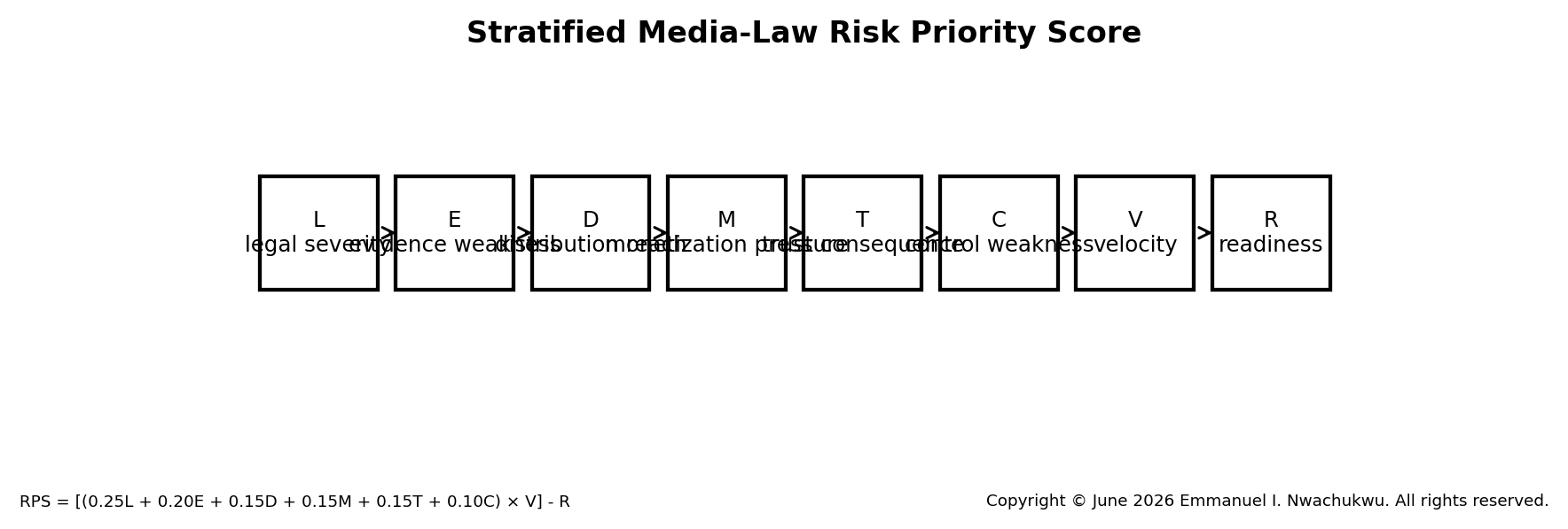
Figure 7. Stratified Media-Law Risk Priority Score.
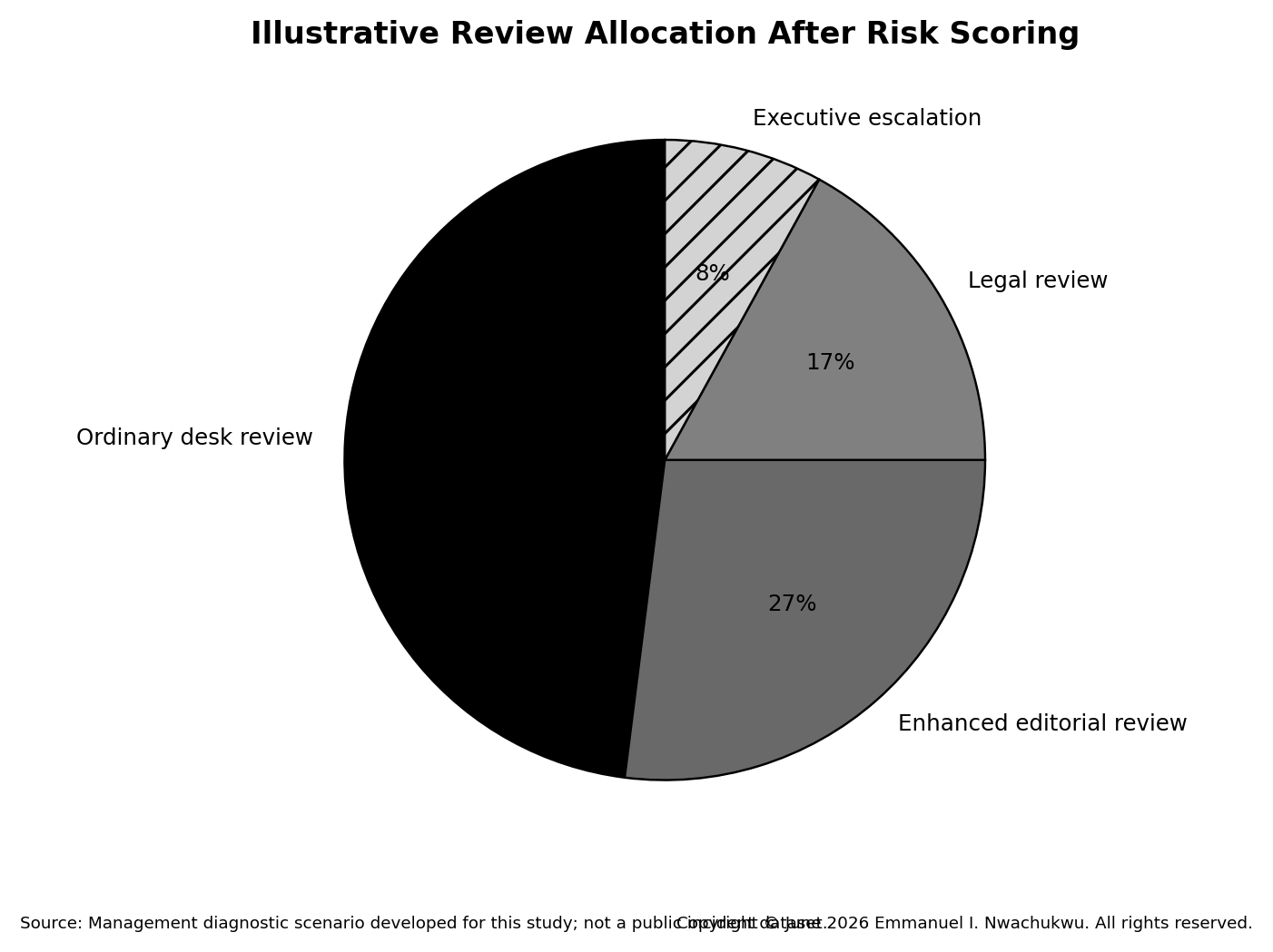
Figure 8. Illustrative review allocation after risk scoring.
Chapter 10: Implementation Roadmap and Final Institutional Position
10.1 From paper policy to working discipline
Media organizations often own policies they do not live by. The staff handbook says one thing, the newsroom under pressure does another, and the correction comes only after the damage becomes public. Implementation has to be practical enough for deadline conditions. An early step is a real audit: which desks publish high-risk claims; which teams use AI; where rights records are stored; which vendors process data; what platforms carry the most traffic; who approves sponsored work; how corrections are handled; and which legal threats arrive most often.
Ownership comes next. Defamation risk should not belong to everyone in theory and no one in practice. The same is true of privacy, data, copyright, advertising disclosure, AI use, moderation, and platform dependence. Each domain should have a named owner and an escalation route. Ownership is not blame. It is responsibility for watching the signals, convening review, and keeping records current.
Training follows, built on real files. Staff learn better from actual publication decisions than from abstract lectures. A high-risk headline, a disputed image, a sponsored post, a correction failure, or an AI summary error will teach more than a generic compliance slide. Training should be short, recurring, and tied to the work people actually do.
The fourth step is to change incentives. If teams are rewarded only for speed, reach, and growth, they will eventually treat caution as disloyalty. Legal governance needs leadership signals. Editors should be praised for holding a weak claim. Producers should be supported when they reject an uncleared asset. Social teams should be rewarded for preserving context, not only for generating shares. Commercial teams should understand that a sponsor is not worth damage to trust. Incentives teach the organization what it truly values.
10.2 Board reporting and public trust
Board oversight should not enter only after scandal. Senior leadership should receive periodic reporting on major legal-risk domains: high-risk publications reviewed, correction patterns, privacy incidents, rights disputes, sponsored-content approvals, platform takedowns, AI-use exceptions, moderation appeals, and legal threats. The purpose is not to frighten the board. It is to make governance visible before emergency.
Public trust is the final measure. A media firm can win a legal point and still lose credibility. It can avoid litigation while quietly eroding audience confidence. It can grow traffic while becoming dependent on systems it does not control. It can defend free speech while mishandling data. Strategic media management must therefore judge success by more than legal survival. The stronger standard is publishable integrity: work that is independent, accurate, rights-aware, transparent, and defensible when challenged.
Boards should ask plain questions. What kind of legal threats are increasing? Where do corrections come from? Which platforms carry too much of our audience? What data do we collect that we no longer need? How are AI tools being used? What content types require counsel most often? Are staff afraid to raise concerns? How quickly do we correct errors? Are sponsored materials labeled clearly after they are clipped or reposted? These questions are not signs of mistrust in editors. They are signs of institutional seriousness.
10.3 Implementation in resource-limited media organizations
Not every media organization has a large legal department, data-protection office, product team, or compliance staff. Many outlets in Nigeria, the African diaspora, local U.S. communities, and nonprofit investigative spaces work with lean teams. The absence of large resources does not excuse the absence of discipline. It does mean the system must be proportionate. A small newsroom can still keep evidence folders, use a high-risk tag, maintain a rights spreadsheet, label sponsored content clearly, record corrections, and know when to seek outside counsel.
Resource-limited organizations should start with the risks most likely to hurt them: defamation, source safety, copyright, paid influence, data handling, and platform dependence. They do not need a complicated software system. A shared secure folder, a simple register, named owners, and recurring review can do significant work. The point is not to imitate a global corporation. The point is to stop relying on memory and goodwill alone.
Collaboration can also help. Smaller outlets may share legal training, template policies, rights-clearance guidance, election-reporting standards, and safety resources through professional associations or academic partners. Universities and research centers can support media houses by producing practical checklists and case notes. The professional field becomes stronger when legal literacy is treated as common infrastructure rather than private advantage.
10.4 Final institutional position
The final position taken here is direct. Media law should not be treated as a late obstacle to editorial work. It should be treated as one of the conditions that allows serious media work to continue. A newsroom that keeps evidence, protects sources, handles data lawfully, clears rights, labels paid influence, documents AI use, moderates proportionately, corrects visibly, and reports risk to leadership is not less free. It is better prepared to defend its freedom.
The future of media management will be shaped by the struggle between speed and proof, reach and control, technology and accountability, commercial pressure and public purpose. Institutions that want public trust must build systems strong enough to carry that struggle without surrendering their judgment. That is the practical meaning of legal governance in media: not fear, not performance, but disciplined freedom.
For Emmanuel I. Nwachukwu’s doctoral research position, the contribution is a management argument as much as a legal one. It asks media leaders to see the newsroom, platform desk, commercial unit, data function, archive, AI tool, and boardroom as one chain of responsibility. The public does not experience the organization in departments. It experiences the published work and the conduct around that work. When that conduct is disciplined, media freedom gains evidence. When it is careless, freedom becomes easier to attack.
A final caution is necessary. No formula, checklist, or policy can replace integrity. A determined organization can fill forms and still act dishonestly. A cynical one can label content and still mislead. Governance tools are useful only when leadership wants truth more than convenience. The best media law system is therefore not the thickest policy binder. It is a culture in which evidence matters, correction is honorable, paid influence is visible, data is handled with restraint, and public-interest journalism is defended because the work is strong enough to stand.
The argument of the research reduces, in the end, to a single discipline that an editor can carry into any deadline. Build the file as the work is made, not after it is challenged; tag the risk where the audience meets it, not only where the article is written; correct in the open; and keep an honest map of the dependencies and jurisdictions that can reshape distribution overnight. None of this guarantees that a media organization will never be sued, sanctioned, or attacked. It guarantees something more useful, which is that when the challenge arrives the organization can open a file rather than scramble for an excuse, and can defend strong work on the strength of how carefully it was made.
Table 8. Implementation sequence for media legal governance.
| Stage | Action | Output |
| 1 | Audit current editorial, data, advertising, platform, and AI practices | Risk baseline and missing-control list. |
| 2 | Assign domain owners and escalation routes | Named accountability across legal-risk domains. |
| 3 | Create risk register and scoring routine | Regular triage of high-risk content and systems. |
| 4 | Train desks, producers, product teams, and commercial staff | Shared practical understanding of risk triggers. |
| 5 | Test the system with recent case files | Evidence of whether the process works under pressure. |
| 6 | Report patterns to senior leadership and board | Governance oversight before crisis. |
| 7 | Revise quarterly after corrections, claims, incidents, and platform changes | Continuous learning and institutional memory. |
Appendix A: Legal Currency and Data Verification Protocol
The legal currency protocol is designed to prevent a common failure in academic and professional media-law writing: relying on old rules while describing new platforms. Before publication, each legal claim should be checked against the most current public source available: statute, court opinion, regulator guidance, official press release, or established institutional report. Pending cases should be identified as pending. A settlement should not be described as a court finding. A regulator’s allegation should not be treated as proof unless the public record supports that language.
Data figures should be separated from management diagnostics. Pew and Reuters Institute figures used here describe audience behavior. They are not presented as direct measures of legal liability. The risk formula is a management instrument, not a public dataset. Any future empirical version should test the model against real incidents, correction logs, legal claims, or newsroom case files.
A legal currency review should include date of source, jurisdiction, status of appeal, whether the matter is statutory or regulatory, whether guidance is binding or advisory, and whether later amendments or orders have changed the position. Reviewers should also note whether a source is primary, such as a statute or court opinion, or secondary, such as commentary. Secondary analysis may be useful, but it should not be allowed to replace primary legal material where primary material is available.
For media organizations working across borders, the verification protocol should include jurisdictional caution. A First Amendment principle from the United States should not be transferred carelessly into Nigeria or the United Kingdom. A European platform duty should not be described as binding on a small publisher outside its scope. The paper’s legal usefulness depends on preserving these distinctions.
Appendix B: Editorial and Product Governance Checklist
Has the claim been classified as ordinary, sensitive, or high-risk? Is there a reporting file showing documents, sources, response attempts, and unresolved facts? Will the headline, social caption, push alert, thumbnail, or clip preserve the caution in the story? Are images, music, video, archive material, charts, and third-party text cleared for the intended use? Is sponsored or affiliate material labeled in the format where the audience will encounter it?
Does the content involve personal data, minors, private citizens, victims, confidential sources, or safety concerns? Was AI used? If yes, what did it do, and who checked the result? Could the item trigger moderation, takedown, or platform-policy concern? Is there a correction route if the claim changes after publication? Who owns post-publication review?
Product teams should ask parallel questions. Does the feature collect data that is necessary for the service? Has the privacy notice been tested in ordinary language? Does the feature expose users to harassment, doxing, or unsafe contact? Are moderation and appeal routes in place? Has the product been tested for children or vulnerable users? Does any AI component create outputs that readers may mistake for verified editorial material?
Commercial teams should ask whether the audience can clearly identify paid influence, whether sponsor review rights are limited, whether claims have been checked, whether affiliate links are labeled, whether creator content preserves disclosure in clips, and whether data sharing with sponsors is lawful and fair. These checks should happen before launch, not after complaint.
Appendix C: Board and Management Audit Checklist
Boards and senior executives should receive concise reporting rather than legal drama. The following questions should be answered at least quarterly. Which high-risk stories received legal or senior editorial review? What correction patterns emerged? Which platforms carry the greatest traffic, revenue, or audience-development dependence? What privacy or data incidents occurred? What AI uses were approved or blocked? What sponsored-content approvals required revision? What legal threats were received and how were they handled?
The board should also ask about resource gaps. Does the newsroom have enough editing capacity for high-risk work? Are rights records current? Are staff trained on AI use? Is there a budget for outside counsel when needed? Are freelancers covered by clear contracts? Are source-protection tools adequate? Are moderation staff supported? Does the organization know where its most sensitive data is stored?
Management should report lessons, not only incidents. A correction pattern may reveal training needs. A takedown pattern may reveal platform dependence. A rights dispute may reveal contract weakness. A privacy complaint may reveal product confusion. The point of board reporting is not blame. It is institutional learning before the next crisis.
Appendix D: Media-Law Risk Register Template
A simple risk register should include the following fields: date; desk or unit; content title; risk category; short risk description; RPS score; owner; review required; review completed; evidence location; action taken; correction or update route; follow-up date; and lesson learned. The register should be secure because it may contain sensitive legal and editorial material. Access should be limited to those with a genuine role in review.
The register should distinguish ordinary recurring matters from major events. A disputed photograph, a sponsor disclosure problem, a takedown notice, and a defamation threat should not all be treated as the same event. Categories allow the organization to see patterns. Over time, the register becomes a map of where risk actually lives, not where leadership assumed it lived.
A risk register can also protect good journalism. When a difficult investigation is challenged, the organization can show that it treated the work carefully before publication. It can locate evidence files, review notes, response attempts, rights records, and correction plans. That readiness does not guarantee victory, but it strengthens the outlet’s position.
Appendix E: Future Empirical Research Agenda
The Stratified Media-Law Risk Priority Score should be tested empirically. Future researchers could examine a sample of newsroom incidents, correction logs, legal claims, takedown notices, rights disputes, and privacy complaints to see whether the variables predict escalation. Researchers could also compare small local outlets, national broadcasters, digital-native publishers, nonprofit investigative organizations, and platform-facing creator networks.
Another research path should focus on Nigeria and the African diaspora. There is need for detailed study of how Nigerian media houses handle election claims, broadcast regulation, source protection, data privacy, platform dependence, and legal threats. Such research should avoid treating African media only as a problem case. It should document practical resilience, informal professional standards, and the ways lean newsrooms solve governance problems without the resources available to large Western institutions.
A further research path should study AI use inside media organizations. The field needs evidence on how AI affects correction patterns, copyright disputes, staff workload, translation quality, misinformation risk, and reader trust. Public debate often moves faster than evidence. Careful empirical work would help separate useful tools from reckless adoption. The strongest future work will combine law, management, journalism studies, data governance, and organizational behavior.
Appendix F: Practical Protocols for Newsroom Use
Protocol 1: high-risk allegation review. A high-risk allegation is any claim that may seriously damage the reputation, liberty, livelihood, safety, or public standing of an identifiable person or organization. Before publication, the desk should confirm the exact allegation, the evidence supporting it, the source of each key fact, the response opportunity given to the subject, the language used to preserve uncertainty, and the person responsible for approval. The editor should ask one practical question: if the subject challenges this tomorrow, what file will we open? If the answer is a collection of memory, assumptions, and scattered messages, the story is not ready for high-risk publication.
Protocol 2: derivative asset control. Every high-risk story should carry a visible internal tag into all derivative assets. The tag should apply to headlines, thumbnails, quote cards, lower thirds, push alerts, newsletters, social captions, video clips, podcast descriptions, and archive summaries. A derivative asset should not be approved by a team that has not read the original context. The safest article in the world can be turned into a dangerous publication by a careless caption. The control point is therefore not only the final edit of the article. It is every public form through which the claim travels.
Protocol 3: sponsored-content review. Paid material should be reviewed for disclosure, claim support, sponsor influence, audience confusion, and data use. The review should identify whether the sponsor had copy approval, whether claims are factual or promotional, whether expert endorsements are paid, whether affiliate revenue is involved, and whether disclosure remains clear if the content is clipped or redistributed. The strongest rule is the simplest: a reader should not have to search for the commercial relationship. If the disclosure is easy for lawyers to find but hard for ordinary readers to see, the outlet has chosen clever compliance over honest communication.
Protocol 4: AI-use discipline. Staff should record when AI is used for transcription, translation, summary, image generation, copy drafting, archive search, or data sorting. The record should identify the tool, the input type, whether confidential or personal data was included, who checked the output, and whether the public should be told about the use. AI should not be used to invent sourcing, fill factual gaps, imitate a named writer without approval, generate a realistic image of a real event, or summarize high-risk legal material without human review. The organization remains responsible even when the tool produced the initial draft.
Protocol 5: correction and update routing. When an error is reported, the opening task is classification. Is it a typo, clarification, factual correction, legal threat, rights complaint, privacy objection, or safety concern? The next task is reach. Where did the error travel? Article, social post, video, newsletter, podcast, search metadata, syndication feed, or screenshot? The remaining task is repair. What note should appear, who approves it, and which channels need action? A correction should not be treated as a private exchange with the complainant. It is part of the public record of the outlet’s integrity.
Protocol 6: platform incident review. Every takedown, demotion, demonetization, account warning, copyright strike, or moderation dispute should be logged. The log should identify the platform, content, stated reason, appeal route, result, revenue or audience effect, and lesson learned. A single platform incident may be a mistake. A pattern is strategy data. If a platform repeatedly limits coverage of war, health, elections, sexuality, or protests, the organization needs to know how that affects editorial planning and audience access.
Protocol 7: source and staff safety. Legal governance must include human safety. A story that exposes corruption, security abuse, political violence, organized crime, or extremist activity may create risks for reporters, editors, fixers, drivers, translators, photographers, and sources. The risk review should ask whether identities need protection, whether communications are secure, whether travel is safe, whether publication timing may expose someone, and whether the organization has a response plan if threats arrive. A newsroom that asks people to take public-interest risks without planning for consequences is not practicing courage. It is outsourcing danger.
Protocol 8: quarterly learning. At the end of each quarter, management should review the risk register, correction log, rights issues, platform incidents, data complaints, AI exceptions, and legal threats. The meeting should produce decisions, not just observations. Which policy needs revision? Which team needs training? Which vendor should be reviewed? Which platform dependence is too high? Which recurring error points to workload pressure? The purpose of the meeting is to turn mistakes and near-misses into institutional memory. A media house that does not learn from small warnings will eventually learn from large public failures.
Protocol 9: publication-aftercare. Publication is not the end of responsibility. The earliest hours after a sensitive story goes live are often the most revealing. Staff should watch for credible correction requests, coordinated harassment, source exposure, platform labels, legal threats, and evidence that a headline or clip is being misread. Aftercare is not weakness; it is stewardship. A newsroom that disappears after publication leaves the public conversation to adversaries, algorithms, and screenshots. The better practice is to remain present enough to correct, clarify, defend, and protect without rewriting the story under pressure.
Protocol 10: leadership language. The way leaders talk about risk shapes the whole organization. If leaders mock caution, staff will hide concerns. If leaders panic over every threat, staff will avoid difficult work. If leaders treat legal review as a punishment, reporters will delay disclosure of problems. The preferred language is practical and calm: What is the evidence? What is the risk? Who may be harmed if we are wrong? What public interest supports publication? What control is missing? What decision can we defend? A culture that asks these questions routinely will not become perfect, but it will become harder to manipulate and less likely to harm people through preventable carelessness.
Protocol 11: final release check. Before a sensitive publication is marked final, the editor should read the version that the public will actually encounter, not only the internal draft. That means reading the headline, standfirst, captions, graphics, social language, embedded links, newsletter teaser, image credits, sponsor labels, and correction note if one exists. Many institutional failures occur in the gap between the careful story and the public packaging around it. A final release check closes that gap. It is simple, inexpensive, and often decisive.
Protocol 12: archive responsibility. Published work remains alive in search, archives, screenshots, classroom use, court files, and political debate. The archive should therefore carry correction notes, updated links, rights restrictions, and metadata that preserve context. Old stories should not be silently altered to hide error, but neither should they be left in a form that repeats known mistakes. Archive care is part of institutional memory and public accountability.
References
European Commission. (2025). European Media Freedom Act. https://commission.europa.eu/strategy-and-policy/priorities-2019-2024/new-push-european-democracy/protecting-democracy/european-media-freedom-act_en
European Commission. (2026). The Digital Services Act. https://digital-strategy.ec.europa.eu/en/policies/digital-services-act
Federal Trade Commission. (2019). FTC imposes $5 billion penalty and sweeping new privacy restrictions on Facebook. https://www.ftc.gov/news-events/news/press-releases/2019/07/ftc-imposes-5-billion-penalty-sweeping-new-privacy-restrictions-facebook
Federal Trade Commission. (2023). Federal Trade Commission announces updated advertising guides to combat deceptive reviews and endorsements. https://www.ftc.gov/news-events/news/press-releases/2023/06/federal-trade-commission-announces-updated-advertising-guides-combat-deceptive-reviews-endorsements
Federal Trade Commission. (2023). Guides concerning the use of endorsements and testimonials in advertising. Federal Register, 88(142), 48092–48124.
Federal Republic of Nigeria. (2023). Nigeria Data Protection Act, 2023. Federal Government of Nigeria.
Newman, N., Fletcher, R., Robertson, C. T., Arguedas, A. R., & Nielsen, R. K. (2025). Digital News Report 2025. Reuters Institute for the Study of Journalism, University of Oxford.
Ofcom. (2025). Online Safety Act: Codes of practice and guidance. Office of Communications.
Pew Research Center. (2025a). Social media and news fact sheet. Pew Research Center.
Pew Research Center. (2025b). Americans’ social media use 2025. Pew Research Center.
Reporters Without Borders. (2025). World Press Freedom Index 2025. Reporters Without Borders.
Reuters. (2024a). Nigeria fines Meta $220 million over data and consumer violations. Reuters.
Reuters. (2024b). Nigeria data protection agency fines Fidelity Bank over data processing concerns. Reuters.
Superior Court of Delaware. (2023). US Dominion, Inc. v. Fox News Network, LLC: Memorandum opinion on summary judgment. Superior Court of Delaware.
U.S. Copyright Office. (2025). Copyright and artificial intelligence. U.S. Copyright Office.
U.S. District Court for the District of Delaware. (2025). Thomson Reuters Enterprise Centre GmbH v. Ross Intelligence Inc. Memorandum opinion. U.S. District Court for the District of Delaware.
U.S. District Court for the Southern District of New York. (2025). The New York Times Company v. Microsoft Corporation and OpenAI: Opinion and order on motions to dismiss. U.S. District Court for the Southern District of New York.
U.S. Supreme Court. (2024). Moody v. NetChoice, LLC, 603 U.S. ___ (2024). https://www.supremecourt.gov/opinions/23pdf/22-277_d18f.pdf
U.S. Supreme Court. (2025). TikTok Inc. v. Garland, 604 U.S. ___ (2025). https://www.supremecourt.gov/opinions/24pdf/24-656_ca7d.pdf