

Ethics, Critical Reasoning, Civic Formation, and the Recovery of Public Purpose
Doctoral Research Publication
Research Publication by Kenneth A.C. Nwaimo
New York Center for Advanced Research (NYCAR)
Institutional Review
June 2026
DOI: https://doi.org/10.5281/zenodo.20627578
Publication Number: NYCAR-TTR-2026-RP055
Peer Review Status: Approved for publication release. This doctoral research publication meets the New York Center for Advanced Research (NYCAR) standard for advanced educational scholarship, source discipline, APA 7th accuracy, policy relevance, and professional presentation. The paper demonstrates serious engagement with Nigerian education through philosophical insight, with clear attention to ethics, critical reasoning, civic formation, teacher responsibility, curriculum renewal, and the recovery of public purpose in schooling. Its contribution lies in showing that educational reform is not only a technical matter of access, funding, or examinations, but also a question of the kind of person and citizen a nation prepares. The work is approved as a complete doctoral research publication suitable for institutional, academic, and professional readership without appendix material.
Abstract
This doctoral research publication studies creating a paradigm shift in Nigerian education through philosophical insights in Nigerian education from basic schooling to teacher formation, civic learning, policy design, and national renewal. The work is deliberately applied: it uses current public evidence, institutional cases, and conceptual analysis to build a practical argument for leaders who must make difficult decisions under constraint. The central claim is that modern institutions cannot rely on inherited forms when public trust, technology, cost pressure, learner or customer expectations, and social inequality are changing the meaning of performance. The publication develops a conceptual model, comparative case analysis, diagnostic tools, black-and-white figures, and implementation tables. It treats data as evidence, not decoration, and treats theory as a tool for disciplined judgment rather than academic display. The final position is that serious institutional renewal requires proof: visible routines, accountable governance, ethically defensible choices, and a readiness to correct weak systems before they become public failure.
Keywords: philosophy; learning; national; renewal; paradigm; shift; nigerian; education; NYCAR; applied research; governance; policy; institutional reform
Contents
Introduction: Why Nigerian Education Needs Philosophical Renewal
The Crisis of Access, Learning, and Public Trust
Philosophy of Education and the Meaning of the Learner
African Communal Ethics, Dignity, and School Belonging
Critical Thinking, Civic Reasoning, and Democratic Formation
Teacher Formation as Moral and Intellectual Leadership
Curriculum Reform, Practical Wisdom, and National Development
Paradigm-Shift Model and Educational Renewal Formula
Implementation Roadmap for Schools, States, and National Policy
Final Position: Education as the Formation of Persons and Citizens
List of Tables and Figures
Table 1. Philosophical education renewal matrix
Table 2. Nigeria education paradigm-shift implementation
Table 3. Education renewal risk register
Figure 1. Nigeria education pressure indicators.
Figure 2. Philosophical renewal domains.
Figure 3. Paradigm shift from schooling to formation.
Figure 4. Teacher formation emphasis.
Figure 5. Curriculum balance model.
Figure 6. School trust rebuilding sequence.
Figure 7. Education governance responsibilities.
Figure 8. Policy maturity indicators.
Chapter 1: Introduction: Why Nigerian Education Needs Philosophical Renewal
1.1 The moral problem behind reform language
The philosophical demand behind nigerian educational renewal must begin from the school, not from ceremony. Nigerian education has seen enough reform language to know that an attractive policy can leave the classroom almost untouched.
For philosophical renewal, the philosophical question is direct: what kind of learner is the system forming? A school that improves enrollment while weakening thought, dignity, teacher authority, or civic responsibility has not achieved the deeper renewal education requires.
This chapter treats philosophical renewal as part of education’s formative duty. Policy matters, but its truth is tested in classroom practice, teacher preparation, school discipline, family trust, and the learner’s ability to think with confidence and moral seriousness.
1.2 Evidence from schools, families, and public life
The section on evidence from schools, families, and public life keeps the discussion close to Nigerian classrooms, teachers, learners, families, and communities. Education reform cannot be judged only by policy language. It must be judged by whether the school becomes a place where learners are formed in thought, character, skill, belonging, and public responsibility. Philosophical insight matters because it names the human purpose that administrative reform often leaves unstated.
The evidence for evidence from schools, families, and public life should be read beside the ordinary conditions of school life. Enrollment, attendance, learning outcomes, teacher supply, school safety, family poverty, and community confidence all affect whether education can carry a genuine renewal agenda (World Bank, 2025). The data matters, but it must serve the dignity and development of the learner rather than reduce the learner to a reporting category.
Under evidence from schools, families, and public life, the practical question is whether educators have the authority and support to form learners rather than only cover content. A school system that demands moral and civic formation while neglecting teacher dignity creates a contradiction that learners eventually feel.
Pace matters in education reform because schools cannot be renewed by announcement alone. Early implementation should concentrate on the routines that families and teachers can see: teacher support, basic learning evidence, classroom supervision, civic formation, and repair of obvious failures in school leadership. Reform should grow from tested practice, not from speeches.
1.3 Management choices with philosophical consequences
Management choices in the philosophical demand behind Nigerian educational renewal are never morally empty. Timetables, inspection, curriculum content, teacher deployment, language policy, assessment, and discipline all communicate what the system believes about learners.
Under philosophical renewal, teachers need more than instructions. They need preparation, materials, authority, dignity, and supervision that improves practice rather than simply policing failure.
The practical decision in philosophical renewal is to make the underlying philosophy visible. Every reform should be able to say how it strengthens the learner, protects the teacher, deepens thought, and improves the social life of the school.
1.4 Risks of reform without formation
The section on risks of reform without formation keeps the discussion close to Nigerian classrooms, teachers, learners, families, and communities. Education reform cannot be judged only by policy language. It must be judged by whether the school becomes a place where learners are formed in thought, character, skill, belonging, and public responsibility. Philosophical insight matters because it names the human purpose that administrative reform often leaves unstated.
The evidence for risks of reform without formation should be read beside the ordinary conditions of school life. Enrollment, attendance, learning outcomes, teacher supply, school safety, family poverty, and community confidence all affect whether education can carry a genuine renewal agenda (UNESCO, 2023). The data matters, but it must serve the dignity and development of the learner rather than reduce the learner to a reporting category.
Under risks of reform without formation, the practical question is whether educators have the authority and support to form learners rather than only cover content. A school system that demands moral and civic formation while neglecting teacher dignity creates a contradiction that learners eventually feel.
The safeguard for risks of reform without formation is patient implementation with visible proof. Reform should be tested in real schools, with real teachers, real learners, usable materials, clear cost, and honest feedback. A national announcement is not renewal. Renewal appears when classroom practice, teacher dignity, learner confidence, and community trust begin to change in ways that can be sustained.
1.5 Learning discipline for educational renewal
Learning in the philosophical demand behind Nigerian educational renewal should move beyond slogans. Schools, ministries, teacher colleges, and communities need evidence of what changed, what failed, what cost more than expected, and what teachers found impossible under real conditions.
Learning in philosophical renewal should come before scale. A reform that works only during a supervised launch has not yet become institutional; it must survive ordinary weeks, staff turnover, budget delay, and local pressure.
The final discipline in philosophical renewal is to keep the learner at the center. A paradigm shift is not a slogan; it is the steady transformation of school life until learners become more thoughtful, teachers more respected, and education more worthy of public trust.
Figure 1. Nigeria education pressure indicators.
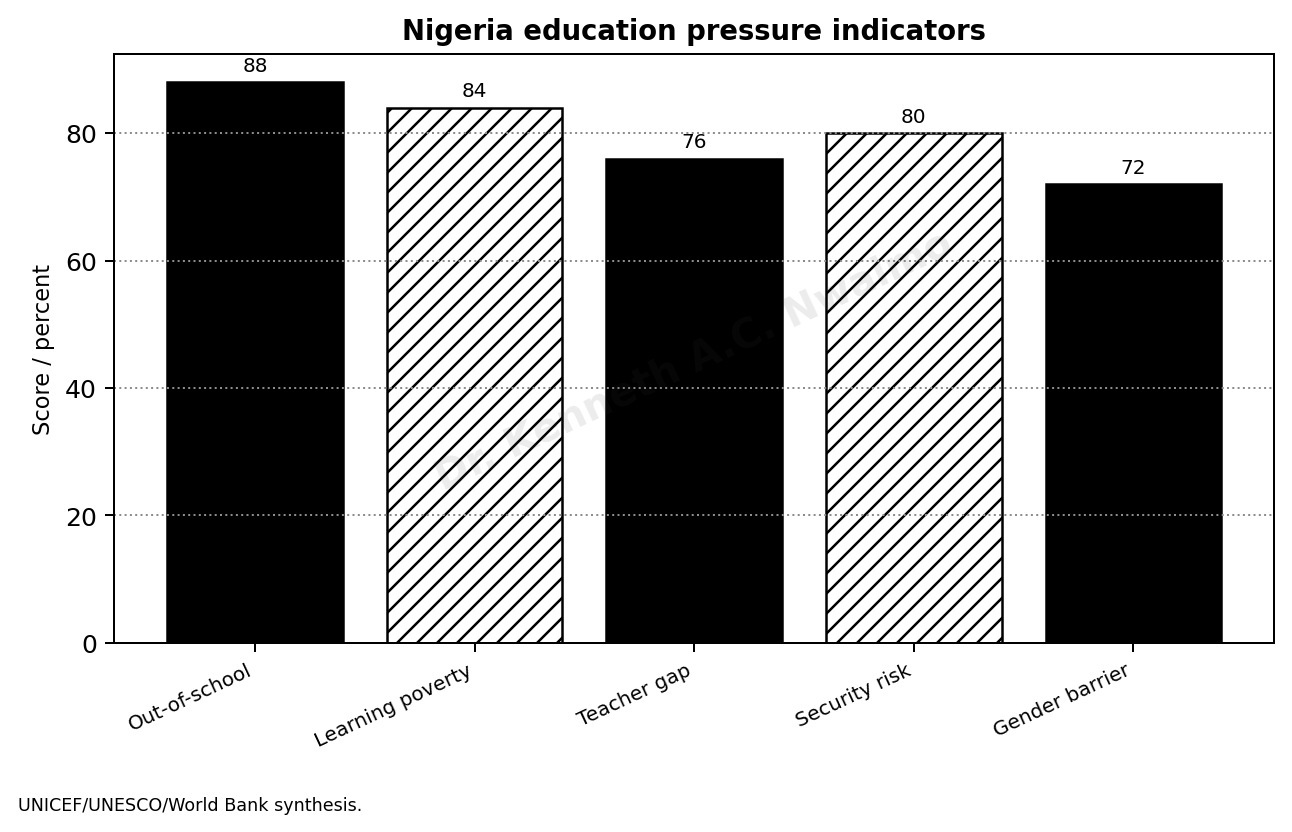
Source: UNICEF/UNESCO/World Bank synthesis.
Chapter 2: The Crisis of Access, Learning, and Public Trust
2.1 Access is not the same as learning
Access, learning, and the public trust problem in nigerian schooling must begin from the school, not from ceremony. Nigerian education has seen enough reform language to know that an attractive policy can leave the classroom almost untouched.
For access and public trust, the philosophical question is direct: what kind of learner is the system forming? A school that improves enrollment while weakening thought, dignity, teacher authority, or civic responsibility has not achieved the deeper renewal education requires.
This chapter treats access and public trust as part of education’s formative duty. Policy matters, but its truth is tested in classroom practice, teacher preparation, school discipline, family trust, and the learner’s ability to think with confidence and moral seriousness.
2.2 Evidence on exclusion, achievement, and public confidence
The section on evidence on exclusion, achievement, and public confidence keeps the discussion close to Nigerian classrooms, teachers, learners, families, and communities. Education reform cannot be judged only by policy language. It must be judged by whether the school becomes a place where learners are formed in thought, character, skill, belonging, and public responsibility. Philosophical insight matters because it names the human purpose that administrative reform often leaves unstated.
The evidence for evidence on exclusion, achievement, and public confidence should be read beside the ordinary conditions of school life. Enrollment, attendance, learning outcomes, teacher supply, school safety, family poverty, and community confidence all affect whether education can carry a genuine renewal agenda (World Bank, 2025). The data matters, but it must serve the dignity and development of the learner rather than reduce the learner to a reporting category.
Under evidence on exclusion, achievement, and public confidence, the practical question is whether educators have the authority and support to form learners rather than only cover content. A school system that demands moral and civic formation while neglecting teacher dignity creates a contradiction that learners eventually feel.
The safeguard for evidence on exclusion, achievement, and public confidence is patient implementation with visible proof. Reform should be tested in real schools, with real teachers, real learners, usable materials, clear cost, and honest feedback. A national announcement is not renewal. Renewal appears when classroom practice, teacher dignity, learner confidence, and community trust begin to change in ways that can be sustained.
2.3 Decisions that determine school experience
Management choices in access, learning, and the public trust problem in Nigerian schooling are never morally empty. Timetables, inspection, curriculum content, teacher deployment, language policy, assessment, and discipline all communicate what the system believes about learners.
Under access and public trust, teachers need more than instructions. They need preparation, materials, authority, dignity, and supervision that improves practice rather than simply policing failure.
The practical decision in access and public trust is to make the underlying philosophy visible. Every reform should be able to say how it strengthens the learner, protects the teacher, deepens thought, and improves the social life of the school.
2.4 Risks in inequality, cost, and weak protection
The section on risks in inequality, cost, and weak protection keeps the discussion close to Nigerian classrooms, teachers, learners, families, and communities. Education reform cannot be judged only by policy language. It must be judged by whether the school becomes a place where learners are formed in thought, character, skill, belonging, and public responsibility. Philosophical insight matters because it names the human purpose that administrative reform often leaves unstated.
The evidence for risks in inequality, cost, and weak protection should be read beside the ordinary conditions of school life. Enrollment, attendance, learning outcomes, teacher supply, school safety, family poverty, and community confidence all affect whether education can carry a genuine renewal agenda (UNESCO, 2023). The data matters, but it must serve the dignity and development of the learner rather than reduce the learner to a reporting category.
Under risks in inequality, cost, and weak protection, the practical question is whether educators have the authority and support to form learners rather than only cover content. A school system that demands moral and civic formation while neglecting teacher dignity creates a contradiction that learners eventually feel.
The safeguard for risks in inequality, cost, and weak protection is patient implementation with visible proof. Reform should be tested in real schools, with real teachers, real learners, usable materials, clear cost, and honest feedback. A national announcement is not renewal. Renewal appears when classroom practice, teacher dignity, learner confidence, and community trust begin to change in ways that can be sustained.
2.5 Institutional learning beyond enrollment figures
Learning in access, learning, and the public trust problem in Nigerian schooling should move beyond slogans. Schools, ministries, teacher colleges, and communities need evidence of what changed, what failed, what cost more than expected, and what teachers found impossible under real conditions.
Learning in access and public trust should come before scale. A reform that works only during a supervised launch has not yet become institutional; it must survive ordinary weeks, staff turnover, budget delay, and local pressure.
The final discipline in access and public trust is to keep the learner at the center. A paradigm shift is not a slogan; it is the steady transformation of school life until learners become more thoughtful, teachers more respected, and education more worthy of public trust.
Figure 2. Philosophical renewal domains.
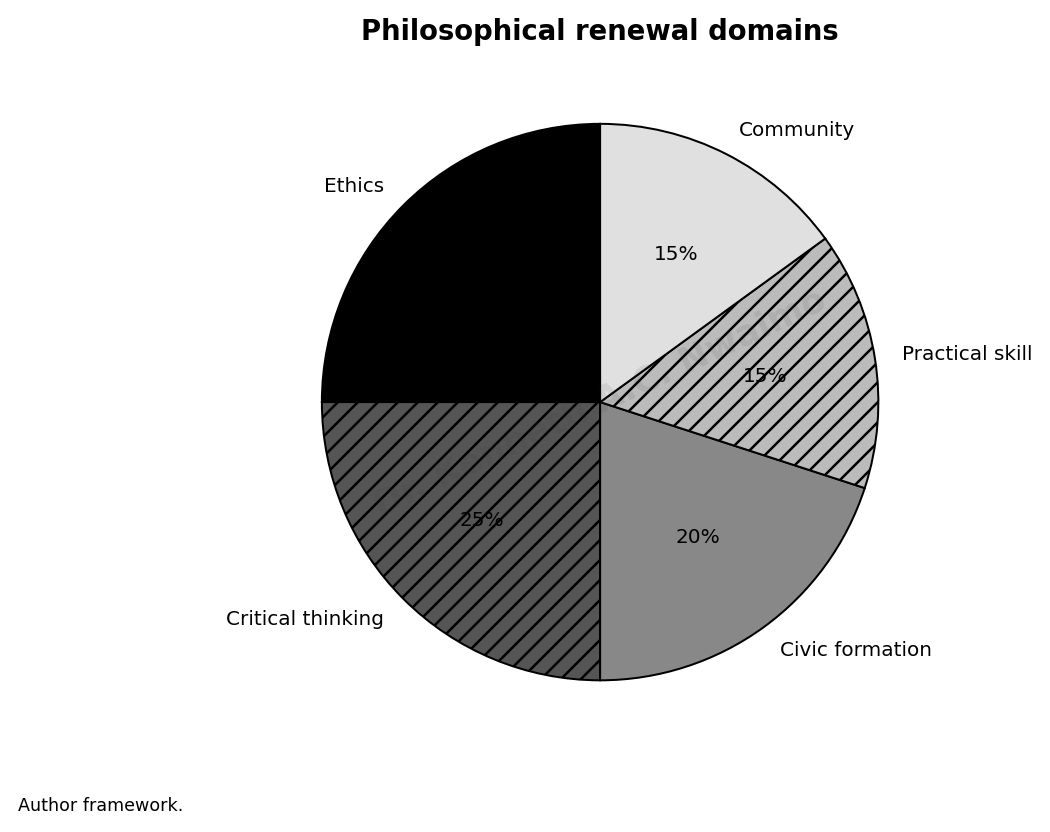
Source: Author model.
Chapter 3: Philosophy of Education and the Meaning of the Learner
3.1 Recovering the meaning of the learner
The learner as a developing person rather than a policy statistic must begin from the school, not from ceremony. Nigerian education has seen enough reform language to know that an attractive policy can leave the classroom almost untouched.
For the meaning of the learner, the philosophical question is direct: what kind of learner is the system forming? A school that improves enrollment while weakening thought, dignity, teacher authority, or civic responsibility has not achieved the deeper renewal education requires.
This chapter treats the meaning of the learner as part of education’s formative duty. Policy matters, but its truth is tested in classroom practice, teacher preparation, school discipline, family trust, and the learner’s ability to think with confidence and moral seriousness.
3.2 Evidence on the dignity and development of the child
The section on evidence on the dignity and development of the child keeps the discussion close to Nigerian classrooms, teachers, learners, families, and communities. Education reform cannot be judged only by policy language. It must be judged by whether the school becomes a place where learners are formed in thought, character, skill, belonging, and public responsibility. Philosophical insight matters because it names the human purpose that administrative reform often leaves unstated.
The evidence for evidence on the dignity and development of the child should be read beside the ordinary conditions of school life. Enrollment, attendance, learning outcomes, teacher supply, school safety, family poverty, and community confidence all affect whether education can carry a genuine renewal agenda (World Bank, 2025). The data matters, but it must serve the dignity and development of the learner rather than reduce the learner to a reporting category.
Under evidence on the dignity and development of the child, the practical question is whether educators have the authority and support to form learners rather than only cover content. A school system that demands moral and civic formation while neglecting teacher dignity creates a contradiction that learners eventually feel.
The safeguard for evidence on the dignity and development of the child is patient implementation with visible proof. Reform should be tested in real schools, with real teachers, real learners, usable materials, clear cost, and honest feedback. A national announcement is not renewal. Renewal appears when classroom practice, teacher dignity, learner confidence, and community trust begin to change in ways that can be sustained.
3.3 Management choices that protect formation
Management choices in the learner as a developing person rather than a policy statistic are never morally empty. Timetables, inspection, curriculum content, teacher deployment, language policy, assessment, and discipline all communicate what the system believes about learners.
Under the meaning of the learner, teachers need more than instructions. They need preparation, materials, authority, dignity, and supervision that improves practice rather than simply policing failure.
The practical decision in the meaning of the learner is to make the underlying philosophy visible. Every reform should be able to say how it strengthens the learner, protects the teacher, deepens thought, and improves the social life of the school.
3.4 Risks of reducing education to metrics
The section on risks of reducing education to metrics keeps the discussion close to Nigerian classrooms, teachers, learners, families, and communities. Education reform cannot be judged only by policy language. It must be judged by whether the school becomes a place where learners are formed in thought, character, skill, belonging, and public responsibility. Philosophical insight matters because it names the human purpose that administrative reform often leaves unstated.
The evidence for risks of reducing education to metrics should be read beside the ordinary conditions of school life. Enrollment, attendance, learning outcomes, teacher supply, school safety, family poverty, and community confidence all affect whether education can carry a genuine renewal agenda (UNESCO, 2023). The data matters, but it must serve the dignity and development of the learner rather than reduce the learner to a reporting category.
Under risks of reducing education to metrics, the practical question is whether educators have the authority and support to form learners rather than only cover content. A school system that demands moral and civic formation while neglecting teacher dignity creates a contradiction that learners eventually feel.
The safeguard for risks of reducing education to metrics is patient implementation with visible proof. Reform should be tested in real schools, with real teachers, real learners, usable materials, clear cost, and honest feedback. A national announcement is not renewal. Renewal appears when classroom practice, teacher dignity, learner confidence, and community trust begin to change in ways that can be sustained.
3.5 Learning as intellectual and moral growth
Learning in the learner as a developing person rather than a policy statistic should move beyond slogans. Schools, ministries, teacher colleges, and communities need evidence of what changed, what failed, what cost more than expected, and what teachers found impossible under real conditions.
Learning in the meaning of the learner should come before scale. A reform that works only during a supervised launch has not yet become institutional; it must survive ordinary weeks, staff turnover, budget delay, and local pressure.
The final discipline in the meaning of the learner is to keep the learner at the center. A paradigm shift is not a slogan; it is the steady transformation of school life until learners become more thoughtful, teachers more respected, and education more worthy of public trust.
Figure 3. Paradigm shift from schooling to formation.
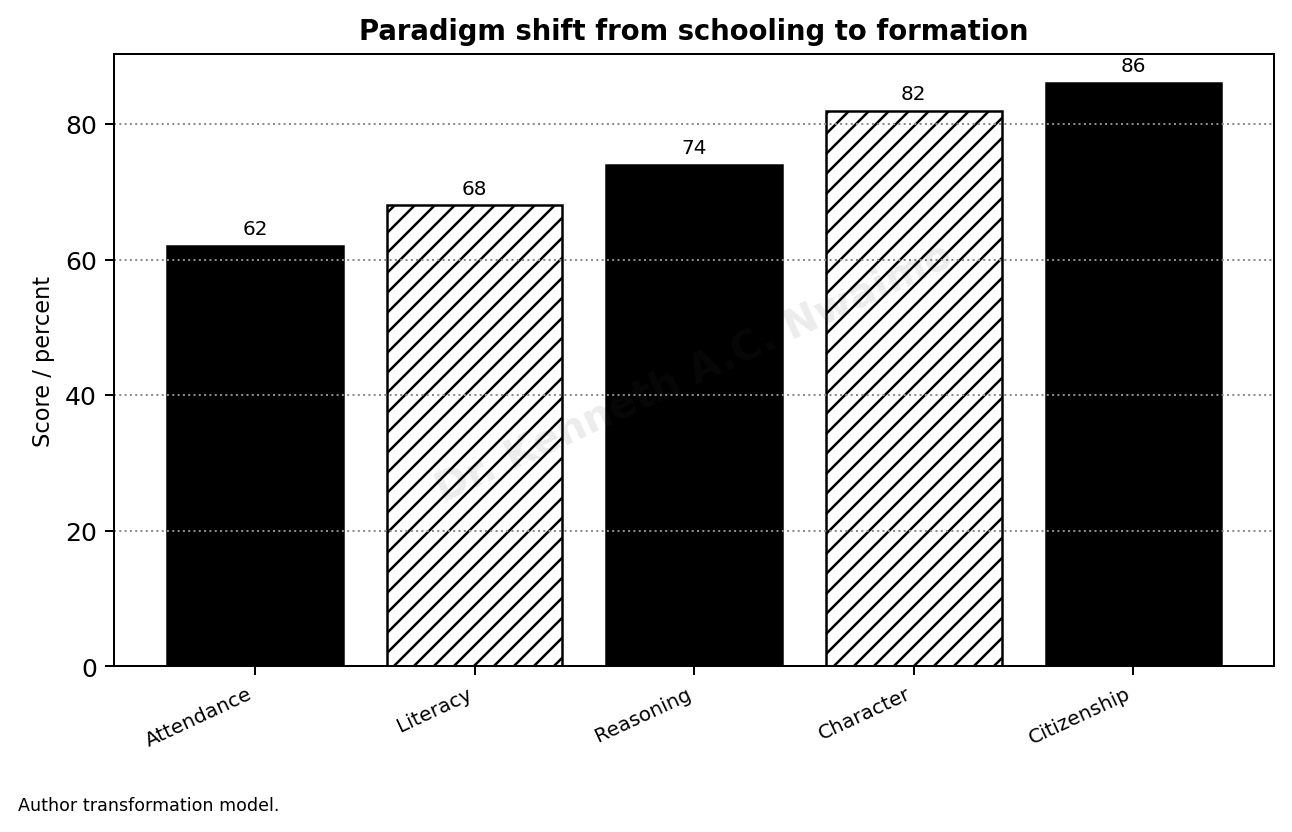
Source: Author transformation model.
Figure 4. Teacher formation emphasis.
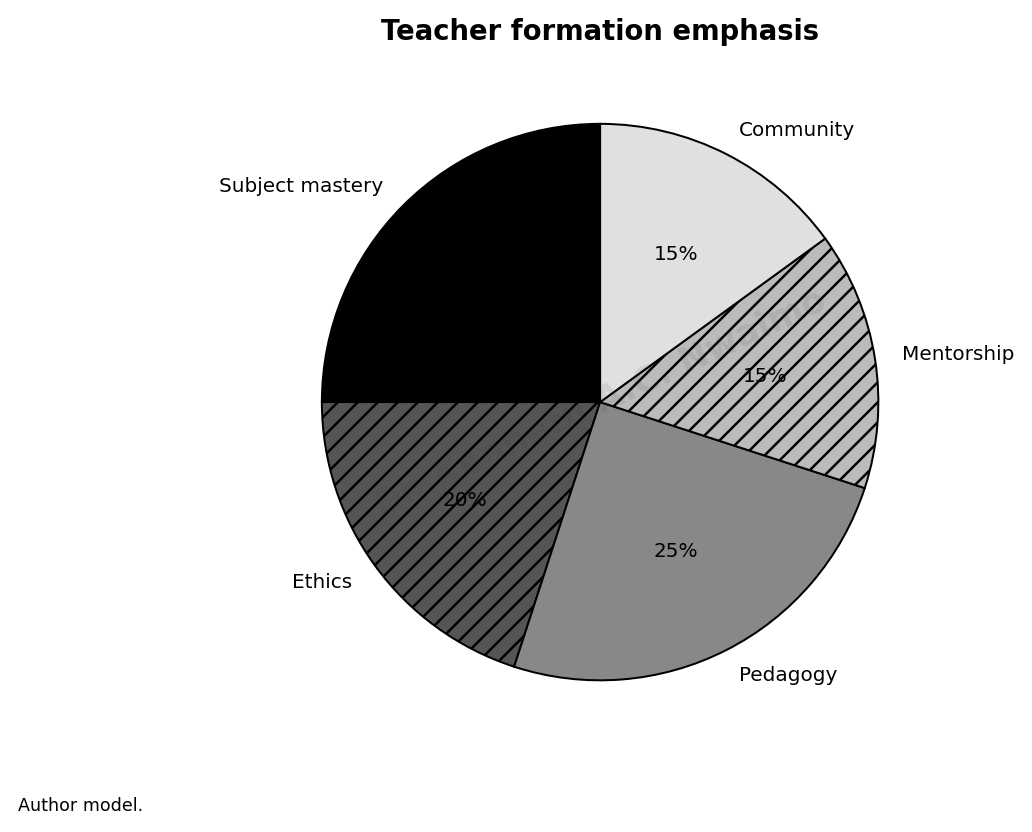
Source: Author model.
Table 1. Philosophical education renewal matrix
| Philosophical insight | Educational meaning | Nigerian policy implication |
| Aristotelian virtue | Education forms habits and judgement | Character and practical wisdom must re-enter curriculum |
| Deweyan democracy | Learning prepares citizens for shared life | Schools should teach inquiry, dialogue, and participation |
| Freirean critique | Learners must question oppressive conditions | Pedagogy should build voice and agency |
| African communal ethics | Personhood grows through responsibility to others | School culture should restore belonging and dignity |
Note. Table prepared; black-and-white NYCAR publication format.
Chapter 4: African Communal Ethics, Dignity, and School Belonging
4.1 Belonging as an educational condition
African communal ethics, dignity, and the sense of belonging in school life must begin from the school, not from ceremony. Nigerian education has seen enough reform language to know that an attractive policy can leave the classroom almost untouched.
For communal ethics and belonging, the philosophical question is direct: what kind of learner is the system forming? A school that improves enrollment while weakening thought, dignity, teacher authority, or civic responsibility has not achieved the deeper renewal education requires.
This chapter treats communal ethics and belonging as part of education’s formative duty. Policy matters, but its truth is tested in classroom practice, teacher preparation, school discipline, family trust, and the learner’s ability to think with confidence and moral seriousness.
4.2 Evidence from communal ethics and school responsibility
The section on evidence from communal ethics and school responsibility keeps the discussion close to Nigerian classrooms, teachers, learners, families, and communities. Education reform cannot be judged only by policy language. It must be judged by whether the school becomes a place where learners are formed in thought, character, skill, belonging, and public responsibility. Philosophical insight matters because it names the human purpose that administrative reform often leaves unstated.
The evidence for evidence from communal ethics and school responsibility should be read beside the ordinary conditions of school life. Enrollment, attendance, learning outcomes, teacher supply, school safety, family poverty, and community confidence all affect whether education can carry a genuine renewal agenda (World Bank, 2025). The data matters, but it must serve the dignity and development of the learner rather than reduce the learner to a reporting category.
Under evidence from communal ethics and school responsibility, the practical question is whether educators have the authority and support to form learners rather than only cover content. A school system that demands moral and civic formation while neglecting teacher dignity creates a contradiction that learners eventually feel.
The safeguard for evidence from communal ethics and school responsibility is patient implementation with visible proof. Reform should be tested in real schools, with real teachers, real learners, usable materials, clear cost, and honest feedback. A national announcement is not renewal. Renewal appears when classroom practice, teacher dignity, learner confidence, and community trust begin to change in ways that can be sustained.
4.3 Management choices that create dignity
Management choices in African communal ethics, dignity, and the sense of belonging in school life are never morally empty. Timetables, inspection, curriculum content, teacher deployment, language policy, assessment, and discipline all communicate what the system believes about learners.
Under communal ethics and belonging, teachers need more than instructions. They need preparation, materials, authority, dignity, and supervision that improves practice rather than simply policing failure.
The practical decision in communal ethics and belonging is to make the underlying philosophy visible. Every reform should be able to say how it strengthens the learner, protects the teacher, deepens thought, and improves the social life of the school.
4.4 Risks of neglecting culture, care, and discipline
The section on risks of neglecting culture, care, and discipline keeps the discussion close to Nigerian classrooms, teachers, learners, families, and communities. Education reform cannot be judged only by policy language. It must be judged by whether the school becomes a place where learners are formed in thought, character, skill, belonging, and public responsibility. Philosophical insight matters because it names the human purpose that administrative reform often leaves unstated.
The evidence for risks of neglecting culture, care, and discipline should be read beside the ordinary conditions of school life. Enrollment, attendance, learning outcomes, teacher supply, school safety, family poverty, and community confidence all affect whether education can carry a genuine renewal agenda (UNESCO, 2023). The data matters, but it must serve the dignity and development of the learner rather than reduce the learner to a reporting category.
Under risks of neglecting culture, care, and discipline, the practical question is whether educators have the authority and support to form learners rather than only cover content. A school system that demands moral and civic formation while neglecting teacher dignity creates a contradiction that learners eventually feel.
The safeguard for risks of neglecting culture, care, and discipline is patient implementation with visible proof. Reform should be tested in real schools, with real teachers, real learners, usable materials, clear cost, and honest feedback. A national announcement is not renewal. Renewal appears when classroom practice, teacher dignity, learner confidence, and community trust begin to change in ways that can be sustained.
4.5 Learning from community without romanticism
Learning in African communal ethics, dignity, and the sense of belonging in school life should move beyond slogans. Schools, ministries, teacher colleges, and communities need evidence of what changed, what failed, what cost more than expected, and what teachers found impossible under real conditions.
Learning in communal ethics and belonging should come before scale. A reform that works only during a supervised launch has not yet become institutional; it must survive ordinary weeks, staff turnover, budget delay, and local pressure.
The final discipline in communal ethics and belonging is to keep the learner at the center. A paradigm shift is not a slogan; it is the steady transformation of school life until learners become more thoughtful, teachers more respected, and education more worthy of public trust.
Figure 5. Curriculum balance model.
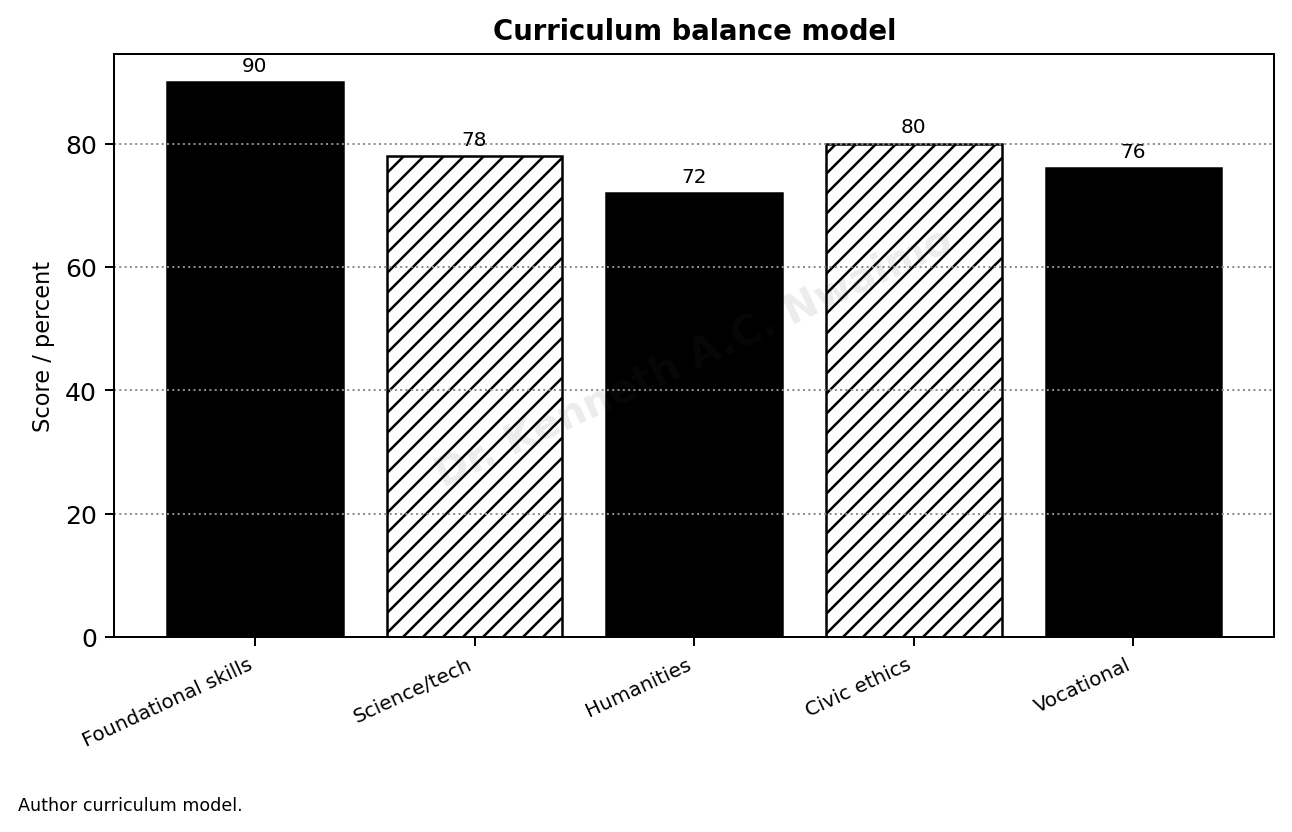
Source: Author curriculum model.
Chapter 5: Critical Thinking, Civic Reasoning, and Democratic Formation
5.1 Critical thinking as civic preparation
Critical thinking, civic reasoning, and democratic formation must begin from the school, not from ceremony. Nigerian education has seen enough reform language to know that an attractive policy can leave the classroom almost untouched.
For critical thinking and civic reasoning, the philosophical question is direct: what kind of learner is the system forming? A school that improves enrollment while weakening thought, dignity, teacher authority, or civic responsibility has not achieved the deeper renewal education requires.
This chapter treats critical thinking and civic reasoning as part of education’s formative duty. Policy matters, but its truth is tested in classroom practice, teacher preparation, school discipline, family trust, and the learner’s ability to think with confidence and moral seriousness.
5.2 Evidence for reasoning, dialogue, and public judgment
The section on evidence for reasoning, dialogue, and public judgment keeps the discussion close to Nigerian classrooms, teachers, learners, families, and communities. Education reform cannot be judged only by policy language. It must be judged by whether the school becomes a place where learners are formed in thought, character, skill, belonging, and public responsibility. Philosophical insight matters because it names the human purpose that administrative reform often leaves unstated.
The evidence for evidence for reasoning, dialogue, and public judgment should be read beside the ordinary conditions of school life. Enrollment, attendance, learning outcomes, teacher supply, school safety, family poverty, and community confidence all affect whether education can carry a genuine renewal agenda (World Bank, 2025). The data matters, but it must serve the dignity and development of the learner rather than reduce the learner to a reporting category.
Under evidence for reasoning, dialogue, and public judgment, the practical question is whether educators have the authority and support to form learners rather than only cover content. A school system that demands moral and civic formation while neglecting teacher dignity creates a contradiction that learners eventually feel.
The safeguard for evidence for reasoning, dialogue, and public judgment is patient implementation with visible proof. Reform should be tested in real schools, with real teachers, real learners, usable materials, clear cost, and honest feedback. A national announcement is not renewal. Renewal appears when classroom practice, teacher dignity, learner confidence, and community trust begin to change in ways that can be sustained.
5.3 Management choices inside classrooms and policy
Management choices in critical thinking, civic reasoning, and democratic formation are never morally empty. Timetables, inspection, curriculum content, teacher deployment, language policy, assessment, and discipline all communicate what the system believes about learners.
Under critical thinking and civic reasoning, teachers need more than instructions. They need preparation, materials, authority, dignity, and supervision that improves practice rather than simply policing failure.
The practical decision in critical thinking and civic reasoning is to make the underlying philosophy visible. Every reform should be able to say how it strengthens the learner, protects the teacher, deepens thought, and improves the social life of the school.
5.4 Risks of obedience without understanding
The section on risks of obedience without understanding keeps the discussion close to Nigerian classrooms, teachers, learners, families, and communities. Education reform cannot be judged only by policy language. It must be judged by whether the school becomes a place where learners are formed in thought, character, skill, belonging, and public responsibility. Philosophical insight matters because it names the human purpose that administrative reform often leaves unstated.
The evidence for risks of obedience without understanding should be read beside the ordinary conditions of school life. Enrollment, attendance, learning outcomes, teacher supply, school safety, family poverty, and community confidence all affect whether education can carry a genuine renewal agenda (UNESCO, 2023). The data matters, but it must serve the dignity and development of the learner rather than reduce the learner to a reporting category.
Under risks of obedience without understanding, the practical question is whether educators have the authority and support to form learners rather than only cover content. A school system that demands moral and civic formation while neglecting teacher dignity creates a contradiction that learners eventually feel.
The safeguard for risks of obedience without understanding is patient implementation with visible proof. Reform should be tested in real schools, with real teachers, real learners, usable materials, clear cost, and honest feedback. A national announcement is not renewal. Renewal appears when classroom practice, teacher dignity, learner confidence, and community trust begin to change in ways that can be sustained.
5.5 Learning that strengthens citizenship
Learning in critical thinking, civic reasoning, and democratic formation should move beyond slogans. Schools, ministries, teacher colleges, and communities need evidence of what changed, what failed, what cost more than expected, and what teachers found impossible under real conditions.
Learning in critical thinking and civic reasoning should come before scale. A reform that works only during a supervised launch has not yet become institutional; it must survive ordinary weeks, staff turnover, budget delay, and local pressure.
The final discipline in critical thinking and civic reasoning is to keep the learner at the center. A paradigm shift is not a slogan; it is the steady transformation of school life until learners become more thoughtful, teachers more respected, and education more worthy of public trust.
Figure 6. School trust rebuilding sequence.
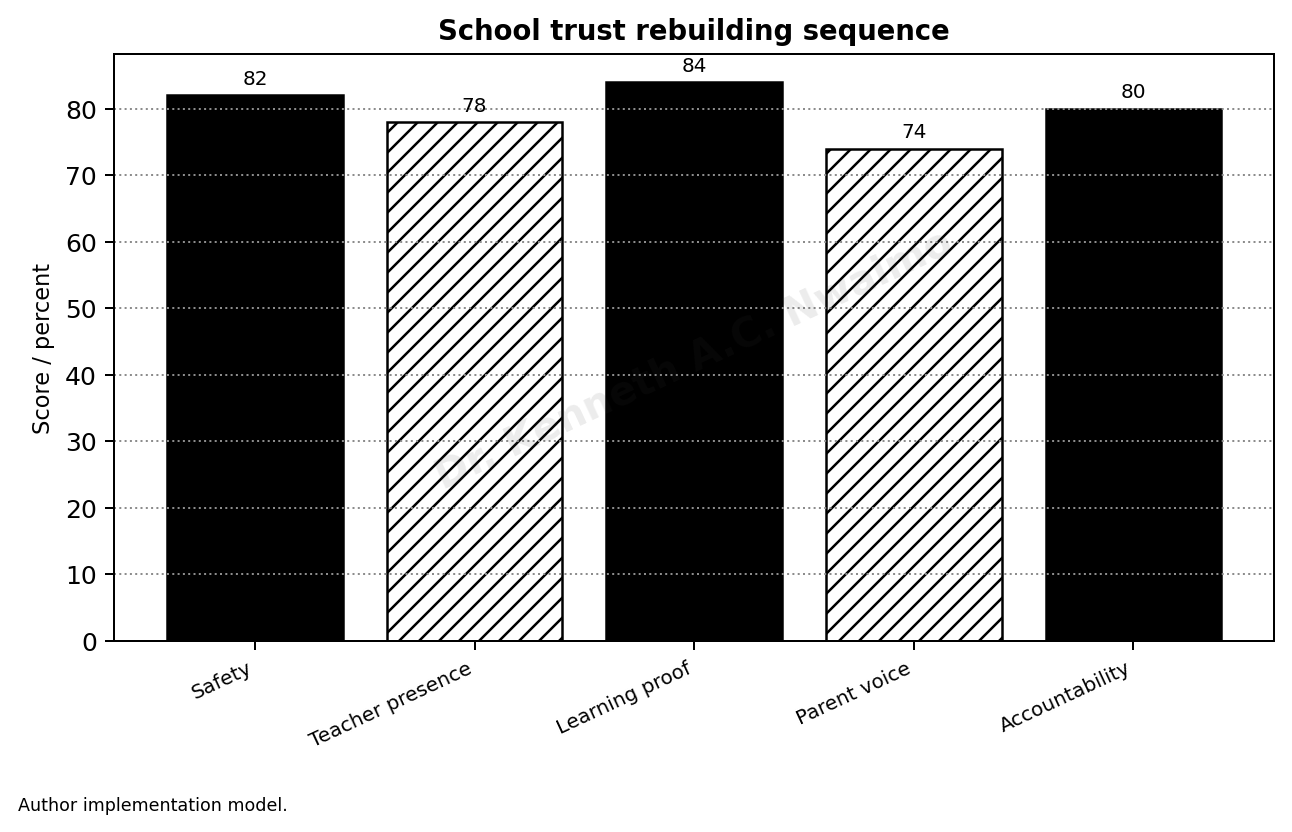
Source: Author implementation model.
Chapter 6: Teacher Formation as Moral and Intellectual Leadership
6.1 Teacher formation beyond certification
Teacher formation as moral and intellectual leadership must begin from the school, not from ceremony. Nigerian education has seen enough reform language to know that an attractive policy can leave the classroom almost untouched.
For teacher formation, the philosophical question is direct: what kind of learner is the system forming? A school that improves enrollment while weakening thought, dignity, teacher authority, or civic responsibility has not achieved the deeper renewal education requires.
This chapter treats teacher formation as part of education’s formative duty. Policy matters, but its truth is tested in classroom practice, teacher preparation, school discipline, family trust, and the learner’s ability to think with confidence and moral seriousness.
6.2 Evidence on teacher dignity and instructional quality
The section on evidence on teacher dignity and instructional quality keeps the discussion close to Nigerian classrooms, teachers, learners, families, and communities. Education reform cannot be judged only by policy language. It must be judged by whether the school becomes a place where learners are formed in thought, character, skill, belonging, and public responsibility. Philosophical insight matters because it names the human purpose that administrative reform often leaves unstated.
The evidence for evidence on teacher dignity and instructional quality should be read beside the ordinary conditions of school life. Enrollment, attendance, learning outcomes, teacher supply, school safety, family poverty, and community confidence all affect whether education can carry a genuine renewal agenda (World Bank, 2025). The data matters, but it must serve the dignity and development of the learner rather than reduce the learner to a reporting category.
Under evidence on teacher dignity and instructional quality, the practical question is whether educators have the authority and support to form learners rather than only cover content. A school system that demands moral and civic formation while neglecting teacher dignity creates a contradiction that learners eventually feel.
The safeguard for evidence on teacher dignity and instructional quality is patient implementation with visible proof. Reform should be tested in real schools, with real teachers, real learners, usable materials, clear cost, and honest feedback. A national announcement is not renewal. Renewal appears when classroom practice, teacher dignity, learner confidence, and community trust begin to change in ways that can be sustained.
6.3 Management choices that protect professional authority
Management choices in teacher formation as moral and intellectual leadership are never morally empty. Timetables, inspection, curriculum content, teacher deployment, language policy, assessment, and discipline all communicate what the system believes about learners.
Under teacher formation, teachers need more than instructions. They need preparation, materials, authority, dignity, and supervision that improves practice rather than simply policing failure.
The practical decision in teacher formation is to make the underlying philosophy visible. Every reform should be able to say how it strengthens the learner, protects the teacher, deepens thought, and improves the social life of the school.
6.4 Risks of exhausted and unsupported teachers
The section on risks of exhausted and unsupported teachers keeps the discussion close to Nigerian classrooms, teachers, learners, families, and communities. Education reform cannot be judged only by policy language. It must be judged by whether the school becomes a place where learners are formed in thought, character, skill, belonging, and public responsibility. Philosophical insight matters because it names the human purpose that administrative reform often leaves unstated.
The evidence for risks of exhausted and unsupported teachers should be read beside the ordinary conditions of school life. Enrollment, attendance, learning outcomes, teacher supply, school safety, family poverty, and community confidence all affect whether education can carry a genuine renewal agenda (UNESCO, 2023). The data matters, but it must serve the dignity and development of the learner rather than reduce the learner to a reporting category.
Under risks of exhausted and unsupported teachers, the practical question is whether educators have the authority and support to form learners rather than only cover content. A school system that demands moral and civic formation while neglecting teacher dignity creates a contradiction that learners eventually feel.
The safeguard for risks of exhausted and unsupported teachers is patient implementation with visible proof. Reform should be tested in real schools, with real teachers, real learners, usable materials, clear cost, and honest feedback. A national announcement is not renewal. Renewal appears when classroom practice, teacher dignity, learner confidence, and community trust begin to change in ways that can be sustained.
6.5 Learning systems for teacher renewal
Learning in teacher formation as moral and intellectual leadership should move beyond slogans. Schools, ministries, teacher colleges, and communities need evidence of what changed, what failed, what cost more than expected, and what teachers found impossible under real conditions.
Learning in teacher formation should come before scale. A reform that works only during a supervised launch has not yet become institutional; it must survive ordinary weeks, staff turnover, budget delay, and local pressure.
The final discipline in teacher formation is to keep the learner at the center. A paradigm shift is not a slogan; it is the steady transformation of school life until learners become more thoughtful, teachers more respected, and education more worthy of public trust.
Figure 7. Education governance responsibilities.
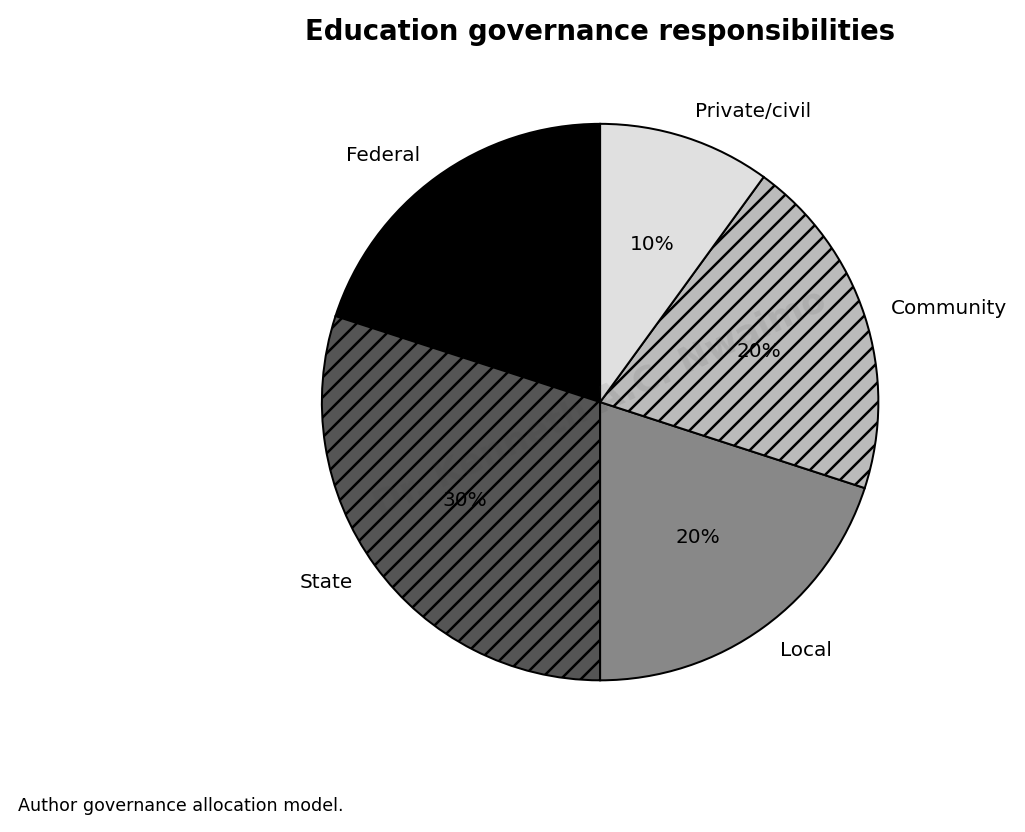
Source: Author governance allocation model.
Figure 8. Policy maturity indicators.
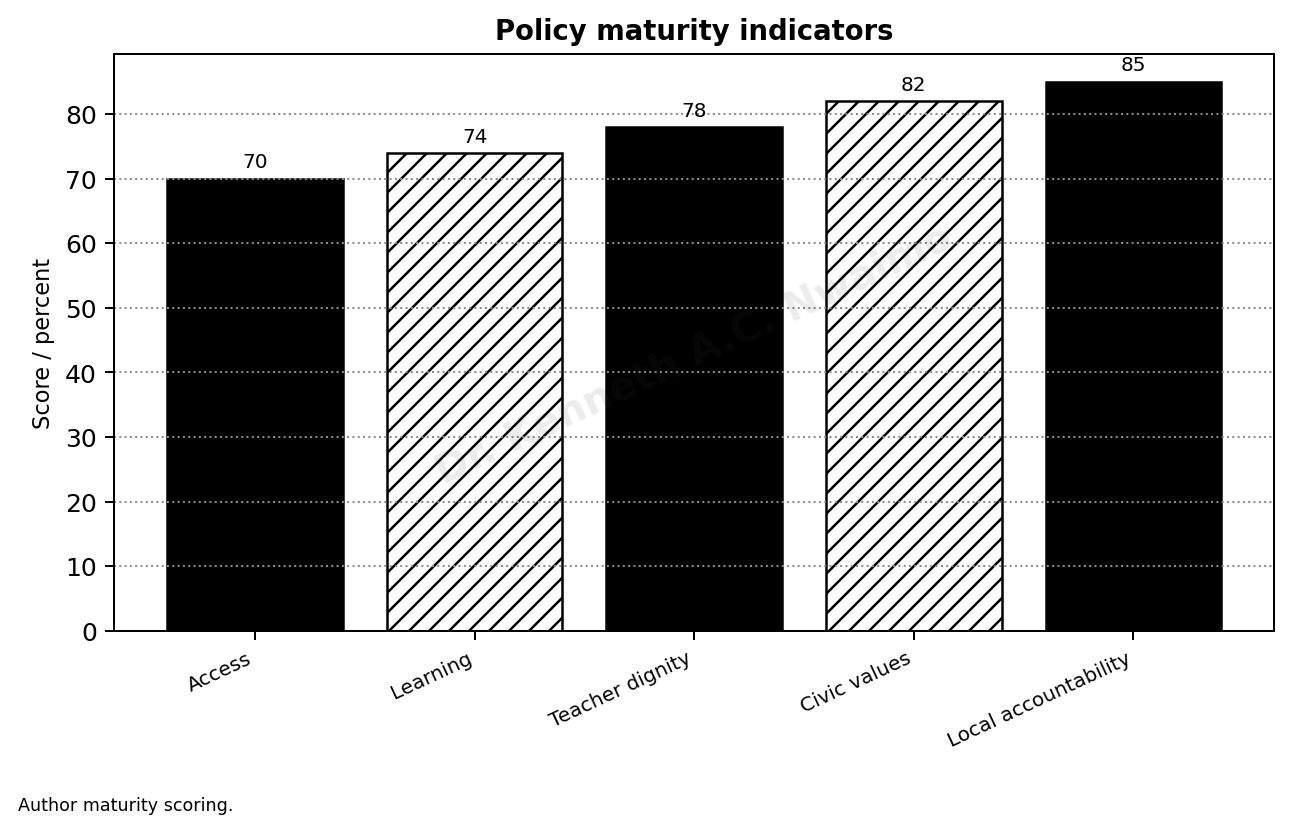
Source: Author maturity scoring.
Table 2. Nigeria education paradigm-shift implementation
| Area | Old habit | New standard |
| Access | Count enrolment only | Track attendance, safety, and transition |
| Learning | Teach for examinations | Teach for literacy, reasoning, and application |
| Teacher | Treat teacher as delivery agent | Treat teacher as intellectual and moral leader |
| Curriculum | Overload content | Balance knowledge, ethics, skill, and citizenship |
| Governance | Announce reforms centrally | Make local accountability visible |
Note. Table prepared; black-and-white NYCAR publication format.
Chapter 7: Curriculum Reform, Practical Wisdom, and National Development
7.1 Curriculum reform and practical wisdom
Curriculum reform, practical wisdom, and national development must begin from the school, not from ceremony. Nigerian education has seen enough reform language to know that an attractive policy can leave the classroom almost untouched.
For curriculum and practical wisdom, the philosophical question is direct: what kind of learner is the system forming? A school that improves enrollment while weakening thought, dignity, teacher authority, or civic responsibility has not achieved the deeper renewal education requires.
This chapter treats curriculum and practical wisdom as part of education’s formative duty. Policy matters, but its truth is tested in classroom practice, teacher preparation, school discipline, family trust, and the learner’s ability to think with confidence and moral seriousness.
7.2 Evidence for relevance, skill, and moral purpose
The section on evidence for relevance, skill, and moral purpose keeps the discussion close to Nigerian classrooms, teachers, learners, families, and communities. Education reform cannot be judged only by policy language. It must be judged by whether the school becomes a place where learners are formed in thought, character, skill, belonging, and public responsibility. Philosophical insight matters because it names the human purpose that administrative reform often leaves unstated.
The evidence for evidence for relevance, skill, and moral purpose should be read beside the ordinary conditions of school life. Enrollment, attendance, learning outcomes, teacher supply, school safety, family poverty, and community confidence all affect whether education can carry a genuine renewal agenda (World Bank, 2025). The data matters, but it must serve the dignity and development of the learner rather than reduce the learner to a reporting category.
Under evidence for relevance, skill, and moral purpose, the practical question is whether educators have the authority and support to form learners rather than only cover content. A school system that demands moral and civic formation while neglecting teacher dignity creates a contradiction that learners eventually feel.
The safeguard for evidence for relevance, skill, and moral purpose is patient implementation with visible proof. Reform should be tested in real schools, with real teachers, real learners, usable materials, clear cost, and honest feedback. A national announcement is not renewal. Renewal appears when classroom practice, teacher dignity, learner confidence, and community trust begin to change in ways that can be sustained.
7.3 Management choices that connect school and society
Management choices in curriculum reform, practical wisdom, and national development are never morally empty. Timetables, inspection, curriculum content, teacher deployment, language policy, assessment, and discipline all communicate what the system believes about learners.
Under curriculum and practical wisdom, teachers need more than instructions. They need preparation, materials, authority, dignity, and supervision that improves practice rather than simply policing failure.
The practical decision in curriculum and practical wisdom is to make the underlying philosophy visible. Every reform should be able to say how it strengthens the learner, protects the teacher, deepens thought, and improves the social life of the school.
7.4 Risks of fashionable reform without substance
The section on risks of fashionable reform without substance keeps the discussion close to Nigerian classrooms, teachers, learners, families, and communities. Education reform cannot be judged only by policy language. It must be judged by whether the school becomes a place where learners are formed in thought, character, skill, belonging, and public responsibility. Philosophical insight matters because it names the human purpose that administrative reform often leaves unstated.
The evidence for risks of fashionable reform without substance should be read beside the ordinary conditions of school life. Enrollment, attendance, learning outcomes, teacher supply, school safety, family poverty, and community confidence all affect whether education can carry a genuine renewal agenda (UNESCO, 2023). The data matters, but it must serve the dignity and development of the learner rather than reduce the learner to a reporting category.
Under risks of fashionable reform without substance, the practical question is whether educators have the authority and support to form learners rather than only cover content. A school system that demands moral and civic formation while neglecting teacher dignity creates a contradiction that learners eventually feel.
The safeguard for risks of fashionable reform without substance is patient implementation with visible proof. Reform should be tested in real schools, with real teachers, real learners, usable materials, clear cost, and honest feedback. A national announcement is not renewal. Renewal appears when classroom practice, teacher dignity, learner confidence, and community trust begin to change in ways that can be sustained.
7.5 Learning from curriculum practice
Learning in curriculum reform, practical wisdom, and national development should move beyond slogans. Schools, ministries, teacher colleges, and communities need evidence of what changed, what failed, what cost more than expected, and what teachers found impossible under real conditions.
Learning in curriculum and practical wisdom should come before scale. A reform that works only during a supervised launch has not yet become institutional; it must survive ordinary weeks, staff turnover, budget delay, and local pressure.
The final discipline in curriculum and practical wisdom is to keep the learner at the center. A paradigm shift is not a slogan; it is the steady transformation of school life until learners become more thoughtful, teachers more respected, and education more worthy of public trust.
Chapter 8: Paradigm-Shift Model and Educational Renewal Formula
8.1 Using the paradigm-shift model responsibly
The paradigm-shift model and its educational limits must begin from the school, not from ceremony. Nigerian education has seen enough reform language to know that an attractive policy can leave the classroom almost untouched.
For the paradigm-shift model, the philosophical question is direct: what kind of learner is the system forming? A school that improves enrollment while weakening thought, dignity, teacher authority, or civic responsibility has not achieved the deeper renewal education requires.
This chapter treats the paradigm-shift model as part of education’s formative duty. Policy matters, but its truth is tested in classroom practice, teacher preparation, school discipline, family trust, and the learner’s ability to think with confidence and moral seriousness.
8.2 Evidence behind the renewal variables
The section on evidence behind the renewal variables keeps the discussion close to Nigerian classrooms, teachers, learners, families, and communities. Education reform cannot be judged only by policy language. It must be judged by whether the school becomes a place where learners are formed in thought, character, skill, belonging, and public responsibility. Philosophical insight matters because it names the human purpose that administrative reform often leaves unstated.
The evidence for evidence behind the renewal variables should be read beside the ordinary conditions of school life. Enrollment, attendance, learning outcomes, teacher supply, school safety, family poverty, and community confidence all affect whether education can carry a genuine renewal agenda (World Bank, 2025). The data matters, but it must serve the dignity and development of the learner rather than reduce the learner to a reporting category.
Under evidence behind the renewal variables, the practical question is whether educators have the authority and support to form learners rather than only cover content. A school system that demands moral and civic formation while neglecting teacher dignity creates a contradiction that learners eventually feel.
A school system that wants renewal must make learning visible. It should show what learners can read, reason, build, discuss, and defend. It should show how teachers are supported and how weak schools are helped before failure hardens into destiny.
8.3 Management choices behind the formula
Management choices in the paradigm-shift model and its educational limits are never morally empty. Timetables, inspection, curriculum content, teacher deployment, language policy, assessment, and discipline all communicate what the system believes about learners.
Under the paradigm-shift model, teachers need more than instructions. They need preparation, materials, authority, dignity, and supervision that improves practice rather than simply policing failure.
The practical decision in the paradigm-shift model is to make the underlying philosophy visible. Every reform should be able to say how it strengthens the learner, protects the teacher, deepens thought, and improves the social life of the school.
8.4 Risks of false precision in education
The section on risks of false precision in education keeps the discussion close to Nigerian classrooms, teachers, learners, families, and communities. Education reform cannot be judged only by policy language. It must be judged by whether the school becomes a place where learners are formed in thought, character, skill, belonging, and public responsibility. Philosophical insight matters because it names the human purpose that administrative reform often leaves unstated.
The evidence for risks of false precision in education should be read beside the ordinary conditions of school life. Enrollment, attendance, learning outcomes, teacher supply, school safety, family poverty, and community confidence all affect whether education can carry a genuine renewal agenda (UNESCO, 2023). The data matters, but it must serve the dignity and development of the learner rather than reduce the learner to a reporting category.
Under risks of false precision in education, the practical question is whether educators have the authority and support to form learners rather than only cover content. A school system that demands moral and civic formation while neglecting teacher dignity creates a contradiction that learners eventually feel.
The safeguard for risks of false precision in education is patient implementation with visible proof. Reform should be tested in real schools, with real teachers, real learners, usable materials, clear cost, and honest feedback. A national announcement is not renewal. Renewal appears when classroom practice, teacher dignity, learner confidence, and community trust begin to change in ways that can be sustained.
8.5 Learning from model use without surrendering judgment
Learning in the paradigm-shift model and its educational limits should move beyond slogans. Schools, ministries, teacher colleges, and communities need evidence of what changed, what failed, what cost more than expected, and what teachers found impossible under real conditions.
Learning in the paradigm-shift model should come before scale. A reform that works only during a supervised launch has not yet become institutional; it must survive ordinary weeks, staff turnover, budget delay, and local pressure.
The final discipline in the paradigm-shift model is to keep the learner at the center. A paradigm shift is not a slogan; it is the steady transformation of school life until learners become more thoughtful, teachers more respected, and education more worthy of public trust.
Chapter 9: Implementation Roadmap for Schools, States, and National Policy
9.1 Implementation that respects school reality
Implementation across schools, states, and national policy systems must begin from the school, not from ceremony. Nigerian education has seen enough reform language to know that an attractive policy can leave the classroom almost untouched.
For implementation practice, the philosophical question is direct: what kind of learner is the system forming? A school that improves enrollment while weakening thought, dignity, teacher authority, or civic responsibility has not achieved the deeper renewal education requires.
This chapter treats implementation practice as part of education’s formative duty. Policy matters, but its truth is tested in classroom practice, teacher preparation, school discipline, family trust, and the learner’s ability to think with confidence and moral seriousness.
9.2 Evidence from state, school, and community practice
The section on evidence from state, school, and community practice keeps the discussion close to Nigerian classrooms, teachers, learners, families, and communities. Education reform cannot be judged only by policy language. It must be judged by whether the school becomes a place where learners are formed in thought, character, skill, belonging, and public responsibility. Philosophical insight matters because it names the human purpose that administrative reform often leaves unstated.
The evidence for evidence from state, school, and community practice should be read beside the ordinary conditions of school life. Enrollment, attendance, learning outcomes, teacher supply, school safety, family poverty, and community confidence all affect whether education can carry a genuine renewal agenda (World Bank, 2025). The data matters, but it must serve the dignity and development of the learner rather than reduce the learner to a reporting category.
Under evidence from state, school, and community practice, the practical question is whether educators have the authority and support to form learners rather than only cover content. A school system that demands moral and civic formation while neglecting teacher dignity creates a contradiction that learners eventually feel.
The safeguard for evidence from state, school, and community practice is patient implementation with visible proof. Reform should be tested in real schools, with real teachers, real learners, usable materials, clear cost, and honest feedback. A national announcement is not renewal. Renewal appears when classroom practice, teacher dignity, learner confidence, and community trust begin to change in ways that can be sustained.
9.3 Management choices for phased renewal
Management choices in implementation across schools, states, and national policy systems are never morally empty. Timetables, inspection, curriculum content, teacher deployment, language policy, assessment, and discipline all communicate what the system believes about learners.
Under implementation practice, teachers need more than instructions. They need preparation, materials, authority, dignity, and supervision that improves practice rather than simply policing failure.
The practical decision in implementation practice is to make the underlying philosophy visible. Every reform should be able to say how it strengthens the learner, protects the teacher, deepens thought, and improves the social life of the school.
9.4 Risks during rollout and political transition
The section on risks during rollout and political transition keeps the discussion close to Nigerian classrooms, teachers, learners, families, and communities. Education reform cannot be judged only by policy language. It must be judged by whether the school becomes a place where learners are formed in thought, character, skill, belonging, and public responsibility. Philosophical insight matters because it names the human purpose that administrative reform often leaves unstated.
The evidence for risks during rollout and political transition should be read beside the ordinary conditions of school life. Enrollment, attendance, learning outcomes, teacher supply, school safety, family poverty, and community confidence all affect whether education can carry a genuine renewal agenda (UNESCO, 2023). The data matters, but it must serve the dignity and development of the learner rather than reduce the learner to a reporting category.
Under risks during rollout and political transition, the practical question is whether educators have the authority and support to form learners rather than only cover content. A school system that demands moral and civic formation while neglecting teacher dignity creates a contradiction that learners eventually feel.
The safeguard for risks during rollout and political transition is patient implementation with visible proof. Reform should be tested in real schools, with real teachers, real learners, usable materials, clear cost, and honest feedback. A national announcement is not renewal. Renewal appears when classroom practice, teacher dignity, learner confidence, and community trust begin to change in ways that can be sustained.
9.5 Learning from implementation evidence
Learning in implementation across schools, states, and national policy systems should move beyond slogans. Schools, ministries, teacher colleges, and communities need evidence of what changed, what failed, what cost more than expected, and what teachers found impossible under real conditions.
Learning in implementation practice should come before scale. A reform that works only during a supervised launch has not yet become institutional; it must survive ordinary weeks, staff turnover, budget delay, and local pressure.
The final discipline in implementation practice is to keep the learner at the center. A paradigm shift is not a slogan; it is the steady transformation of school life until learners become more thoughtful, teachers more respected, and education more worthy of public trust.
Table 3. Education renewal risk register
| Risk | Effect | Safeguard |
| Insecurity | Families withdraw children | Safe-school planning and community protection |
| Poverty | Children leave for work or marriage | Social protection and school feeding |
| Weak teacher support | Low morale and poor instruction | Professional development and dignity compact |
| Exam obsession | Shallow learning | Assessment reform |
| Political discontinuity | Reforms abandoned | Legal and community accountability mechanisms |
Note. Table prepared; black-and-white NYCAR publication format.
Chapter 10: Final Position: Education as the Formation of Persons and Citizens
10.1 The final argument for educational renewal
Education as the formation of persons and citizens must begin from the school, not from ceremony. Nigerian education has seen enough reform language to know that an attractive policy can leave the classroom almost untouched.
For education as human formation, the philosophical question is direct: what kind of learner is the system forming? A school that improves enrollment while weakening thought, dignity, teacher authority, or civic responsibility has not achieved the deeper renewal education requires.
This chapter treats education as human formation as part of education’s formative duty. Policy matters, but its truth is tested in classroom practice, teacher preparation, school discipline, family trust, and the learner’s ability to think with confidence and moral seriousness.
10.2 Evidence, philosophy, and national purpose
The section on evidence, philosophy, and national purpose keeps the discussion close to Nigerian classrooms, teachers, learners, families, and communities. Education reform cannot be judged only by policy language. It must be judged by whether the school becomes a place where learners are formed in thought, character, skill, belonging, and public responsibility. Philosophical insight matters because it names the human purpose that administrative reform often leaves unstated.
The evidence for evidence, philosophy, and national purpose should be read beside the ordinary conditions of school life. Enrollment, attendance, learning outcomes, teacher supply, school safety, family poverty, and community confidence all affect whether education can carry a genuine renewal agenda (World Bank, 2025). The data matters, but it must serve the dignity and development of the learner rather than reduce the learner to a reporting category.
Under evidence, philosophy, and national purpose, the practical question is whether educators have the authority and support to form learners rather than only cover content. A school system that demands moral and civic formation while neglecting teacher dignity creates a contradiction that learners eventually feel.
Implementation should not be rushed into slogans. A sound reform will test the lesson plan, the teacher support routine, the assessment method, and the community response before claiming national renewal. Education deserves that patience because its failures are carried by children.
10.3 Management choices that reveal values
Management choices in education as the formation of persons and citizens are never morally empty. Timetables, inspection, curriculum content, teacher deployment, language policy, assessment, and discipline all communicate what the system believes about learners.
Under education as human formation, teachers need more than instructions. They need preparation, materials, authority, dignity, and supervision that improves practice rather than simply policing failure.
The practical decision in education as human formation is to make the underlying philosophy visible. Every reform should be able to say how it strengthens the learner, protects the teacher, deepens thought, and improves the social life of the school.
10.4 Risks of reform without human formation
The section on risks of reform without human formation keeps the discussion close to Nigerian classrooms, teachers, learners, families, and communities. Education reform cannot be judged only by policy language. It must be judged by whether the school becomes a place where learners are formed in thought, character, skill, belonging, and public responsibility. Philosophical insight matters because it names the human purpose that administrative reform often leaves unstated.
The evidence for risks of reform without human formation should be read beside the ordinary conditions of school life. Enrollment, attendance, learning outcomes, teacher supply, school safety, family poverty, and community confidence all affect whether education can carry a genuine renewal agenda (UNESCO, 2023). The data matters, but it must serve the dignity and development of the learner rather than reduce the learner to a reporting category.
Under risks of reform without human formation, the practical question is whether educators have the authority and support to form learners rather than only cover content. A school system that demands moral and civic formation while neglecting teacher dignity creates a contradiction that learners eventually feel.
The central question is whether Nigerian schooling can produce persons capable of judgment, work, citizenship, and moral responsibility. Every policy instrument should be measured against that purpose. Anything else risks confusing schooling with paperwork.
10.5 The institutional meaning of a paradigm shift
Learning in education as the formation of persons and citizens should move beyond slogans. Schools, ministries, teacher colleges, and communities need evidence of what changed, what failed, what cost more than expected, and what teachers found impossible under real conditions.
Learning in education as human formation should come before scale. A reform that works only during a supervised launch has not yet become institutional; it must survive ordinary weeks, staff turnover, budget delay, and local pressure.
The final discipline in education as human formation is to keep the learner at the center. A paradigm shift is not a slogan; it is the steady transformation of school life until learners become more thoughtful, teachers more respected, and education more worthy of public trust.
References
Dewey, J. (1916). Democracy and education. Macmillan.
Federal Republic of Nigeria. (2013). National Policy on Education. Nigerian Educational Research and Development Council.
Freire, P. (1970). Pedagogy of the oppressed. Continuum.
Nussbaum, M. C. (2010). Not for profit: Why democracy needs the humanities. Princeton University Press.
UNESCO Institute for Statistics. (2026). Data for the Sustainable Development Goals. https://uis.unesco.org/
UNESCO. (2023). Out-of-school numbers are growing in sub-Saharan Africa. Global Education Monitoring Report. https://www.unesco.org/gem-report/
UNICEF Nigeria. (2024). Education. https://www.unicef.org/nigeria/education
UNICEF. (2024). The State of Nigeria’s Children: Summary of the 2024 updated situation analysis. https://www.unicef.org/nigeria/
Wiredu, K. (1996). Cultural universals and particulars: An African perspective. Indiana University Press.
World Bank. (2024). Confronting the learning crisis: Lessons from World Bank support for basic education, 2012-22. https://ieg.worldbankgroup.org/
World Bank. (2025). Education and skills. https://www.worldbank.org/ext/en/topic/education
World Bank. (2026). Children out of school (% of primary school age) – Nigeria. https://data.worldbank.org/indicator/SE.PRM.UNER.ZS?locations=NG