

Production Governance, Virtual Production, and the Economics of Visual Storytelling
Research Paper Publication by Chijioke D. Ogbo
Research Area: Media Management and Media Research
Institutional Affiliation: New York Center for Advanced Research (NYCAR)
Publication No.: NYCAR-TTR-2026-RP039
Date: June 4, 2026
DOI: https://doi.org/10.5281/zenodo.20545558
Peer Review Status
This manuscript was reviewed under the internal editorial review framework of the New York Center for Advanced Research (NYCAR). The review focused on academic coherence, source integrity, professional voice, mathematical suitability, case-study credibility, visual formatting, and alignment with NYCAR master’s-level media-research standards.
Abstract
Media management now has to account for a kind of production work that did not exist at the same scale in the classical studio era: graphics that are planned, tested, priced, shot, revised, and delivered across many departments before the audience ever sees a finished frame. Modern graphics in filmmaking do not belong only to post-production. They shape development, finance, previsualization, set design, cinematography, performance, editing, marketing, intellectual property control, and audience reception. The analysis treats media management and modern graphics as a single production problem. Its argument is direct: the quality of visual storytelling depends not only on software power or artistic talent, but also on the managerial intelligence that connects creative intention, technical workflow, labor capacity, schedule discipline, and commercial responsibility.
It rests on an integrative media-research design supported by documentary case analysis. It draws on peer-reviewed scholarship, production-studies literature, industry practice documents, and real case evidence from Industrial Light & Magic’s StageCraft workflow for The Mandalorian, Weta FX’s virtual-production and visual-effects work on the Avatar franchise, Netflix production and VFX guidance, and recent research on real-time rendering pipelines for independent filmmaking. These cases show that modern graphics can reduce uncertainty when they are planned early, governed carefully, and tied to clear creative decisions. They also show that graphics can become expensive, confusing, and artistically weak when they are treated as a late rescue tool for poor planning.
It develops the Graphics Production Management Probability Model, a practical mathematical framework for estimating whether a graphics-heavy film project is likely to reach controlled delivery. The model does not pretend to replace professional judgment. It gives producers, production managers, VFX supervisors, post-production supervisors, and media executives a disciplined way to identify pressure points: weak preproduction governance, asset confusion, review delays, set-integration problems, insufficient artist capacity, schedule churn, and rework. A companion Graphics Management Risk Ratio supports early diagnosis. The central finding is that modern graphics improve filmmaking when management moves visual decision-making upstream. Graphics then become part of narrative design rather than an emergency repair shop. For master’s-level media research, the topic matters because film management is no longer only the coordination of people, locations, budgets, and equipment. It is the governance of images as data, labor, art, capital, and story.
Keywords: media management, modern graphics, filmmaking, virtual production, visual effects, production governance, VFX labor, media research, StageCraft, Weta FX, Netflix
Contents
Chapter 1: Introduction
Film has always joined art to management. A director may speak in images, actors may search for emotional truth, and designers may build worlds with fabric, paint, light, and sound, yet none of that work survives without organization. Modern graphics intensify that old fact. Digital characters, virtual sets, motion capture, real-time environments, crowd simulations, virtual scouting, volumetric capture, LED volumes, facial performance systems, compositing, and final-pixel rendering have changed the shape of production labor. The producer who treats these tools as decorations misunderstands the contemporary film process. Graphics now affect the budget before a camera is chosen, the schedule before a stage is booked, and the story before the first storyboard is approved.
The discussion that follows treats media management and modern graphics in filmmaking as a production-governance problem. Media management is understood here as the planning, coordination, control, and ethical stewardship of creative media work from idea to audience. Modern graphics are understood as the combined use of digital visual techniques, real-time rendering, visual effects, animation, compositing, virtual production, and graphic design systems in film and screen media. The two cannot be separated. When graphics become central to a film’s world, the management system has to carry creative uncertainty, technical dependency, data complexity, labor pressure, and market expectation. The more visually ambitious a project becomes, the less tolerant it is of weak management.
A poor manager can hide for a while on a simple production. On a graphics-heavy production, poor management becomes visible. A late design decision may create hundreds of broken shots. An unclear approval chain may hold artists in weeks of revision. A weak asset naming system may corrupt files, duplicate labor, and frustrate vendors. A director’s vague visual language may lead to expensive exploratory work that never reaches the screen. A production budget may look controlled until the hidden cost of rework appears. The glamour of modern graphics often hides the managerial discipline that keeps such work from becoming chaos.
The purpose here is not to celebrate technology for its own sake. Film history is full of technical novelty that looked impressive for a season and then became ordinary. The more serious question is whether modern graphics help filmmakers tell stories with stronger control over meaning, cost, time, and audience experience. That question belongs to media management because digital images are now part of the organizational life of film production. A virtual environment is an artistic object, but it is also a database, a scheduling issue, a lighting problem, a software dependency, a storage cost, a rights asset, and a labor demand. Good management sees all of those meanings at once.
1.1 Background to the Study
The film industry has moved through several technical shifts: synchronized sound, color, widescreen formats, portable cameras, nonlinear editing, digital intermediates, computer-generated imagery, streaming distribution, and now virtual production and AI-assisted workflows. Each shift has created artistic possibility and managerial strain. Modern graphics differ from some earlier shifts because they relocate decisions across the production chain. In a traditional model, visual effects could be concentrated after principal photography, even though good productions still planned effects in advance. In contemporary practice, digital assets may be designed before casting, tested during previsualization, used on set through LED walls, adjusted during editing, and repurposed for marketing or game extensions.
Virtual production is one of the clearest signs of this shift. Epic Games describes virtual production as a wide set of techniques that include previsualization, technical visualization, virtual scouting, live compositing, and in-camera visual effects (Epic Games, n.d.). Industrial Light & Magic presented its StageCraft workflow for The Mandalorian as a system that allowed complex visual-effects shots to be captured in camera through real-time game-engine technology and LED screens (Industrial Light & Magic, 2020). Weta FX explains virtual production as the point where physical and digital worlds meet, allowing directors to work with motion-capture performance while viewing virtual characters and environments in context (Weta FX, n.d.). These are not minor tool changes. They alter what producers have to know, when decisions have to be made, and how departments must cooperate.
The growth of digital graphics has also changed the meaning of film labor. A modern film may depend on hundreds or thousands of artists who never appear on set but whose work defines the visible world of the film. Atkinson’s analysis of visual-effects labor and materiality warns against treating VFX as invisible magic detached from the spaces, processes, and workers that produce it (Atkinson, 2015). That warning matters for management. When graphics are treated as a mysterious technical afterthought, the people who make them are often given weak briefs, unrealistic deadlines, and unstable creative direction. When graphics are treated as a managed creative system, the production can align directors, cinematographers, designers, supervisors, editors, data managers, vendors, and executives around decisions that are difficult but visible.
Media management therefore needs a language that can evaluate graphics beyond spectacle. A spectacular image may be poorly managed if it wastes labor, distorts the story, burns the budget, or masks weak planning. A modest image may be brilliantly managed if it serves narrative purpose, protects the schedule, and uses the available pipeline with care. That distinction stays at the center of the argument. The issue is not whether modern graphics are beautiful or fashionable. The issue is whether film managers can govern the conditions under which graphics become useful, credible, and sustainable parts of filmmaking.
1.2 Problem Statement
Many film and screen-media projects now depend on graphics without having a management system strong enough to support that dependence. A production may approve a script with heavy world-building, creatures, set extensions, simulations, or digital doubles, yet fail to align creative design, technical testing, vendor bidding, data flow, review discipline, and labor capacity before shooting. The result is familiar in production practice: late changes, escalating costs, rushed artists, visual inconsistency, and a post-production period that becomes a rescue mission rather than a finishing process.
The problem addressed here is the gap between the growing creative role of modern graphics and the limited managerial frameworks used to control graphics-heavy filmmaking. Standard production schedules and budgets are often too linear for virtual production and complex VFX workflows. They separate pre-production, production, and post-production too neatly, even though modern graphics often require those phases to overlap. They may list VFX as a department while failing to show how VFX decisions affect design, lighting, camera movement, editing, and performance. They may authorize software and hardware spending without enough attention to approval speed, artist workload, metadata control, file security, or version discipline.
This gap creates practical harm. Producers may underestimate the amount of design work needed before a stage day. Directors may discover too late that a desired camera move requires asset rebuilding. Cinematographers may light actors against virtual environments whose color logic is still unsettled. Editors may receive footage whose graphics assumptions no longer fit the cut. Vendors may compete on low bids and then absorb impossible change requests. The audience sees only the final image, but the production lives through the consequences of weak governance long before release.
A serious media-management paper must therefore ask how modern graphics can be managed as a creative, technical, economic, and ethical system. Nothing in the argument requires every production to use virtual production or high-end computer graphics. It argues that when a production chooses modern graphics, management must change with the choice. The project must know which decisions must be made early, which assets must be locked, which areas can remain flexible, which risks are technical, which are artistic, which are labor risks, and which are executive risks caused by unclear authority.
1.3 Aim, Objectives, and Research Questions
The aim is to examine how media management can improve the planning and execution of modern graphics in filmmaking. It develops a practical framework for graphics governance and tests its logic against real production cases. Written for master’s-level media research, the work does not attempt a purely technical manual. Its concern is management: how film leaders make decisions, organize people, protect creative purpose, and control risk when images are produced through complex digital systems.
The objectives are fivefold. The first objective is to define modern graphics as a management category rather than a narrow technical category. The second is to examine relevant literature on media management, production studies, visual-effects labor, virtual production, and digital transformation in film. The third is to analyze practical case evidence from StageCraft, Weta FX, Netflix, and real-time rendering research. The fourth is to develop a mathematical diagnostic model that can help managers estimate delivery control and risk in graphics-heavy projects. The fifth is to offer recommendations for producers, production managers, media executives, educators, and VFX supervisors.
The research questions follow from those objectives. How should media management understand modern graphics in filmmaking? Which managerial failures most often damage graphics-heavy productions? How do virtual production and real-time rendering change the relationship between pre-production, production, and post-production? What can be learned from major case examples such as The Mandalorian, Avatar, Netflix production practice, and independent virtual production research? How can a practical mathematical model help media managers diagnose graphics risk without reducing creative work to crude numbers?
These questions are answered through synthesis rather than fieldwork. It draws on official production documents, trade sources, peer-reviewed research, and case analysis. That design is appropriate for a master’s-level paper because the purpose is to build a coherent management model that can later be tested with primary data. The method is not a substitute for studio interviews, budget analysis, or vendor-level production records. It is a disciplined first stage: a framework that identifies what such future research should measure.
1.4 Significance of the Study
The subject matters because modern graphics now influence nearly every part of screen production. Even films that advertise practical effects often contain invisible digital work. The audience may not notice set extensions, beauty work, background replacement, digital crowds, sky replacement, environmental cleanup, muzzle flashes, screen inserts, or simulated atmosphere. A film without visible fantasy may still be graphics-heavy in its production reality. This means media managers who lack graphics literacy may misunderstand their own projects.
It also matters for film education. Many media-management programs still teach production as if the major challenge is coordinating a largely physical shoot. That knowledge remains essential, but it is no longer enough. Graduates entering film, television, streaming, advertising, and branded content need to understand how assets move, how real-time images are tested, how VFX bidding can distort budgets, how review software shapes creative decisions, and how data security affects production continuity. They do not need to become compositors or engine programmers. They need enough judgment to manage people who are doing that work.
For the industry, the study speaks to cost control and labor dignity. Poor graphics management does not simply waste money. It pushes stress downward onto artists, coordinators, assistants, and vendors. When executives change direction late, when directors approve without clarity, or when producers underbudget, the cost is often paid by workers through overtime, weekend labor, creative frustration, and reputational pressure. A media-management approach that treats graphics as planned creative labor rather than infinite digital correction is more honest and more sustainable.
For audiences, the issue is quality. Viewers may not know why a film feels visually coherent or visually hollow, but they feel the difference. Strong graphics management helps images serve story, performance, rhythm, and tone. Weak graphics management produces clutter, inconsistency, or spectacle without meaning. The cultural value of film is not protected by technology alone. It is protected by the human and institutional decisions that determine what technology is asked to do.
Chapter 2: Literature Review
The literature on media management, visual effects, and virtual production is spread across several fields. Production studies examines labor, institutions, authorship, and industrial practice. Media-management literature addresses strategy, project control, financing, audience markets, and organizational behavior. Technical research examines rendering, pipelines, real-time systems, and workflow performance. Trade and studio documents give practical detail that academic literature often misses. The review brings those strands together because graphics-heavy filmmaking sits at their intersection.
One difficulty in the literature is that language often separates art from management. Visual-effects scholarship may describe images, bodies, screens, labor, and mediation, while management writing may focus on budgets, schedules, rights, teams, and performance. In practice, those concerns are joined. A digital creature is a design decision, a rigging challenge, a performance translation, a rendering cost, a schedule dependency, and a brand asset. A virtual set is a world, a stage, a lighting source, a software environment, and a risk item. Serious analysis has to hold these meanings together.
Another difficulty is the temptation to treat new tools as proof of progress. The film industry has often attached inflated promises to technology. The arrival of digital cameras did not automatically create better cinematography. Nonlinear editing did not automatically create better storytelling. Virtual production will not automatically create better films. Scholarship and management practice therefore need a disciplined vocabulary that asks what a tool changes in decision-making, labor, cost, quality, and creative control.
2.1 Media Management in the Digital Film Economy
Media management in the film economy is the governance of uncertainty. A film begins as a proposal for future attention. Money is spent before demand is known. Creative quality is difficult to guarantee. Distribution conditions can change. Audience taste is unstable. Technology can expand possibility while increasing complexity. Digital graphics intensify this uncertainty because they add a second production world beside the physical one. The film is shot, but it is also built. It is performed, but it is also simulated. It is edited, but it is also continuously revised at the level of image elements.
Digital transformation research in media and audiovisual industries argues that technology changes more than tools. It alters business models, production relationships, skills, and organizational routines. Tsiavos (2025), in work on artificial intelligence and the film industry, describes AI as affecting the film value chain and raising concerns around authorship, creative integrity, and labor displacement. Kotlinska’s 2024 work on digital transformation in the audiovisual industry links digital change to sustainable practice and innovation in business models. These studies support the broader point that media management must examine how technology reorganizes work, not merely how it improves output.
The film industry also remains a project-based economy. Many workers are hired for a production, released, and rehired elsewhere. Vendors operate under contracts, bids, and delivery deadlines. Creative authority may be divided between producers, directors, studio executives, showrunners, supervisors, and financiers. In such a setting, modern graphics require strong coordination because the people responsible for the final image may be scattered across companies, countries, time zones, and software systems. Management failure often appears as artistic failure because the audience cannot see the institutional problem behind the image.
Media managers must therefore work with three connected forms of capital. The first is financial capital: the budget, contingency, insurance, vendor contracts, stage costs, licensing, rendering expense, and delivery cost. The second is creative capital: the story world, visual identity, design intelligence, performance quality, and emotional coherence of the film. The third is technical capital: software, hardware, data systems, asset libraries, rendering capacity, pipeline knowledge, and security. A graphics-heavy production becomes dangerous when one of these forms of capital is strong and the others are weak. A rich budget cannot save a confused visual concept forever. A brilliant concept cannot survive a broken pipeline. Technical power without creative control often becomes empty display.
2.2 Modern Graphics as Production Infrastructure
Modern graphics should be understood as production infrastructure. Infrastructure is often invisible when it works and painfully visible when it fails. A production’s graphics system includes previsualization tools, concept art, asset databases, modeling and rigging systems, texture and look-development processes, motion-capture systems, camera tracking, LED walls, color pipelines, editorial handoff, review platforms, storage, security, render management, compositing, quality control, and final delivery. It also includes human authority: who can approve, who can revise, who can stop a flawed process, and who absorbs the cost when a decision changes.
The traditional image of visual effects as post-production work is now insufficient. Real-time production methods allow filmmakers to see digital environments during a shoot. In-camera visual effects can place actors before LED displays that show interactive backgrounds. Previsualization can guide action design before locations or sets are finalized. Virtual scouting can allow departments to inspect digital spaces before physical construction. Live compositing can help a director judge whether an actor, camera move, and digital world belong together. Each of these methods shifts work earlier. That shift is valuable only if management understands it.
A common mistake is to think that early visualization eliminates uncertainty. It does not. It moves uncertainty into a different form. Instead of discovering a problem after the shoot, a team may discover it during asset preparation, stage testing, or virtual camera review. This is still useful because earlier problems are often cheaper than later problems. Yet early discovery requires time, staff, and budget. A production that wants the advantages of virtual production while refusing to invest in early design discipline will likely suffer.
Netflix’s VFX best-practice guidance emphasizes the importance of reducing ambiguity in image exchange, improving quality, and limiting errors across post-production and vendor workflows (Netflix Partner Help Center, n.d.-a). That advice may look technical, but it is also managerial. Ambiguity is a cost. When image files, naming systems, color assumptions, frame ranges, delivery formats, or review expectations are unclear, the production pays through delay and correction. Good graphics management turns technical clarity into creative time.
2.3 Virtual Production and the Collapse of Linear Workflow
Virtual production challenges the neat separation between pre-production, production, and post-production. The classical division still has administrative value, but graphics-heavy work bends it. A background asset may be designed in pre-production, used as an LED wall environment during the shoot, revised after editorial changes, and then adapted for a trailer campaign. A digital character may require early performance testing, motion-capture planning, on-set reference, animation, simulation, and final compositing. The asset travels through the production. The manager has to track both its artistic meaning and its technical state.
Industrial Light & Magic’s public description of StageCraft for The Mandalorian shows why the linear model is no longer enough. The workflow used real-time game-engine rendering and LED screens to allow filmmakers to capture many complex VFX shots in camera (Industrial Light & Magic, 2020). Such a system requires the virtual world to be prepared before the shoot. A desert, spacecraft interior, horizon, or lighting condition cannot simply be postponed. It has to be designed, approved, tested, and synchronized with camera tracking and stage needs. The production day becomes dependent on pre-built digital material.
This has clear management benefits. Actors may perform in a more believable environment than a blank screen. Cinematographers may receive interactive light and reflection. Directors may make decisions with visible context. Producers may reduce some location travel and post-production uncertainty. Yet the method also creates pressure. If the virtual environment is not ready, the stage cannot perform its promise. If creative approvals are late, the LED volume becomes an expensive room waiting for decisions. If departments disagree about color, scale, or camera movement, the conflict appears during a stage day rather than in a remote post facility.
The value of virtual production therefore depends on disciplined preparation. The phrase “fix it in post” becomes less acceptable when the production has already moved post-related decisions into pre-production and the shoot. Media management must create earlier locks, clearer authority, and better rehearsal systems. The reward is not simply technical efficiency. The reward is creative confidence under pressure.
2.4 Visual-Effects Labor, Ethics, and Credit
Graphics management is also labor management. Visual-effects artists, coordinators, production managers, supervisors, data wranglers, pipeline engineers, render managers, and compositors carry enormous responsibility for the final image. Much of their work is unseen because successful visual effects often disappear into the film. This invisibility can weaken labor recognition. The public may praise a director’s world while ignoring the teams who built it. The industry may celebrate spectacle while allowing unstable bidding, late changes, and compressed schedules to damage workers’ lives.
Atkinson’s discussion of the spaces, labor, and materiality of VFX production is valuable because it refuses the fantasy that digital effects arrive from nowhere (Atkinson, 2015). Modern graphics are material in a different sense: they require machines, rooms, servers, screens, bodies, time, attention, and skill. They also require management choices. When a studio demands late revisions without extending time or budget, the choice has material consequences for workers. When a producer accepts a low bid that cannot reasonably cover the work, the resulting pressure is not an accident. It is built into the contract.
The USC Annenberg Inclusion Initiative’s report on women in visual effects examined representation, barriers, and perceptions in a field that has become central to filmmaking (Smith et al., 2021). Its significance for the argument lies in the connection between graphics management and equity. A production pipeline is never neutral if some workers experience reduced access to leadership, credit, mentoring, or authority. Modern graphics cannot be managed well while ignoring the conditions under which graphics workers enter, remain, and advance in the field.
Ethical media management asks whether the image has been produced under conditions that respect human labor. This does not mean every production can avoid pressure. Film work is often intense. It does mean that managers should avoid preventable harm: vague briefs, unstable approvals, abusive revision cycles, unpaid overtime expectations, and erasure of creative contribution. A film that wins praise for visual power while damaging the workers who made that power has a governance problem. The problem is moral and managerial at once.
2.5 Graphics, Story, and Audience Meaning
Modern graphics succeed only when they serve story. Audiences may enjoy spectacle, but spectacle detached from character, rhythm, and emotional stakes becomes tiring. The most impressive image in a film can fail if it arrives at the wrong moment, distracts from performance, or breaks the visual grammar of the world. Media management has a role here because managers help determine whether the project has enough time and structure for graphics to become expressive rather than merely expensive.
Graphics-heavy productions often face a tension between exploration and control. Artists need room to discover better images. Directors need room to refine. Producers need a schedule that ends. These needs are not enemies, but they must be ordered. Early stages should allow more experimentation because changes are cheaper and creatively useful. Later stages need stronger locks because every change carries downstream cost. A manager who allows endless late exploration may think they are protecting artistry, while in fact they may be destroying the conditions needed for good artistry.
The Avatar franchise illustrates the relationship between technical invention and story-world commitment. Weta FX notes that Avatar became a major moment for virtual production because James Cameron wanted to direct live actors on a motion-capture stage while viewing performances inside the Pandora environment (Weta FX, n.d.). Trade reporting on Avatar: The Way of Water describes the scale of the VFX work, including thousands of shots and extensive water-related effects handled by Weta FX (PostPerspective, 2023). The management lesson is not that every film should seek that scale. The lesson is that large-scale graphics require a deep commitment to visual logic, technology development, and sustained production control.
A modern graphics manager must ask what the audience is meant to feel, not only what the audience is meant to see. A dragon, ocean, city, crowd, robot, ghost, or alien landscape has no automatic value. Its value comes from placement in narrative life. The production system has to protect that meaning. When managers separate graphics from story, they invite expensive emptiness. When they connect graphics to story from development onward, they help build images that carry emotional weight.
2.6 Literature Gap
The literature offers useful insight into virtual production, media labor, digital transformation, and VFX workflows, yet a practical management gap remains. Many sources explain what modern tools can do. Fewer explain how media managers should diagnose whether a production is ready to use those tools responsibly. Technical documentation often assumes a motivated production system. Production-studies scholarship can describe labor and culture but may not give managers an applied model for risk control. Trade case studies offer valuable detail, but they may emphasize success stories more than failure conditions. Professional bodies such as the Visual Effects Society curate virtual-production guidance for practitioners, yet resources of that kind rarely formalize a diagnostic for managerial readiness (Visual Effects Society, n.d.).
The work here addresses that gap by building a graphics-governance model for film management. The model is not presented as a universal law. It is a decision aid. Its value lies in making hidden risk discussable before it becomes expensive. If a project has weak previsualization, unstable approvals, underdeveloped assets, thin artist capacity, and a director who has not committed to the look, the model should produce a warning. If a project has strong preparation, clear creative authority, reliable version control, tested on-set integration, and disciplined review, the model should show higher delivery control. Numbers cannot replace judgment, but they can force judgment into the open.
Chapter 3: Methodology and Analytical Framework
The methodology is an integrative, evidence-synthesis design. It synthesizes scholarship, industry practice material, and case evidence to produce a management model. This design is appropriate because the subject crosses academic, technical, and industrial domains. A purely theoretical study would miss production realities. A purely technical study would miss media-management questions. A purely trade account would risk becoming promotional. The integrative method allows the paper to compare evidence across source types while keeping management judgment at the center.
The research does not claim access to confidential production budgets, vendor contracts, internal schedules, or studio performance data. That limitation is important. Film projects often protect the very information that would allow the strongest empirical testing: cost overruns, change orders, approval histories, artist hours, render failures, vendor disputes, and late-stage rework. Because those records are not publicly available for most productions, the paper uses documented cases and builds a framework that future researchers could test with internal data.
The evidence base includes four case clusters. The first is ILM’s StageCraft workflow and the public history of The Mandalorian’s LED-volume production. The second is Weta FX’s virtual-production and Avatar-related work, with production details from official and trade sources. The third is Netflix’s VFX and virtual-production guidance, including best-practice documents and technology writing about validation for Unreal Engine. The fourth is recent research on real-time rendering pipelines for independent live-action filmmaking, especially work that considers how virtual production can be adapted outside large studio budgets. These cases were chosen because they represent different scales and management problems.
3.1 Research Design
The design uses documentary case analysis rather than interviews. Documentary case analysis examines written, public, and traceable materials to identify patterns. In media research, this method is useful when access to active productions is limited but credible materials exist. The method requires caution. Official studio materials often emphasize success. Trade interviews may understate conflict. Academic research may generalize from controlled examples that do not fully match commercial pressure. Sources are therefore read critically, used to identify management principles rather than to make unsupported claims about private production decisions.
The analysis moves through four connected steps. It defines the management problem that modern graphics create, then reads the literature and practice materials to surface recurring risk categories. Those categories become the lens through which the case evidence is examined. The closing step builds the Graphics Production Management Probability Model and the Graphics Management Risk Ratio. The model is intentionally practical. It gives media managers a way to structure questions before committing to a workflow, stage plan, vendor strategy, or graphics budget.
The work follows an applied master’s-level standard. It does not seek abstraction for its own sake. Every concept is tied to a production question. Preproduction governance asks whether the project has locked enough creative decisions before expensive work begins. Asset/version control asks whether the production can locate, update, approve, and protect the digital material it depends on. On-set graphics integration asks whether digital and physical production can work together without delay. Review discipline asks whether approvals are clear and timely. Labor capacity asks whether the human system can carry the required volume of work.
3.2 Source Selection and Evaluation
Sources were selected according to relevance, credibility, and traceability. Peer-reviewed materials were used for broad conceptual grounding, especially on virtual production, production workflows, digital transformation, and visual-effects labor. Official studio and platform sources were used for case details, with the understanding that such sources may present the institution favorably. Trade sources were used where they provided specific production information not available in academic literature. Public guidance from Netflix was used because it reveals practical standards around file exchange, VFX quality, ambiguity reduction, and workflow validation.
Greater weight goes to sources that are peer-reviewed, official, or clearly tied to production practice. It avoids unsupported claims about exact budgets, private conflicts, or confidential workflow failures unless those claims are documented. It also avoids treating a single successful case as proof that a method should be adopted everywhere. StageCraft, Weta FX, and Netflix represent high-resource settings. Independent virtual production research is therefore included to prevent the paper from assuming that large-studio capacity is the normal condition for all filmmakers.
Evaluation also considered sector relevance. A source about video-game rendering may be technically useful but not sufficient for film management unless it speaks to cinematic workflow, performance, or production decision-making. A marketing article about virtual production may show industry language but cannot be treated as strong evidence by itself. A trade interview can provide valuable technical detail, but its claims must be read alongside managerial constraints. The result is a balanced evidence base suitable for the purpose of model-building.
3.3 Graphics Production Management Probability Model
The Graphics Production Management Probability Model estimates the likelihood that a graphics-heavy film project will reach controlled delivery. Controlled delivery means that the project can deliver the required graphics to an acceptable creative, technical, budgetary, and schedule standard without extraordinary rework or damaging labor pressure. The model is expressed as a logistic function because production control is not linear. A small improvement in governance may matter little when the project is already chaotic; the same improvement may matter greatly when the project is near readiness. Likewise, severe risk can push a project below a threshold where normal management tools no longer work.
The model is written as follows: P(CDᵢ) = 1 / (1 + exp(−Zᵢ)). Here P(CDᵢ) is the probability of controlled delivery for project i, and the linear predictor is Zᵢ = β₀ + β₁·PGᵢ + β₂·AVCᵢ + β₃·PVᵢ + β₄·OSIᵢ + β₅·RDᵢ + β₆·LCᵢ − β₇·SCᵢ − β₈·RRᵢ − β₉·VFᵢ. PG means preproduction governance. AVC means asset and version control. PV means pipeline visibility. OSI means on-set integration. RD means review discipline. LC means labor capacity. SC means schedule churn. RR means render and revision rework. VF means vendor fragmentation.
Each variable can be scored from 0 to 100 during a production readiness review. Higher scores in PG, AVC, PV, OSI, RD, and LC increase the probability of controlled delivery. Higher scores in SC, RR, and VF reduce it. The coefficients are left unfixed here because they require empirical testing. A studio, film school, production company, or research team could estimate them using historical project data. The formula therefore works as a structure for disciplined assessment rather than a claim of universal statistical proof.
The strength of the logistic model is that it shows how multiple conditions interact. A project may have strong creative design but weak asset control. Another may have excellent software but poor review discipline. Another may have a capable vendor but unstable direction from the director or studio. The model prevents managers from hiding behind one strength. It asks whether the whole production system is ready. A single high score cannot protect a weak system forever.
3.4 Graphics Management Risk Ratio
The second mathematical tool is the Graphics Management Risk Ratio. It is simpler than the probability model and can be used early in development. It is written as a ratio of risk to control: GMRR = (SC + RR + VF + ACU) / (PG + AVC + PV + RD). SC is schedule churn, RR is render and revision rework, and VF is vendor fragmentation, while ACU, approval-chain uncertainty, isolates the most volatile part of review discipline so the ratio can be read before a full readiness review exists. PG, AVC, PV, and RD keep the meanings already defined. A higher ratio signals greater danger. A ratio above 1.00 means risk factors are stronger than control factors. A ratio below 1.00 suggests that management controls are stronger than the visible risk burden.
The ratio is useful because it gives producers a quick way to compare projects or versions of the same project. For example, a film that adds major creature work after financing but before clear design approval may see its risk ratio increase sharply. A production that introduces a central asset database, locks visual rules early, and reduces approval layers may lower the ratio. The tool does not replace a schedule or budget. It tells managers whether the schedule and budget are being asked to carry more uncertainty than they can reasonably absorb.
The GMRR also gives language to difficult meetings. Instead of saying that a director is being indecisive or that a vendor is underperforming, a manager can say that approval-chain uncertainty and rework are pushing the project above the risk threshold. That language is less personal and more useful. It focuses the team on causes. It also protects workers because it makes hidden management failure visible before the pressure falls entirely on artists and coordinators.
3.5 Visual Framework and Diagnostic Materials
Three visual tools support the analysis. Figure 1 compares managerial pressure between a traditional late-VFX workflow and a managed virtual-production workflow. The scores are not external statistics; they are author diagnostic scores derived from the case synthesis. Their purpose is to show how pressure shifts when graphics work moves earlier. Previsualization lock, asset control, on-set graphics, and review speed improve in the managed virtual-production setting, while post rework declines. The figure is not a claim that virtual production always reduces cost. It shows the management logic: earlier decisions can reduce late repair when the system is prepared.
Figure 2 presents a managerial attention mix for graphics-heavy filmmaking. Creative alignment receives the largest share because graphics have no value without narrative purpose. Asset/version control follows closely because digital confusion can destroy time. Set integration, review and approval, and labor capacity complete the mix. The pie chart is deliberately simple. It reminds managers that the problem is distributed. A graphics-heavy film cannot be managed only by purchasing software, hiring a famous vendor, or adding post-production weeks. It needs balanced attention.
Figure 3 compares four case clusters through diagnostic scores: StageCraft workflow, Avatar/Weta workflow, Netflix pipeline guidance, and independent virtual-production workflow. Again, the scores are interpretive rather than confidential production data. They show a plausible management pattern. High-resource cases tend to show stronger delivery-control capacity, though they still carry risk burdens. Independent workflows may have lower control capacity and higher risk burden because they often lack the infrastructure, personnel depth, and testing time available to major studios. The point is not to rank prestige. The point is to ask what kind of management system a production can actually support.
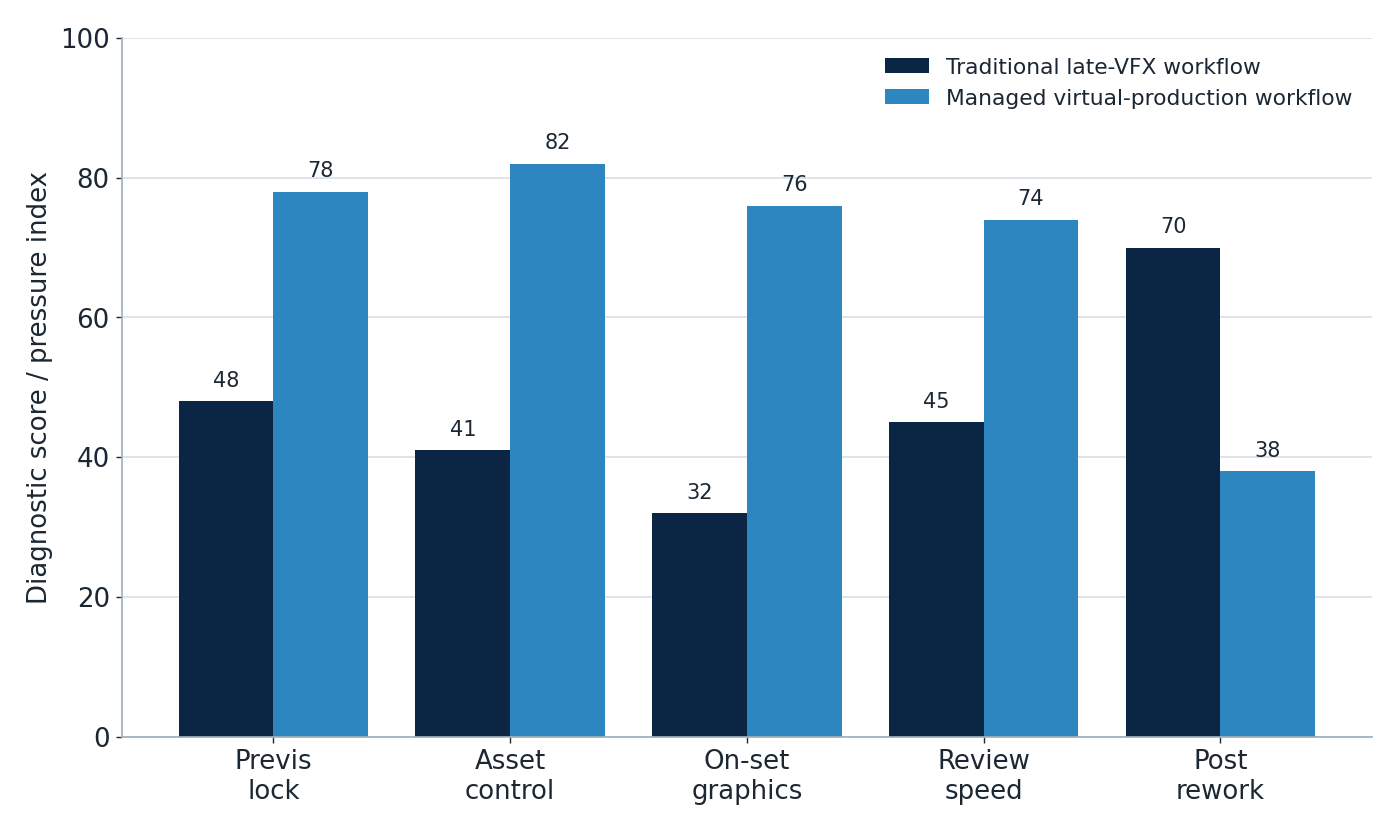
Figure 1. Production-management shift in graphics-heavy filmmaking.
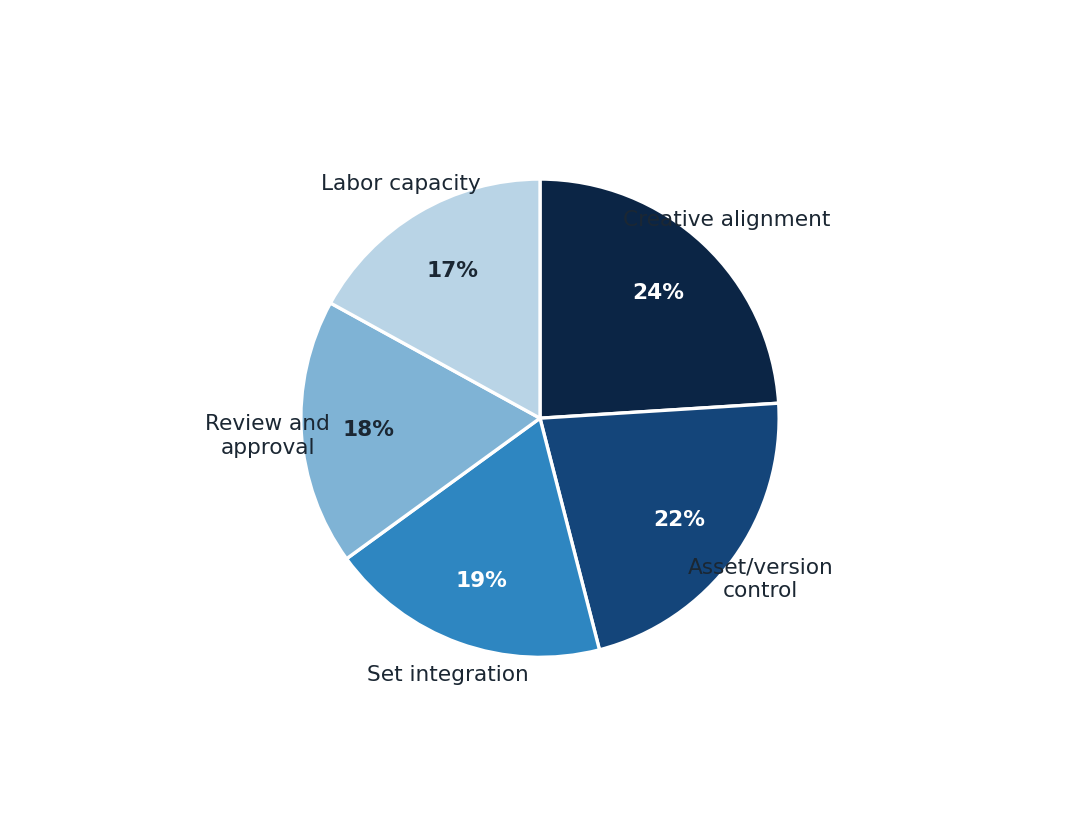
Figure 2. Managerial attention mix for modern graphics production.
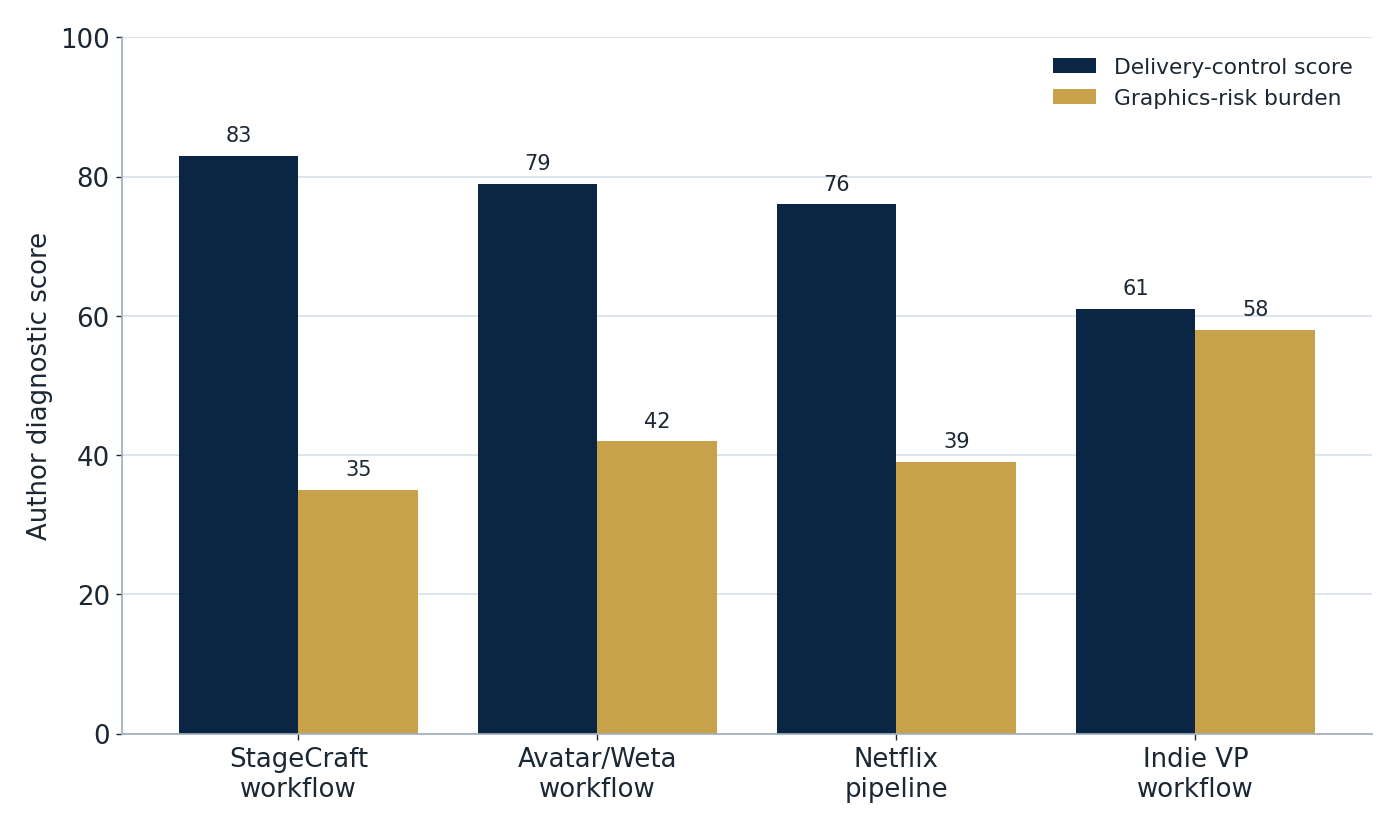
Figure 3. Case-based diagnostic contrast for graphics governance.
Table 1. Graphics Production Governance Matrix
| Governance area | Management question | Failure signal | Corrective action |
| Preproduction governance | Are visual rules, priorities, and approvals clear before costly work begins? | Repeated redesign, unclear story-world rules, weak asset lock | Create a visual bible; approve key looks; define decision owners |
| Asset/version control | Can the team locate, update, secure, and approve digital material without confusion? | Duplicate assets, wrong versions, lost files, mismatched color or scale | Use naming rules, asset database, lock dates, and access controls |
| Pipeline visibility | Does management know where each shot and asset sits in the workflow? | Late surprises, invisible bottlenecks, poor vendor reporting | Use shared dashboards, status categories, and weekly risk review |
| On-set integration | Are physical and digital teams ready to work together during the shoot? | Stage delays, mismatched lighting, camera-tracking errors | Run tests, rehearse cues, involve VFX and camera departments early |
| Review discipline | Are notes clear, consolidated, timely, and tied to approval authority? | Contradictory notes, taste drift, stalled approvals | Set note protocol, limit approvers, separate exploration from final approval |
| Labor capacity | Can the human system carry the graphics volume without destructive pressure? | Overtime spikes, burnout, vendor distress, falling quality | Re-scope, add support, revise schedule, or reduce graphics ambition |
Note. The matrix is designed as an applied diagnostic tool for graphics-heavy film projects. It is not based on confidential studio data.
Chapter 4: Case Analysis
The case analysis examines how modern graphics become manageable or dangerous in real production contexts. Each case shows a different relationship between creativity, technology, and management. StageCraft emphasizes early digital-environment preparation and on-set integration. Weta FX and Avatar emphasize large-scale world-building, motion capture, performance translation, and long-cycle research and development. Netflix emphasizes pipeline standards, validation, and distributed production discipline. Independent virtual-production research emphasizes adaptation under resource limits. Together, these cases show that modern graphics are not a single method. They are a family of production choices that require different forms of control.
The case analysis avoids two common errors. The first is technological hero worship. A tool can be impressive and still poorly suited to a project. The second is nostalgic rejection. Practical effects and location work remain powerful, but rejecting digital graphics as artificial ignores how deeply digital work now supports even realistic films. The useful question is not whether graphics should dominate filmmaking. The useful question is when, why, and how graphics should be governed so they serve the film rather than overwhelm it.
Read also: Editorial Trust and Platform Power in New York Digital Publishing
4.1 Case One: StageCraft and The Mandalorian
The Mandalorian became one of the most discussed examples of modern virtual production because ILM’s StageCraft workflow made LED-volume filmmaking visible to a wider industry audience. ILM described the system as a new workflow using real-time game-engine technology and LED screens to capture many complex visual-effects shots in camera (Industrial Light & Magic, 2020). The important management lesson is that the virtual set is not simply a backdrop. It is a production environment that has to be designed, approved, tested, synchronized, and maintained. The LED wall changes who must be ready before the camera rolls.
In a conventional green-screen workflow, many background decisions can be delayed into post-production, although good VFX planning still matters. In a StageCraft-style workflow, the background must exist in usable form before shooting. This creates a stronger demand for early art direction, camera planning, color testing, and asset readiness. It can reduce some downstream uncertainty, but it increases upstream responsibility. The producer has to fund preparation. The director has to commit to visual choices. The art department, VFX team, camera department, lighting team, and real-time engine team must operate as one production unit.
The system also changes performance and cinematography. Actors are not facing an empty color field; they can respond to a visible world. Reflections and interactive light can appear on costumes, helmets, skin, and props. Camera operators and cinematographers can frame against the environment in real time. These benefits have management value because they can reduce guesswork. Yet they depend on readiness. If the digital world is unfinished or wrong, the apparent advantage can become delay. A virtual-production stage is not forgiving when the image pipeline is weak.
StageCraft therefore demonstrates a broader principle: graphics management succeeds when it moves decision-making earlier without pretending that early decisions are free. A production cannot simply transfer post-production labor to pre-production and call it efficiency. It must redesign budget, staffing, schedule, approvals, and rehearsal around the transfer. The media manager’s task is to ask whether the production has actually paid for the new workflow or merely adopted its language.
4.2 Case Two: Weta FX, Avatar, and World-Building Discipline
The Avatar films represent a different scale of modern graphics management. Weta FX describes virtual production as the meeting of physical and digital worlds and identifies Avatar as a major moment because Cameron wanted to direct live actors on a motion-capture stage while viewing performances inside the fictional world of Pandora (Weta FX, n.d.). The management problem here is not a single LED-volume workflow. It is the long-term governance of an invented world. Creatures, bodies, water, plants, skies, facial expression, movement, language, and physical laws have to appear consistent across thousands of shots.
Trade reporting on Avatar: The Way of Water describes the production as involving thousands of visual-effects shots, with Weta FX handling a very large share and water work forming a major technical challenge (PostPerspective, 2023). The exact production methods are more complex than any short case summary can capture, but the managerial lesson is clear. When graphics define the story world, the production must build and protect a visual system. The problem is no longer how to add effects to a film. The problem is how to make the film’s reality.
Such world-building requires patient research and development. Water simulation, facial performance, underwater capture, creature animation, and environmental coherence do not emerge from last-minute instruction. They require testing, failure, recalibration, and artistic control. This has implications for financing. A producer cannot responsibly approve a film of that kind while budgeting graphics as a late cost line. The graphics are the film’s production body. They must be treated as a central budget and schedule driver.
The Avatar case also shows why management must protect aesthetic coherence. A large graphics team can produce many impressive elements, but the film will fail visually if those elements do not belong to the same world. Coherence requires leadership: directors, production designers, VFX supervisors, art directors, cinematographers, and producers must keep returning to the same questions. What is the physical logic of this world? How does light behave? How do bodies move? What level of stylization is allowed? Which designs are locked, and which remain open? Without such discipline, scale becomes fragmentation.
4.3 Case Three: Netflix, Pipeline Standards, and Distributed Control
Netflix provides a useful case because its production environment depends on scale, distribution, and standardization. The company supports many forms of content across regions, vendors, genres, and production sizes. Its public VFX best-practice guidance states that image exchange between finishing facilities and VFX vendors affects quality, schedule, and cost and that the guidance is intended to reduce errors and ambiguity (Netflix Partner Help Center, n.d.-a). This is a management statement as much as a technical one. Errors and ambiguity are not harmless. They accumulate into delay, rework, and conflict. The company also maintains a public explainer that frames virtual production for the partners it works with (Netflix Partner Help Center, n.d.-b).
Netflix Technology Blog’s writing on a validation framework for Unreal Engine in virtual production points to another managerial need: testing. Real-time engines are powerful, but a production cannot assume that every version, plug-in, asset, display system, or hardware configuration will behave predictably under film conditions (Netflix Technology Blog, 2022). Validation is the institutional answer to enthusiasm. It asks whether the tool works under the conditions in which the production intends to use it.
The Netflix case is important because modern media organizations often manage portfolios rather than single projects. A studio, streamer, or network may support many productions at different stages. Without shared standards, every production invents its own naming systems, delivery assumptions, security habits, and review routines. That freedom can look creative, but it often creates waste. Standardization does not have to kill artistry. When done intelligently, it removes avoidable confusion so creative workers can focus on decisions that matter.
Pipeline standards are especially important for distributed labor. A VFX vendor in one city may receive plates from a production in another country, animation from a separate team, notes from a showrunner, color decisions from a finishing house, and security instructions from the studio. The more distributed the work, the more management must protect clarity. Netflix’s public guidance offers a practical example of how large media organizations try to control this complexity through documentation, validation, and workflow norms.
4.4 Case Four: Independent Virtual Production and Resource Discipline
High-end case studies can mislead independent filmmakers if they are treated as universal models. An independent production cannot simply imitate StageCraft or Avatar. It may not have access to a large LED volume, deep R&D teams, extensive asset libraries, or long testing periods. Recent research on real-time rendering pipelines for independent live-action films is therefore valuable because it asks how virtual production can be functional at smaller scales (Silva Jasaui, 2024). The lesson is not that independent productions should avoid modern graphics. The lesson is that they must match ambition to capacity with unusual honesty.
Independent filmmakers may benefit from previsualization, virtual scouting, real-time environments, and lower-cost rendering tools. These methods can improve planning and reduce some location or set costs. They can also create traps. A small team may underestimate the labor needed for usable assets. A director may become seduced by a software demo that does not reflect production constraints. A low-cost LED arrangement may introduce lighting, moire, color, or perspective problems. A project may save money on travel and lose it through rework.
Resource discipline is therefore the heart of independent graphics management. The manager must ask which graphics are essential to the story and which are vanity. The production should design fewer, stronger digital moments rather than many weak ones. It should test the workflow before committing. It should choose visual concepts that match available tools. It should avoid promising the audience a world it cannot make credible. In low-budget filmmaking, restraint is not defeat. It is often the condition of artistic survival.
The independent case also matters for education. Film schools and media programs increasingly introduce students to virtual production, game engines, and digital design. The danger is that students may learn tool operation without production judgment. A master’s-level media-management curriculum should teach students how to evaluate readiness, budget risk, workflow capacity, and labor ethics. Knowing how to open a software package is not the same as knowing how to manage a film that depends on it.
4.5 Cross-Case Findings
The cases point to several shared findings. Modern graphics reward early decision-making: whether the production uses an LED volume, motion capture, a distributed VFX pipeline, or independent real-time rendering, the project grows stronger when design and workflow are tested before expensive production days. Graphics management also depends on clear authority, since a production must know who approves visual direction, who resolves conflict, who controls version lock, and who can authorize major changes. The technical pipeline, in turn, is a creative system; file formats, color management, naming conventions, and review platforms may seem administrative, yet they directly shape artistic time and image quality.
Labor capacity cannot be wished into existence; a film may own the software and hardware yet lack enough artists, coordinators, supervisors, or pipeline support. Modern graphics also demand ethical attention, because rework and poor planning so often transfer pressure to the workers least able to refuse it. Scale changes the problem but does not remove it. A major studio may have stronger infrastructure but face larger complexity. An independent team may have fewer shots but less margin for error. Management intelligence is required at both levels.
The most important cross-case finding is that graphics-heavy filmmaking is a decision system. Every asset, shot, environment, and review note is tied to prior decisions and future consequences. The myth of infinite digital flexibility is one of the most dangerous myths in modern film production. Digital tools are flexible, but labor, time, money, attention, and audience patience are limited. Good media management protects those limits.
Chapter 5: Discussion
The discussion returns to the central argument: modern graphics do not manage themselves. A production may acquire advanced technology and still fail artistically or financially if it lacks the human and organizational discipline to use it. The managerial problem is not simply complexity. Film has always been complex. The new problem is the fusion of physical and digital production at nearly every stage. That fusion changes the timing of decisions, the distribution of labor, and the meaning of production control.
The model developed in Chapter 3 gives managers a way to read this complexity. It asks whether the production has sufficient preproduction governance, asset/version control, pipeline visibility, on-set integration, review discipline, and labor capacity. It also asks whether schedule churn, rework, and vendor fragmentation are rising. These are not abstract variables. They are everyday production realities. A producer can sit in a readiness meeting and score them. The value of the model lies in the conversation it forces.
5.1 Management Lessons for Producers and Executives
The first lesson is that graphics decisions must be financed early. Producers often resist early spending because development and pre-production already feel financially exposed. Yet graphics-heavy projects can become more expensive when early planning is underfunded. Concept art, previs, technical tests, asset prototypes, and workflow rehearsals may look like optional costs until the production discovers that the shoot depends on them. A media manager should treat early graphics preparation as risk insurance, not decorative overhead.
The second lesson is that executives must respect decision locks. Studio or investor intervention is sometimes necessary, especially when the film is drifting or the market context changes. But late changes to graphics-heavy work are rarely simple. A new design, scene restructure, or story note can affect many assets, shots, vendors, and departments. Executives who demand changes without understanding downstream cost are making hidden budget decisions. Responsible management makes those costs visible before approval.
The third lesson is that producers should not let software vendors define the production strategy. Tools matter, but a film is not a demo reel. The workflow must fit the story, budget, crew, schedule, and distribution need. A producer should ask what the tool solves, what new problems it creates, what training it requires, what dependencies it introduces, and what happens if it fails. Mature media management welcomes innovation without surrendering judgment.
The fourth lesson is that review culture determines cost. A production with slow, vague, or contradictory notes will waste money no matter how talented the artists are. Review discipline means that notes are specific, consolidated, timely, and tied to story purpose. It also means that approvers understand the difference between a necessary change and personal taste drift. Creative leadership should be strong enough to refine without endlessly reopening decisions.
5.2 Lessons for Production Managers and VFX Supervisors
Production managers and VFX supervisors sit at the point where creative ambition meets operational reality. Their relationship is decisive. A production manager who sees VFX as a distant post-production department will miss critical dependencies. A VFX supervisor who speaks only in technical language may fail to secure the production support needed for good work. Both roles require translation. They must translate story into tasks, tasks into schedules, schedules into budget, and budget into choices.
A useful practice is the graphics-readiness review. Before principal photography or virtual-stage booking, the team should examine the status of key assets, approval chains, color and camera tests, vendor assignments, storage and security, reference capture, editorial handoff, and contingency. The review should not be a ceremonial meeting. It should have authority to pause, reduce, redesign, or resequence work. A readiness review that cannot change decisions is only theatre.
VFX supervisors also need protection from impossible expectations. They are often asked to make the image possible after other departments have made choices without enough technical consultation. Strong media management gives the supervisor a voice early enough to prevent avoidable problems. This is not about giving technical departments control over the film. It is about recognizing that creative authority without technical knowledge can become expensive fantasy.
Production managers should also track rework as a warning signal. Some revision is healthy. Film is an iterative medium. But repeated rework for the same issue suggests a deeper governance failure: unclear direction, weak approval, unstable story, poor reference, or inadequate technical testing. The question is not whether artists can revise. The question is why they are revising.
5.3 Modern Graphics and the Director’s Authority
The rise of modern graphics does not reduce the director’s importance. It changes the kind of discipline required from the director. A director working with heavy graphics must develop clear visual language earlier than a director relying mostly on captured reality. They must understand what can remain open and what must be decided. They must listen to supervisors without losing artistic command. They must give notes that are precise enough to guide labor and flexible enough to allow artistic discovery.
Some directors thrive in this environment because they treat technology as a way to see and shape the film more clearly. Others struggle because they confuse infinite digital possibility with creative freedom. Freedom without decision becomes drift. A production can spend weeks exploring versions of a creature’s face, a city skyline, or a virtual sunset without improving the story. The director’s task is to know when the image has become meaningful enough to move forward.
Media management can support the director by building decision rituals. Visual bibles, look books, previs reviews, asset-lock meetings, virtual scouts, shot-priority lists, and final-note protocols help creative authority become operational. These tools do not make the film less artistic. They protect artistry from confusion. The director remains the artistic center, but the center must communicate clearly with the system around it.
5.4 Audience Trust and the Problem of Empty Spectacle
Audience trust is easy to underestimate. Viewers may accept impossible worlds if those worlds obey their own emotional and visual rules. They may reject expensive images if the film seems to ask for awe without earning it. Modern graphics can produce emptiness when management allows spectacle to replace dramatic need. A chase may become bigger without becoming more tense. A creature may become more detailed without becoming more alive. A city may become more enormous without becoming more memorable.
This problem belongs partly to writing and directing, but management is involved because budgets and schedules express priorities. If the largest share of visual attention goes to scale while character scenes are rushed, the film may betray its own story. If marketing demands trailer moments before the script has solved its emotional structure, graphics teams may be asked to decorate weakness. A serious media manager should defend the story from empty expansion.
The audience also responds to consistency. In a graphics-heavy film, inconsistency can damage belief. Lighting may not match. Physics may shift. Digital characters may look more finished in one sequence than another. Environments may feel disconnected. These are aesthetic problems with management causes. Consistency requires time for look development, unified supervision, careful review, and quality control. The final image carries the memory of the production system that made it.
5.5 Education and Training Implications
Media-management education should adjust to the realities described above. Students need to learn budgeting, scheduling, contracts, leadership, and distribution. They also need graphics literacy. That does not mean every student must become a VFX artist or Unreal Engine specialist. It means that future managers should understand enough to ask intelligent questions. What must be built before the shoot? What is an asset? What is a version? What is a render dependency? What is a color pipeline? What does an approval delay do to a vendor? What risks appear when live-action and digital environments meet on set?
A master’s-level course could use case simulations. Students might be given a script with ten graphics-heavy sequences and asked to design a management plan. They would have to choose which scenes use practical sets, which use virtual production, which use post VFX, and which should be rewritten to reduce risk. They would prepare a budget-risk memo, a graphics-readiness checklist, and a review protocol. Such assignments would train judgment rather than software operation alone.
Film schools should also teach labor ethics inside production planning. Students need to understand that late notes and poor planning affect real workers. They should learn how bidding pressure can damage vendors, how credit practices shape careers, and how inclusion failures limit the field. Modern graphics are not just images. They are workplaces. Education should make that visible.
5.6 Ethical and Legal Issues
Modern graphics raise ethical and legal issues beyond labor pressure. Digital doubles, facial capture, de-aging, synthetic extras, AI-assisted image generation, and asset reuse create questions around consent, authorship, likeness rights, and credit. A media manager cannot treat these issues as legal paperwork handled after creative decisions are made. They must be considered during development, casting, contracting, and post-production planning.
The expansion of AI-assisted film tools makes this concern sharper. Tsiavos (2025) identifies ethical concerns around authorship, creative integrity, and labor displacement in the film industry’s AI transformation. Even with graphics and virtual production as the main focus, the AI issue cannot be ignored because modern graphics pipelines increasingly include machine-learning tools for rotoscoping, upscaling, facial work, asset generation, and review support. The managerial question is not only whether a tool saves time. It is whether the tool respects rights, preserves creative accountability, and avoids exploiting unlicensed labor or images.
Data security is another issue. Modern graphics workflows move large volumes of unfinished material through platforms, vendors, clouds, and review systems. Leaks can damage marketing plans, violate contracts, and expose artists or actors to public scrutiny before work is complete. Security is not separate from creativity. A team that cannot share material safely may slow review and damage collaboration. A team that shares carelessly may create legal and reputational risk. Media management has to balance access with protection.
Chapter 6: Recommendations
The recommendations are written for producers, media executives, film-school leaders, production managers, post-production supervisors, and VFX supervisors. They are practical because the topic is practical. A film either manages its graphics system or suffers from it. The recommendations do not require every production to adopt the same technology. They require each production to make honest decisions about what its chosen technology demands.
Recommendation one is to create a graphics-governance plan during development. The plan should identify major graphics categories, expected assets, likely vendors, technical dependencies, visual-reference needs, approval authority, and risk areas. It should be updated during pre-production rather than filed away. A script with heavy graphics should not reach full budget approval without this plan.
Recommendation two is to conduct a graphics-readiness review before shooting or virtual-stage work begins. The review should score the project using variables from the Graphics Production Management Probability Model: preproduction governance, asset/version control, pipeline visibility, on-set integration, review discipline, labor capacity, schedule churn, rework risk, and vendor fragmentation. A low score should trigger redesign or delay. The point is not to punish ambition. The point is to prevent ambition from becoming negligence.
Recommendation three is to lock visual language early while preserving controlled areas for discovery. A production should know which assets are fixed, which are exploratory, and which can be revised only with executive approval. Locking everything too early may kill discovery. Leaving everything open too long will damage delivery. The answer is staged commitment.
Recommendation four is to integrate VFX and graphics supervisors into creative planning from the start. They should review scripts, storyboards, budgets, locations, set designs, camera plans, and schedule assumptions. Their role should not begin after problems are already embedded. Early consultation often saves money and protects artistic quality.
Recommendation five is to use clear review protocols. Notes should be consolidated, dated, assigned, and tied to approval levels. A project should distinguish between exploratory review, director review, studio review, technical review, and final approval. Confusing these stages creates delay. Review meetings should end with decisions, not vague encouragement.
Recommendation six is to protect labor capacity. Producers should budget realistic artist hours, coordinator support, pipeline support, and contingency. They should track overtime and rework. They should resist the practice of treating vendors as shock absorbers for poor planning. A production that cannot afford the labor required by its graphics ambition should change the ambition.
Recommendation seven is to build ethics into contracts and workflow. Digital likeness use, AI-assisted work, asset reuse, credit, confidentiality, and consent should be addressed before production. Waiting until conflict arises is weak management. Ethical clarity protects the project as well as the people in it.
Chapter 7: Conclusion
Modern graphics have changed filmmaking because they have changed management. They have moved visual decision-making upstream, blurred the line between physical and digital production, expanded the number of workers responsible for the final image, and made data governance part of creative governance. A film manager who does not understand this shift may still speak confidently about budget and schedule, but they will be missing the place where much of the film is actually being made.
The argument throughout has been that media management and modern graphics must be studied together. StageCraft shows how real-time environments and LED volumes can transform on-set production when preparation is strong. Weta FX and Avatar show what long-cycle world-building requires when the film’s reality is digital as much as physical. Netflix shows the importance of standards, validation, and ambiguity reduction in distributed workflows. Independent virtual-production research shows that modern graphics must be scaled to actual capacity. Across these cases, the same principle appears: technology helps only when management gives it direction, time, and discipline.
The Graphics Production Management Probability Model and the Graphics Management Risk Ratio provide practical tools for diagnosing risk. They do not reduce creativity to numbers. They make managerial assumptions visible. They help teams ask whether they have locked enough decisions, prepared enough assets, protected enough labor, clarified enough authority, and tested enough workflow before the project becomes too expensive to correct.
The final professional judgment is simple. Modern graphics are neither the future of cinema by themselves nor the enemy of cinema. They are a powerful set of image-making practices that can deepen story when governed well and weaken story when used carelessly. Media management is the difference between those outcomes. The best graphics-heavy films are not made by technology alone. They are made by people who know what the image is for, who respect the workers who build it, and who organize the production so that imagination can survive contact with time, money, and the screen.
Chapter 8: Applied Management Framework for Media Research
A master’s-level media paper should not end with praise for innovation. It should leave the reader with a method. The applied framework below converts the argument into a process that can be used by production companies, film schools, media researchers, and independent producers. The framework has six stages: concept diagnosis, graphics classification, workflow selection, readiness scoring, delivery monitoring, and post-project learning. Each stage is designed to prevent a familiar production mistake.
Concept diagnosis asks whether graphics are central, supportive, or avoidable. A central graphics project is one in which digital environments, characters, effects, or design systems carry the film’s identity. A supportive graphics project uses graphics to extend, correct, or enhance captured footage. An avoidable graphics project includes effects that may look attractive but do not meaningfully serve story or market value. This distinction matters because a central graphics project must be managed from the beginning. A supportive project needs disciplined integration. An avoidable project should be cut or reduced before it consumes resources.
Graphics classification breaks the work into categories: world-building, character work, environmental extension, simulation, screen graphics, invisible cleanup, stylized design, motion graphics, title design, and marketing assets. Classification helps prevent vague budgeting. A line item called “VFX” tells a manager little. A classified breakdown tells the production which work needs early design, which requires on-set reference, which depends on editorial lock, and which can be handled late without major risk. It also helps vendors bid with greater honesty.
Workflow selection asks whether a sequence should be handled through practical production, post-production VFX, virtual production, hybrid methods, or redesign. The choice should be based on story, cost, schedule, performer needs, location limits, safety, technical readiness, and audience expectation. A project should not use virtual production because it sounds modern. It should use it where the method solves a specific production problem. A cave interior, spaceship cockpit, impossible sunset, alien terrain, or dangerous travel setting may justify virtual production. A simple room scene may not.
Readiness scoring uses the probability model and risk ratio. This scoring should involve producers, department heads, supervisors, post-production leadership, and finance. Different departments may score the same variable differently, and those disagreements are useful. If executives score review discipline high while artists score it low, the production has learned something important. The score is not a verdict. It is a diagnostic conversation.
Delivery monitoring occurs during production and post-production. The same variables should be tracked repeatedly, not only at the beginning. A project may begin with strong control and lose it through story changes, staff turnover, vendor delays, or executive uncertainty. Monitoring should include change-order volume, review turnaround time, asset completion rate, shot approval velocity, overtime pressure, and rework frequency. These measures help managers intervene before the final months become unmanageable.
Post-project learning is often neglected because productions disband after delivery. Yet graphics-heavy projects create valuable knowledge. What assets were reusable? Which vendors performed well? Which approval process failed? Which tests saved money? Which assumptions proved false? A production company or film school should archive this learning. Without institutional memory, every project repeats old mistakes with new software.
8.1 Table and Figure Interpretation
Table 1 presents a graphics-production governance matrix. Its purpose is to connect management questions to failure signals and corrective action. A normal table might list departments and tasks. This matrix is more useful because graphics failure rarely belongs to one department alone. A late asset may reflect weak creative approval, insufficient modeling time, poor reference capture, or unclear vendor scope. The matrix encourages managers to diagnose the cause rather than blame the nearest team.
Figure 1 should be read as a pressure-shift map. It does not say that virtual production always beats traditional methods. Instead, it shows how a well-managed graphics workflow can move control earlier and reduce some late-stage pressure. The cost of that improvement is early preparation. Figure 2 should be read as an attention guide. Creative alignment and asset control receive the largest shares because a graphics-heavy film depends on meaning and organized material. Figure 3 should be read as a case-based warning. Major systems can show strong control and still carry real risk. Independent systems can be useful and still require sharper restraint.
The table and figures also demonstrate an important research principle. In media management, not every useful visual must be a claim of external measurement. Some visuals are analytical devices. They help organize professional judgment. The document marks them as diagnostic, not empirical. That distinction protects academic honesty while still giving managers tools they can use.
8.2 Practical Case Application: A Hypothetical Studio Film
Consider a mid-budget science-fiction film with one alien city, two digital creatures, several screen interfaces, and three action sequences requiring set extension. The director wants a strong visual identity but has not chosen between practical miniatures, LED-stage work, and post-production VFX. A weak management approach would approve the budget with a broad effects estimate and solve the details later. A stronger approach would classify the graphics and run a readiness review before major spending.
The alien city is world-building and should require early concept art, previs, scale rules, environmental logic, and asset planning. The digital creatures require performance reference, rigging tests, animation style approval, and creature-behavior rules. Screen interfaces may need graphic design continuity and on-set playback decisions. The action set extensions require camera planning, tracking strategy, location reference, and editorial assumptions. Once classified, the production may discover that only one sequence truly benefits from LED-stage work, while the rest can be handled through planned post-production VFX and partial practical builds.
Using the probability model, the production might score high on creative ambition but low on preproduction governance and review discipline. The GMRR may show that schedule churn and approval uncertainty are already too high. The corrective action would be to delay final budget approval for two weeks, produce a visual bible, assign a single approval path, test the creature workflow, and reduce one action sequence. The result may look less grand on paper, but it may produce a stronger film. Management is often the art of saving the film from its own wish list.
This example is hypothetical, but it reflects real production logic. Many graphics problems are born before the graphics team begins full work. They begin when a script promises images without managerial structure, when a budget hides uncertainty, or when creative leaders defer difficult choices. A well-designed framework can expose these issues early.
8.3 Practical Case Application: A Documentary or Factual Media Project
Modern graphics are not limited to fiction filmmaking. Documentaries, factual series, journalism, educational media, and historical reconstructions increasingly use maps, data visualization, animation, archival repair, virtual environments, and illustrative graphics. The management problem is different because truth claims are stronger. A fictional dragon must be believable. A documentary reconstruction must also be ethically marked and factually responsible.
A media manager working on a historical documentary should distinguish between evidence-based reconstruction, interpretive illustration, and speculative visualization. Evidence-based reconstruction uses verified sources such as photographs, maps, court documents, architectural plans, or eyewitness accounts. Interpretive illustration helps explain a process or event without claiming direct visual certainty. Speculative visualization fills gaps and must be labeled carefully. The graphics team should not be asked to create false precision.
This matters for media research because graphics can shape public understanding. A polished animation may persuade viewers even when the evidence behind it is thin. A map may make uncertain boundaries look settled. A reenactment may appear more factual than it is. Ethical media management therefore requires documentation of sources, review by subject experts, and clear visual language that distinguishes fact from reconstruction. The same tools that create wonder in fiction can create misinformation in factual media if they are poorly governed.
The graphics-governance model can be adapted for factual media by adding variables for evidentiary support, source transparency, and editorial review. A documentary with strong graphics but weak sourcing should be treated as high risk. A public-interest media project should never let design quality outrun evidence.
8.4 Sector Implications: Streaming, Advertising, and Short-Form Media
Streaming platforms have increased demand for high-volume screen production. This demand affects graphics management because more projects compete for artists, vendors, stages, render capacity, and supervisory talent. A streaming series may require film-quality graphics on a tighter television schedule. The schedule pressure can be intense because episodes overlap in writing, shooting, editing, and effects delivery. Media managers must plan graphics as an episodic pipeline, not as a one-time feature-film push.
Advertising and branded content bring a different challenge. Turnaround times are short, brand approval layers are heavy, and visuals may need to match strict identity rules. Modern graphics can help agencies produce product worlds, virtual sets, stylized transitions, and campaign assets. Yet approval uncertainty can be severe because clients, agencies, directors, legal teams, and platform teams may all have notes. Review discipline is therefore more important than tool choice. A thirty-second spot can become a management disaster if the approval chain is confused.
Short-form and social media content create another pattern. Creators may use graphics tools quickly, cheaply, and experimentally. The risk is not always budget overrun; it may be brand inconsistency, rights misuse, low-quality output, or burnout. Media managers in this sector need lightweight governance: asset libraries, rights checks, style guides, version control, and ethical rules for synthetic content. The same principles apply, but the process must be scaled to the pace of the medium.
8.5 Research Limitations and Future Study
The chief limitation of the present work is the absence of confidential production data. Access to such data would allow stronger testing of the proposed model. Future research should collect anonymized project data from production companies, VFX vendors, film schools, and independent filmmakers. Useful variables would include number of graphics shots, asset counts, review cycles, change orders, artist hours, render failures, overtime levels, approval delays, and final delivery outcomes. With enough data, the coefficients in the probability model could be estimated rather than proposed.
Future research should also include interviews. Producers, production managers, VFX supervisors, coordinators, artists, cinematographers, editors, and directors would likely describe graphics risk differently. Comparing those perspectives could reveal where misunderstanding enters the production system. For example, executives may believe a late change is minor because it affects only one sequence, while artists may know it affects an asset used across many shots. Interview research could make such gaps visible.
Another research direction is comparative study across national industries. Hollywood, Nollywood, Bollywood, European public-film systems, East Asian studios, and independent African media houses may manage graphics under very different financing, labor, training, and distribution conditions. A model built only from high-resource U.S. and New Zealand examples would be too narrow. Future work should test how graphics governance changes in industries with different budgets, crew structures, training systems, and audience expectations.
A further direction is the impact of AI-assisted graphics tools on management. The question is not whether AI will enter film production. It already has in many forms. The stronger question is how managers will govern consent, authorship, quality, labor displacement, and credit. The framework can be extended by adding AI-risk variables, though that work deserves its own focused study.
References
Atkinson, S. (2015). The performance and materiality of the processes, spaces and labor of VFX production. Spectator, 35(2), 36-46. https://cinema.usc.edu/spectator/35.2/5_Atkinson.pdf
Epic Games. (n.d.). What is virtual production? Unreal Engine. https://www.unrealengine.com/explainers/virtual-production/what-is-virtual-production
Industrial Light & Magic. (2020, February 20). Groundbreaking LED stage production technology created for hit Lucasfilm series The Mandalorian. https://www.ilm.com/groundbreaking-led-stage-production-technology-created-for-hit-lucasfilm-series-the-mandalorian/
Kotlinska, M. (2024). The influence of digital transformation on the evolution of the audiovisual industry. European Research Studies Journal. https://ersj.eu/journal/3702
Netflix Partner Help Center. (n.d.-a). VFX best practices. Netflix Studios. https://partnerhelp.netflixstudios.com/hc/en-us/articles/360000611467-VFX-Best-Practices
Netflix Partner Help Center. (n.d.-b). What is virtual production? Netflix Studios. https://partnerhelp.netflixstudios.com/hc/en-us/articles/1500002552642-What-is-Virtual-Production
Netflix Technology Blog. (2022, August 10). Virtual production: A validation framework for Unreal Engine. https://netflixtechblog.com/virtual-production-a-validation-framework-for-unreal-engine-aab780b2f8c8
PostPerspective. (2023, January 5). Avatar: The Way of Water: Weta’s Joe Letteri on VFX workflow. https://postperspective.com/avatar-the-way-of-water-wetas-joe-letteri-on-unique-vfx-workflow/
Silva Jasaui, D. (2024). Virtual production: Real-time rendering pipelines for indie live-action films. Applied Sciences, 14(6), 2530. https://doi.org/10.3390/app14062530
Smith, S. L., Choueiti, M., Pieper, K., Case, A., & Choi, A. (2021). Invisible in visual effects: Understanding the prevalence and experiences of women in the field. USC Annenberg Inclusion Initiative. https://assets.uscannenberg.org/docs/aii-study-women-in-visual-effects-2021-11-04.pdf
Tsiavos, V. (2025). The digital transformation of the film industry: How artificial intelligence impacts the film value chain. Telecommunications Policy. https://www.sciencedirect.com/science/article/pii/S0308596125001181
Visual Effects Society. (n.d.). Virtual production publications. https://vesglobal.org/virtual-production-publications/
Weta FX. (n.d.). Virtual production. https://www.wetafx.co.nz/research-and-tech/technology/virtual-production